Execution in logistics doesn’t break down because of a lack of effort. It breaks down because of a lack of coordination.
In the high-stakes world of air cargo and infrastructure projects, we’ve spent decades throwing "more people" at problems. We treat hiring as a tactical response to a localized fire. If a warehouse is slow, hire more handlers. If a project is behind, find more contractors. But in a fragmented, multi-stakeholder environment, adding more bodies to a broken process only creates more noise.
At ImEx Cargo, we’re shifting the conversation. We aren’t looking for more "help wanted" signs; we’re building workforce infrastructure.
This is the logic behind WIN: the Workforce Innovation Network. It is the digital execution layer designed to bridge the massive gap between talent development and real-world logistics execution.
The Execution Gap: Why Hiring Isn't Enough
The logistics industry currently operates in silos. On one side, you have universities and workforce boards training the next generation of logistics experts. On the other, you have airlines, GSAs, and prime contractors struggling to find qualified, ready-to-execute talent.
In the middle? Silence.
The handoff from "classroom" to "cockpit" or "cargo floor" is where the momentum dies. Without a shared digital freight infrastructure, a student’s certification doesn’t translate into a visible asset for a GSA managing a complex shipment.
WIN changes this by acting as an ecosystem execution layer. It doesn't just list jobs; it coordinates the movement of people and freight through a single, standardized workflow.

Introducing WIN: The Workforce Innovation Network
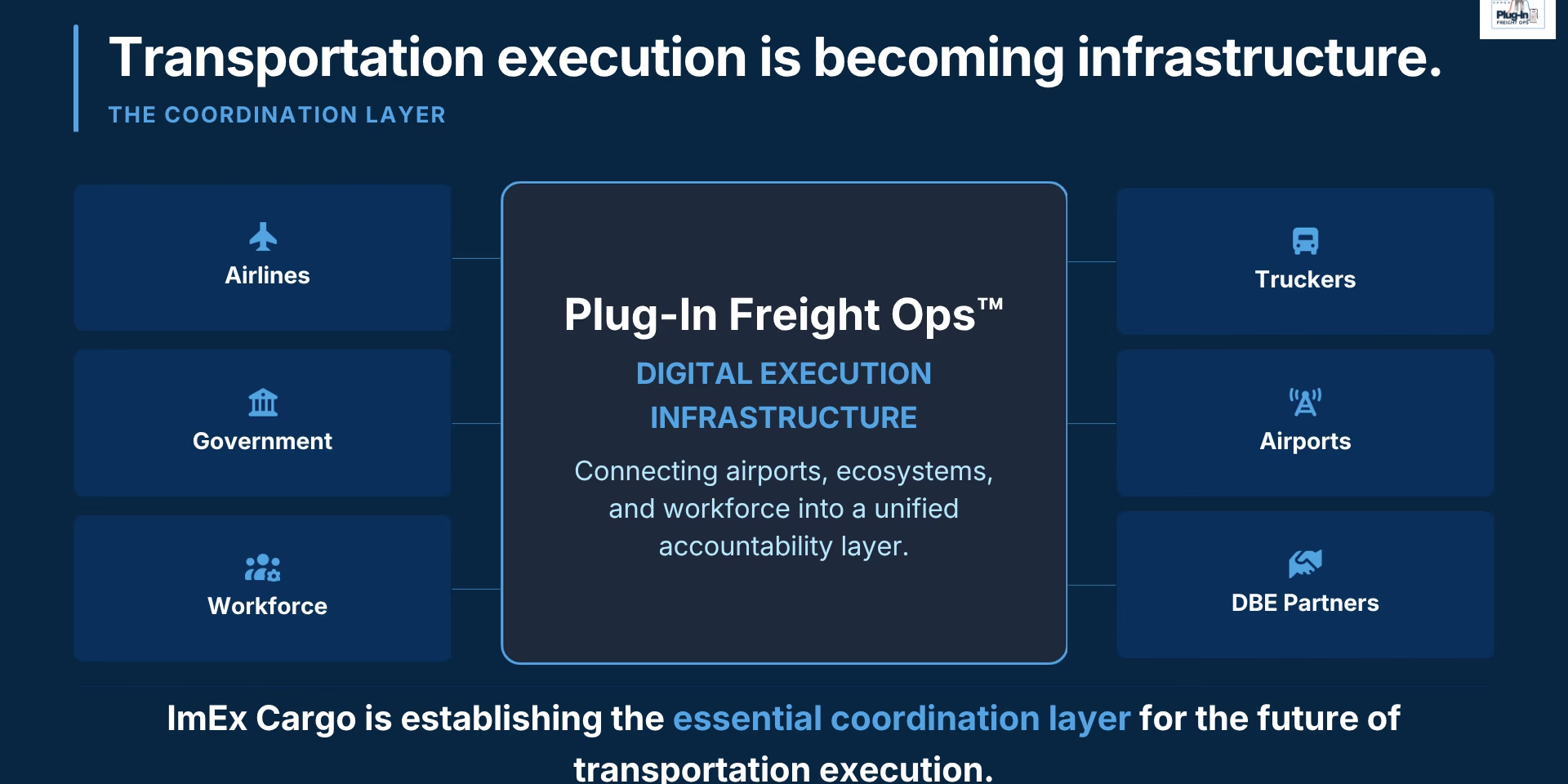
WIN is the human-centric component of our Plug-In Freight Ops™ platform. While the platform manages the technical lifecycle of a shipment: from quote to booking to tracking: WIN manages the lifecycle of the talent executing those steps.
Think of it as a coordination layer that sits above existing systems. It doesn’t replace a university’s curriculum or an airline’s internal ERP. Instead, it "plugs in" to these entities to provide:
- Workflow Visibility: Seeing exactly where a shipment (or a trainee) is in the process.
- Standardized Handoffs: Ensuring that when freight moves from a trucker to a cargo handler, the data and the accountability move with it.
- Partner Accountability: Real-time tracking of performance across DBEs (Disadvantaged Business Enterprises) and diverse suppliers.
Beyond the 'Help Wanted' Sign: Workforce as Infrastructure
When we talk about "infrastructure," we usually mean bridges, runways, and fiber-optic cables. But a workforce is just as vital to the movement of goods as the asphalt on the ground.
If your workforce isn't digitally integrated into your operations, your infrastructure is incomplete.
WIN treats workforce development as a continuous, live feed. By connecting workforce boards and training institutions directly to the transportation workflow visibility provided by Plug-In Freight Ops™, we ensure that training is aligned with actual market demand.
We’re moving away from "just-in-case" training to "just-in-time" execution.

Connecting the Dots: Airlines, Universities, and Suppliers
The power of a network is determined by who is connected to it. WIN brings four critical groups into a single coordinated flow:
- Airlines & GSAs: They gain a predictable pipeline of talent and partners who are already trained on the digital execution layer they use daily.
- Universities & Academies: They can offer students real-world experience through the ImEx Cargo Academy, ensuring graduates are "execution-ready" on day one.
- Workforce Boards: They gain data-driven insights into where funding is creating the most impact, with audit-ready oversight of job placement and performance.
- Diverse Suppliers (DBEs): Small and diverse firms gain a seat at the table of large-scale infrastructure projects by plugging into a system that handles the heavy lifting of compliance and coordination.
The Coordination Layer in Action
How does this look on the ground?
Imagine a prime contractor managing a massive airport infrastructure project. They need to hit diversity spend targets, ensure safety compliance, and keep the project on schedule.
Without a coordination layer, they are chasing emails, spreadsheets, and manual check-ins from twenty different subcontractors.
With WIN and Plug-In Freight Ops™, the contractor sees a single dashboard. They can track the movement of materials, verify the certifications of the workforce on-site, and ensure that every handoff is documented. This is what we call ecosystem execution. It’s not just "managing"; it’s orchestrating.

Workflow Standardization: From Quote to Tracking
The backbone of WIN is the Plug-In Freight Ops™ commitment to standardizing the shipment lifecycle.
Fragmenation happens when everyone uses a different "language" for their workflows. WIN provides the "Rosetta Stone." By standardizing the quote → book → track process, we eliminate the friction that usually leads to delays.
- Quote: Real-time capacity visibility for all partners.
- Book: Instant digital confirmation, reducing manual entry errors.
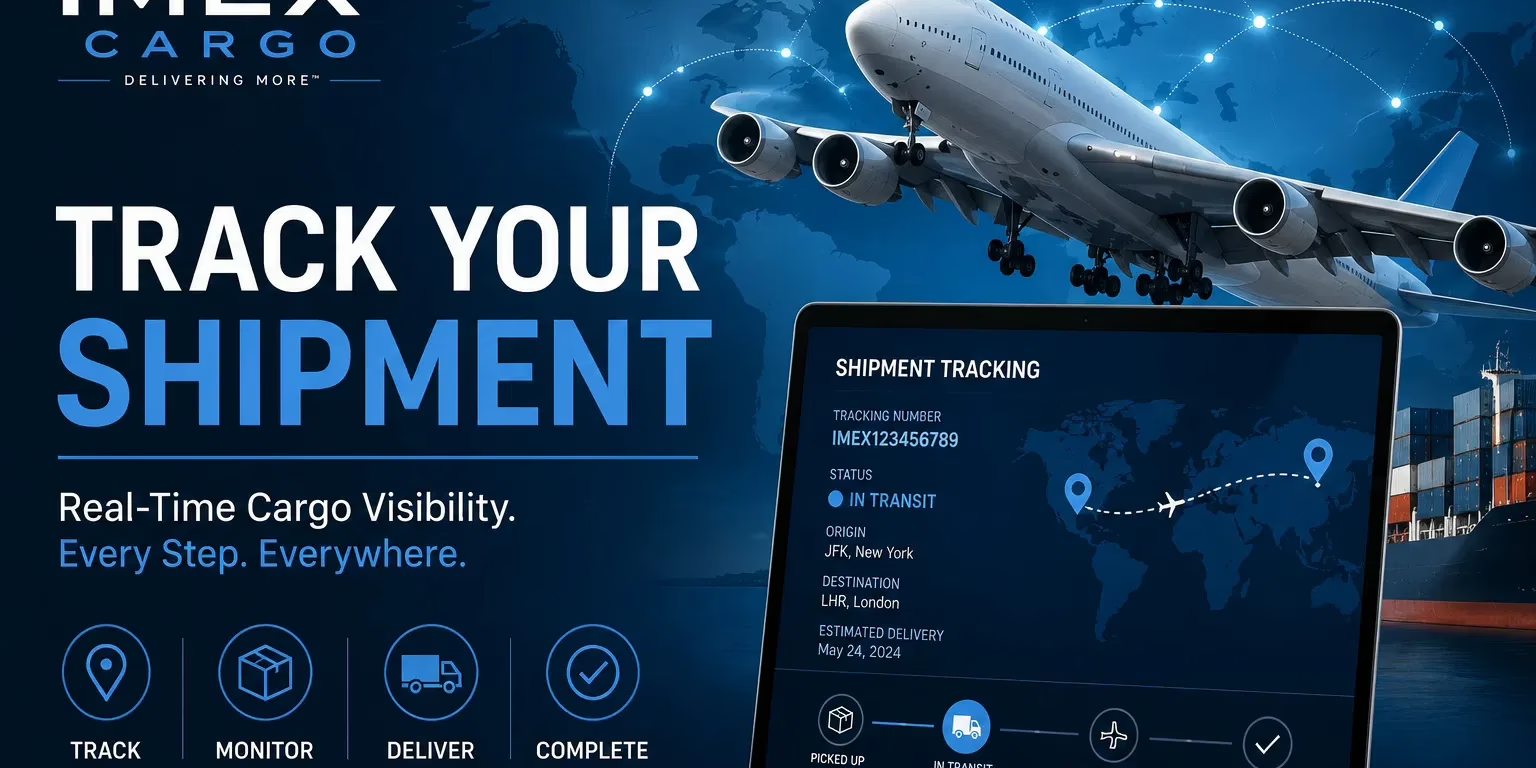
- Track: End-to-end visibility that holds every stakeholder accountable, from the first mile to the last.
This level of transportation workflow visibility is what allows a "Workforce Innovation Network" to actually innovate. You can’t improve what you can’t see.
The Future is Interoperable
We are entering an era where the most successful logistics organizations won't be the ones with the most assets, but the ones with the best coordination.
The Workforce Innovation Network (WIN) is our invitation to move past the fragmented, manual processes of the past. It’s a call to build a more resilient, inclusive, and efficient logistics infrastructure: one where talent and technology are perfectly synced.
We aren't just shipping freight. We’re executing a smarter future.
Ready to Plug In?
We typically address these challenges through a focused pilot program or a capability walkthrough. If you're ready to see how a coordination layer can reduce fragmentation in your operation, let’s start a conversation.
Contact us today to map WIN to your current logistics environment.