Where execution breaks down in global logistics, the cost is rarely measured just in dollars: it is measured in lost momentum, fractured trust, and missed windows for high-value freight. For decades, the General Sales Agent (GSA) was viewed as a commercial intermediary: a sales team that sold belly space and moved paper.
But as global supply chains grow more fragmented and the demand for real-time visibility increases, that old model is reaching its expiration date. The "order-taker" GSA is being replaced by a new breed of partner: the infrastructure provider.
In the modern landscape of air cargo operations, the most successful GSAs are no longer just selling capacity; they are providing the digital and physical execution layer that allows airlines, freight forwarders, and ground handlers to operate as a single, coordinated unit. This shift from "sales agent" to "logistics infrastructure provider" is fundamentally changing how cargo moves through gateways like Boston and across the broader New England region.
The Evolution: From Order-Taker to Execution Engine
Historically, the airline GSA’s value proposition was simple: reach. They provided airlines with local market access without the overhead of a dedicated station. While that core need still exists, the complexity of modern logistics has raised the bar.
Airlines now face extreme margin pressure and a need for 20-30% operational cost reductions. They are looking for partners who can handle more than just the booking. They need partners who can manage the full shipment lifecycle: from quote to delivery: with total execution accountability.
This evolution means the next-generation GSA must act as a mini-network operator. At ImEx Cargo, we’ve moved beyond the traditional boundaries of general sales agent logistics to build a system where sales are inextricably linked to execution. It’s not enough to fill the plane; you have to ensure the freight actually makes it onto the tarmac, through the ground handling handoffs, and onto the final delivery truck without a single data gap.
The "Connective Tissue" for Global Scaling
For international airlines, scaling into a new market like the U.S. Northeast often involves a choice between high fixed costs and low visibility. By utilizing a GSA that operates as an infrastructure provider, airlines gain a "plug-and-play" operational stack.
We call this the "connective tissue" of logistics. It is the layer that sits between the airline’s core systems and the physical reality of the ground. This infrastructure includes:
- Regional Expertise: Navigating the specific regulatory and logistical nuances of the New England corridor.
- Operational Synergy: Coordinating between RFS (Road Feeder Services) and airport handlers to ensure seamless transfers.
- Physical Infrastructure: Integrating warehousing and cross-docking capabilities that allow for specialized cargo handling, such as pharma or aerospace engines.
By providing this layer, we allow airlines to grow their footprint globally without the massive overhead of building local stations from scratch. The focus shifts from "managing a station" to "overseeing an execution outcome."
Solving the "White Space" Between Stakeholders
The most dangerous part of any shipment lifecycle is the "white space": the gaps in communication and data that occur during handoffs between stakeholders. When a freight forwarder hands cargo to a trucker, or a trucker hands it to a ground handler, visibility often disappears.
Traditional GSAs often stood on the sidelines during these handoffs. As an infrastructure provider, we step directly into that space. Through cargo execution management, we standardize how these handoffs occur.
The goal is to eliminate the silos. When an airline, a forwarder, and a ground handler all operate within a single coordinated workflow, the risk of delays drops precipitously. This is particularly critical in Boston, where space at Logan International (BOS) is at a premium and the high-value nature of local exports: biotech, medical devices, and aerospace: requires zero-fail execution.

Plug-In Freight Ops™: Standardizing Execution in New England
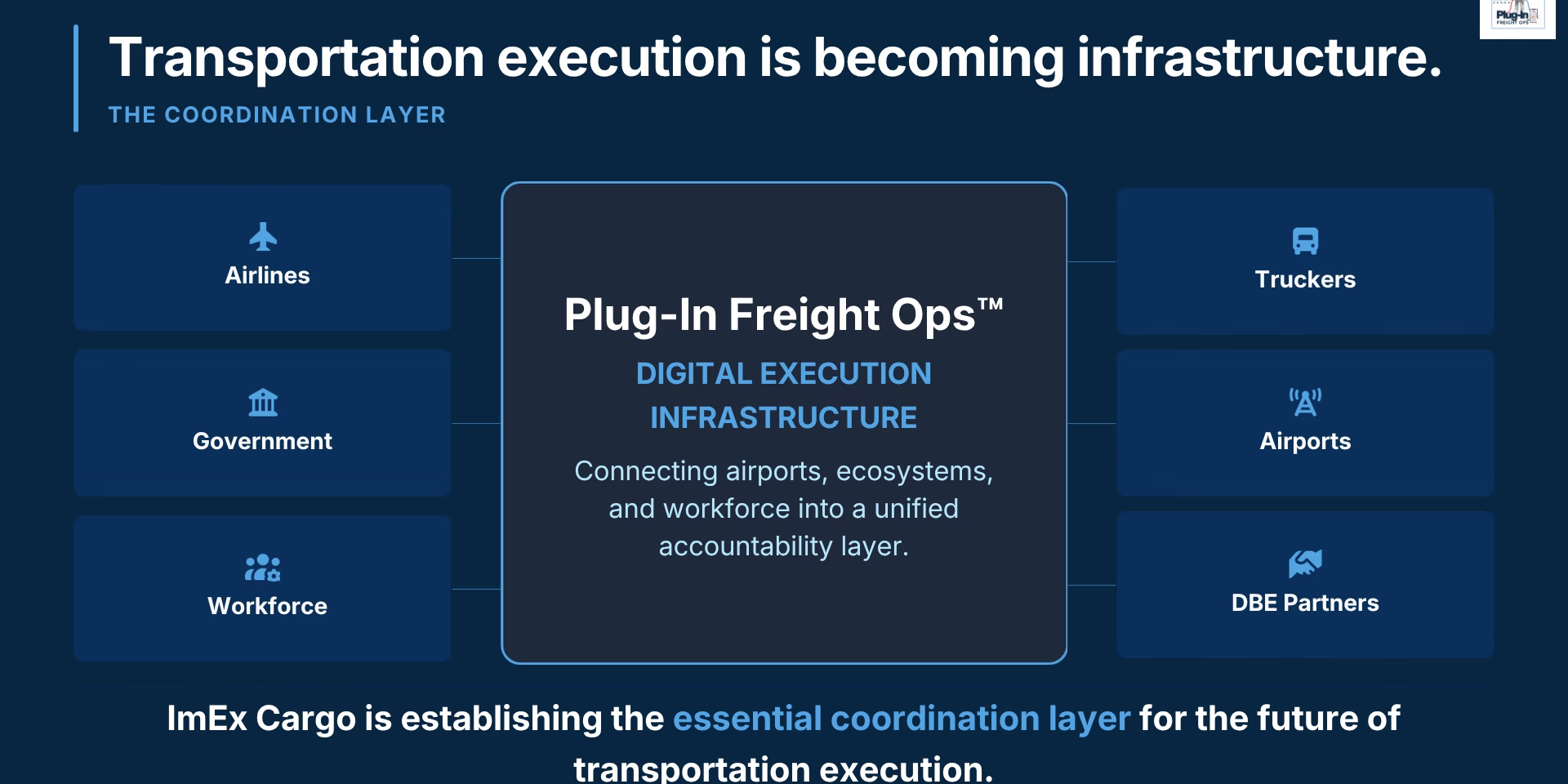
To bridge these gaps, ImEx Cargo utilizes Plug-In Freight Ops™. This digital execution infrastructure layer was designed specifically to coordinate logistics across fragmented, multi-stakeholder environments.
Rather than replacing the systems airlines or forwarders already use, Plug-In Freight Ops™ sits above them. It standardizes execution across the full shipment lifecycle. In a region like New England, where logistics can involve multiple regional airports (BDL, PVD, MHT) and complex trucking routes, this centralized coordination is vital.
The platform provides:
- Structured Handoffs: Every participant in the chain: from the airline to the DBE partner: knows exactly when and how their part of the execution must occur.
- Partner Accountability: Real-time performance tracking ensures that every stakeholder is meeting the agreed-upon standards.
- Audit-Ready Oversight: For prime contractors and federal agencies managing large-scale infrastructure programs, this provides the level of transparency required for compliance and reporting.
Standardization is the only way to move from reactive "firefighting" to proactive air cargo operations management. As we’ve argued before, data standards alone won’t solve your gaps; you need an execution layer that enforces those standards in the real world.

Why Visibility is the New Infrastructure
In the past, "infrastructure" meant warehouses, trucks, and planes. Today, infrastructure is also the data that flows between those physical assets. If you can't see a shipment, you can't manage it. If you can't manage it, you can't improve it.
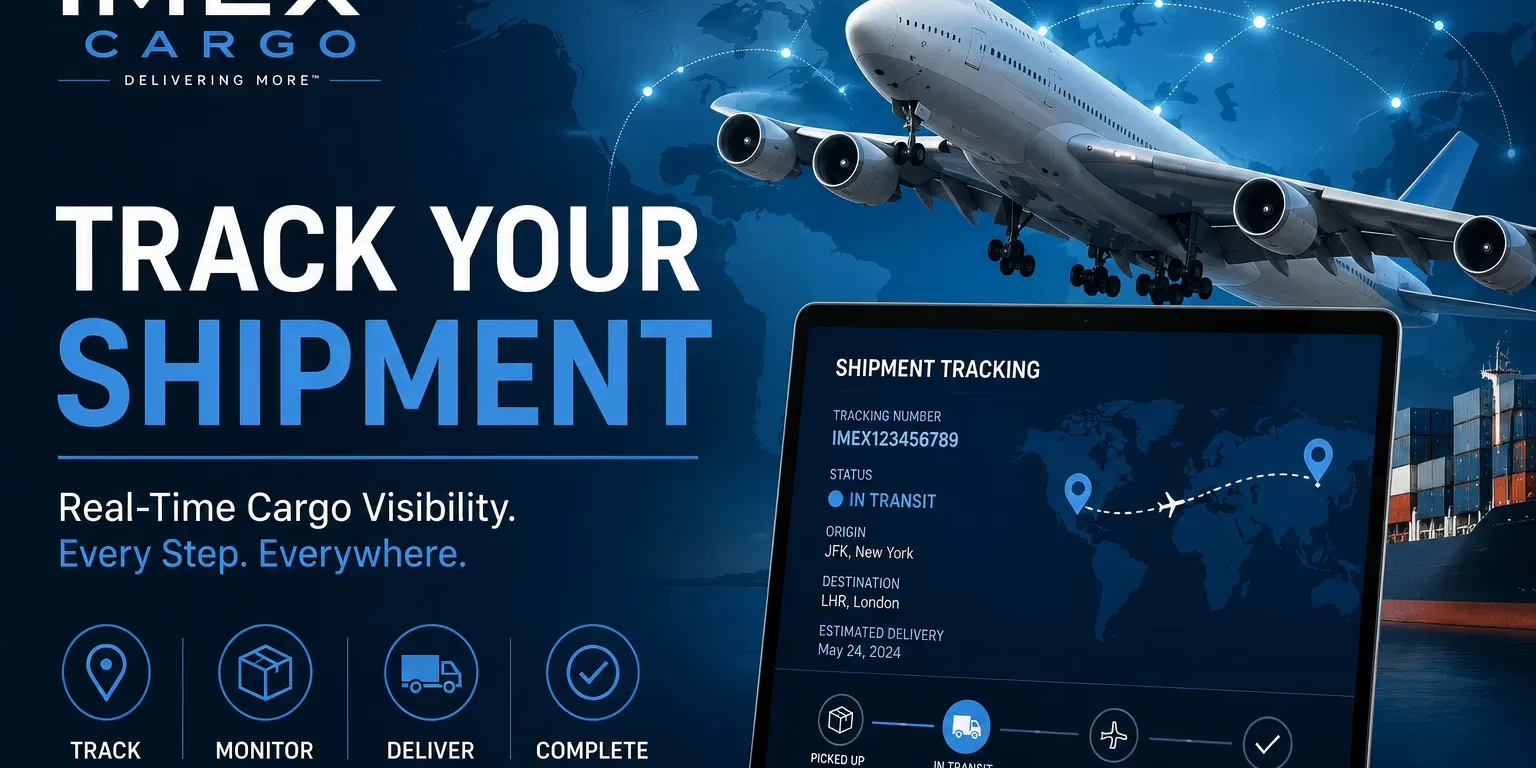
Next-generation GSAs provide visibility as a core service. This isn't just about "tracking numbers"; it’s about execution visibility. It’s knowing that a shipment was delayed at the warehouse because of a specific documentation error, or that a truck is arriving 30 minutes late for a critical cooling window.
This level of detail allows for "exception management": the ability to fix problems before they become catastrophes. For our airline partners, this translates to higher load factors and improved market share. When forwarders know that a specific GSA provides the most reliable execution infrastructure in a region, they prioritize that carrier.

The Future of Cargo Execution Management
The shift toward GSAs as infrastructure providers is not a temporary trend; it is a fundamental restructuring of the industry. As e-commerce continues to drive demand for speed and as specialized sectors like life sciences require more precise handling, the old "sales-only" model will continue to fade.
In Boston and across New England, ImEx Cargo is leading this transition. We are building the infrastructure that allows our partners to focus on their core business while we handle the complexities of regional execution.
By integrating digital coordination with physical logistics expertise, we are ensuring that the next generation of air cargo is more transparent, more accountable, and ultimately more efficient.
Moving Toward a Partnership
The complexity of today's logistics environment requires more than a vendor; it requires an execution partner who understands the high stakes of the tarmac and the digital requirements of the modern supply chain.
We typically address these operational challenges through a focused pilot program or a capability walkthrough. Whether you are an airline looking to scale into the Northeast or a prime contractor managing a complex logistics-driven project, we can map how a digital execution layer can reduce your risk and improve your outcomes.
Ready to see how Plug-In Freight Ops™ would apply in your environment? Request a Pilot to start the conversation.