Logistics execution fails most often at the handoff. Whether it is a pallet moving from a truck to a cargo hold or a data point moving between a GSA and a freight forwarder, the gaps between stakeholders create friction, delay, and unnecessary risk.
But there is a secondary, more systemic handoff that is failing just as frequently: the transition from workforce development to operational execution.
For decades, the logistics industry has approached hiring and training as isolated activities. We recruit, we train, and then we hope the new talent integrates into a fragmented system. In an era of rapid digital transformation and complex global supply chains, "hope" is not a strategy.
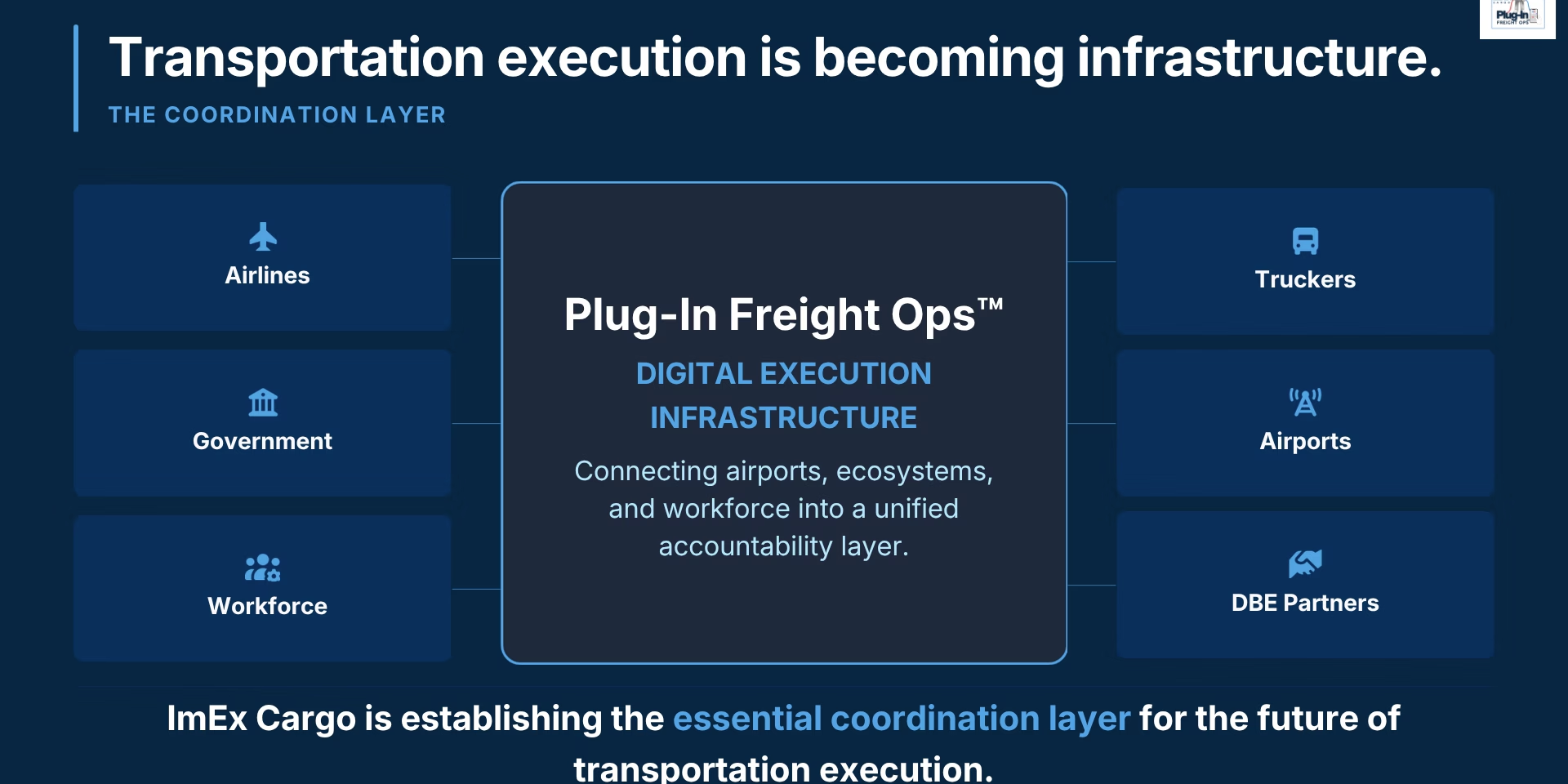
The Workforce Innovation Network (WIN), powered by ImEx Cargo’s Plug-In Freight Ops™, is a practical way to close these gaps. It is not just a training program or a hiring initiative. It is a shared model that helps airlines, cargo operators, schools, and public partners work together more clearly and get better results.
The Invisible Friction in Logistics Execution
The logistics industry still works in silos. Airlines have urgent staffing needs. Schools are trying to prepare students for real jobs. Workers are looking for clear paths into stable careers. Too often, those efforts stay disconnected.
That disconnect leads to:
- Skill Gaps: Students and job seekers are trained on one thing while employers need another.
- Slow Onboarding: Airlines and operators spend too much time closing readiness gaps after hiring.
- Missed Opportunities: Workers, schools, and employers struggle to find each other at the right time.
- Compliance Challenges: It can be hard to track DBE (Disadvantaged Business Enterprise) participation and workforce goals across multiple partners.
We don't need more disconnected programs. We need a simpler way for employers, schools, and talent pipelines to connect around real workforce needs.
WIN: A Better Way to Connect Talent to Opportunity
At ImEx Cargo, we see a simple problem: employers need people who are ready, schools want students to succeed, and workers need clearer paths into real jobs. WIN helps connect those pieces.
The Workforce Innovation Network (WIN) brings together the organizations that need talent and the institutions preparing that talent. Using the Plug-In Freight Ops™ model, WIN creates a clearer path from learning to work so fewer people fall through the cracks. That includes structured Workforce Activation Pilots that help employers and partners test workforce coordination in real operating environments.
Beyond Training: A Practical Workforce Model
Unlike traditional workforce programs, WIN is designed around what happens next. It does not stop at training. It helps connect candidates to real operating environments, real employer expectations, and real opportunities.
- Better Alignment: Training is shaped around the workflows and expectations airlines and cargo operators actually use.
- Smoother Transitions: Schools and workforce partners can move candidates into opportunities with less guesswork and less delay.
- More Confidence for Employers: Airlines, operators, and project partners get better visibility into readiness before day one.

How WIN Creates Better Outcomes for Everyone
WIN works because it creates value for every group involved, not just one side of the hiring equation.
1. Airlines and Cargo Operators
Airlines and GSAs get access to talent that is better aligned with real operational needs. That means less time spent on basic onboarding, fewer readiness gaps, and a more reliable path to staffing critical roles. Through WIN’s Employer Partners model, organizations can engage more directly in shaping readiness and improving execution continuity.
2. Educational Institutions (Universities and Academies)
Schools want students to graduate into real opportunities. Through the Academy and broader Workforce Development Partnerships, WIN helps connect classroom learning to the skills and workflows employers actually expect, making programs more relevant and outcomes easier to demonstrate.
3. Workers and Emerging Talent
Students, job seekers, and career changers gain a clearer path into the industry. Instead of trying to navigate a confusing market on their own, they can connect to employers, understand what is expected, and build toward roles that offer long-term growth through the Academy and connected Workforce Development Partnerships.
4. Government and Public Partners
Public-sector stakeholders need workforce efforts that produce measurable results. WIN makes it easier to align employers, schools, and community partners while also improving visibility into DBE participation and broader workforce goals. This coordination is supported by Workforce Ecosystem Infrastructure that creates stronger oversight across stakeholders.

Economic Opportunity and the DBE Ecosystem
A core part of WIN is creating real access for certified DBE networks. In many logistics projects, DBE participation is treated like a compliance requirement. WIN treats it as an opportunity to build stronger local participation and better long-term outcomes.
By connecting diverse suppliers and workforce partners into a clearer operating model, WIN helps smaller firms participate more effectively and with greater visibility. That creates value for the firms themselves, for prime contractors, and for public agencies looking for real economic impact.
It also makes progress easier to track, so stakeholders can see where participation is happening and how partners are contributing.
A Better Model for Workforce Success
The global supply chain is only as strong as the people behind it. When employers, schools, and workers are better connected, operations become more stable and opportunities become easier to access.
The Workforce Innovation Network (WIN) is designed to support that by:
- Reducing Disconnects: Bringing employers and talent pipelines closer together.
- Improving Readiness: Helping people prepare for the work that actually exists.
- Creating Better Outcomes: Giving airlines stronger talent access, schools stronger placement pathways, and workers stronger career entry points.
As we move forward with this 20-part series, we will dig deeper into these outcomes and show how WIN can support airlines, educators, public agencies, and workforce partners in practical ways.
Join the WIN Network
The future of logistics depends on stronger connections between employers, schools, and workers. Whether you are an airline trying to build a more reliable talent pipeline, an educational institution looking to create better outcomes for students, or a public partner focused on workforce impact, the Workforce Innovation Network is built to help those groups connect and succeed together.
We are currently expanding the network and looking for strategic partners who want a more practical, outcome-focused approach through the Workforce Innovation Network, Workforce Activation Pilots, Employer Partners, Workforce Development Partnerships, and Workforce Ecosystem Infrastructure, including employers, educators, and public entities building stronger execution-linked workforce pathways.
We can walk through how this would apply in your environment. Whether it starts with one employer group, one school partnership, or a focused pilot at an airport hub, WIN is designed to create shared value from the start.
Start a partnership conversation through Workforce Activation Pilots.
Featured News
ImEx Cargo has officially introduced Plug-In Freight Ops™ as Transportation Execution Infrastructure, outlining how the model creates a structured coordination layer across fragmented logistics environments.
Read the official press release here:
ImEx Cargo Introduces Plug-In Freight Ops™ as Transportation Execution Infrastructure