Logistics is easy when the cargo is moving. It’s when it stops that things fall apart.
In multimodal logistics, the "handoff" is the single most dangerous moment for your margin. Whether it’s moving from an airline to a ground handler, or a forwarder to a last-mile trucker, these transition points are where data dies, accountability vanishes, and delays become inevitable.
According to industry data, nearly 62% of logistics providers identify system integration and fragmented coordination as their primary barriers to efficiency. We call this the "Logistics Black Hole": that period where nobody is quite sure who owns the shipment, even though everyone is looking at a "tracking" screen.
If your operations feel like a constant game of telephone, you’re likely making one (or all) of these seven mistakes. Here’s the straight talk on how to fix them.
1. Confusing "Tracking" with "Execution Visibility"
Most operators think if they have a GPS ping or an EDI status update, they have visibility. They don’t. They have a history lesson.
Tracking tells you where the cargo was two hours ago. Execution visibility tells you if the next stakeholder is actually ready to receive it. If your truck is arriving at the terminal but the ground handler hasn't processed the arrival notification, your "tracking" is just watching a train wreck in slow motion.
At ImEx Cargo, we believe visibility without the ability to act is just noise. True execution requires a coordination layer that standardizes these milestones across every partner in the chain.
2. Relying on "Email-Based Handoffs"
If your primary coordination tool is an Outlook inbox, you aren't running a logistics operation; you’re running a massive game of "he-said, she-said."
Emails are where instructions go to die. Important attachments get buried, "Reply All" chains become unmanageable, and critical exceptions are missed because someone was at lunch. Transitioning to a digital execution layer like Plug-In Freight Ops™ moves the conversation out of the inbox and into a structured workflow where every action is logged, time-stamped, and visible to all parties.

3. Ignoring the Coordination Layer Above Your TMS
Many firms spend millions on a Transportation Management System (TMS) only to find their teams still using spreadsheets. Why? Because a TMS is often a silo. It’s great at managing your internal data, but it’s terrible at coordinating with an external airline, a GSA, or a local trucking partner who doesn't use your software.
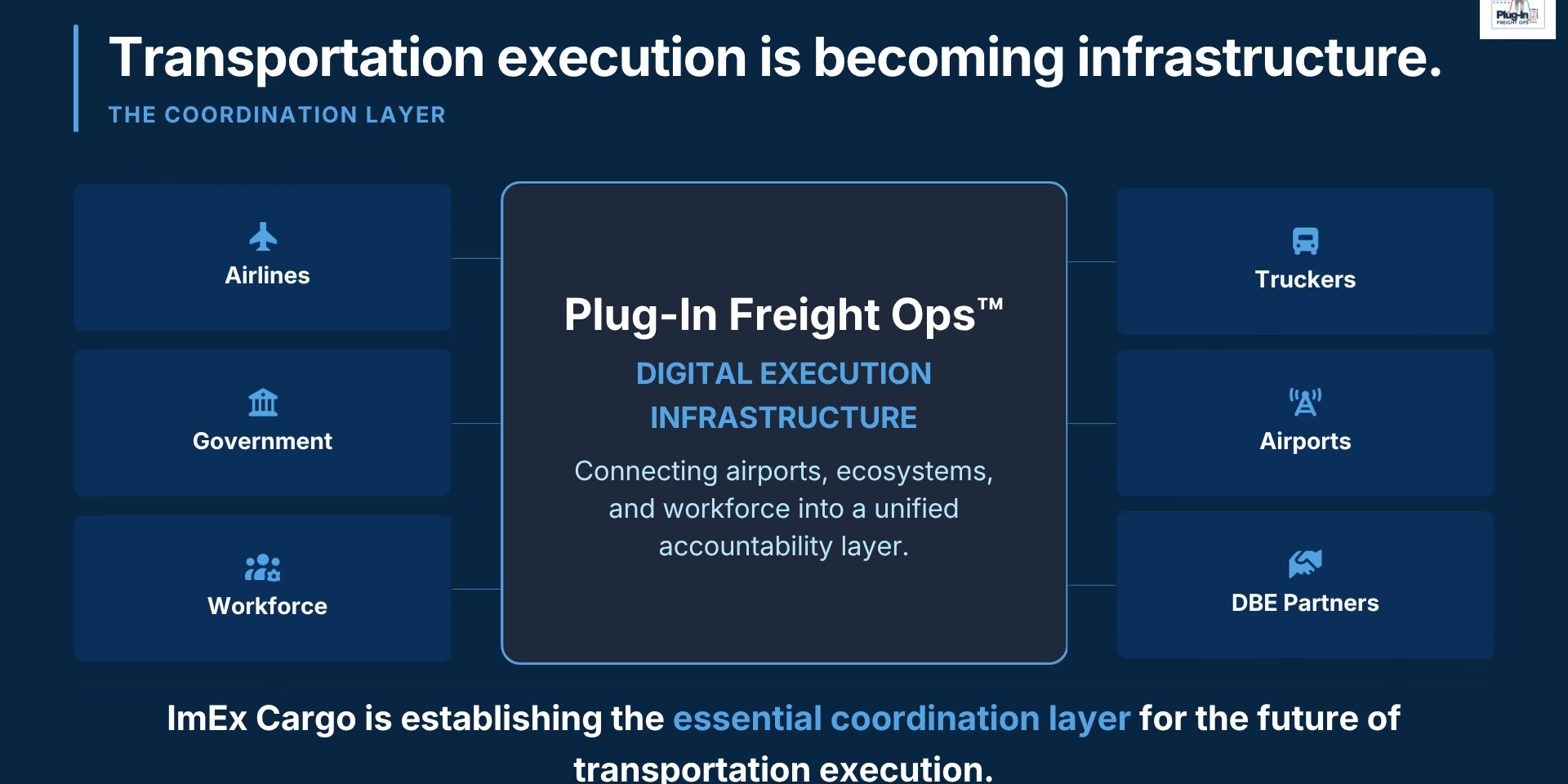
You don't need a new TMS; you need a digital freight infrastructure layer. Plug-In Freight Ops™ sits above your existing systems, connecting fragmented stakeholders into a single coordinated flow without requiring anyone to migrate their data. It’s the "connective tissue" that your TMS is missing.
4. Lack of Assigned Accountability During Transitions
When a shipment is delayed at a hub, who is responsible?
- The carrier who delivered it?
- The warehouse that received it?
- The forwarder who didn't send the paperwork?
Without structured handoffs, everyone points a finger at someone else. Modern execution requires defined ownership at every milestone. By using a platform that requires a digital "handshake" between parties: like the ones we facilitate for Domestic Trucking and air cargo: you eliminate the ambiguity. If the task isn't checked off, the owner is clear.
5. Manual Data Re-entry: The Silent Killer of Speed
Every time a human has to type a Bill of Lading number or a weight into a new system, your risk of error increases by roughly 3%. In a multimodal move with four stakeholders, that’s a 12% chance of a typo that could hold up customs or ground a shipment.
The industry is moving toward standards like IATA ONE Record, which creates a single, API-based shipment record. If you aren't automating the flow of data between your partners, you are paying your team to create mistakes. Digital infrastructure allows you to "plug in" data once and let it flow through the entire lifecycle: from quote to delivery.

6. Missing Real-Time Exception Management
In logistics, things go wrong. Weather happens. Flights get cancelled. Trucks break down. The mistake isn't having the problem: it's finding out about it four hours too late.
Most handoff processes are reactive. You find out there’s an issue when the next stakeholder calls to ask where the cargo is. Proactive exception management uses real-time data to flag delays before they cascade. If the truck hasn't reached the geofence 30 minutes before the cutoff, an automated alert should trigger a re-plan. If your system doesn't scream when a milestone is missed, it isn't helping you.
7. Fragmented Partner Onboarding
You’re only as fast as your slowest partner. If it takes three weeks of paperwork to "onboard" a new DBE trucker or a specialized handler, you can't be agile.
Fragmented onboarding leads to "preferred partner" silos where you keep using the same expensive vendors because it’s too hard to switch. A unified coordination layer allows you to activate a network of certified DBE and diverse suppliers instantly. By standardizing the requirements and the workflow, you can plug in any partner who meets the criteria and get moving immediately.

The Solution: Moving from Fragmentation to Coordination
The "Godmother of Cargo," Michelle DeFronzo, founded ImEx Cargo on a simple principle: Execution is everything. We’ve spent over 30 years in the trenches of airline GSAs, freight forwarding, and infrastructure projects. We know that the technology doesn't matter if it doesn't solve the handoff problem.
Plug-In Freight Ops™ was built to be the execution layer the industry was missing. It doesn't replace your systems; it fixes the gaps between them.
- Quote: Standardize how you receive and compare rates.
- Book: Lock in capacity with automated documentation.
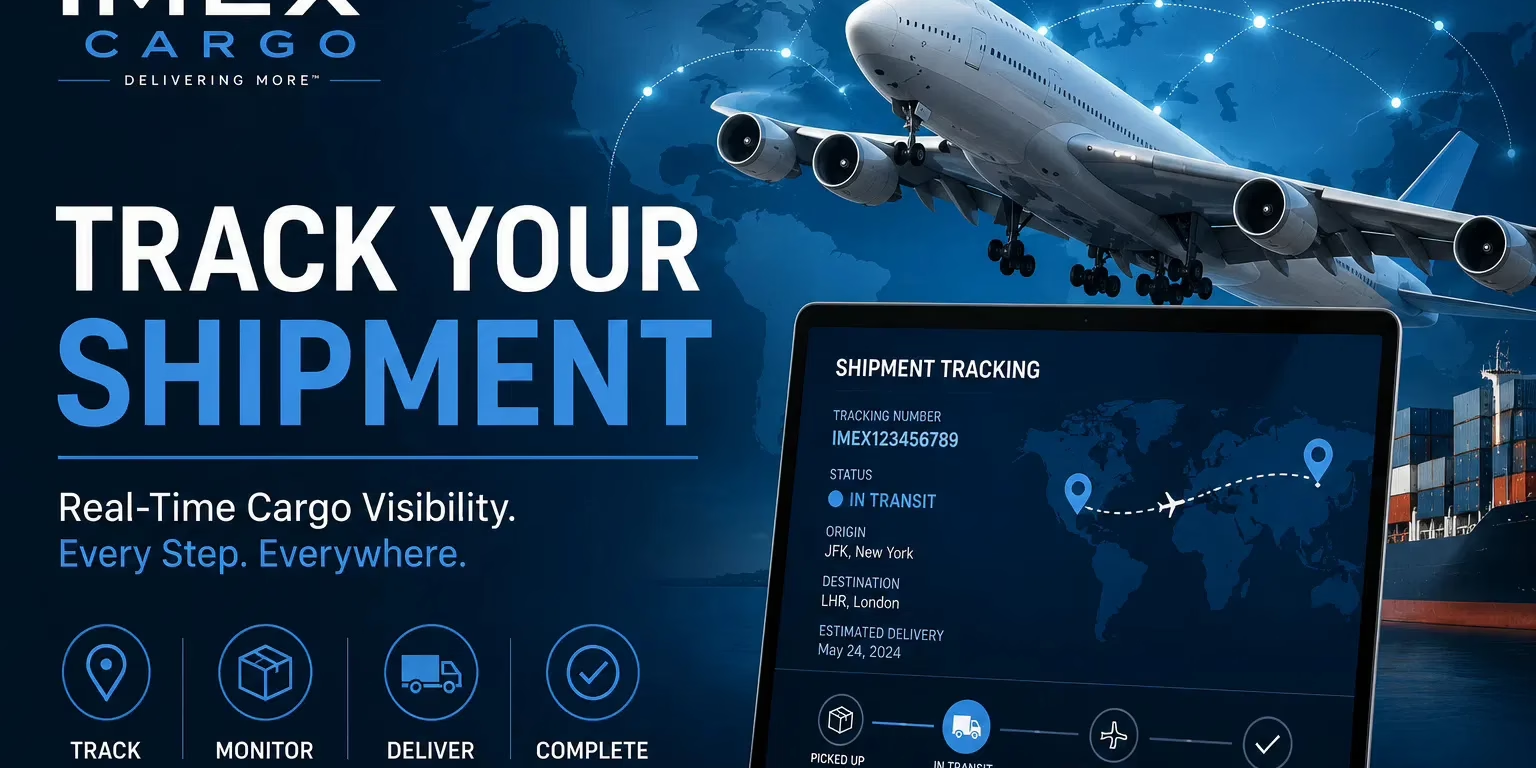
- Track: Real-time visibility that actually tells you the status of the execution.
- Coordinate: Bring airlines, truckers, and government stakeholders into one accountable workflow.
Is Your Operation Ready for Modern Execution?
Stop watching the black hole eat your margins. Whether you are an airline managing capacity or a prime contractor overseeing a massive infrastructure project, the mistakes above are costing you time and money.
We typically address these challenges through a focused 90 day pilot program designed to map your current environment and demonstrate measurable improvement in execution speed and accountability.
Ready to see how this applies to your operation?
Connect with our team for a capability walkthrough or to discuss a pilot deployment. Let’s stop "tracking" your problems and start executing your solutions.