Where does logistics execution break down? It rarely happens within a single company’s four walls. It happens in the "white space" between them.
The modern logistics landscape is not a linear chain; it is a sprawling, fragmented ecosystem. When a high-priority shipment moves from an airline to a ground handler, then to a trucker, and finally to a prime contractor, information is often lost in the handoffs. Phone calls, disparate spreadsheets, and disconnected legacy systems create a "visibility gap" that leads to delays, increased risk, and skyrocketing operational costs.
At ImEx Cargo, we’ve shifted the narrative. The challenge isn't just seeing where your freight is: it’s coordinating the execution of its movement across every stakeholder.
Enter the Plug-In Freight Ops™ execution layer. This isn't another SaaS tool meant to replace your current systems; it is the digital infrastructure that sits above them, standardizing workflows and unifying the entire ecosystem into a single coordinated flow.
The Fragmented Reality vs. The Connected Ecosystem
Most organizations rely on "visibility" platforms. They tell you that your cargo is late, but they don't give you the tools to prevent the delay in the first place. This is the difference between observation and execution.
To solve for execution, you must first map the ecosystem. You need to understand how every stakeholder: from the government agency providing the oversight to the academy training the workforce: interacts with the shipment lifecycle.

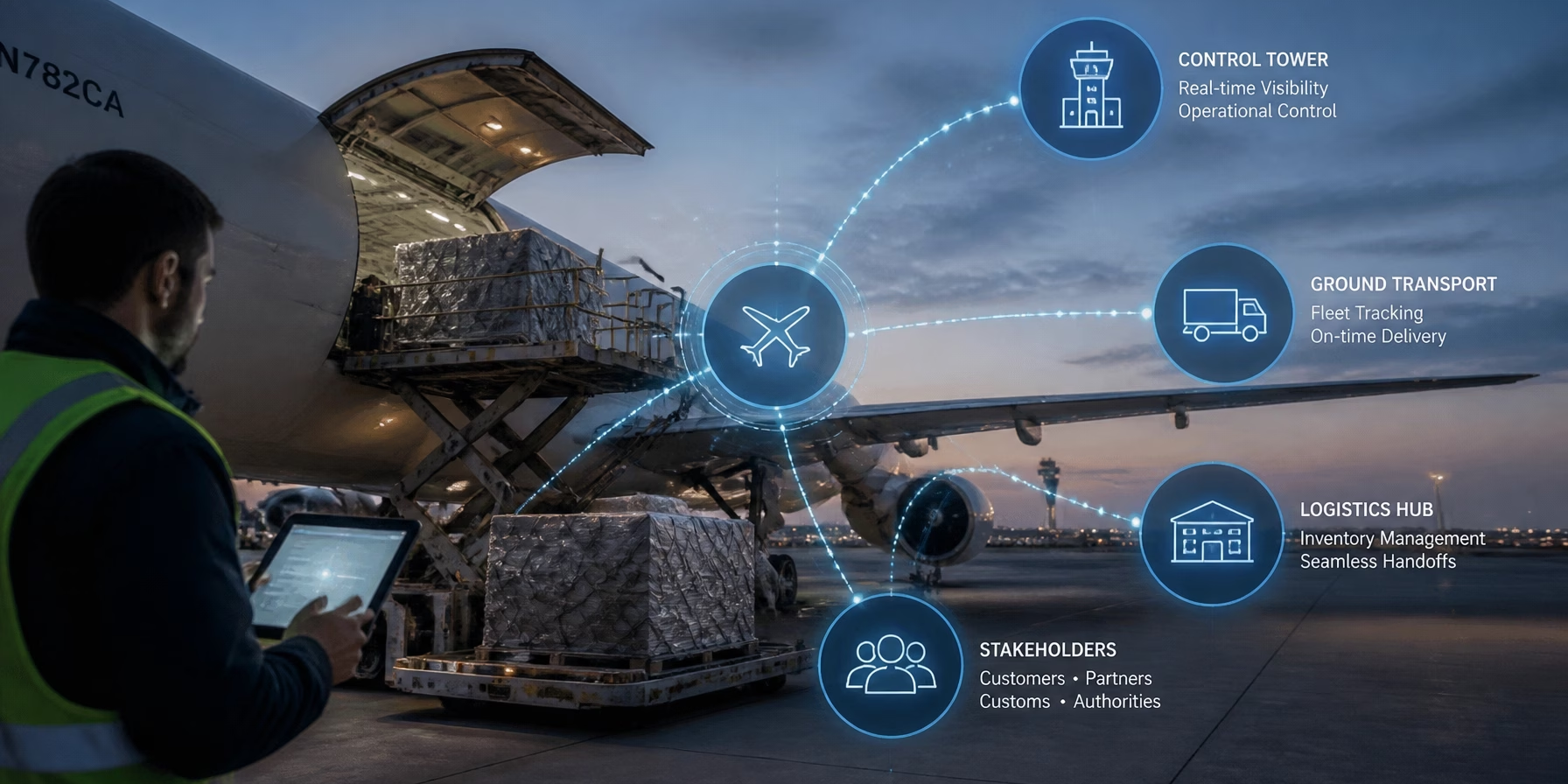
The Plug-In Freight Ops™ Ecosystem Map: A unified execution layer connecting every critical stakeholder.
Mapping the Stakeholders: Who Plugs In?
The strength of an execution layer is determined by the breadth of the network it can coordinate. For Plug-In Freight Ops™, we’ve identified nine core stakeholders that must be synchronized to achieve true operational excellence.
1. Airlines and GSAs
Airlines and General Sales Agents (GSAs) are the backbone of international trade. However, they often struggle with manual booking processes and fragmented communication with ground handlers. By plugging into a unified execution layer, airlines gain real-time visibility into capacity and booking status, ensuring that every kilo of space is optimized.
2. Airports and Transportation Hubs
Airports are the physical "nodes" of the ecosystem. Coordinating the flow of trucks, handlers, and aircraft requires more than just a schedule; it requires structured handoffs. A centralized execution layer allows airport authorities to monitor throughput and reduce congestion by standardizing how data is shared across the tarmac.
3. Ground Handlers
The handoff between the aircraft and the warehouse is one of the most critical points of failure. Handlers need clear, structured instructions and real-time updates to ensure that freight moves quickly and accurately. Plug-In Freight Ops™ provides the digital execution layer that ensures handoffs are audited and accountable.

4. Trucking Providers
The "last mile" or "first mile" is where the digital world meets the physical road. Trucking providers often operate in silos. By integrating them into the broader ecosystem, we ensure that the trucker knows exactly when the cargo is ready for pickup: eliminating dry runs and waiting time.
5. Prime Contractors and Infrastructure Firms
For large-scale infrastructure projects, logistics is the pulse of the program. Prime contractors need more than a tracking number; they need an audit-ready oversight system. They need to know that every component of their project: from raw materials to specialized equipment: is moving according to the project timeline.
6. Government Agencies
Federal, state, and municipal agencies have unique requirements, particularly concerning compliance and economic impact. Whether it’s managing transportation programs or ensuring CUI (Controlled Unclassified Information) compliance, the execution layer provides the structured data needed for government oversight.
7. DBE (Disadvantaged Business Enterprises)
Diversity in the supply chain is often treated as a checkbox. In our ecosystem, it is built into the infrastructure. Our DBE partner portal allows prime contractors to activate certified diverse suppliers in real-time, meeting compliance and economic impact objectives within the same system used for logistics execution.
8. Workforce Development & Academies
Logistics execution is only as good as the people behind it. By connecting training institutions and workforce pipelines directly into the ecosystem, we ensure a steady flow of talent that is trained on the very systems they will use in the field. This "workforce-to-execution" pipeline is a critical differentiator for modern infrastructure programs.
9. Technology and Academy Partners
We don’t work in a vacuum. We partner with technology leaders and academic institutions to ensure our infrastructure is always evolving. Whether it’s implementing ONE Record data standards or integrating smarter payment solutions, the ecosystem is built to scale.
Moving Beyond Visibility to Digital Execution
When these nine stakeholders are connected through Plug-In Freight Ops™, the results are transformative. We move from a world of "where is my shipment?" to a world of "how is our project executing?"
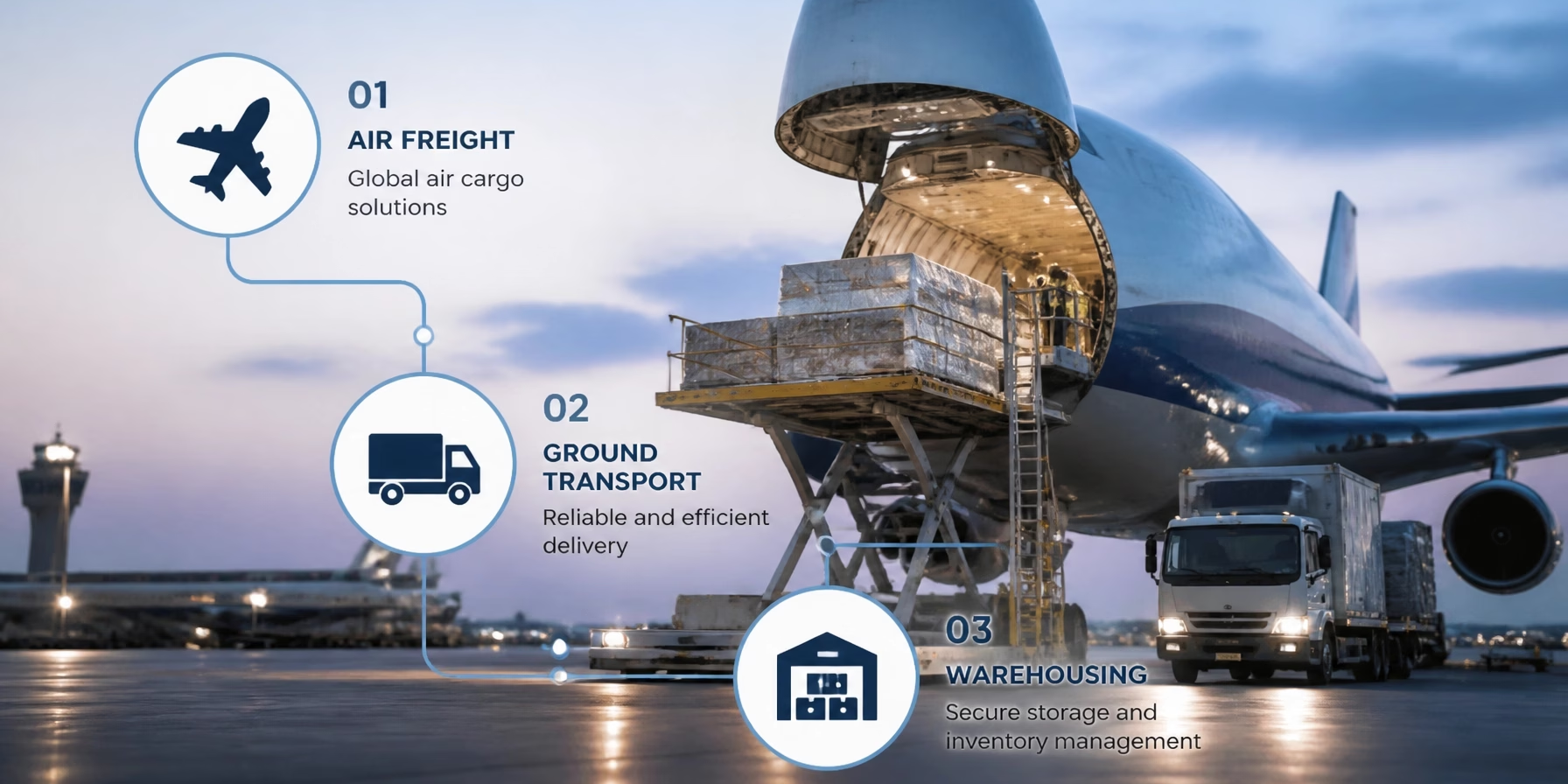
The platform manages the full lifecycle: from quote to booking to tracking and delivery. It creates a standardized workflow that reduces fragmentation and improves execution speed.

The Plug-In Freight Ops™ dashboard provides the control tower view needed for multi-party coordination.
The Key Benefits of the Execution Layer:
- Structured Hoffs: No more lost emails or missed calls. Every transition between stakeholders is documented and tracked.
- Partner Accountability: With real-time performance tracking, you can see exactly where the bottlenecks are occurring and address them with data, not guesswork.
- Audit-Ready Oversight: For highly regulated industries, having a single source of truth for every movement is not just a luxury: it’s a requirement.
- Ecosystem Activation: Quickly bring on new partners, DBEs, or trucking providers and have them "plug in" to your existing workflows instantly.
The Strategic Alignment: Why Now?
The logistics industry is reaching a tipping point. Legacy systems are reaching their limits, and the complexity of global infrastructure projects is increasing. Relying on fragmented systems is a risk that most organizations can no longer afford to take.
The "Connected Ecosystem" is not a future concept; it is a current reality for those using Plug-In Freight Ops™. It represents a shift toward a more resilient, accountable, and efficient way of moving goods and executing projects.

Let’s Map Your Environment
Every logistics environment has its own unique set of stakeholders and challenges. The first step toward better execution is mapping that ecosystem and identifying where the handoffs are failing.
At ImEx Cargo, we typically address these challenges through a focused pilot. We work with you to identify a specific lane or project where coordination is breaking down and demonstrate how an execution layer can restore control.
Are you ready to move beyond simple visibility?
We can walk through how this ecosystem map would apply specifically to your operation. Let’s start a conversation about a capability walkthrough or a targeted pilot to see the Plug-In Freight Ops™ layer in action.
Contact ImEx Cargo today to learn more about activating your logistics execution layer.