In the world of high-stakes logistics: where you're moving critical infrastructure parts, government-bound cargo, or sensitive tech: a handshake used to be the gold standard. It meant you were trusted. It meant your word was your bond.
But in 2026, a handshake is just the beginning.
Today, trust is built on data. More specifically, it’s built on how you protect that data. If you’re working with prime contractors, federal agencies, or large-scale infrastructure projects, being a "good partner" isn't just about showing up on time. It’s about proving that your digital house is in order.
Welcome to Part 6 of our WIN (Workforce Infrastructure Network) series. Today, we’re peeling back the curtain on two technical terms that are becoming the lifeblood of secure logistics: CUI Compliance and Data Residue.
Don’t let the jargon scare you off. At its core, this is about one thing: being the safest, most reliable partner in the ecosystem.
What Exactly is CUI (and Why Should You Care)?
If you’ve spent any time around government contracts, you’ve heard of "Classified" information. But there’s a massive middle ground called CUI: Controlled Unclassified Information.
Think of CUI as the "sensitive-but-not-secret" category. In logistics, this isn’t James Bond stuff. It’s practical, operational data that could cause real headaches if it fell into the wrong hands. We’re talking about:
- Shipment Manifests: Knowing exactly what is on a truck heading to a military base or a power plant.
- Routing & GPS Data: The specific timing and path of sensitive equipment.
- HAZMAT Details: Information on hazardous materials that require special handling and security.
- Load Plans: How equipment is positioned for troop transport or emergency response.
When you handle this data, you aren’t just a truck driver or a freight forwarder; you are a custodian of information. This is why agencies now require compliance with standards like NIST 800-171 or CMMC.
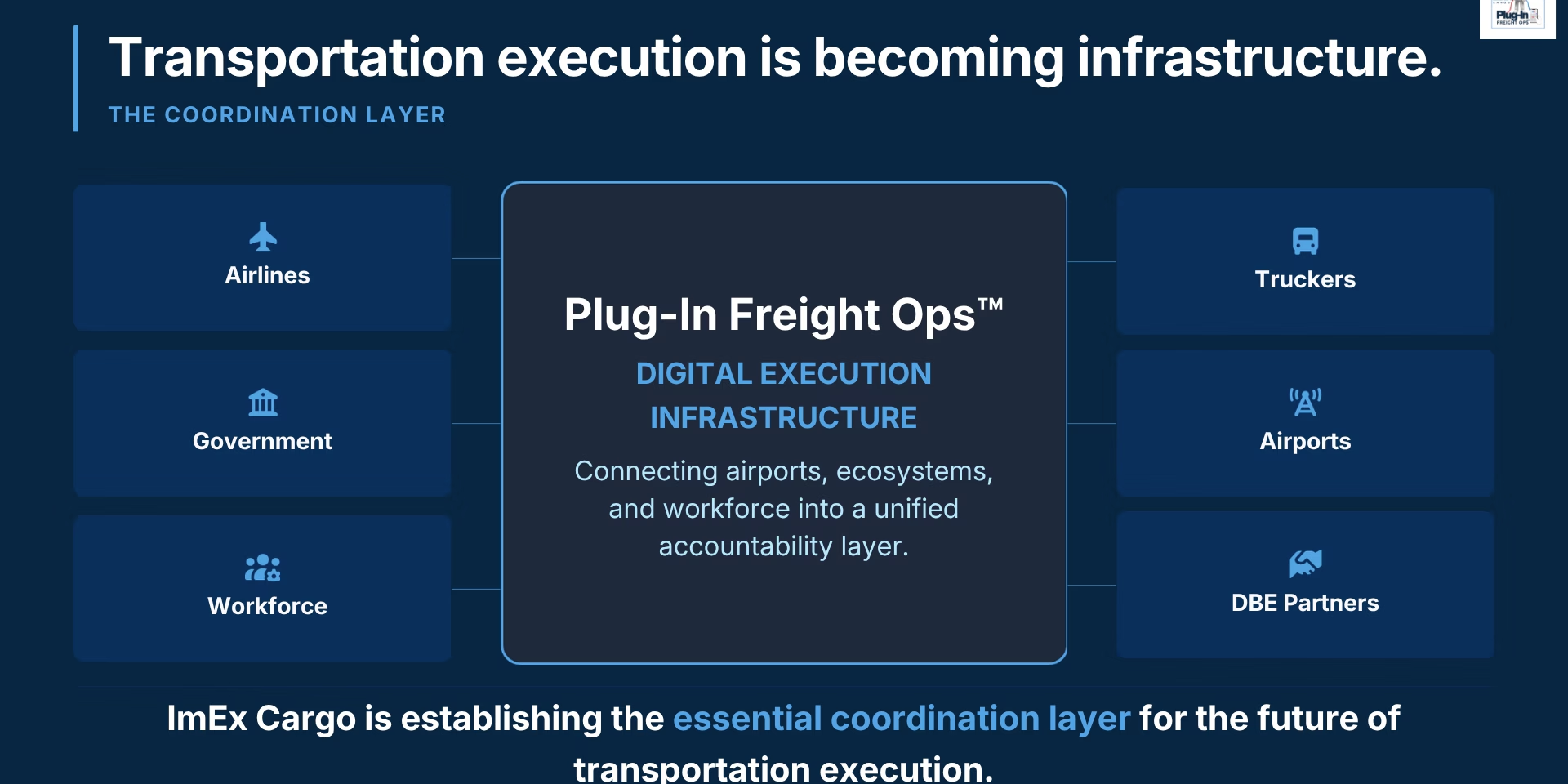
At ImEx Cargo, we designed Plug-In Freight Ops™ to sit as a digital execution layer that standardizes how this information is handled across the entire shipment lifecycle. It moves the conversation from "I think we're secure" to "Here is the proof."

The Ghost in the Machine: Understanding Data Residue
Here is where it gets interesting: and where most logistics providers trip up.
Imagine you finish a delivery. You sign off, the truck is empty, and the job is done. Physically, the cargo is gone. But digitally? There’s a "ghost" left behind.
Data Residue is the digital footprint that remains in your systems after a transaction is complete. It lives in:
- System Logs: Records of who logged in and when.
- Temp Files: Cached data on your server or mobile device.
- Backups: Snapshots of your database taken three days ago.
- Message Queues: The behind-the-scenes "chat" between your tracking app and your driver’s phone.
If these digital crumbs aren't managed, they become a vulnerability. For a prime contractor, a logistics partner who leaves "data residue" floating around is a liability.
Being a "safe" partner means having a plan for sanitization. You need to know not just how to store data, but how to destroy it when the mission is over.
Why Audit Trails Are the New "Thank You" Note
In complex logistics, things happen. Flights get delayed. Routes change. Packages go missing.
In a standard environment, you spend hours on the phone trying to figure out where the breakdown happened. In a secure, compliant environment, you look at the audit trail.
An audit trail isn't just a list of events; it's an accountability map. It tells a story:
- Who accessed the manifest?
- When was the routing changed?
- Which stakeholder approved the handoff?
This level of execution accountability is what separates the amateurs from the pros. When you can provide a tamper-evident log of every move, you aren't just a vendor: you’re a trusted infrastructure partner.

Positioning Yourself as a "Safe" Partner
If you’re a small-to-medium-sized logistics firm or a DBE (Disadvantaged Business Enterprise), compliance can feel like a mountain. But here’s the secret: Prime contractors are looking for partners who make their lives easier.
When a Prime contractor takes on a billion-dollar infrastructure project, they are responsible for the security of their entire supply chain. If they have to spend six months training you on how to handle CUI, they might just find someone else.
However, if you can say, "We operate within a secure digital execution layer that handles our audit trails and data sanitization automatically," you just became their favorite partner.
This is exactly what the WIN (Workforce Infrastructure Network) is designed to do. We bridge the gap between local talent/small businesses and the massive requirements of global infrastructure projects.
Compliance is a Credential, Not a Chore
At ImEx Cargo, we see compliance as a competitive advantage. We’ve put in the work to secure the right credentials: like our Massachusetts Non-Gaming Vendor Registration: because it proves we understand how to operate in regulated environments.

Whether it’s air cargo, trucking, or multi-party project execution, the goal is always ecosystem execution. This means everyone: from the airline to the DBE trucker: is moving in sync, protected by the same high standards of security.
The Road Ahead: Why Secure Coordination Wins
The future of logistics isn't just about moving boxes faster. It’s about moving them smarter and safer.
As we continue this WIN series, remember that every step we take toward better workforce development and digital infrastructure is grounded in security. You can't have a reliable workforce if you don't have a secure environment for them to work in.
Key Takeaways for Your Next Project:
- Identify the CUI: Know which parts of your data are sensitive before you start.
- Clean the Residue: Ensure your IT systems aren't holding onto "ghost" data.
- Automate the Trail: Use platforms like Plug-In Freight Ops™ to handle the logging for you.
- Lead with Security: Make your compliance part of your pitch to prime contractors.

Ready to elevate your execution?
If you’re managing complex logistics and find that coordination is breaking down: or if you’re worried about meeting the security demands of a new contract: we should talk.
We typically address these challenges through a focused pilot program where we map Plug-In Freight Ops™ directly to your current operation.
Let’s walk through how this would apply in your environment.