Most logistics companies will tell you exactly what they do.
They’ll talk about their fleet size, their routes, or their latest tracking app. But very few can tell you why they actually exist. In an industry that’s been around since the first steamship, the "why" usually gets buried under a mountain of paperwork.
For me, it’s different. I didn’t build ImEx Cargo because I wanted to move more boxes. I built it because I spent decades watching capable, hardworking people fail because the system they were working in was fundamentally broken.
The industry’s "dirty secret" isn’t a lack of technology. It’s fragmentation. It’s the 200-email shipment chains, the invisible handoffs, and the reactive chaos that everyone has just accepted as "normal."
I’m here to tell you: It shouldn’t be normal.
The Villain: The 200-Email Chain

If you’ve spent any time in logistics execution, you know this scene.
A critical shipment is delayed. You open your inbox, and there it is: a thread with 42 recipients, 12 attachments, and three different time zones. Somewhere in that digital haystack is the one piece of information you need to keep the cargo moving.
But nobody can find it.
The airline blames the GSA. The GSA blames the trucker. The trucker is waiting for a gate that doesn’t know they’re coming. Everyone is operating in a silo. They aren’t lazy; they’re just disconnected.
This is the "villain" of our story: Fragmentation. It’s the gap between the quote, the booking, and the actual execution where money, time, and trust go to die.
The Narrative: A Founder’s Journey
Every great shift starts with a realization. Here is how we got from "moving freight" to "building the bridge."
Once upon a time…
There was a woman working inside the global cargo industry long before "digital transformation" was a buzzword. That woman was me. I worked the phones. I handled the midnight crises. I managed airlines, solved border delays, and built relationships that others couldn't. I lived in the trenches of operational reality.
Every day…
I watched the same problem repeat itself across aviation, trucking, and government logistics. Too many systems. Too many emails. Too many disconnected players.
Shipments moved, but coordination broke. Critical info lived in inboxes. Partners operated blind. Teams reacted instead of executing together. The industry kept buying more software, but the execution stayed fragmented. We were adding more "apps" to a broken foundation.
One day…
I stopped asking: "How do we move more freight?"
And I started asking: "Why is nobody coordinating the ecosystem itself?"
I realized that we didn’t need another freight portal or a better spreadsheet. We needed a connective layer. We needed a way to standardize execution across the full lifecycle: from the first quote to the final delivery: regardless of which systems each partner was using.
Because of that…
I began building something different. Not another freight platform. Not another marketplace. Not a tool that competes with its users.
I built Plug-In Freight Ops™.
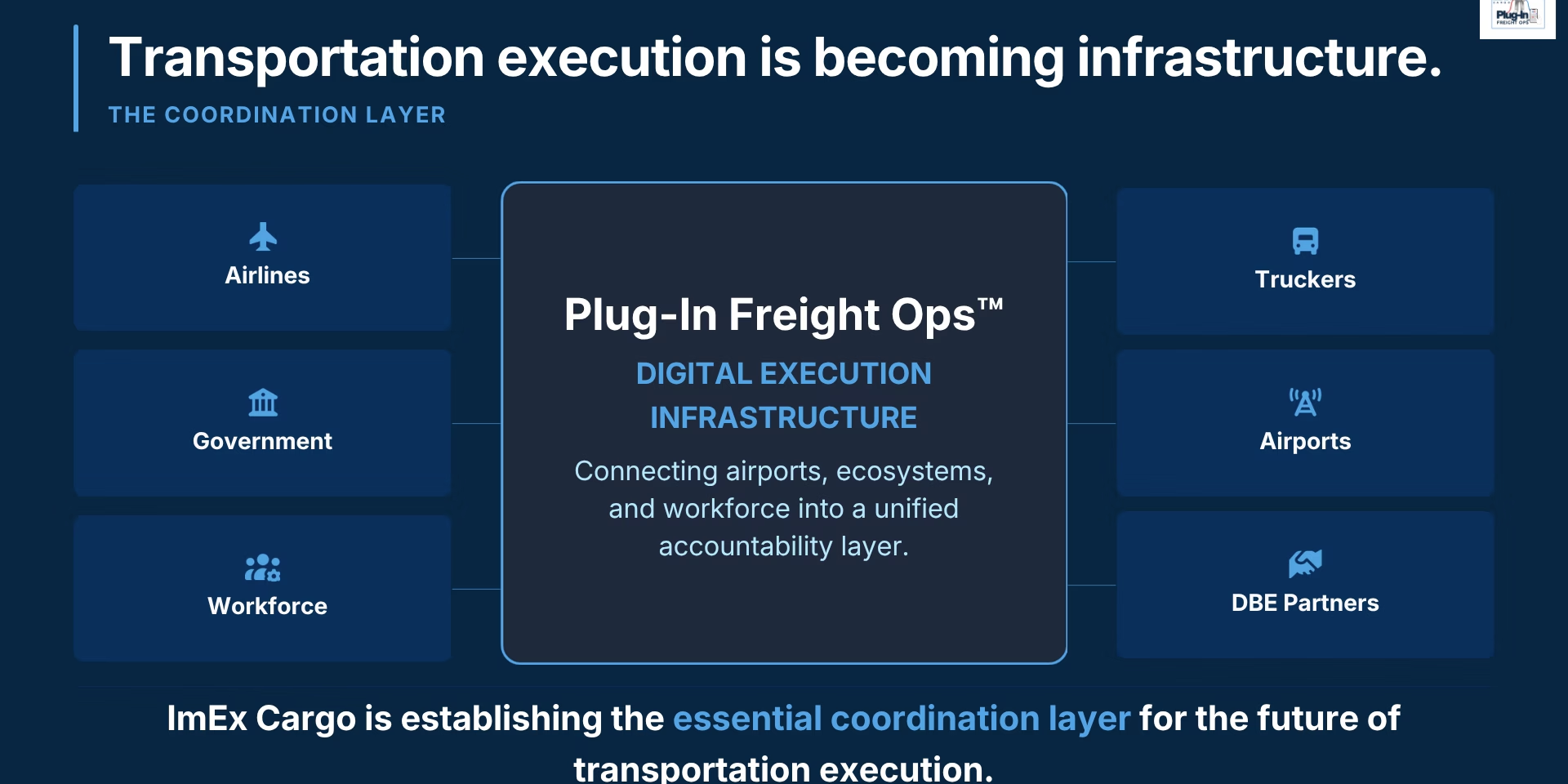
It was designed as a digital execution infrastructure layer: what I call "Layer 4." It sits above fragmented systems and connects the people, partners, and workflows that are already there.
Until finally…
The same experience that once made me "just another logistics operator" became the foundation for an infrastructure capable of modernizing how fragmented cargo ecosystems actually work.
Today, ImEx Cargo isn't just a forwarding company. We are the connective layer between the people already moving the world.
Why We Built "Layer 4"

Michelle DeFronzo, Founder of ImEx Cargo, focused on ecosystem coordination.
When we talk about Plug-In Freight Ops™, we aren’t talking about "logistics software." We are talking about Execution Coordination.
Most tech in this space tries to replace what you already have. They want you to "rip and replace" your legacy systems. That’s a recipe for disaster in complex environments like airport authorities, federal agencies, or prime contractors.
Our approach is different. We don't replace; we coordinate.
1. Workflow Standardization (Quote → Book → Track)
Execution fails at the handoffs. By standardizing the workflow across all stakeholders: airlines, truckers, and government agencies: we ensure that every partner is held to the same standard of accountability.
2. Ecosystem Activation (The DBE Advantage)
We’ve built-in a way to activate partner ecosystems, including certified DBE networks. This isn’t just about compliance; it’s about making sure every participant in the chain has the visibility they need to succeed. When the small players win, the whole project moves faster.
3. Real-Time Accountability
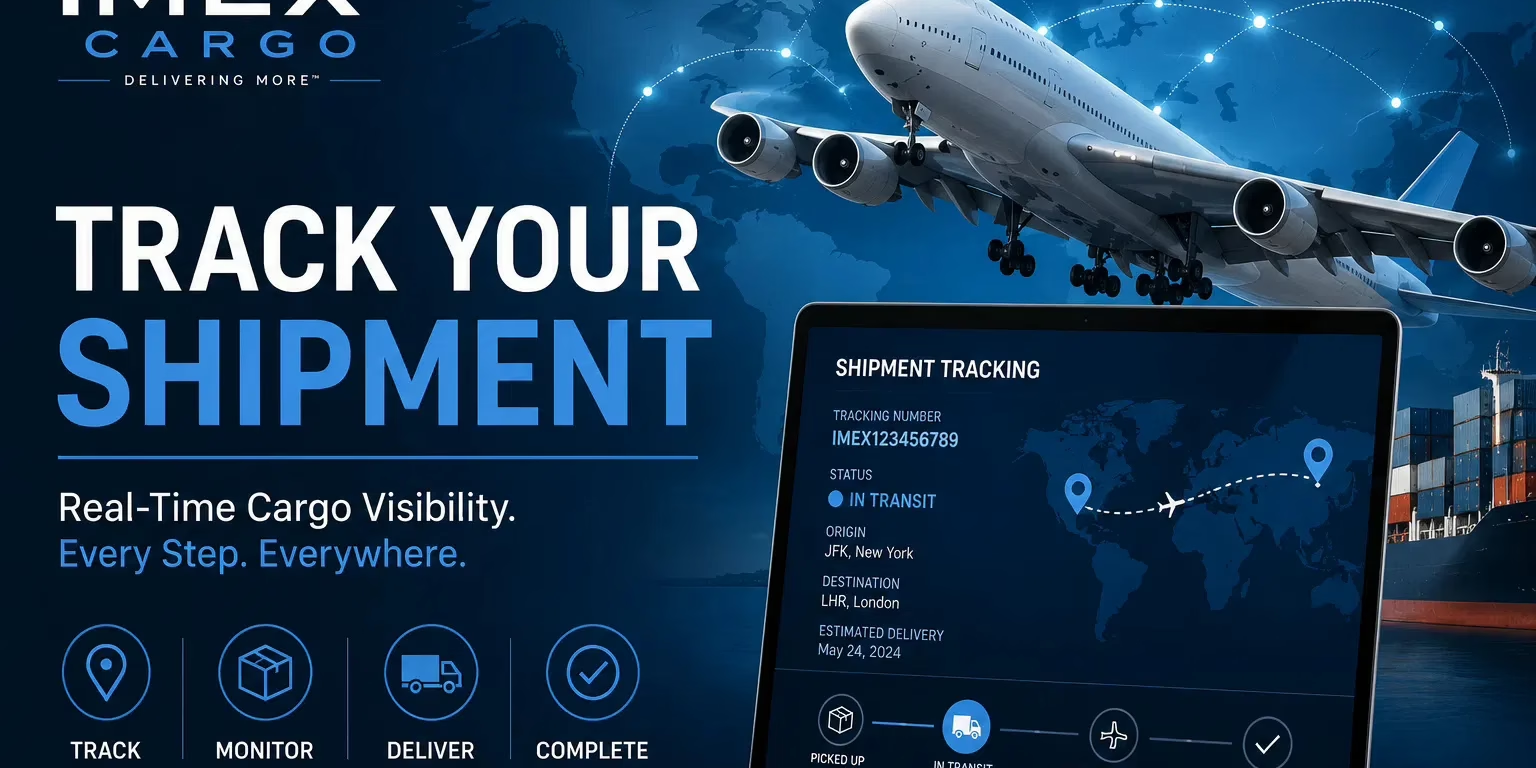
Visibility is worthless if it isn't actionable. Our platform provides structured handoffs. When a truck arrives at a terminal, the terminal knows. When an airline confirms capacity, the forwarder sees it. No more "where is my stuff?" emails.
The Execution Layer in Action

The Plug-In Freight Ops™ dashboard: Turning chaos into coordinated execution.
What does this look like in the real world?
Imagine a large-scale infrastructure project involving twenty different trucking companies, three airlines, and a dozen government stakeholders. Normally, this is a coordination nightmare.
With Plug-In Freight Ops™, it looks like this:
- Centralized Control: One digital layer where all stakeholders see the same truth.
- Audit-Ready Oversight: Every movement, every delay, and every handoff is logged and tracked.
- Reduced Risk: We identify bottlenecks before they become 200-email chains.
We’ve taken 30 years of operational pain and turned it into a system that removes the friction from freight. We aren’t just helping you ship; we’re helping you execute.
Stop Normalizing Chaos
The market is currently saturated with AI claims and generic "visibility" dashboards. But very few can credibly say: "I built this because I survived the operational fragmentation myself for 30 years."
That is our moat. We know why things break because we’ve fixed them at 2:00 AM on a Saturday.
If you are a prime contractor, an airport authority, or a logistics leader who is tired of losing money in the gaps between your stakeholders, it’s time to stop looking for another "app" and start looking for a coordination layer.
We typically address these challenges through a focused pilot program where we map our infrastructure to your specific operational environment.
Let’s move past the chaos.
Click here to learn more about Plug-In Freight Ops™ or reach out to start a conversation about how we can coordinate your ecosystem. We are happy to map this directly to your current operation.
Written by Michelle DeFronzo, Founder & CEO of ImEx Cargo.