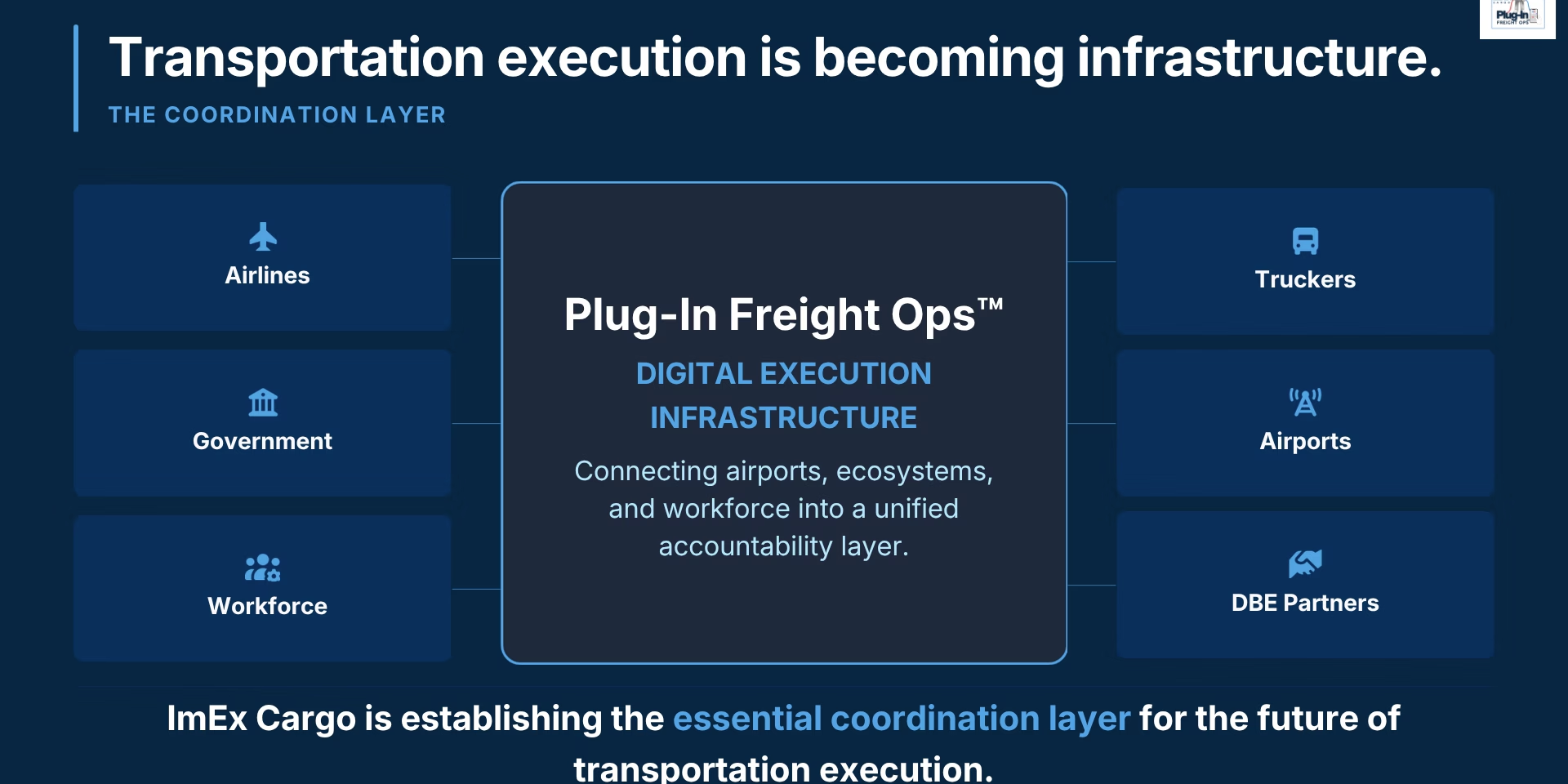
Execution breaks down in the gaps between stakeholders. In the world of complex logistics: where a single shipment might touch an airline, a GSA, a trucking provider, and a government agency: the "talent gap" is often a polite way of describing a lack of coordinated workflow.
Traditional logistics training focuses on the "how-to" of moving a box. But in today’s environment, the challenge isn't just the movement of goods; it’s the management of information and the accountability of the handoff. To solve this, we must move beyond traditional job placement and toward execution placement.
At ImEx Cargo, we are bridging this divide by merging workforce development with a digital freight infrastructure designed for real-world complexity. Through the ImEx Cargo Academy and our Plug-In Freight Ops™ platform, we are building a pipeline of talent that doesn’t just fill a seat: they own the workflow.
The Talent Gap is Actually an Execution Gap
When logistics managers say they can’t find "good people," what they usually mean is they can’t find people who can step into a fragmented environment and immediately bring order to it.
Most logistics roles are taught as "tribal knowledge." A new coordinator spends months learning the idiosyncratic ways a specific company handles a cargo execution management process. If that person leaves, the knowledge leaves with them, and the operation stumbles.
This fragmentation is costly. It leads to:
- Delayed Quotes: Losing business before the shipment even starts.
- Visibility Black Holes: Not knowing where a shipment is during critical handoffs.
- Compliance Risks: Especially in government logistics and infrastructure support.
We believe the solution is to standardize the execution layer so that the workforce can be trained to a high-performance, digital-first standard from day one.
The ImEx Cargo Academy: Training Built for Action

The ImEx Cargo Academy was born from 30+ years of operational reality. We realized that to power the next generation of logistics, we couldn't rely on theory-based education. We needed a workforce-ready model that connects training directly to the tools of the trade.
Our curriculum focuses on transportation workflow visibility and the core pillars of the shipment lifecycle:
- Standardized Quoting: Moving from "estimates" to precise, data-driven quoting.
- Booking Execution: Managing capacity and stakeholder accountability.
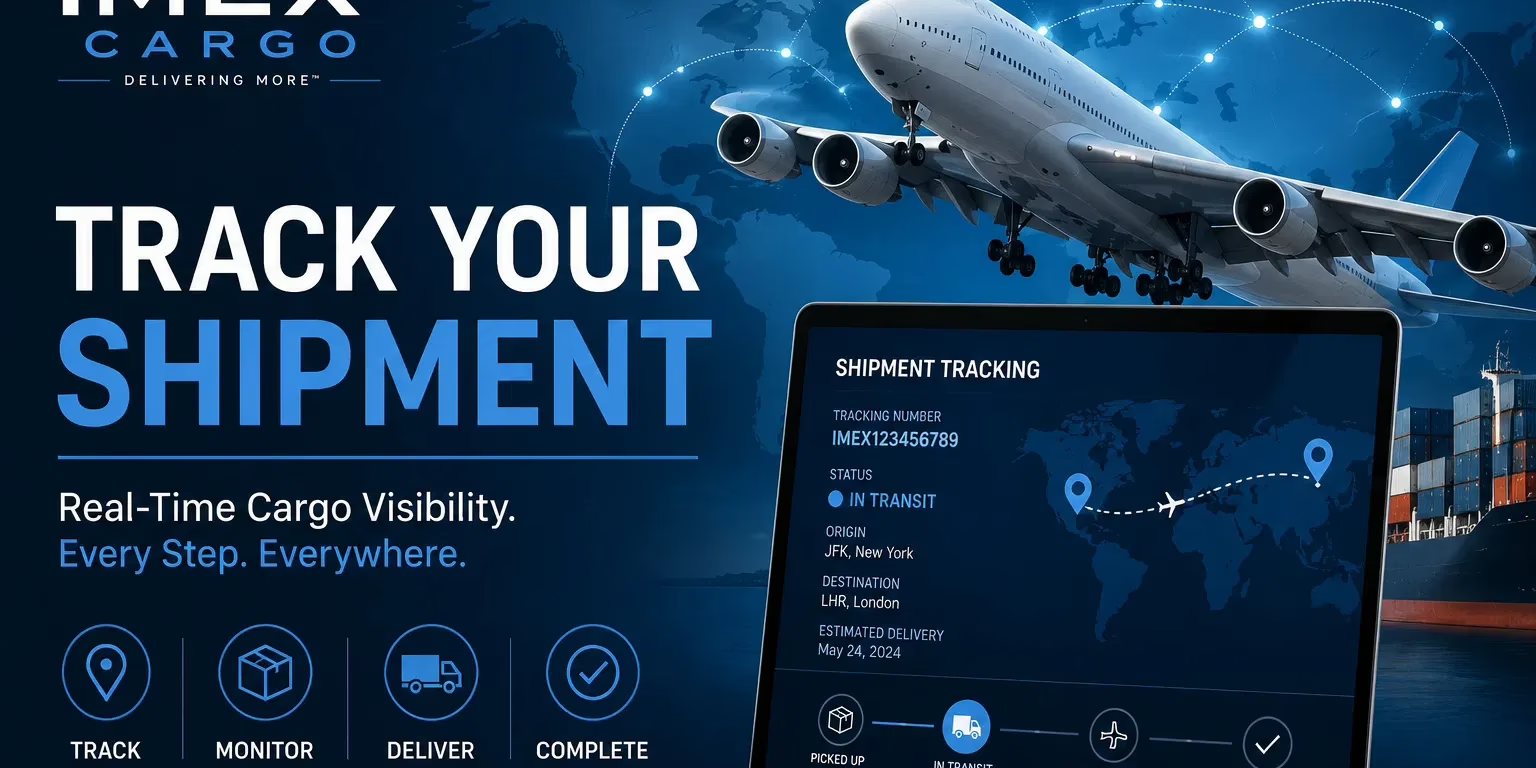
- Real-Time Tracking: Using digital tools to maintain an audit-ready trail of every movement.
By utilizing programs like the Massachusetts Workforce Training Fund Express, we help organizations upskill their current teams or onboard new talent using a "plug-and-play" methodology. We aren't just teaching logistics; we are teaching the digital coordination required to manage multi-party logistics projects.
Plug-In Freight Ops™: The Infrastructure of Coordination

If the Academy provides the "skilled players," Plug-In Freight Ops™ provides the "playbook" and the "stadium."
This platform isn't just another piece of software; it is a digital execution infrastructure layer. It sits above existing fragmented systems to coordinate logistics across airlines, freight forwarders, and trucking providers into a single, structured workflow.
Why Digital Infrastructure Matters for Workforce Strategy
When you have a standardized digital layer, the "talent gap" shrinks. Why? Because the system codifies the best practices.
- Standardized Handoffs: The system dictates when and how a shipment moves from one party to another.
- Built-in Accountability: Every stakeholder is measured against the same performance tracking.
- Visibility for All: From the prime contractor to the small DBE trucking firm, everyone sees the same truth.
This allows us to take a "Digital-First" approach to workforce strategy. We train the workforce on the platform, and the platform guides the workforce through the execution.
Powering Large-Scale Infrastructure and Government Programs

For prime contractors and government agencies, the stakes of the talent gap are even higher. Large-scale infrastructure projects require massive coordination and often mandate the participation of diverse (DBE/WBE) suppliers.
The challenge is often "readiness." A small, diverse supplier may have the trucks and the expertise, but they may lack the digital infrastructure or the trained staff to meet the strict reporting and visibility requirements of a federal project.
Our model solves this by:
- Activating Partner Ecosystems: We provide the digital layer that small suppliers can "plug into," instantly giving them enterprise-level visibility and reporting capabilities.
- Building the Pipeline: Through the Academy, we ensure these suppliers have access to trained coordinators who understand the specific requirements of government-driven logistics.
- Reducing Risk: For the prime contractor, this means a more reliable, audit-ready supply chain that meets both operational and compliance objectives.
This is how we move from "meeting a quota" to "executing a program." We are building the human and digital infrastructure that allows more stakeholders to participate in complex logistics safely and efficiently.
The Human Element in a Digital World

Despite the emphasis on digital infrastructure, the "human element" remains the most critical component of logistics. Digital tools don't move freight; people do.
The goal of our digital-first workforce strategy isn't to replace humans: it's to empower them. By automating the repetitive, manual tasks of tracking and documentation, we free up logistics professionals to focus on strategic problem-solving.
When a flight is delayed or a road is closed, a trained coordinator with high-level visibility can make an informed decision in minutes rather than hours. That is the power of combining a skilled workforce with a robust digital execution layer.
Moving Toward Execution Excellence
The logistics industry is at a crossroads. We can continue to fight over a shrinking pool of "experienced" talent, or we can build a new infrastructure that makes excellence a repeatable process.
At ImEx Cargo, we are choosing the latter. We are creating a world where:
- Workforce development is an integrated part of the supply chain.
- Digital freight infrastructure provides the visibility needed for accountability.
- Cargo execution management is a standardized, professional discipline.
Whether you are a prime contractor looking to de-risk your next project, an airline looking to coordinate your GSA network, or an organization looking to upskill your logistics team, we are ready to help.
Let’s Move the Conversation Forward
Explore the Workforce Innovation Network to see how our Academy model and Plug-In Freight Ops™ platform can transform your results.