Growing up in East Boston, you learn three things early: the value of a hard day’s work, the importance of family, and how to spot a "mess" from a mile away. My Sicilian heritage didn't just give me a love for a good espresso; it gave me a relentless drive for order.
When I started at Eastern Airlines, I was moving people. Later, in banking, I was moving capital. But when I founded ImEx Cargo, I realized the world was trying to move millions of tons of freight through a system held together by nothing but sheer willpower and 200-email chains.
For 30 years, I’ve watched the industry try to solve "logistics" by throwing more software at it. More tracking. More visibility. Yet, the chaos remains. That’s because we don’t have a shipping problem: we have an execution problem.
Today, I’m rewriting the rulebook on how we coordinate cargo.
The Invisible Chaos: The 200-Email Chain
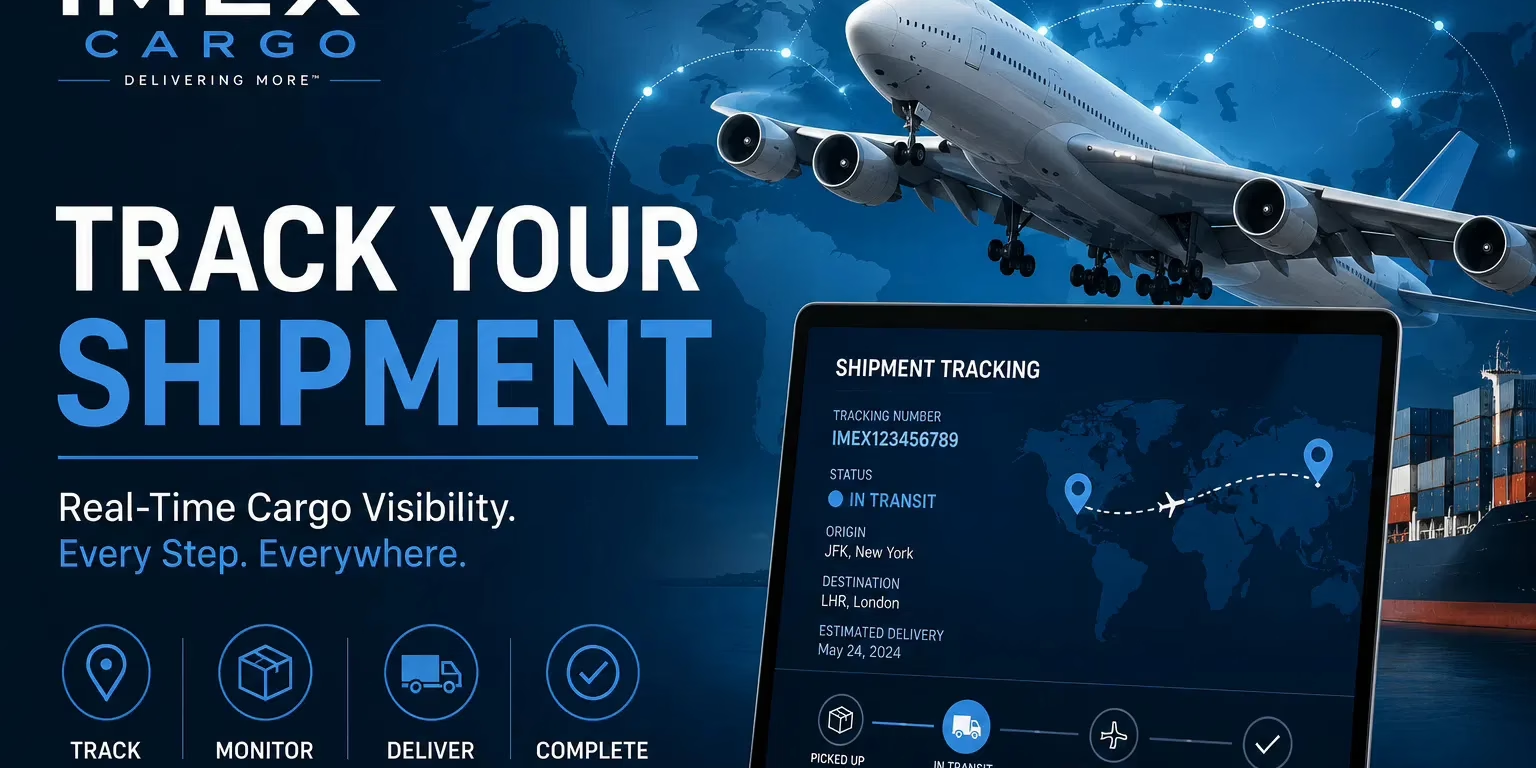
We’ve all been there. You have a critical shipment: maybe it’s high-value medical equipment or mission-critical machinery. You check your visibility tool, and it says the cargo is "In Transit."
But the truck is late to the terminal. The airline has a weight restriction. The GSA is waiting for a confirmation that’s buried in an inbox. Suddenly, that "In Transit" status is a lie.

This is the Logistics Execution Gap. It’s the space between what your systems see and what your organization can actually do about it in real-time.
In the early days of ImEx Cargo, I lived in that gap. I saw how fragmented systems: OMS, WMS, and TMS: worked perfectly in their own silos but failed miserably at the "seams." When a handoff happens between a forwarder, a trucker, and an airline, the data breaks. The accountability vanishes. And the firefighting begins.
The Banking Pivot: Moving Value, Not Just Boxes
Before I became the "Godmother of Cargo," I spent time in commercial banking at Bank of New England. That experience changed everything. In banking, you don't just "move money." You manage a ledger. Every transaction has a beginning, a middle, and an end. There is a clear, audit-ready trail of accountability.
I realized that logistics execution management should work exactly the same way.
A shipment isn’t just a box; it’s a series of contractual obligations and performance milestones. When I looked at the industry, I saw we were lacking a "Digital Ledger" for coordination. We had plenty of ways to move the box, but no way to manage the execution of the move across multiple stakeholders.
The Shift to Digital Freight Infrastructure
In 2020, the world changed. When AirBridgeCargo's U.S. operations ceased, we lost a major revenue stream overnight. It was a "pivot or perish" moment.
I didn't want to be just another airline GSA or a freight forwarding company. I wanted to build the digital freight infrastructure that I wished existed for the last three decades.
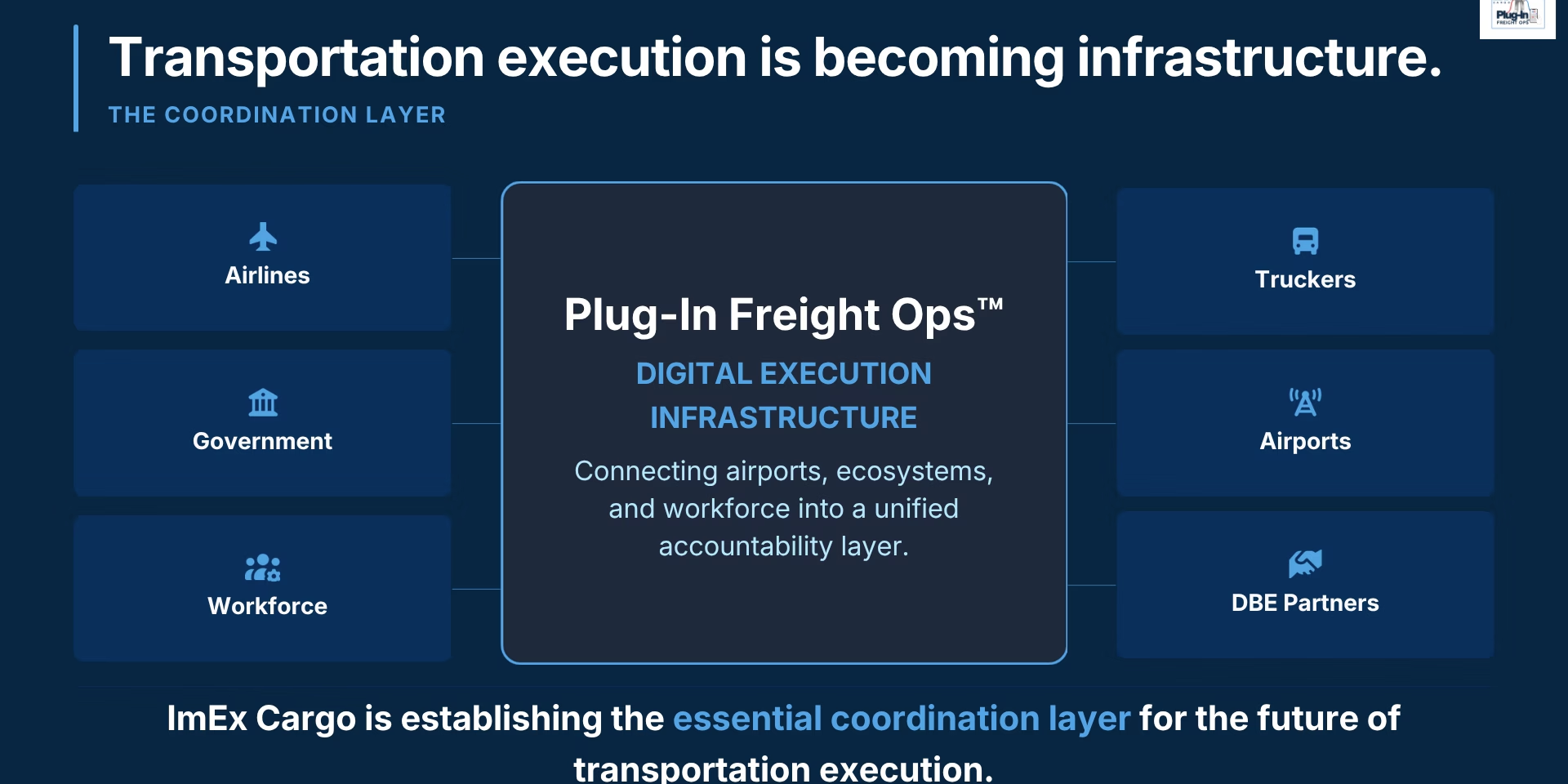
We stopped focusing on moving freight and started focusing on Plug-In Freight Ops™.

This isn't another TMS designed to replace what you have. It’s a connective operational layer that sits above your existing systems. It standardizes and manages execution across the full shipment lifecycle: from quote to booking to tracking and delivery.
How We Close the Gap:
- Workflow Standardization: We take the "quote → book → track" flow and turn it into a structured, digital process. No more manual quotes buried in inboxes.
- Multi-Party Coordination: We connect airlines, GSAs, freight forwarders, and trucking providers into a single coordinated workflow.
- Execution Accountability: If a handoff is missed, the system knows. We don't just show you where the cargo is; we show you who is responsible for the next move.
- Audit-Ready Oversight: For our government and infrastructure partners, we provide the level of transparency and compliance that traditional systems simply can't touch.
Why "Built by Cargo People" Matters
The biggest mistake tech companies make is building software for people they’ve never met, doing jobs they don’t understand.
Plug-In Freight Ops™ wasn't built in a Silicon Valley basement. It was built on the tarmac at Logan Airport. It was built through the experience of managing thousands of tons of freight and navigating the complex world of DBE and diverse supplier networks.
We understand that logistics isn't just code; it's people. It's the driver waiting at the gate. It's the agent managing capacity. It's the project manager trying to meet a government mandate.

That’s why we also launched the ImEx Cargo Academy. We aren't just giving people a platform; we are training the next generation of logistics professionals to operate within this new, coordinated reality. We are bridging the gap between talent and technology.
The Rulebook Has Changed
The era of "hope-based logistics": hoping the email was seen, hoping the truck arrives, hoping the data is right: is over.
True transportation workflow visibility requires more than a GPS dot on a map. It requires a system of execution that enforces accountability at every turn.
Whether you are an airline managing capacity or a prime contractor overseeing a massive infrastructure project, the problem is the same: fragmentation kills performance.
At ImEx Cargo, we’ve built the "Plug-In" that makes the whole machine work. We aren't just moving boxes; we’re moving the industry forward.
Let’s Map Your Execution
Are you tired of the 200-email chain? Are you ready to see what real cargo execution management looks like in your environment?
We typically address these challenges through a focused pilot program or a capability walkthrough.
Request a Freight Quote or Contact Us Today to see how we can plug into your operation and close the execution gap for good.