When a veteran dispatcher or a senior logistics agent hands in their resignation, most organizations focus on the immediate vacancy. They look at the "seat" that needs filling and the salary that needs replacing.
But in the complex world of air cargo, freight forwarding, and infrastructure logistics, the person isn't the biggest loss.
The real loss is the "tribal knowledge" they take with them.
In logistics, tribal knowledge is the undocumented expertise that keeps operations moving. It’s the "who to call" at a specific port when a container is stuck. It’s the understanding of which airline actually hits its tight delivery windows and which routing guides have "silent" exceptions.
When this knowledge lives only in someone’s head, your business is one resignation away from an operational crisis.
The Multi-Million Dollar Risk of "Individual Heroics"
We often celebrate the "hero" in the warehouse or the office who fixes every problem and knows every shortcut. But relying on individual heroics is a fundamental risk to execution resilience.
Recent industry studies show that the cost of losing a key logistics employee goes far beyond a recruiter's fee. For specialized roles, the replacement cost can reach 150% to 200% of their annual salary when you factor in ramp-up time and lost productivity.
In a documented case study of an aerospace manufacturer, the loss of a single retiring expert led to $2.3 million in losses over just four months due to errors, delays, and a significant drop in customer volume. The cost to have captured that knowledge beforehand? Roughly $10,000.
That is an ROI of over 22,000% for organizations that choose to institutionalize their workflows rather than siloing them. This is where Workforce Ecosystem Infrastructure becomes operationally important: it helps institutionalize knowledge so execution standards, handoff logic, and partner coordination do not disappear when individuals leave.
What Tribal Knowledge Looks Like in Logistics
If you are an airline executive, a GSA, or a prime contractor managing high-stakes infrastructure projects, tribal knowledge likely dictates your daily success. It shows up in:
- Routing Logic: Knowing that a specific lane is prone to "black hole" delays during certain months.
- Carrier Relationships: Having the personal cell number of a terminal manager who can expedite a critical shipment, and relying on informal partner relationships instead of structured, scalable coordination across Employer Partners.
- Compliance & Documentation: Understanding the nuances of government freight requirements that aren't written in any manual.
- Exception Management: Knowing how to "work" a fragmented multi-party handoff when the standard system fails.
When knowledge is undocumented, operations become a "black box." Decisions cannot be audited, improved, or replicated. You aren’t building a scalable business; you’re managing a collection of individual experts.

From "People-Dependent" to "Platform-Resilient"
At ImEx Cargo, we’ve lived this problem for decades. We’ve seen the frustration when a key account manager leaves and the new hire spends six months just trying to figure out "how we’ve always done it."
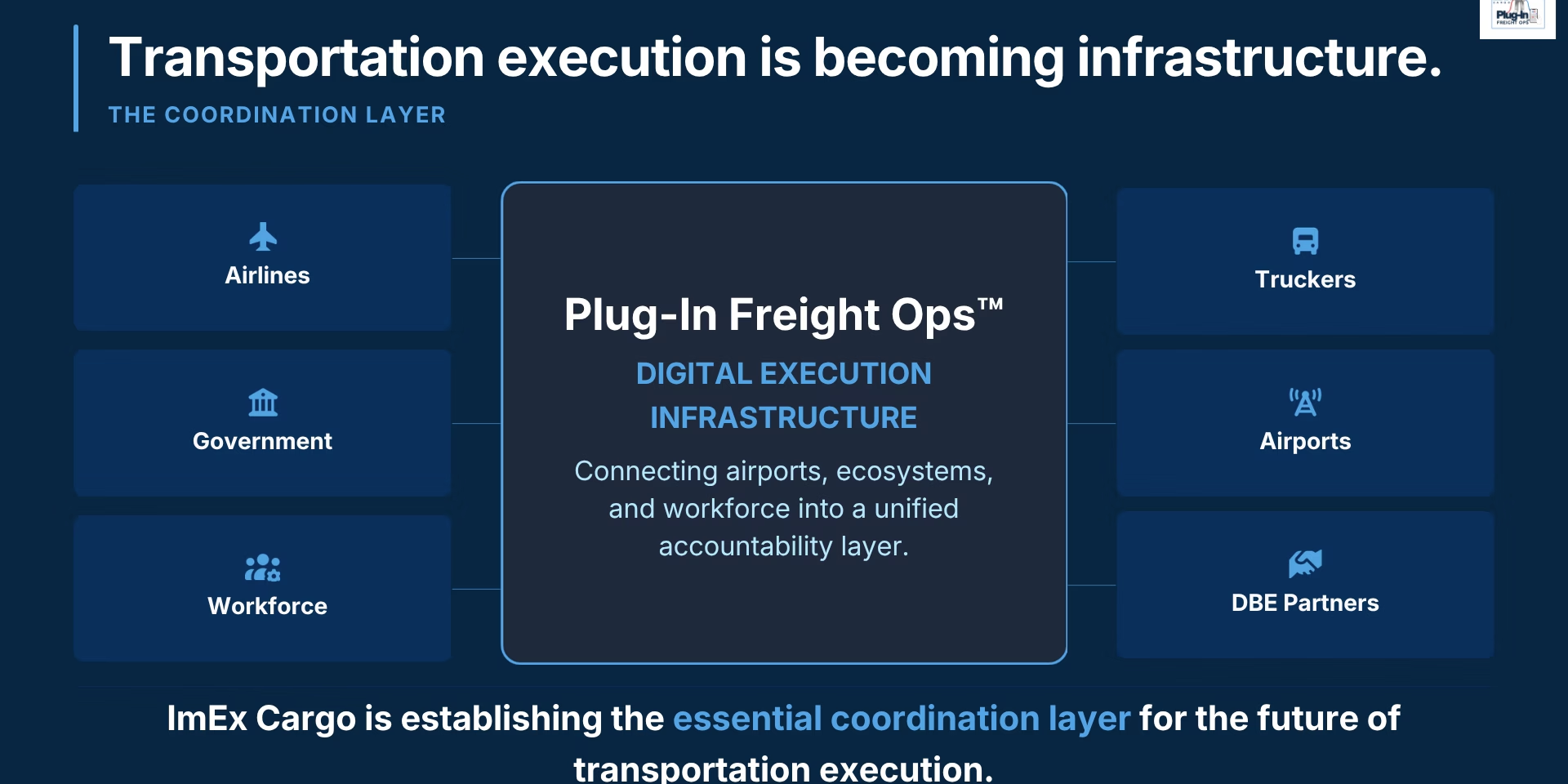
This is exactly why we developed Plug-In Freight Ops™.
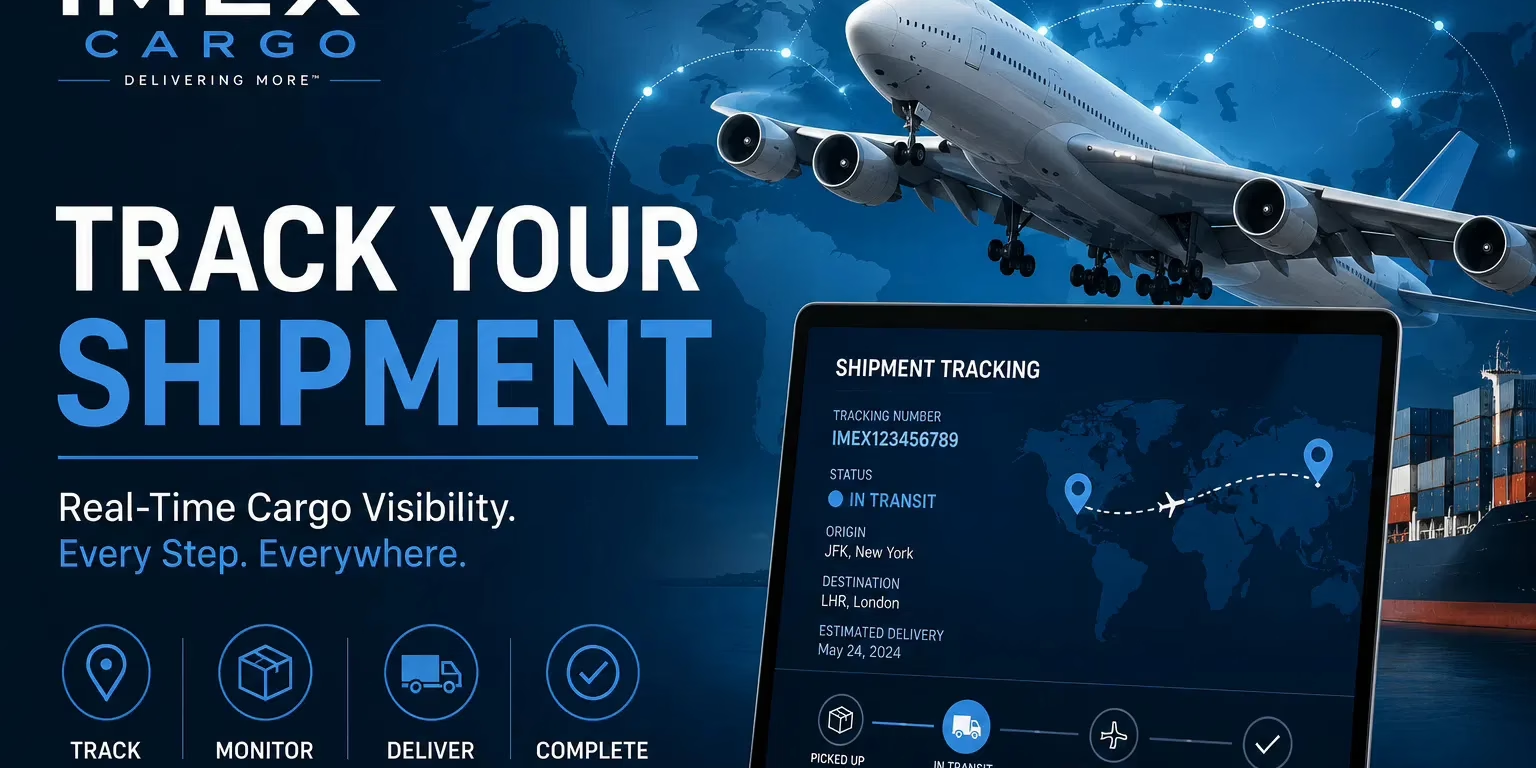
We don't view logistics as just moving boxes. We view it as a series of coordinated executions that require a single source of truth. Plug-In Freight Ops™ serves as a digital execution infrastructure layer that sits above your existing systems. It doesn't replace your TMS or your ERP; it standardizes the execution across the full shipment lifecycle: from quote to booking to tracking and delivery.
How Plug-In Freight Ops™ Captures the "Logistics Brain"
The platform is designed to turn tribal knowledge into institutional assets through three core mechanisms:
1. Structured Workflow Standardization
Instead of workflows living in email chains and spreadsheets, Plug-In Freight Ops™ mandates a clear path for every shipment. By codifying the "Quote → Book → Track" process, you ensure that every stakeholder: whether they’ve been there 20 years or 20 days: follows the same high-performance standard.
2. Multi-Party Coordination & Accountability
In fragmented environments involving airlines, truckers, and government agencies, handoffs are where execution breaks down. Our platform connects these stakeholders into a single coordinated workflow. When a handoff happens, it’s tracked and visible. The "knowledge" of how a partner should perform is no longer a gut feeling; it’s a data-backed record.
3. Real-Time Visibility and Audit-Ready Oversight
When knowledge is captured digitally, you gain the ability to audit performance in real-time. If a delay happens, you don't have to ask an employee "why." You can see where the breakdown occurred in the digital layer. This visibility is critical for government freight infrastructure and large-scale capital programs where compliance is non-negotiable.

The Workforce Activation Link
Capturing knowledge is only half the battle. The other half is ensuring your workforce is ready to execute. This is where the Academy connects directly into Workforce Activation Pilots and bridges the gap between training and operational performance.
We’ve found that the market is struggling with a "retention" problem more than a "hiring" problem. Leaders are saying: "We can hire and train people, but then they leave." That is why execution-focused workforce design matters inside the broader Workforce Innovation Network.
By combining the Academy’s approved training courses (ranging from Logistics Fundamentals to Digital Freight Operations) with the Plug-In Freight Ops™ platform, we help organizations build Workforce Resilience.
- Training accelerates onboarding and builds a base level of competency.
- Plug-In Freight Ops™ captures the specific operational "DNA" of your business so that when an employee does move on, the system remains.
- Workforce Activation Pilots create a practical path to apply that training inside live execution environments.
- Employer Partners strengthen the partner relationships required to align workforce readiness with real operational demand.
- Workforce Development Partnerships extend that coordination across training institutions and ecosystem participants needed to sustain execution over time.
This approach reduces your dependency on "individual heroics" and allows you to scale your operation without fear of the "brain drain."

Reducing the "Silent Tax" on Scaling
Tribal knowledge acts as a silent tax on your growth. You can’t add more customers if your current experts are already at capacity. You can’t expand to new regions if your processes aren't documented and portable.
Execution infrastructure allows you to:
- Reduce Onboarding Time: New hires become productive in days, not months.
- Minimize Errors: Standardized workflows eliminate the "I forgot to tell you" mistakes.
- Increase Capacity: One coordinator can manage more shipments because the system handles the visibility and tracking overhead.
Building an Operation That Outlasts Its Employees
The question isn’t whether your employees will eventually leave. They will. The question is whether your operation: your routing logic, your partner relationships, and your execution standards: will leave with them.
In 2026, the logistics leaders who win won't be those with the most experts; they will be the ones with the best Execution Infrastructure. They will be the ones who have successfully moved their tribal knowledge from people’s heads into a digital system that provides visibility, accountability, and continuity.

Start Your Knowledge Transfer Today
Don't wait for your most experienced dispatcher to hand in their notice before you start thinking about knowledge capture.
We typically address these operational gaps through a focused pilot. We can map your current workflows and show you exactly how Plug-In Freight Ops™ can provide the coordination layer your business needs to stay resilient.
Contact Michelle DeFronzo and the ImEx Cargo team to walk through how this would apply in your specific environment. Let’s build a logistics operation that is as resilient as the cargo you move.