Most logistics executives measure success by throughput, on-time delivery, or margin. But there is a silent metric that is likely eating your profit faster than fuel surcharges or equipment maintenance: Turnover.
In a recent industry pulse check, we noticed something revealing. When asked about their biggest workforce hurdles, airline cargo leaders, GSAs, and forwarders didn’t point to a lack of applicants or even a lack of training.
They pointed to Retention.
The industry isn't failing to find people. It’s failing to keep them. And more importantly, it's failing to keep the institutional knowledge those people carry.
The $20,000 "Open Door" Problem
In 2024–2025, the cost of replacing a single frontline logistics employee has climbed significantly. Benchmarks now suggest that turnover costs range from $8,000 to over $20,000 per person when you factor in recruitment, background checks, drug testing, and the inevitable "ramp-up" period where productivity is at its lowest.
For a mid-sized operation with 500 employees and a typical 30% churn rate, that is a $1.2 million to $2.5 million annual hole in the balance sheet.
But the financial cost is only the visible part of the iceberg. The real danger lies in what walks out the door when that employee hands in their badge.
The Hidden Risk: Tribal Knowledge
In many logistics environments, the business lives inside people’s heads.
- “Bill knows which carrier always handles the Sunday night transfer.”
- “Sarah knows the specific paperwork quirk for that one government agency.”
- “Joe knows the manual workaround when the legacy tracking system fails.”
This is Tribal Knowledge. It is the "individual heroics" that keep a fragmented system running. But when Bill, Sarah, or Joe leaves, they don't just leave a vacancy. They leave an operational void.
Every resignation in a system dependent on tribal knowledge creates immediate risk. Workflows break, handoffs fail, and customer relationships are strained. This isn't just a HR issue; it’s an infrastructure failure.
Shifting from Training to Operational Resilience
The traditional response to turnover is: "We need more training."
While training is vital, it doesn’t solve the fundamental problem of knowledge loss. You can train a new hire on the basics, but you can’t quickly "train" the ten years of operational nuance that left with their predecessor.
Operational Resilience is the solution. It means building a system where the "brain" of the company stays in the building, regardless of who is sitting in the seat.

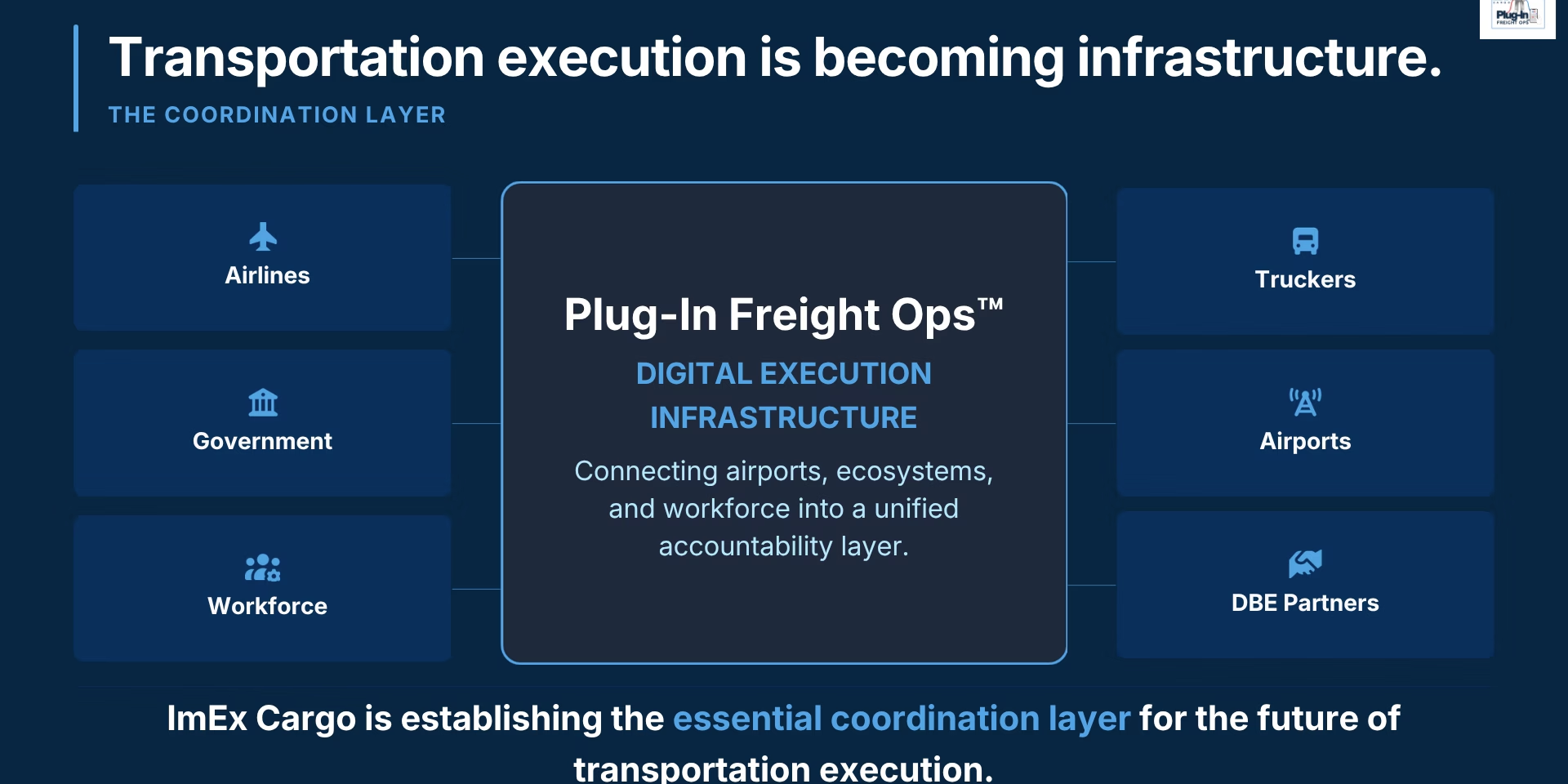
This is why we built Plug-In Freight Ops™. It’s not just a tool for moving freight; it’s a digital execution infrastructure designed to capture the "how" of your operation.
How Execution Infrastructure Fixes Retention
Rather than replacing your existing systems, Plug-In Freight Ops™ sits above them to standardize and manage execution across the full shipment lifecycle. Here is how that impacts retention and workforce resilience:
1. Reducing Operational Chaos
Burnout is a primary driver of logistics turnover. Chaos: manifested as endless email chains, frantic phone calls, and missing paperwork: is exhausting. By providing a unified coordination layer, we reduce the cognitive load on your team. When people feel in control of their workflows, they stay.
2. Digitizing the "Nervous System"
When workflows, handoffs, and decisions are captured within a structured system, the organization becomes less dependent on individual heroics. The "tribal knowledge" is converted into Digital Capital.
3. Structured Handoffs and Accountability
Mistakes and "firefighting" often happen at the handoff between stakeholders (trucker to warehouse, handler to airline). Plug-In Freight Ops™ standardizes these handoffs. When an employee knows exactly what is expected of them and has the tools to execute it flawlessly, their job satisfaction increases.

Protecting Your "Workforce Activation" Investment
Many organizations are focused on workforce activation: bringing new talent and diverse suppliers (DBEs) into the logistics ecosystem. But if you bring new talent into a chaotic environment, you are essentially pouring water into a leaky bucket.
Our Workforce Activation Pilots work in tandem with the broader Workforce Innovation Network, Employer Partners, and Workforce Development Partnerships that support talent activation across the logistics ecosystem.
Just as important, Workforce Ecosystem Infrastructure is the layer that reduces turnover risk. It creates a structured operating environment where workforce activation is connected to standardized execution, visible handoffs, and operational continuity.
We don't just bring people into the system; we give them an environment where they can contribute faster, ramp with less friction, and stay productive from day one through the Academy.

The CEO’s New Priority: Reducing Dependency
The conversation around workforce is changing. It’s no longer just about hiring faster; it’s about reducing the organization's dependency on individual people for critical operational continuity.
By implementing an execution coordination layer, you are doing three things:
- Lowering the cost of turnover: New hires ramp up faster because the "how-to" is built into the system.
- Improving retention: Staff burnout decreases as manual, repetitive "chasing" of information is replaced by automated visibility.
- Insulating the business: If a key employee leaves, the workflow remains intact.

Building Your Resilient Future
The question isn’t whether your employees will eventually leave. The question is whether your operation leaves with them.
In a fragmented, multi-stakeholder environment like air cargo or large-scale infrastructure projects, you cannot afford to have your operational intelligence scattered across a dozen spreadsheets and a hundred different heads.
Plug-In Freight Ops™ is the infrastructure that holds that intelligence together.
We typically address these challenges through a focused pilot program where we map your current execution workflows to the digital layer.
Ready to stop the "knowledge leak"? Let’s walk through how this would apply in your environment.