Operational stability in logistics is often framed as a technical challenge: optimizing routes, managing capacity, or integrating APIs. But in 2026, the most significant threat to a stable supply chain isn't a software bug or a fuel price hike. It is the high cost of human turnover.
When execution workflows are fragmented, the "hidden" workload falls on the people. They are the ones bridge-building between siloed systems, chasing down tracking updates via phone calls, and manually correcting data errors. This constant state of "firefighting" is the primary driver of burnout.
For organizations managing complex logistics: airlines, freight forwarders, and prime contractors: retention is no longer just an HR metric. It is an operational prerequisite. To stabilize the workforce, we must first stabilize the work.
The High Cost of the "Chaos Tax"
In the current logistics environment, turnover is not just a nuisance; it is an executive-level risk. Recent industry data shows that warehouse turnover averages roughly 36% annually, while logistics providers see churn rates of approximately 31%.
The financial impact is staggering. The average cost to replace a single logistics employee has risen to over $45,000. These costs include:
- Recruitment and Onboarding: Sourcing, vetting, and training new talent in a competitive labor market.
- Operational Friction: The "tribal knowledge" lost when an experienced coordinator leaves, leading to more errors and missed handoffs.
- Overtime and Burnout: Remaining staff must pick up the slack, leading to a "turnover contagion" where one departure triggers three more.
When people leave, the execution layer breaks. Shipments miss their windows, partner accountability drops, and the risk of program failure increases. This is the "Chaos Tax": the premium you pay for unmanaged, fragmented workflows.
Why Logistics Execution is Inherently Stressful
Logistics professionals are often asked to perform "heroics" daily. They operate in high-pressure environments where a single miscommunication can delay a multi-million dollar infrastructure project or ground a cargo aircraft.
The stress doesn't come from the work itself, but from the friction in the work:
- System Fragmentation: Switching between 10+ different portals for quoting, booking, and tracking.
- Lack of Visibility: Having to guess where a shipment is because the partner hasn't updated their system.
- Manual Handoffs: Relying on emails and spreadsheets to coordinate between truckers, handlers, and government stakeholders.
When your workforce spends 60% of their time "fixing" the process rather than "executing" it, they burn out. This is where Plug-In Freight Ops™ changes the equation.

Standardizing Execution: The Antidote to Burnout
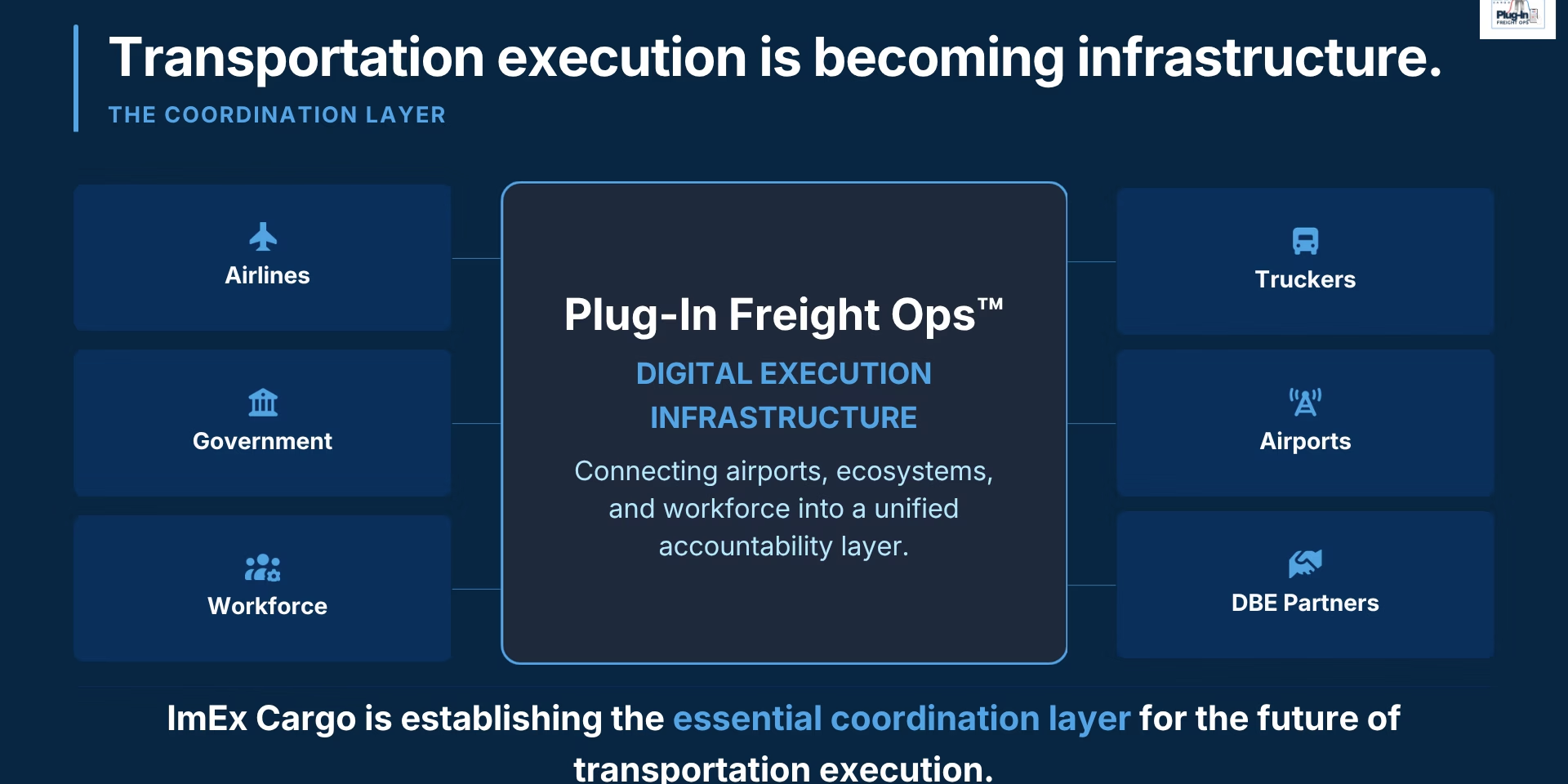
Plug-In Freight Ops™ is designed to be the digital execution infrastructure that sits above existing systems. It doesn't ask workers to replace their current tools; it standardizes the layer where execution actually happens.
By providing a unified coordination layer, it reduces the cognitive load on the workforce in three critical ways:
1. Structured Handoffs
Instead of chasing a status update via a dozen emails, the platform manages the handoff between airlines, GSAs, and trucking providers. Workers see exactly what is expected of them and their partners, reducing the anxiety of the "unknown."
2. Real-Time Accountability
When execution is visible, finger-pointing stops. Plug-In Freight Ops™ enables partner accountability by tracking performance across all stakeholders. This clarity reduces the interpersonal conflict that often leads to workplace dissatisfaction.
3. Workflow Standardization
From quote to booking to delivery, the platform creates a repeatable, reliable process. Standardized workflows (SOPs) turn high-stress "exception management" into a routine, manageable task.
When the process is predictable, the job becomes sustainable.
Building a Resilient Workforce Pipeline
Retention is the first step; growth is the second. As part of our Workforce Resilience series, we emphasize that operational stability is also about how you activate new talent through a connected Workforce Innovation Network, supported by the broader workforce ecosystem infrastructure needed to align employers, training partners, and execution workflows.
Plug-In Freight Ops™ does more than just coordinate freight; it activates partner ecosystems, including certified DBE networks, Employer Partners, workforce development pipelines, and the broader workforce ecosystem infrastructure required to align employers, training partners, and execution workflows.
By standardizing how work is executed, organizations can more easily onboard and retain:
- Diverse Suppliers (DBEs): Who can now integrate into complex programs without the typical administrative overhead.
- New Talent Pipelines: Training institutions can teach skills based on standardized execution workflows, making new hires productive on day one through structured pathways such as the Academy.
- Career Advancement: When routine tasks are automated or streamlined, employees can move into higher-value roles, such as program management or strategic coordination.

Stability as a Competitive Advantage
In an industry defined by volatility, stability is a differentiator. Organizations that master workforce retention through execution coordination don't just save on HR costs: they gain a significant competitive edge.
- Improved Execution Speed: Stable teams are faster and more accurate.
- Reduced Operational Risk: There are fewer "near misses" and cargo delays when the workforce is experienced and calm.
- Audit-Ready Oversight: For government and infrastructure programs, having a stable, accountable workforce is essential for compliance and performance tracking.
We typically find that when the "noise" is removed from the daily workflow, retention rates improve naturally. Workers want to be successful; they want to know that the effort they put in will result in a completed shipment, not another manual data entry task.
Moving Toward Operational Resilience
Retention is not an isolated HR problem. It is a symptom of how your logistics execution is structured. If your team is struggling with high turnover, it is likely that your execution layer is too fragmented, putting too much pressure on the human element to "hold it all together."
At ImEx Cargo, we help organizations map their current operations to a more stable, coordinated model.
Are you ready to reduce the stress on your workforce and stabilize your operations?
- Pilot Discussion: We can start with a focused pilot to identify where execution breaks down in your current environment through Workforce Activation Pilots designed to strengthen operational continuity.
- Capability Walkthrough: We can walk through how Plug-In Freight Ops™ would integrate with your existing systems to create a unified execution layer.
- Partnership Conversation: Learn how our workforce activation tools, Employer Partners, and Workforce Development Partnerships can help you meet both operational and compliance goals.
Operational stability starts with the people. Let’s build the infrastructure they need to succeed.