When a veteran dispatcher or a senior logistics manager walks out the door for the last time, they aren’t just taking their coffee mug. They are taking a library of "unwritten rules" that keep your operation running.
In logistics, we call this tribal knowledge. It’s the informal, undocumented expertise that allows a few key people to "just make things work" when a shipment goes sideways.
But relying on heroics is a massive risk. In an industry defined by fragmentation and high turnover, if your execution logic lives in someone’s head instead of your infrastructure, you don't have a resilient operation: you have a fragile one.
This post, part of our Workforce Resilience series, explores how to capture that "brain" and plug it into your digital infrastructure using Plug-In Freight Ops™. It also connects to the broader Workforce Innovation Network (WIN), where ImEx Cargo is building more structured approaches to workforce resilience, knowledge transfer, and execution continuity.
The "Quiet Exit": What Happens When the Brain Drains
Every day, roughly 10,000 Baby Boomers retire. In the logistics and supply chain sector, this transition is creating a "knowledge vacuum." When these experts leave, the processes they managed often become "black boxes" to everyone else.
The impact is felt almost immediately:
- Operational Disruption: Shipments that used to be "standard" suddenly face delays because a specific customs quirk wasn't documented.
- Quality Erosion: The unwritten "shortcuts" and recovery strategies that maintained high service levels vanish.
- Onboarding Friction: New hires take months to reach full productivity because they have to "learn the ropes" through trial and error rather than a guided system.
Logistics is a game of handoffs. If the logic governing those handoffs is missing, execution breaks down. This is why digital freight infrastructure is no longer a luxury; it’s a survival requirement.

Defining Tribal Knowledge in Logistics
Tribal knowledge isn't just "knowing how to do the job." It’s the deep context that isn't found in your standard operating procedures (SOPs).
Think about the specific planner who knows exactly which carrier to call when a load is late at midnight. Or the warehouse supervisor who knows that a specific airport gate always requires a different set of paperwork on Fridays.
Common areas where tribal knowledge hides:
- Carrier Recovery: The informal list of "Plan B" providers and the personal relationships that grease the wheels.
- System Workarounds: How to navigate a legacy WMS or TMS when the "official" way is too slow during peak season.
- Customs & Compliance: Lane-specific nuances for international freight that aren't codified in the general manual.
- Stakeholder Nuances: Understanding the specific communication preferences of airlines, GSAs, and ground handlers.
If your execution relies on "knowing the right guy," your process is a liability. You need to move from individual heroics to system-guided execution.
Plug-In Freight Ops™: The Repository for Execution Logic
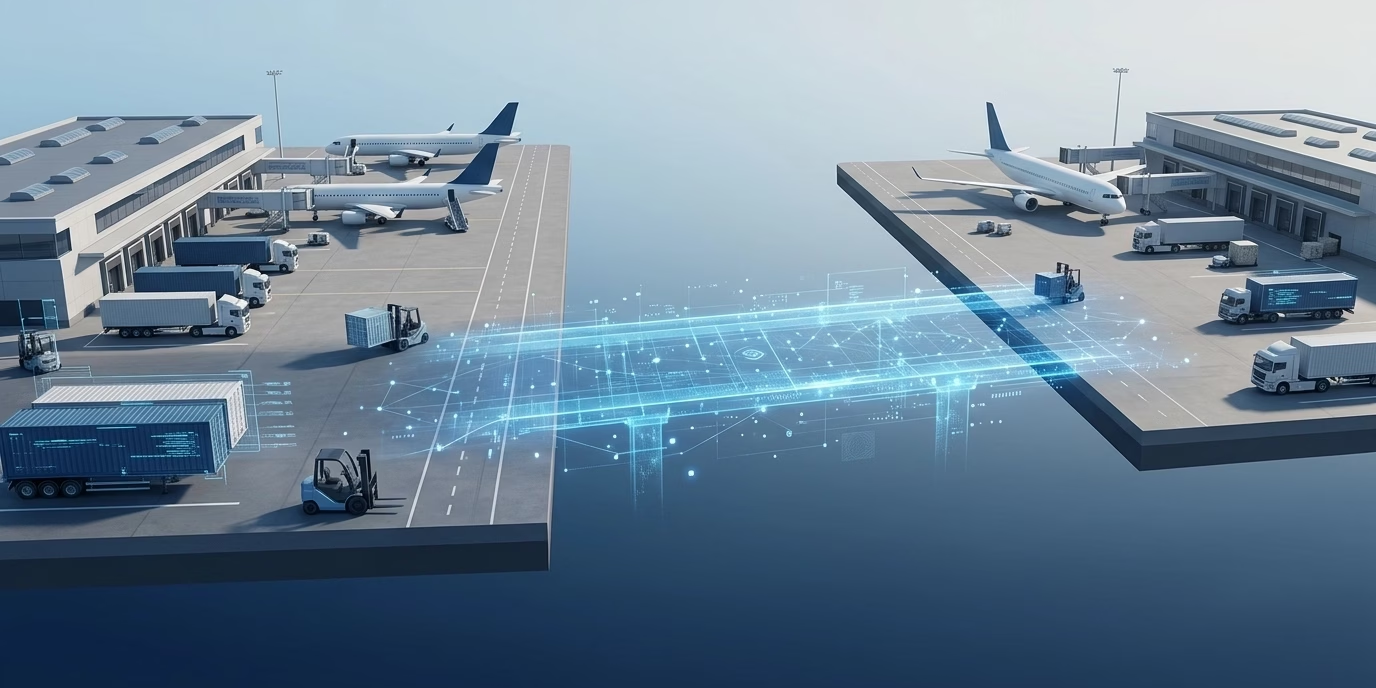
At ImEx Cargo, we developed Plug-In Freight Ops™ to serve as a digital execution infrastructure layer. It doesn't replace your existing TMS or WMS; it sits above them to standardize and manage execution across the full shipment lifecycle.
By capturing your operation's unique logic within this layer, you effectively "plug" the brain drain.
How it works as a Digital Brain:
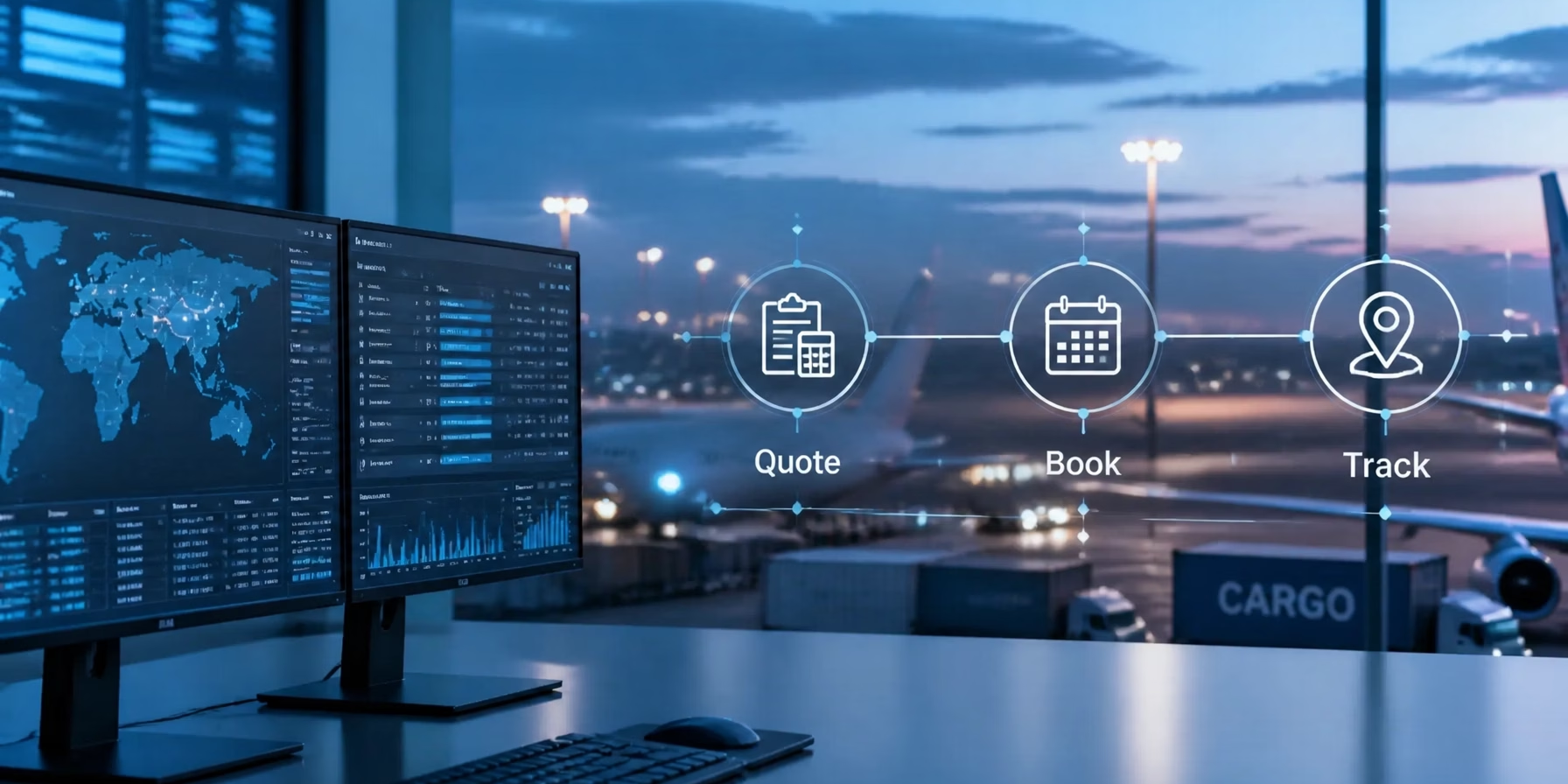
- Workflow Standardization: It forces a structured path from Quote → Book → Track → Deliver. Every stakeholder follows the same "playbook," regardless of their experience level.
- Partner Accountability: The system tracks handoffs and performance in real-time. If a partner drops the ball, the system alerts the right person based on pre-defined logic: not just memory.
- Audit-Ready Oversight: Because the execution logic is codified, every action is logged. This creates a historical record of "how we solved this problem before," making it accessible to the entire team.

Workforce Resilience: Faster Onboarding and Scalability
The biggest bottleneck to scaling a logistics firm is the time it takes to train new staff. Traditional training relies on shadowing veterans: a process that is slow, inconsistent, and drains the veteran’s productivity.
When you use a digital execution layer, you change the training dynamic. Instead of teaching a new hire to "remember everything," you teach them to "follow the system."
The results of this shift include:
- 50% Reduction in Ramp-Up Time: New hires can manage complex workflows faster because the system provides the guardrails and logic.
- Consistency Across Shifts: Whether it’s 2 PM or 2 AM, the execution logic remains the same.
- Empowered Diverse Talent: By standardizing workflows, you make it easier to activate diverse supplier networks (DBEs) and workforce pipelines who may be new to your specific ecosystem.
- Stronger Employer Coordination: Organizations can align operational needs with Employer Partners and Workforce Development Partnerships to reduce onboarding friction and improve execution readiness.
- Structured Activation Paths: Teams can move from concept to field execution through focused Workforce Activation Pilots that test how workforce coordination supports live operations.

Step-by-Step: How to Capture Your Institutional Intelligence
You don’t have to wait for a "digital transformation" project to start protecting your knowledge assets. You can start by identifying the "knowledge hotspots" in your current operation.
1. Map Critical Roles
Identify the individuals whose departure would cause an immediate "execution gap." These are typically your senior dispatchers, compliance officers, and transport planners.
2. Surface the "Tricks of the Trade"
Observe your high performers. What shortcuts are they taking? What extra steps do they add to ensure a shipment moves smoothly? Ask them: "If you weren't here, what is the one thing a new person would definitely mess up?"
3. Codify the Logic
Take those insights and build them into your digital workflow. This is where Plug-In Freight Ops™ shines. Instead of a 50-page PDF manual that no one reads, the logic is embedded into the actual software interface.
4. Continuous Verification
Institutional knowledge isn't static. As regulations change and partners evolve, your digital execution layer must be updated. Assign "process stewards" to keep the digital logic aligned with real-world realities. This is also where Workforce Ecosystem Infrastructure becomes relevant: maintaining continuity requires a structure for how employers, workforce partners, and operational stakeholders stay aligned over time.

The Bottom Line: Execution is the Only Asset
In the modern logistics landscape, your physical assets (trucks, planes, warehouses) are often shared or leased. Your true competitive advantage is your Execution Logic: the unique way you coordinate stakeholders to move freight faster and more reliably than the competition.
If that logic only exists in the minds of your employees, it is a depreciating asset. By moving it into a digital coordination layer, you turn it into a scalable, durable infrastructure.
We typically address these challenges through a focused pilot program where we map your current "tribal logic" to a digital workflow. In some environments, that work also extends into Workforce Activation Pilots, where execution workflows, onboarding structure, and partner coordination are tested together.
For organizations looking to formalize how knowledge is transferred into repeatable operating capability, the Academy and the broader Workforce Innovation Network (WIN) provide additional pathways to support resilience across teams and partners.
Are you ready to secure your operation’s intelligence?
We can walk through how this would apply in your environment.