Freight broker training is often treated as a shortcut to learning rates, load boards, and carrier calls. That is only part of the job.
A freight broker operates at the center of a multi-party execution process. Shippers, carriers, warehouses, customs providers, forwarders, consignees, and internal teams all depend on accurate information and timely handoffs. When those connections fail, the result can be missed appointments, margin loss, cargo claims, and damaged customer relationships.
The strongest training programs therefore combine compliance education with practical operational readiness. They prepare new professionals to coordinate freight from quote through delivery: not simply to process transactions.
What Is Freight Broker Training?
Freight broker training is a structured program that teaches the regulatory, commercial, operational, and communication skills required to arrange transportation between shippers and motor carriers.
A complete program should cover:
- Freight brokerage roles and responsibilities
- Transportation modes and equipment
- Quoting, pricing, and margin management
- Carrier sourcing and qualification
- Contracts and shipment documentation
- Tracking and status communication
- Exception management and escalation
- Customer service and relationship management
- Transportation management systems and digital tools
- Compliance, ethics, and fraud prevention
Training should also explain where brokerage fits within the broader supply chain. A broker may coordinate with a shipper, carrier, warehouse, freight forwarder, customs broker, airport, or final-mile provider during one shipment.
That makes coordination a core competency: not an optional soft skill.
Compliance Education Is Not the Same as Operational Readiness
One of the most important distinctions in freight broker training is the difference between learning how authority works and learning how to execute freight reliably.
Licensing and compliance education
In the United States, new brokers generally apply for broker authority through the Federal Motor Carrier Safety Administration’s Unified Registration System. FMCSA identifies requirements that include:
- A broker authority application
- A $300 non-refundable application fee
- A $75,000 surety bond or trust fund agreement
- A BOC-3 designation of process agents
- Ongoing recordkeeping and authority maintenance
The FMCSA broker registration page provides the current federal process. Financial responsibility requirements and related updates are outlined in the agency’s broker and freight forwarder financial responsibility guidance.
These requirements can change. Training providers should direct learners to official sources and qualified compliance professionals for current guidance.
Operational readiness
Compliance knowledge does not automatically prepare someone to manage a live shipment.
An execution-ready broker must know how to:
- Translate a customer request into an executable load
- Confirm equipment, timing, and accessorial requirements
- Vet a carrier before tendering freight
- Document commitments accurately
- Communicate changes across stakeholders
- Escalate exceptions before they become failures
- Close the load with complete records and billing support
The goal is not merely to understand the rules. It is to perform the work consistently under time pressure.
The Core Skills Every Freight Broker Needs

1. Quoting and pricing
Brokers need to understand how rates are formed. Training should introduce:
- Lane characteristics and capacity
- Equipment requirements
- Fuel and accessorial costs
- Seasonality and market conditions
- Spot and contract pricing
- Buy rates, sell rates, and gross margin
Practical exercises should require learners to build quotes from incomplete information, identify missing requirements, and explain the assumptions behind a proposed rate.
2. Carrier qualification
Carrier qualification is a risk-control function, not a clerical task.
Learners should practice reviewing authority status, insurance, operating information, equipment suitability, and other required documentation. Programs should also address fraud indicators, identity verification, cargo theft risk, and the dangers of double brokering.
A qualified carrier on paper still requires appropriate shipment-level communication and monitoring.
3. Documentation and record discipline
Freight brokerage depends on accurate records. Training should cover:
- Customer rate confirmations
- Carrier packets
- Load tenders
- Pickup and delivery information
- Bills of lading
- Proof of delivery
- Accessorial documentation
- Claims and incident records
- Invoices and payment support
Every handoff should leave a usable record. This preserves continuity when a team member is unavailable and gives managers an audit trail when a dispute arises.
4. Communication across handoffs
A broker may communicate with a shipper in the morning, a dispatcher at midday, and a warehouse or consignee later in the day.
Training should teach professionals to communicate:
- Who owns the next action
- What has changed
- When the next milestone is expected
- Which party needs to respond
- What escalation path applies
Clear communication is especially important when multiple systems are involved. A status update that remains in one inbox or platform does not create shared operational visibility.
5. Exception management
Normal shipments are not the best test of readiness. Exceptions are.
Learners should work through scenarios involving:
- Missed pickup appointments
- Driver delays
- Equipment breakdowns
- Rejected or damaged freight
- Weather disruptions
- Capacity failures
- Documentation gaps
- Delivery appointment changes
A useful exercise requires the trainee to identify the issue, assign ownership, notify affected parties, document the decision, and confirm resolution.
6. Technology and workflow discipline
Technology changes how brokers work, but software familiarity alone is not enough.
Training should include the shipment lifecycle in a transportation management system or comparable environment:
Quote → Book → Assign → Track → Resolve → Deliver → Document → Invoice
Learners should practice entering accurate data, updating milestones, attaching documents, and using dashboards or reports to identify risk.
The important lesson is that technology supports a workflow. It does not replace judgment, accountability, or communication.
A Practical Freight Broker Training Curriculum
A structured program can be organized into eight modules:
- Industry fundamentals : Roles of shippers, brokers, carriers, forwarders, warehouses, and other participants.
- Compliance and authority : FMCSA requirements, documentation, financial responsibility, and ethical boundaries.
- Freight operations : Equipment, modes, shipment requirements, appointments, and accessorials.
- Quoting and negotiation : Rate construction, market conditions, carrier buying, and customer selling.
- Carrier and partner management : Qualification, onboarding, communication, and performance expectations.
- Technology and documentation : TMS workflows, tracking, records, and billing support.
- Customer service and exceptions : Updates, issue resolution, escalations, and post-load communication.
- Capstone simulation : End-to-end execution of a shipment from initial request through delivery and closeout.
The capstone matters. It demonstrates whether learners can connect individual skills into one coordinated operating process.
Building Workforce Continuity Through Training
Freight broker training is also a workforce-continuity strategy.
Many logistics organizations rely on experienced employees who carry critical knowledge in memory, personal spreadsheets, email threads, and informal workarounds. When those employees leave, the organization may lose more than headcount. It may lose customer preferences, carrier relationships, escalation habits, and knowledge of how exceptions are resolved.
A stronger training model converts that tribal knowledge into:
- Standard operating procedures
- Checklists and decision trees
- Documented escalation paths
- Defined handoff requirements
- Role-based performance measures
- Supervised practice and feedback
This allows new professionals to become productive without requiring every lesson to be rediscovered through trial and error.
For colleges, workforce boards, employers, and public-sector partners, logistics workforce development should connect training to actual employer needs. Career training programs can provide a foundation, but employer input is necessary to make the pathway operationally relevant.
How to Evaluate a Training Program
Organizations evaluating freight broker training should ask whether the program measures behavior, not just course completion.
Use this checklist:
- Does the curriculum distinguish brokers from carriers and forwarders?
- Does it address current compliance responsibilities without promising licensing outcomes?
- Do learners practice quoting and margin decisions?
- Is carrier qualification taught as a risk-control process?
- Are documentation and recordkeeping assessed?
- Do trainees practice real communication handoffs?
- Are exception scenarios included?
- Is technology used in practical simulations?
- Are learners measured on accuracy, response time, and escalation quality?
- Is there a mentored transition into live operations?
- Can managers verify competency through a repeatable checklist?
The strongest programs use scenario-based assessments. A trainee should be able to explain not only what they would do, but who needs to know, when they need to know it, and how the action will be recorded.
The Role of Digital Execution Infrastructure
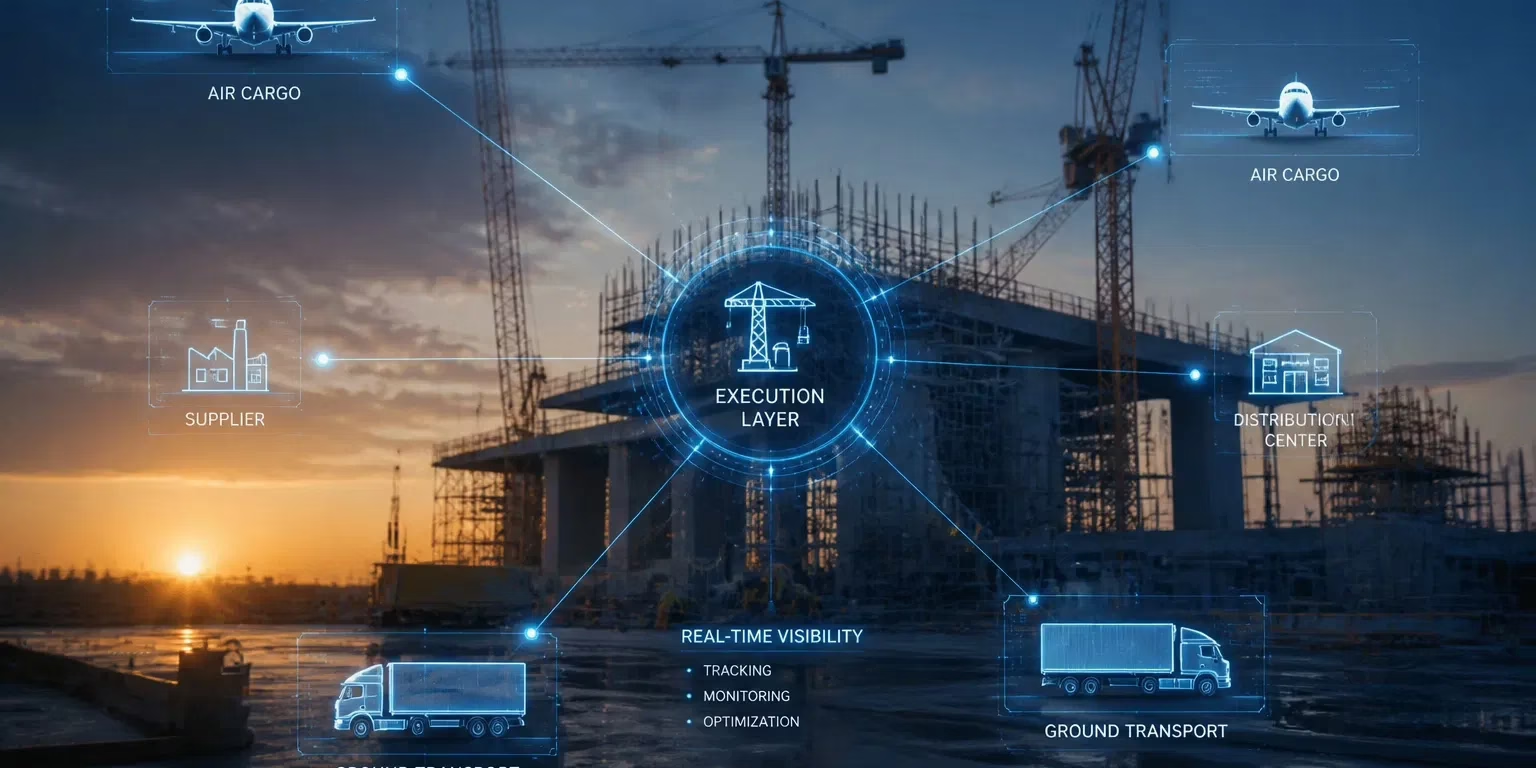
Modern freight broker training should prepare people to work in coordinated digital environments. Brokers need visibility into shipment status, partner responsibilities, pending actions, and unresolved exceptions.
Digital execution infrastructure can provide the shared workflow that connects existing systems and stakeholders. ImEx Cargo’s Plug-In Freight Ops™ is one example of this category, designed to coordinate airlines, GSAs, forwarders, trucking partners, government stakeholders, and workforce ecosystems without requiring every organization to replace its existing systems.
The broader principle is more important than any one platform: trained people perform better when the operating environment makes ownership, timing, and handoffs visible.
Organizations developing a new program or strengthening an existing one can begin with a focused pilot. A capability walkthrough can map the curriculum to current roles, workflows, systems, and employer expectations.
Frequently Asked Questions
What is freight broker training?
Freight broker training teaches the compliance, commercial, operational, technology, and communication skills used to arrange freight transportation. Effective programs prepare learners to coordinate shipments from quote through delivery and documentation.
How long does freight broker training take?
The timeframe varies by program and learner experience. Introductory coursework may take several weeks, while a more complete pathway with simulations, assessments, and supervised production may take several months. Readiness depends on demonstrated competency, not time spent in class alone.
What skills does a freight broker need?
A freight broker needs pricing, negotiation, carrier qualification, documentation, customer service, tracking, communication, exception management, and technology skills. The ability to coordinate multiple stakeholders is central to all of these responsibilities.
Is freight broker training required?
Training itself is not the same as federal broker authority. FMCSA requirements relate to registration, authority, financial responsibility, and other compliance obligations. Organizations should verify current requirements through official FMCSA resources and obtain professional advice for specific situations.
How does technology change broker training?
Technology makes workflow discipline more important. Brokers must learn how to enter accurate information, manage milestones, share updates, document handoffs, and use visibility tools to identify risk. Training should include practical work in the systems used by the employer.
Author
Michelle DeFronzo is Founder and CEO of ImEx Cargo, a woman-owned logistics and freight-technology company. With more than 30 years in global logistics, she builds modular infrastructure that modernizes access and collaboration in operational industries without requiring “rip-and-replace” disruption. Her work focuses on platform strategy, ecosystem design, and access economics. Read more from Michelle DeFronzo.