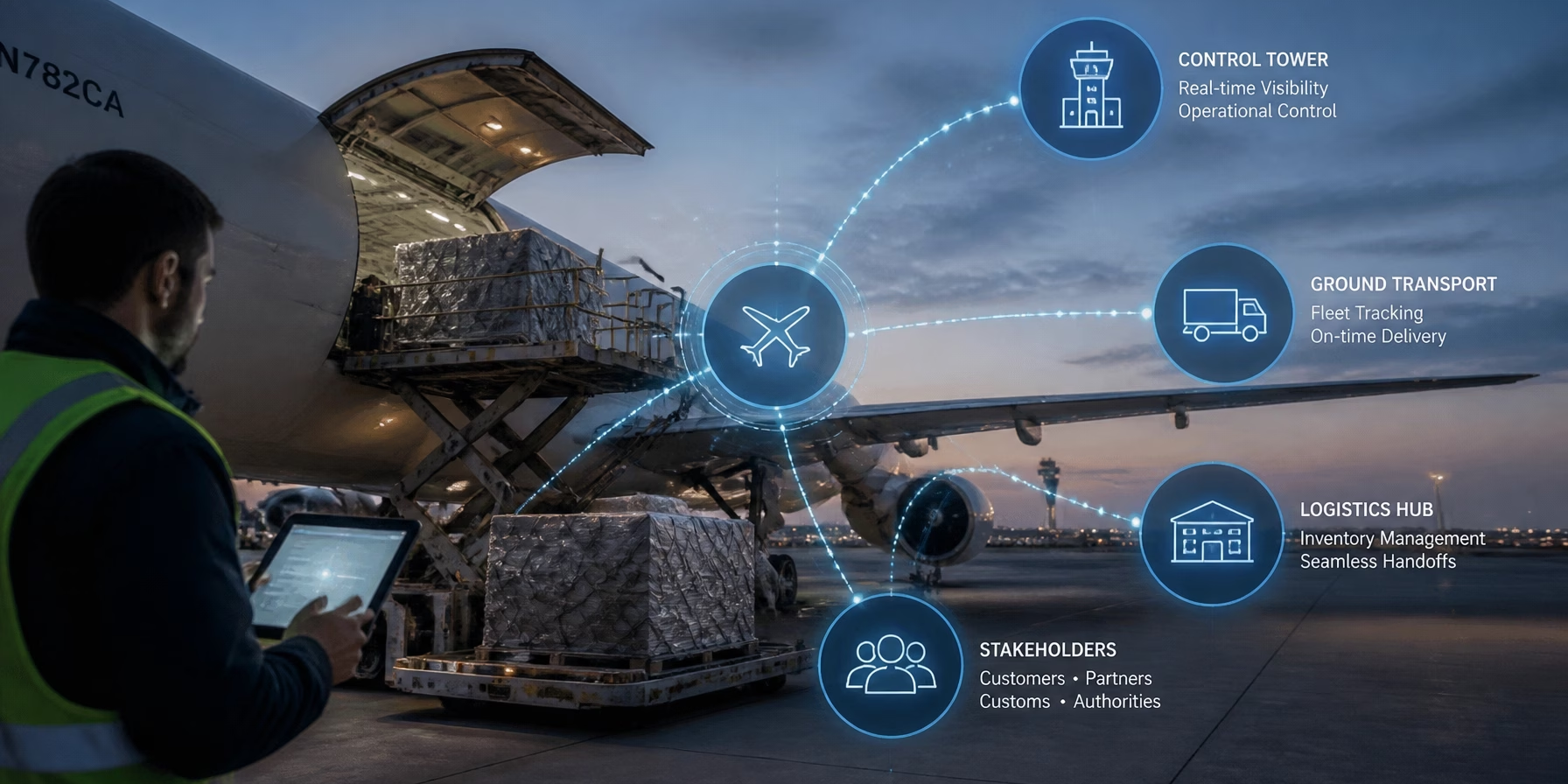
In 2026, logistics execution is no longer just a software problem: it is a people problem.
As global supply chains become increasingly fragmented, the gap between "having a system" and "executing a shipment" has widened. By the end of 2026, the industry faces a projected shortfall of over 174,000 drivers and a 31% increase in demand for skilled supply chain talent.
For organizations managing complex logistics: airlines, GSAs, freight forwarders, and government agencies: the challenge is clear: Traditional hiring can’t keep pace with operational demands.
To succeed, leaders must stop viewing workforce development as a "human resources task" and start treating it as a core component of their digital execution infrastructure.
The Execution Gap: Why Training Fails Without Coordination
Most logistics training programs fail because they exist in a vacuum. A student learns how to fill out an Air Waybill or calculate dimensional weight, but when they enter a real-world operation, they are met with disconnected systems, fragmented emails, and manual handoffs across fragmented cargo ecosystems.
This is where air cargo visibility challenges and weak operational coordination in air cargo begin to slow down execution.
Execution breaks down where training meets reality.
At ImEx Cargo, we’ve solved this through a dual-layered approach:
- ImEx Cargo Academy: A workforce development engine that trains the people who operate digital freight infrastructure across modern air cargo operations and complex partner environments.
- Plug-In Freight Ops™: An ecosystem execution layer that standardizes workflows so those experts can perform from day one through structured cargo execution management.
When you connect a trained talent pipeline directly to an infrastructure-grade execution system, you reduce ramp-up time, improve cargo coordination, and create more consistent airline cargo workflows from quote to booking to tracking.

ImEx Cargo Academy: Building the 2026 Workforce
The ImEx Cargo Academy isn't about theory; it’s about preparing people to operate freight as infrastructure. Founded by Michelle DeFronzo, who brings 30+ years of experience in airfreight and government contracting, the Academy is designed to bridge the skills gap through instructor-led, practical programs tied directly to execution environments.
Our 2026 curriculum focuses on the "Human-Plus-Technology" model. We aren't training people to replace automation: we are training them to operate the human side of digital freight infrastructure across real-world air cargo operations, partner networks, and time-sensitive execution flows.
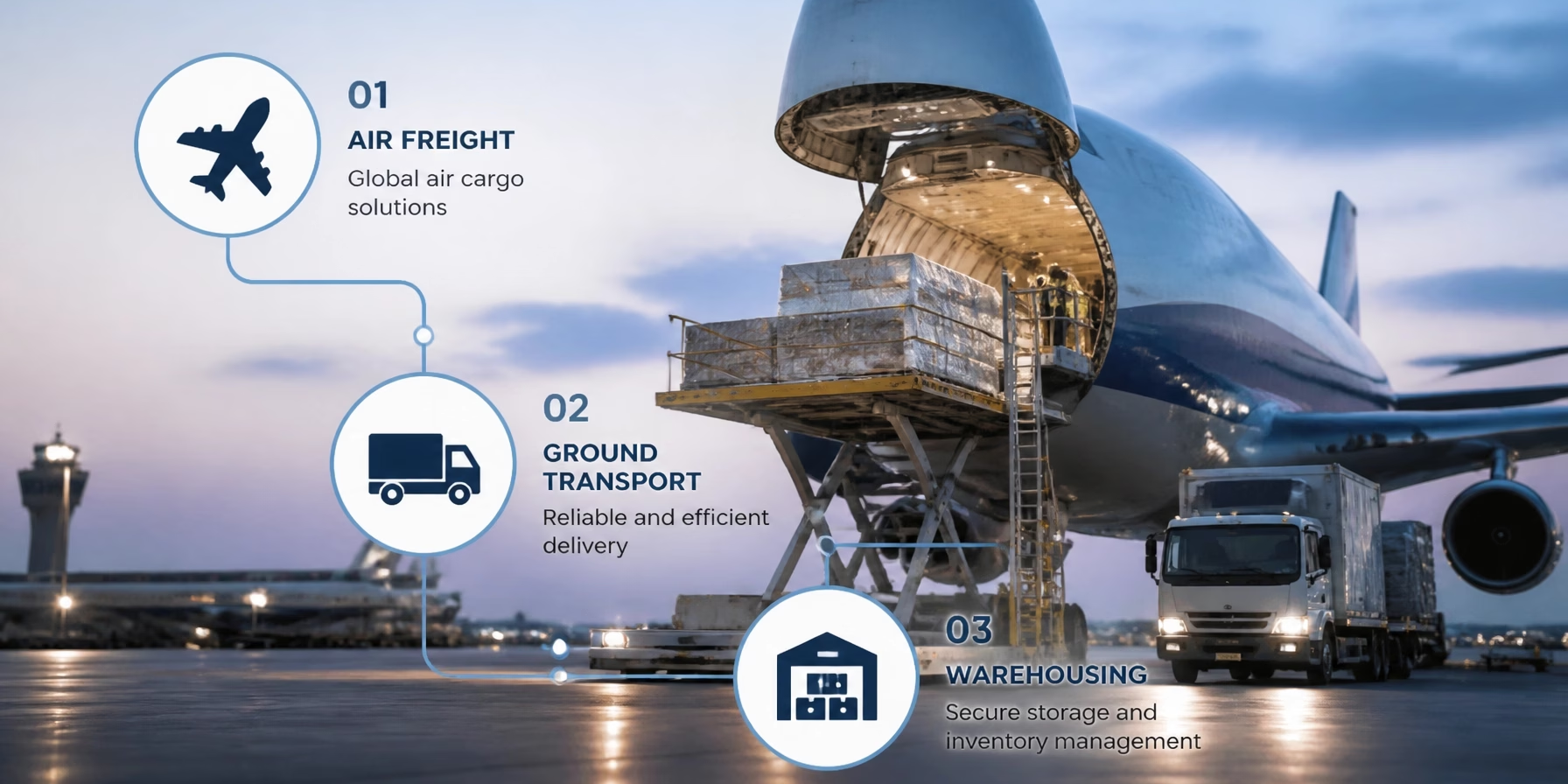
That means preparing talent for transportation execution, multimodal workflows, and structured cargo execution management, not just isolated warehouse or transport tasks. The next generation of logistics professionals must know how freight moves across air, trucking, terminal, and partner handoffs while maintaining execution accountability at every stage.
It also means understanding the difference between the systems people use and the workflow they are responsible for managing. A TMS is a tool. The ecosystem execution layer is the coordination workflow that connects stakeholders, standardizes handoffs, and keeps shipments moving across fragmented environments.
That matters because workforce development is not separate from execution quality. It is the human component of a high-performance execution coordination system. It is how teams strengthen operational coordination in air cargo, solve air cargo visibility challenges, and handle complex cargo coordination tasks in a modernized industry without adding more fragmentation.
Core Training Pillars:
- Layer 2: Transportation Execution: Training coordinators to manage operational flow across pickups, transfers, bookings, exceptions, and delivery dependencies in live execution environments.
- Digital Freight Operations & Workflow Management: Learning to navigate execution layers like Plug-In Freight Ops™ to manage quotes, bookings, tracking, and handoffs in one interface across standardized processes used in modern air cargo operations.
- Multimodal Workflow Coordination: Training talent to manage shipment execution across air, trucking, terminal, and partner environments where timing, accountability, and cross-party alignment determine performance.
- Layer 4: Digital Freight Infrastructure: Preparing teams to operate within the infrastructure layer that standardizes execution, creates visibility across stakeholders, and enforces accountability across the shipment lifecycle.
- Logistics Data Analysis: Turning shipment data into operational visibility, faster issue escalation, and better response to air cargo visibility challenges across multi-stakeholder environments.
- Compliance & Documentation: Mastering the intricacies of import/export and government-specific logistics while reducing delays tied to incomplete or inconsistent shipment data.
- Workforce Readiness: Preparing talent to step into high-pressure environments like airport gateway operations or large-scale infrastructure projects with the judgment needed for effective cargo coordination, stronger operational coordination in air cargo, and clear execution accountability.

Turning Talent into Operational Efficiency
A talent pipeline is only as good as the output it generates. In 2026, operational efficiency is defined by partner accountability and structured handoffs.
When an organization leverages Academy-trained staff alongside our Plug-In Freight Ops™ platform, they are not just adopting software. They are aligning trained personnel to an infrastructure-grade execution model where people operate the coordination layer, not just the tools inside it.
That distinction matters. A TMS may support a task. An ecosystem execution layer governs how stakeholders coordinate, how handoffs are managed, and how performance is maintained across shipment lifecycles.
When those two elements work together, organizations realize three immediate benefits:
1. Standardized Execution
Fragmented teams often have "their own way" of doing things. The Academy provides the Standard Operating Procedures (SOPs) and templates, while the platform enforces them. This ensures that every shipment follows the same quote-to-delivery lifecycle, regardless of who is managing it. The result is stronger cargo execution management across multi-party environments and more consistent control over transportation execution.
2. Real-Time Visibility
Trained logistics coordinators understand that "tracking" isn't just watching a map: it’s about proactive communication. Our platform provides the tools for real-time status updates, while our workforce knows exactly which triggers require stakeholder intervention. This is critical for reducing air cargo visibility challenges and improving decision-making across complex cargo coordination environments.
3. Reduced Risk
The 2026 landscape is rife with compliance risks. By training staff specifically in NAICS navigation and government contracting primers, we ensure that your team isn't just moving boxes: they are protecting your contract integrity.
Just as important, workforce development improves cargo exception handling. When delays, documentation mismatches, booking changes, or partner handoff failures occur, trained teams can respond faster, escalate correctly, and keep air cargo operations moving without unnecessary disruption.
In practice, that is the shift from labor-based logistics to execution-based logistics. Teams must be trained to own milestones, manage handoffs across multimodal workflows, and maintain accountability across every booking, update, and exception inside structured cargo execution management.
That is the role of workforce development in the infrastructure-grade model: it supplies the human operators of the execution coordination system. The platform creates the framework; the workforce keeps the ecosystem aligned, responsive, and accountable.

Meeting DBE and Economic Impact Goals
For prime contractors and federal agencies, workforce development isn't just about efficiency: it’s about compliance and impact.
Large-scale infrastructure and transportation programs often require strict adherence to Disadvantaged Business Enterprise (DBE) goals and local workforce utilization targets.
ImEx Cargo acts as the bridge. By activating a certified DBE network and providing a workforce pipeline through the Academy, we allow organizations to:
- Meet diversity spend requirements through a high-performing, certified partner.
- Demonstrate economic impact by training and placing talent from within the project's local community.
- Audit-ready oversight: Our platform tracks performance across the entire ecosystem, providing the data needed to prove compliance during project reviews.
Your 2026 Workforce Strategy: A 5-Step Blueprint
To build a resilient logistics operation this year, follow this framework:
- Identify the Handoffs: Where is your execution currently breaking down? (e.g., between the warehouse and the carrier).
- Standardize the Workflow: Don't wait for a "superstar" hire. Implement a digital layer like Plug-In Freight Ops™ to define how the work must be done.
- Source Specialized Talent: Instead of generic job boards, look to specialized pipelines like the ImEx Cargo Academy that produce industry-ready coordinators.
- Enforce Accountability: Use data-driven dashboards to track partner and employee performance in real-time.
- Scale via Ecosystems: Stop trying to hire every role internally. Activate a network of diverse, certified partners who are already trained on your execution standards.

Moving Forward
Logistics execution in 2026 requires more than just "more people." It requires a coordinated system where trained talent and digital infrastructure work in lockstep.
In air cargo, that means building teams that can manage exceptions, maintain structured handoffs, and operate effectively across stakeholders, systems, and shifting shipment conditions. It also means training them for transportation execution, multimodal workflows, and execution accountability, so they can coordinate what happens between partners, not just what happens at a single touchpoint.
Workforce strategy now plays a direct role in air cargo operations, stronger operational coordination in air cargo, more reliable cargo coordination, better cargo execution management, and the successful operation of digital freight infrastructure across a modernized industry.
At ImEx Cargo, we provide the infrastructure and the people to run it. Whether you are an airline looking to optimize your GSA operations or a prime contractor needing to meet complex workforce goals, we can help.
Ready to bridge your execution gap?
We typically address these challenges through a focused pilot program or a capability walkthrough. Contact our team today to map our workforce and platform solutions to your current operation.