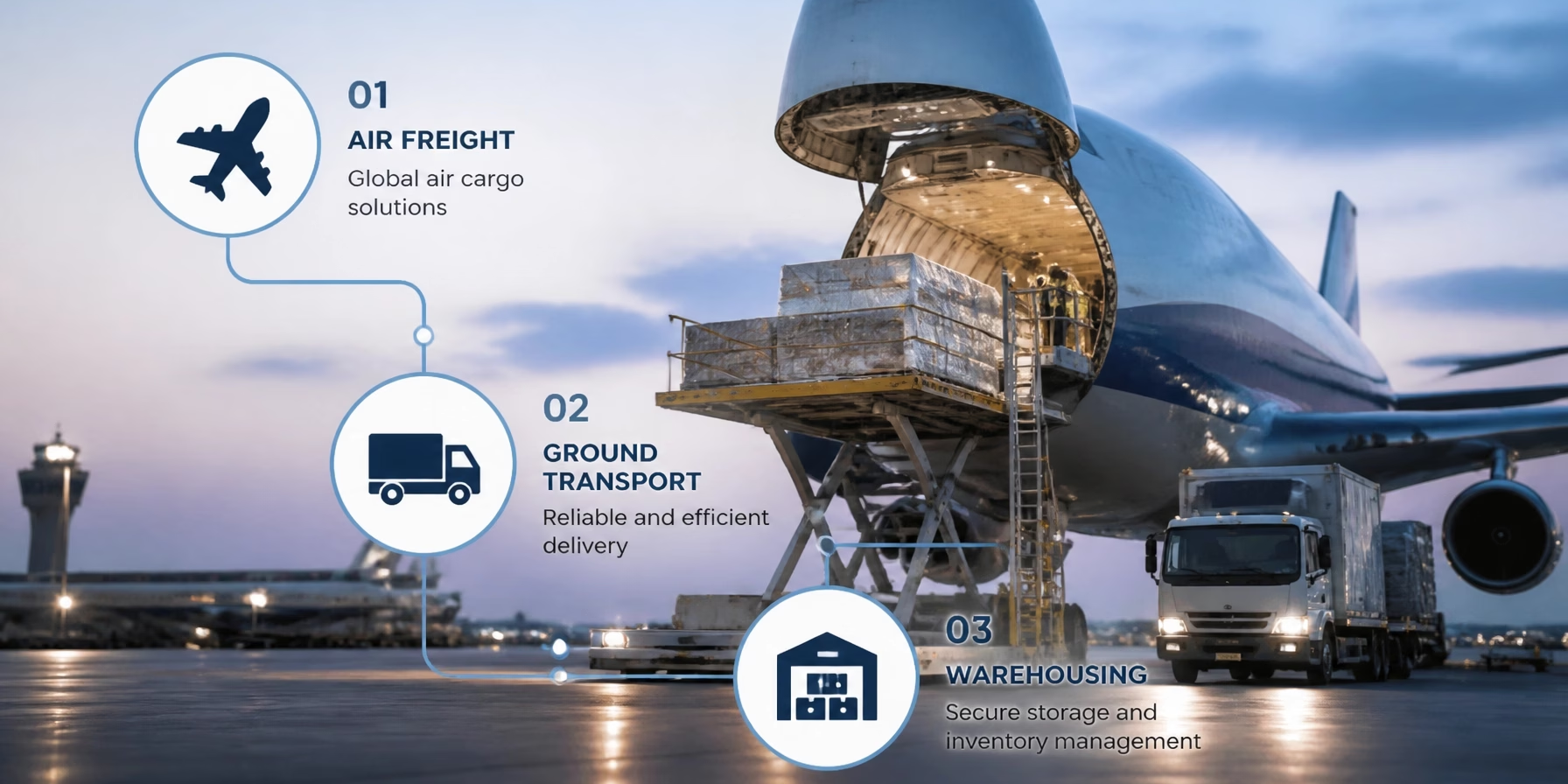
Most logistics software is built in a vacuum. It is designed by engineers who have never stood on a tarmac at 3:00 AM or tried to coordinate a multi-modal handoff across three different time zones.
At ImEx Cargo, we did things differently. Our platform, Plug-In Freight Ops™, didn’t start with a line of code. It started with a career spent listening.
In the early 1990s, the logistics industry was undergoing a massive shift. The term "Third-Party Logistics" (3PL) was just beginning to take root, and the promise of global, just-in-time supply chains was the new frontier. Michelle DeFronzo, the founder of ImEx Cargo, was at the center of this transformation as an EDI (Electronic Data Interchange) Manager.
Her role was unique: she sat exactly between the clients, the software developers, and the operational teams. She was the translator.
The Translator: Bridging Code and Cargo
In the 90s, EDI was the backbone of the logistics boom. It allowed for the electronic exchange of purchase orders, invoices, and shipping notices. But while the technology was revolutionary, there was a massive disconnect between the digital intent and the physical reality of freight movement.
Developers wrote code based on logic. Operations moved freight based on reality.
Michelle’s job was to take the real-world, often messy needs of shipping and translate them into structured technology. This experience created a fundamental philosophy at ImEx Cargo: Build what people actually need. Design with operators in mind.

"The technology should never be the hurdle," Michelle often notes. "It should be the bridge." This culture of inclusion: ensuring that the person loading the aircraft has as much say in the workflow as the executive reviewing the dashboard: became the DNA of our company.
Where Execution Breaks Down
As ImEx Cargo grew into a leader in airline GSA services and transportation coordination, we began to notice a recurring pattern. Despite the proliferation of "all-in-one" logistics platforms, execution was still breaking down.
The breakdown didn't happen within individual companies. It happened in the "white space" between them.
When a shipment moves from an airline to a trucking provider, or from a freight forwarder to a government-inspected warehouse, data often disappears. Fragmentation, lack of real-time visibility, and a total absence of partner accountability lead to delays, increased costs, and risk.
We looked for a solution that could manage these multi-stakeholder environments. We looked for a system that could sit above the existing silos and coordinate execution across the full shipment lifecycle: from quote to booking to tracking and delivery.
We couldn't find it. So, we built it.
Built Out of Necessity: The Birth of Plug-In Freight Ops™
Plug-In Freight Ops™ was originally an internal tool. We built it to solve our own operational headaches. We needed a way to ensure that when we quoted a complex multimodal move, the booking followed a structured workflow, and the tracking was audit-ready and visible to every stakeholder involved.
We focused on the four pillars of transportation execution:
- Quoting: Standardizing how rates and capacity are requested and confirmed.
- Booking: Creating a digital record that carries through the entire lifecycle.
- Tracking: Real-time visibility that isn't just a "ping," but a confirmed milestone.
- Accountability: Structured handoffs where performance is tracked for every party involved.

What started as a way to manage our own shipments evolved into something much larger: digital freight infrastructure.
Not Just a Software, but an Infrastructure Layer
We realized that the industry didn't need another ERP or another TMS. Most organizations already have those. What they need is a coordination layer.
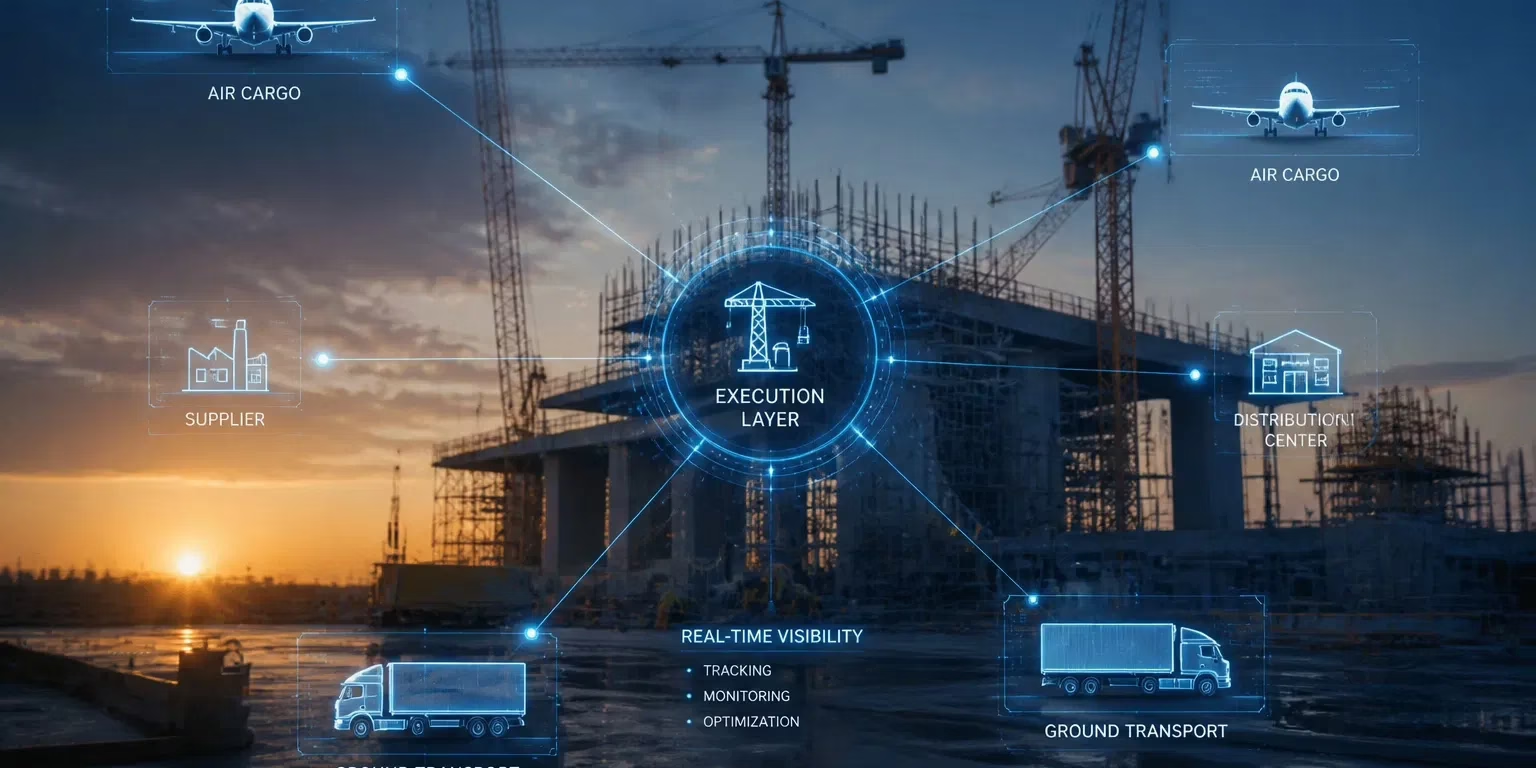
Plug-In Freight Ops™ doesn't replace your existing systems. It "plugs in" above them. It acts as the digital execution infrastructure that standardizes management across fragmented environments. Whether you are an airline managing a GSA network, a prime contractor overseeing a large-scale infrastructure project, or a government agency managing a complex supply chain, you require a single source of truth.
Our platform connects airlines, GSAs, trucking providers, and even government stakeholders into a single, coordinated workflow. It enables:
- Structured Handoffs: Knowing exactly who has the freight and what the next step is.
- Partner Accountability: Tracking the performance of every vendor in the chain.
- Real-Time Visibility: Moving past "last known location" to active execution status.
Activating the Ecosystem: DBE and Workforce Integration
One of the most significant lessons from our origin story is that logistics is a human business. You cannot have effective digital infrastructure without a reliable human ecosystem.
That is why we integrated certified DBE (Disadvantaged Business Enterprise) networks and workforce pipelines directly into the platform. For government agencies and prime contractors, meeting economic impact objectives is often a manual, compliance-heavy task.
Plug-In Freight Ops™ automates this by activating these diverse supplier networks within the unified execution system. This ensures that operational excellence and compliance goals are met simultaneously, rather than being managed in separate silos.

Why Coordination Fails Without a "Plug-In" Layer
Most logistics failures aren't caused by a lack of effort; they are caused by a lack of synchronization.
When an airline receives a booking, but the trucking provider isn't aware of the specific delivery window, or the ground handler hasn't received the updated paperwork, the system stalls. These "execution gaps" cost the industry billions annually in detention fees, spoiled goods, and lost time.
By treating logistics as a series of multimodal workflows rather than a series of isolated events, Plug-In Freight Ops™ reduces this fragmentation. It provides the audit-ready oversight required for complex logistics-driven projects.
The Future of Digital Freight Infrastructure
ImEx Cargo’s journey from a 1990s EDI management role to a leader in digital freight infrastructure is a testament to the power of listening to the operator. We didn't build a product to sell it; we built a solution to use it.
Today, we help organizations responsible for managing complex logistics execution: from airport authorities to infrastructure firms: regain control over their multi-stakeholder environments.
We move beyond the "black box" of logistics and into a world of structured, visible, and accountable execution.

Let’s Map Your Execution Workflow
We know that every logistics environment has its own unique set of "broken handoffs" and visibility gaps. We don't believe in one-size-fits-all solutions. Instead, we start by understanding your current operations.
We typically address these challenges through a focused pilot program, where we can demonstrate how a digital execution layer can standardize your workflows and improve partner performance.
Are you ready to move from fragmented management to infrastructure-level control?
- Pilot Discussion: We can walk through how this would apply to your specific environment.
- Capability Walkthrough: See the dashboard in action and map it to your current stakeholders.
- Partnership Conversation: Learn how our DBE and workforce integration can support your compliance goals.
Contact ImEx Cargo today to start the conversation. Let's build a more coordinated future, together.