In the world of modern logistics, execution rarely breaks down inside a single company’s system. It breaks down in the gaps between them.
A shipment from origin to destination isn't a straight line; it is a series of handoffs between independent organizations. When an airline, a ground handler, a trucking company, and a freight forwarder all touch the same piece of cargo, they are often operating in silos. They use different systems, follow different protocols, and maintain different versions of "the truth."
This fragmentation is why shipments sit on tarmacs, why paperwork goes missing, and why real-time visibility often feels like a suggestion rather than a reality.
Multi-Party Freight Coordination is the operational answer to this fragmentation. It is not just a software category; it is a blueprint for how modern logistics networks must operate to remain competitive, compliant, and efficient.
What is Multi-Party Freight Coordination?
Multi-party freight coordination is the structured management of execution across three or more independent organizations involved in a freight movement.
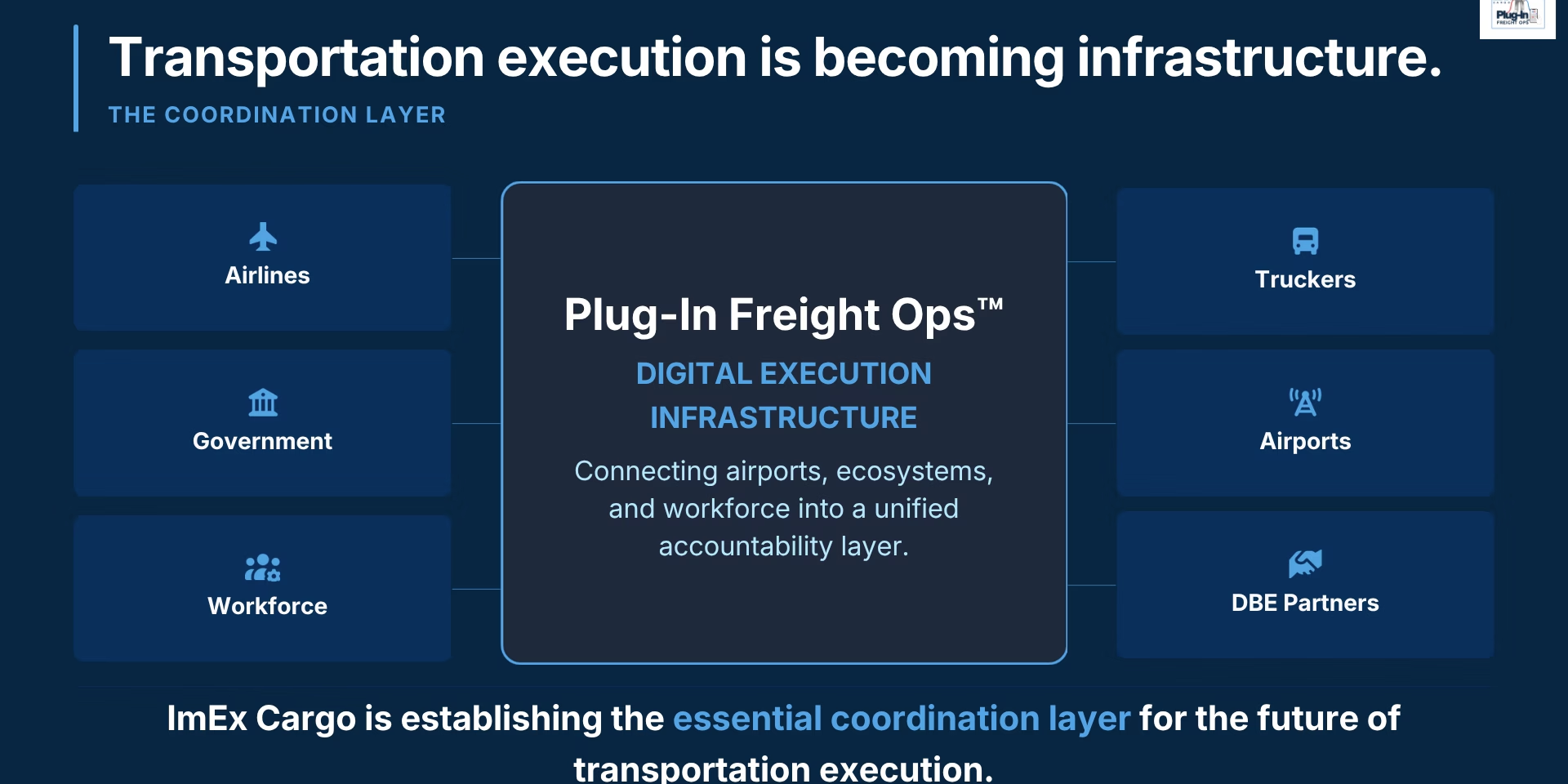
Unlike traditional logistics models that focus on bilateral relationships (e.g., a shipper talking to a carrier), multi-party coordination acknowledges that every shipment is part of a broader ecosystem. It provides the digital execution infrastructure required to unify these disparate parties into a single, coordinated workflow.
At its core, this model focuses on:
- Workflow Standardization: Ensuring every party follows the same "Quote → Book → Track" sequence.
- Execution Alignment: Coordinating actions in real-time across carriers, GSAs, and forwarders.
- System Neutrality: Connecting stakeholders without forcing them to replace their existing ERP or TMS.
By treating the logistics chain as a single orchestrated environment rather than a collection of isolated events, organizations can finally close the execution gap that costs the industry billions in delays and errors annually.
The Multi-Party Reality: Navigating the Ecosystem
Freight does not move through one company. It moves through a chain of independent entities, each with its own incentives and operational hurdles.

Consider a standard international air freight shipment. The "Multi-Party Reality" looks like this:
- The Shipper initiates the request.
- The Freight Forwarder manages the booking and documentation.
- The Trucking Provider handles the first-mile delivery to the airport.
- The Ground Handler receives the cargo at the terminal.
- The Airline executes the long-haul movement.
- Government Agencies manage customs and compliance.
In a traditional setup, information is passed through a "game of telephone." An email from the forwarder to the trucker might not be updated when the airline delays the flight. The result is a total lack of supply chain execution visibility. Multi-party freight coordination replaces this linear, fragile communication with a centralized coordination layer.
The Core Elements of Structured Execution
True multi-party coordination is built on five pillars that ensure a shipment moves according to plan, regardless of how many stakeholders are involved.
1. Structured Handoffs
The most dangerous moment for any shipment is the handoff. Multi-party coordination defines exactly what information must be exchanged and what physical actions must be verified when cargo moves from one party to another. This eliminates "he said, she said" disputes.
2. Clear Ownership & Accountability
In an ecosystem coordination layer, every stage of the shipment lifecycle has a designated owner. If a milestone is missed, the system identifies where the breakdown occurred and who is responsible for the resolution. This moves logistics from "passive tracking" to "active accountability."
3. Shared Visibility (A Single Source of Truth)
Visibility isn't just knowing where a truck is on a map. Real visibility means all parties see the same quote, the same booking status, and the same tracking events simultaneously. This ensures that when an exception occurs, everyone is looking at the same data to fix it.
4. Governed Workflows
A coordination platform enforces a standardized process across all partners. Whether you are working with a Tier-1 carrier or a small, certified DBE partner, the workflow remains consistent.
5. Partner Performance Tracking
Because every action is recorded within the coordination layer, organizations gain audit-ready data on partner performance. You can move beyond anecdotal feedback and start measuring actual execution speed and accuracy across your entire network.

How It Differs from Traditional Models
It is easy to confuse multi-party coordination with existing logistics software. However, the distinction is critical for leadership teams evaluating their digital strategy.
- Not a TMS (Transportation Management System): A TMS is designed for a single enterprise to manage its own shipments and carriers. It is an internal tool. Multi-party coordination is an infrastructure layer that sits above multiple companies' internal systems to coordinate their interaction.
- Not a Freight Marketplace: Marketplaces are matchmakers; they help you find a carrier. They rarely manage the actual execution or the complex handoffs that happen after the match is made. Plug-In Freight Ops™ picks up where the marketplace ends.
- Not a Pure Visibility Platform: Traditional visibility tools are observational: they tell you your shipment is late. A coordination platform is operational: it provides the tools to prevent the delay or re-coordinate the handoff in real-time.
The Technology Enabler: Digital Execution Infrastructure
Execution at scale requires a specific type of technology: Digital Freight Infrastructure.
This is the underlying "plumbing" that allows data to flow seamlessly between an airline’s booking system, a trucker’s mobile app, and a government agency’s compliance portal.
At ImEx Cargo, we call this Plug-In Freight Ops™. It doesn't ask you to tear out your existing software. Instead, it "plugs in" to your operation to provide a unified coordination layer. This approach allows for zero-migration deployment, meaning you can begin coordinating complex multi-party workflows in weeks, not years.

Industry Applications: Where Coordination Matters Most
While every logistics operation benefits from better coordination, certain sectors find it mission-critical:
- Air Cargo & GSAs: Coordinating bookings across multiple airlines and ground handlers while providing forwarders with real-time tracking.
- Infrastructure & Large-Scale Projects: Managing the movement of specialized equipment and materials across dozens of prime contractors and subcontractors.
- Government & Public Sector: Ensuring accountability and visibility in federally funded transportation programs where DBE participation and audit trails are mandatory.
- Drayage & Port Operations: Synchronizing the high-pressure handoffs between ocean carriers, port terminals, and short-haul trucking providers.
The Business Case: Why Multi-Party Coordination Wins
Investing in a freight execution platform isn't just about "better tech." It's about fundamental business outcomes that impact the bottom line.
Reduced Operational Overhead
When everyone is on the same page, the "manual coordination tax": the endless emails and follow-up calls: disappears. Teams spend less time chasing status and more time managing exceptions.
Faster Cycle Times
Structured handoffs mean cargo doesn't sit idle. By tightening the gaps between stakeholders, organizations can significantly reduce total transit time without changing their physical assets.
Risk Mitigation & Compliance
For government contractors and infrastructure firms, multi-party coordination provides a permanent, digital audit trail. You have proof of execution, proof of partner participation, and proof of compliance at every stage.
Improved Partner Performance
Visibility creates accountability. When partners know their performance is being tracked in a shared execution layer, service levels naturally rise.
Moving Toward a Coordinated Future
Logistics is no longer a game of individual excellence; it is a game of ecosystem alignment. Organizations that continue to rely on fragmented, bilateral communication will find themselves burdened by delays and rising costs.
Multi-party freight coordination offers a different path: one where execution is standardized, stakeholders are aligned, and visibility is built into the very infrastructure of the shipment.
Ready to see how coordination can transform your operation?
We typically address these challenges through a focused pilot. We can walk through how an execution coordination layer would apply to your specific environment, whether you are managing an airline network, an infrastructure project, or a complex government program.