Execution in air cargo often breaks down at the most critical point: the handoff between human capability and operational demand. For years, the industry has treated talent as a variable cost to be managed through hiring cycles: a reactive, transactional approach to a structural problem.
In a high-stakes environment where air waybills, flight schedules, and ground handling must sync perfectly, "hiring" is no longer enough. To survive the next decade of volatility, airlines and cargo operators must shift their thinking. We don't just need more people; we need workforce infrastructure.
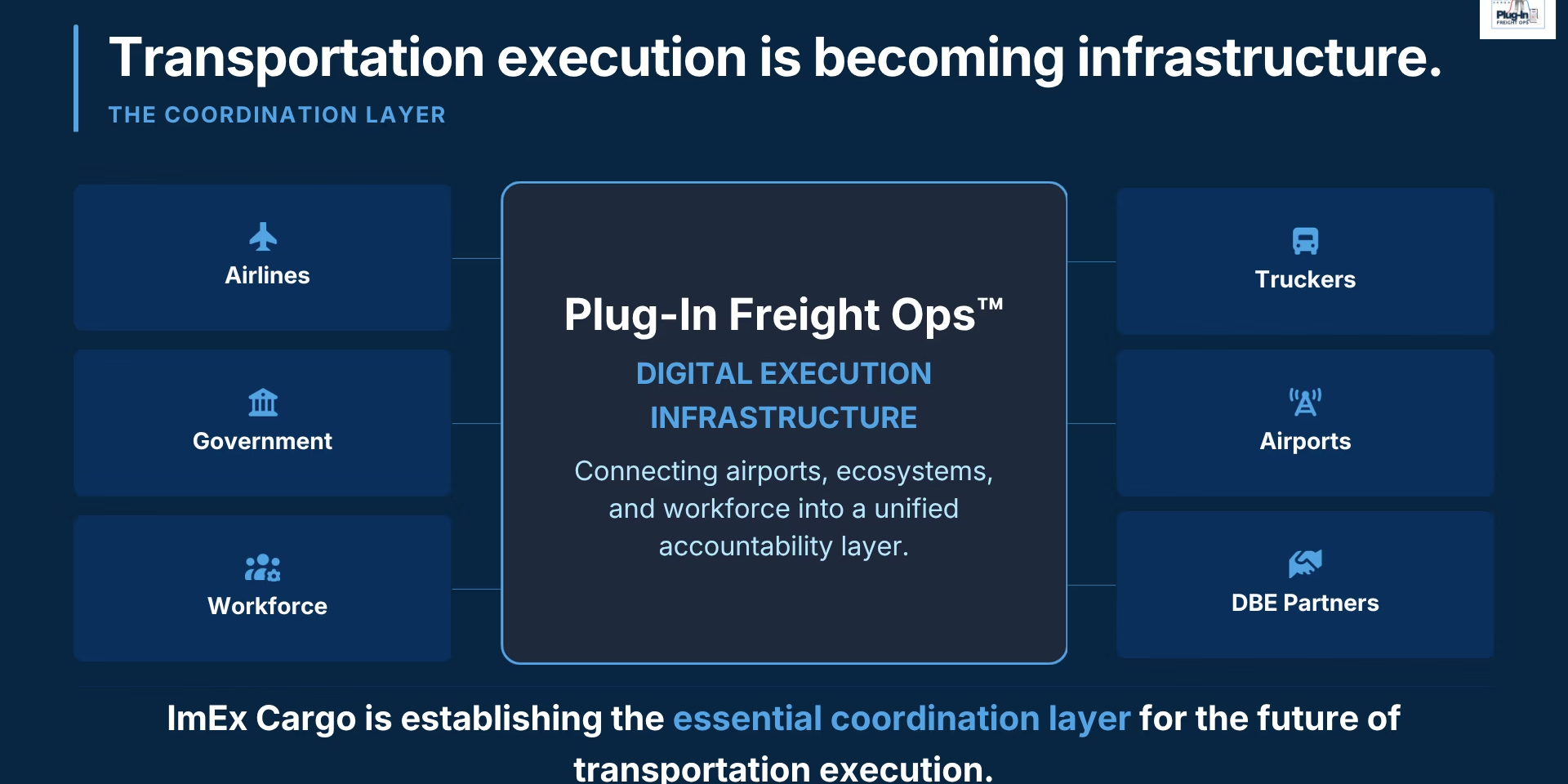
At ImEx Cargo, we’ve observed that the most successful logistics programs aren't just buying labor; they are building a coordination layer that connects industry needs, educational pipelines, and government workforce boards into a single, unified system.
Why Hiring is a Band-Aid, Not a Cure
Traditional hiring is reactive. A contract is won, a peak season approaches, or turnover spikes, and the HR machine kicks into gear. This transactional model is designed for a world that no longer exists: a world where labor was abundant and operational knowledge was static.
Today, air cargo faces a different reality:
- Operational Latency: When a ground handler or carrier is understaffed by even 10%, the ripple effect hits the entire schedule.
- The Knowledge Gap: As experienced professionals retire, they take decades of specialized cargo expertise with them.
- Predictability Deficit: Without a strategic pipeline, operators are constantly over-paying for emergency temp labor or losing revenue due to capacity constraints.
Hiring is a search for a person to fill a hole. A workforce strategy is the design of a pipeline that ensures the hole never exists in the first place.

The Shift: Workforce as Logistics Infrastructure
We often talk about infrastructure in terms of runways, warehouses, and digital platforms like Plug-In Freight Ops™. But the people who execute these workflows are the most vital part of that infrastructure.
If your workforce is fragmented, your execution will be fragmented.
When we view workforce as infrastructure, it becomes something that requires a coordination layer. This layer sits above the individual companies and agencies, standardizing how talent is identified, trained, and activated.
It moves the industry away from "who can we find today?" to "how is our talent ecosystem performing?"
The Industry Needs a Common Coordination Layer
The breakdown in workforce development usually happens because stakeholders are siloed:
- Airlines & GSAs know the skills they need but don't have the time to train from scratch.
- Universities & Colleges have the students but lack the real-time industry data to align curricula with actual operational requirements.
- Workforce Boards & Government have the funding but struggle to measure the real-world economic impact of their programs.
Without a centralized coordination layer, these entities are speaking different languages. They need a digital execution infrastructure that bridges the gap.
Plug-In Freight Ops: The Workforce Innovation Network (WIN)
This is where the Plug-In Freight Ops Workforce Innovation Network comes in. We didn't build a training company; we built a coordination layer for human capital.
Rather than competing for the same shrinking pool of candidates, the Workforce Innovation Network (WIN) allows the cargo ecosystem to activate talent pipelines through a unified system. It connects the "Quote → Book → Track" workflow of freight to the "Train → Certify → Deploy" workflow of people.

Key Pillars of Workforce Infrastructure:
- Visibility & Accountability: Just as you track a shipment, you must track the readiness and certification of your workforce across the ecosystem.
- Structured Handoffs: Ensuring that students moving from an Academy environment into a ramp or warehouse environment are meeting standardized, industry-vetted benchmarks.
- Ecosystem Activation: Leveraging DBE networks and diverse talent pools to meet both compliance requirements and operational goals.
Strategic Advantage Through Workforce Activation
Workforce activation is becoming a strategic differentiator. Airlines and cargo hubs that can guarantee a stable, highly-skilled labor force will win the most lucrative contracts and the highest-performing partners.
This isn't about "hiring graduates." It’s about building a Workforce Strategy that provides:
- Risk Reduction: Less turnover and fewer safety incidents due to standardized, high-quality training.
- Increased Control: The ability to scale operations up or down based on a predictable pipeline of talent.
- Audit-Ready Oversight: Clear documentation of training and compliance for federal, state, and municipal contracts.

From Transactional to Strategic
The logistics industry is at a crossroads. We can continue to struggle with the "hiring crisis," or we can begin to invest in the infrastructure that solves it.
The Plug-In Freight Ops™ platform is designed to coordinate logistics across fragmented environments. That coordination must include the people behind the pallets. When you align your workforce strategy with your digital execution layer, you move from a state of constant reaction to a state of strategic control.
Let’s Build the Infrastructure Together
We are currently working with forward-thinking airlines, airport authorities, and prime contractors to implement this coordination layer. If you are ready to move beyond "hiring" and start building a workforce infrastructure that drives real execution, we should talk.
We can walk through how this would apply in your environment.
- Pilot Discussion: Explore how the Workforce Innovation Network can plug into your current operations.
- Capability Walkthrough: See the Plug-In Freight Ops™ platform in action and how it manages multi-stakeholder ecosystems.
- Partnership Conversation: Learn how we connect education, industry, and government to build the next generation of air cargo professionals.
Contact ImEx Cargo today to start the conversation.