For decades, the logistics industry has been obsessed with optimization. Multi-billion dollar enterprises have poured capital into ERPs, TMSs, and WMSs to make their internal operations faster, leaner, and more efficient. They succeeded: on the inside.
But as soon as a shipment leaves the four walls of the enterprise, the efficiency collapses. The "outside": the space between organizations: is still a chaotic mess of fragmented EDI, disparate portals, and endless email threads.
The hard truth of 2026 is that internal optimization has reached a point of diminishing returns. The next frontier of competitive advantage isn't found in optimizing your own silos; it is found in coordinating the ecosystem.
The Execution Gap: Why Visibility Alone Is Failing
We have entered an era where "visibility" is a buzzword that has lost its teeth. For years, the market was told that if we could just see where the cargo was, the problems would solve themselves.
The reality? Visibility only tells you that you’re in trouble; it doesn’t help you get out of it.
When a shipment is delayed at a terminal or a handoff between a trucker and a ground handler fails, a tracking dot on a map doesn't fix the problem. The breakdown occurs in the execution gap: the space where coordination fails between multiple stakeholders who don’t share a system of record.
This is particularly evident in the most complex nodes of the supply chain: Airports and Cargo Ecosystems.

The Fragmented Reality of Cargo Ecosystems
Air cargo is the ultimate example of a fragmented operational environment. To move a single high-value pallet from an international origin to a domestic destination, a dozen entities must synchronize:
- Airlines and GSAs managing capacity.
- Ground handlers managing the tarmac and warehouse.
- Trucking providers handling the first and last mile.
- Freight forwarders coordinating the flow.
- Government agencies (Customs, TSA) overseeing compliance.
- Certified DBE (Disadvantaged Business Enterprise) partners fulfilling participation requirements.
In most cases, these stakeholders are operating in digital silos. When a handoff happens, the data is "thrown over the wall" via email or a manual spreadsheet update. This is what we call "shadow infrastructure." It is slow, prone to error, and creates massive operational risk.
At ImEx Cargo, we have seen that the cost of this fragmentation isn't just measured in delays: it's measured in the breakdown of accountability. When everyone has their own version of the truth, "execution" becomes reactive firefighting rather than proactive orchestration.
The AI Trap: Faster Noise vs. Structured Coordination
With the rise of "agentic" AI and predictive analytics, many organizations are looking to technology to bridge these gaps. However, there is a significant trap: AI without structured coordination is just faster noise.
If an AI predicts a delay but doesn't have a structured workflow to alert the next three stakeholders and re-book the connection automatically, the "intelligence" is wasted. To move from "sensing" risk to "responding" to it, you need a digital execution infrastructure that handles the heavy lifting of multi-party handoffs.
The goal isn't just to have smarter software; it's to have a stronger System of Coordination.

Introducing the Execution Command Center
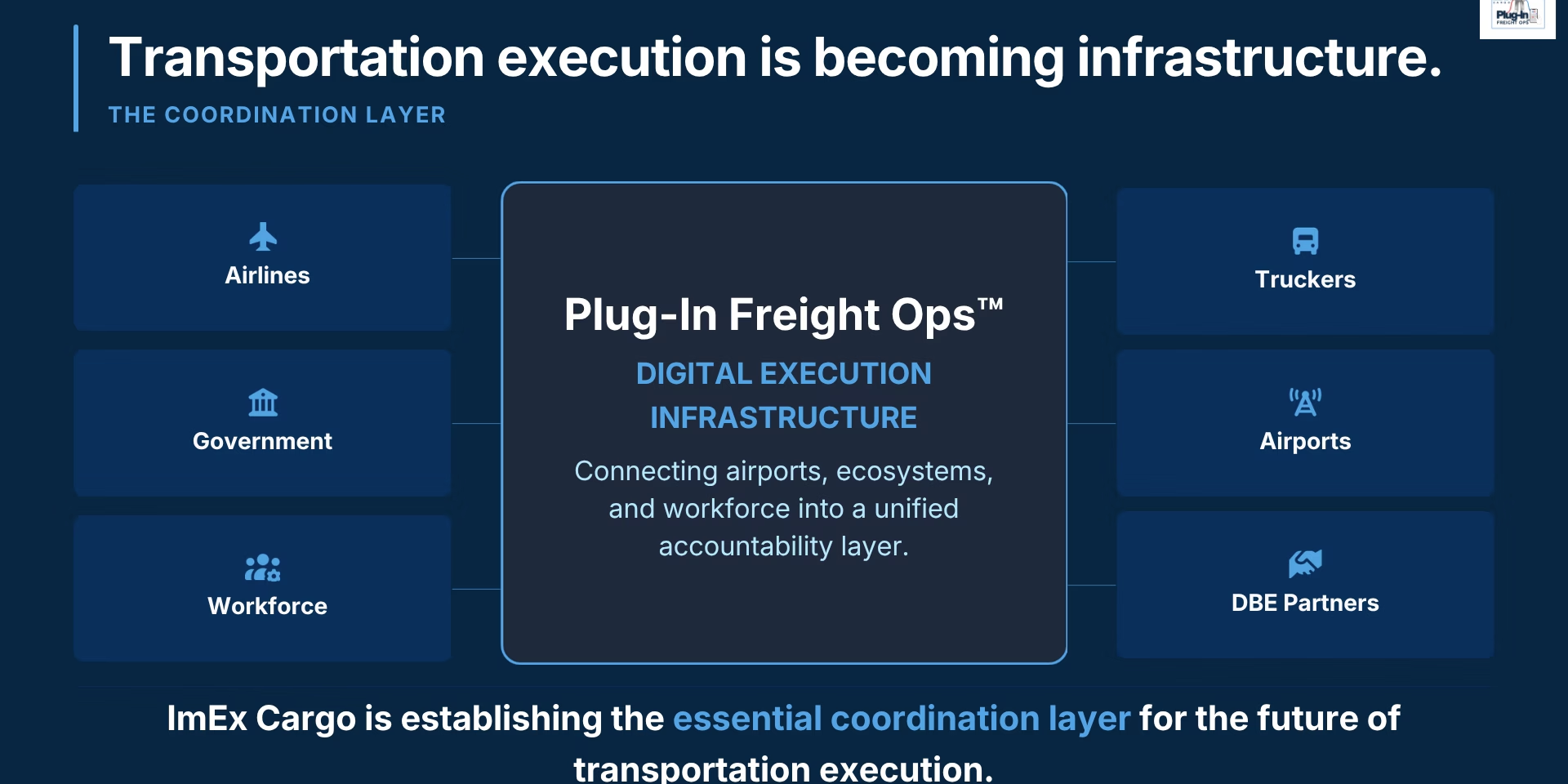
The industry is moving toward a "Command Center" operating model. This isn't just a dashboard; it is a Digital Execution Infrastructure layer that sits above existing systems to provide:
- Multi-Party Workflow Orchestration: Standardizing the lifecycle of a shipment: from Quote to Book to Track to Deliver: across all participants.
- Clean Milestone Management: Ensuring that every handoff is timestamped, verified, and accountable.
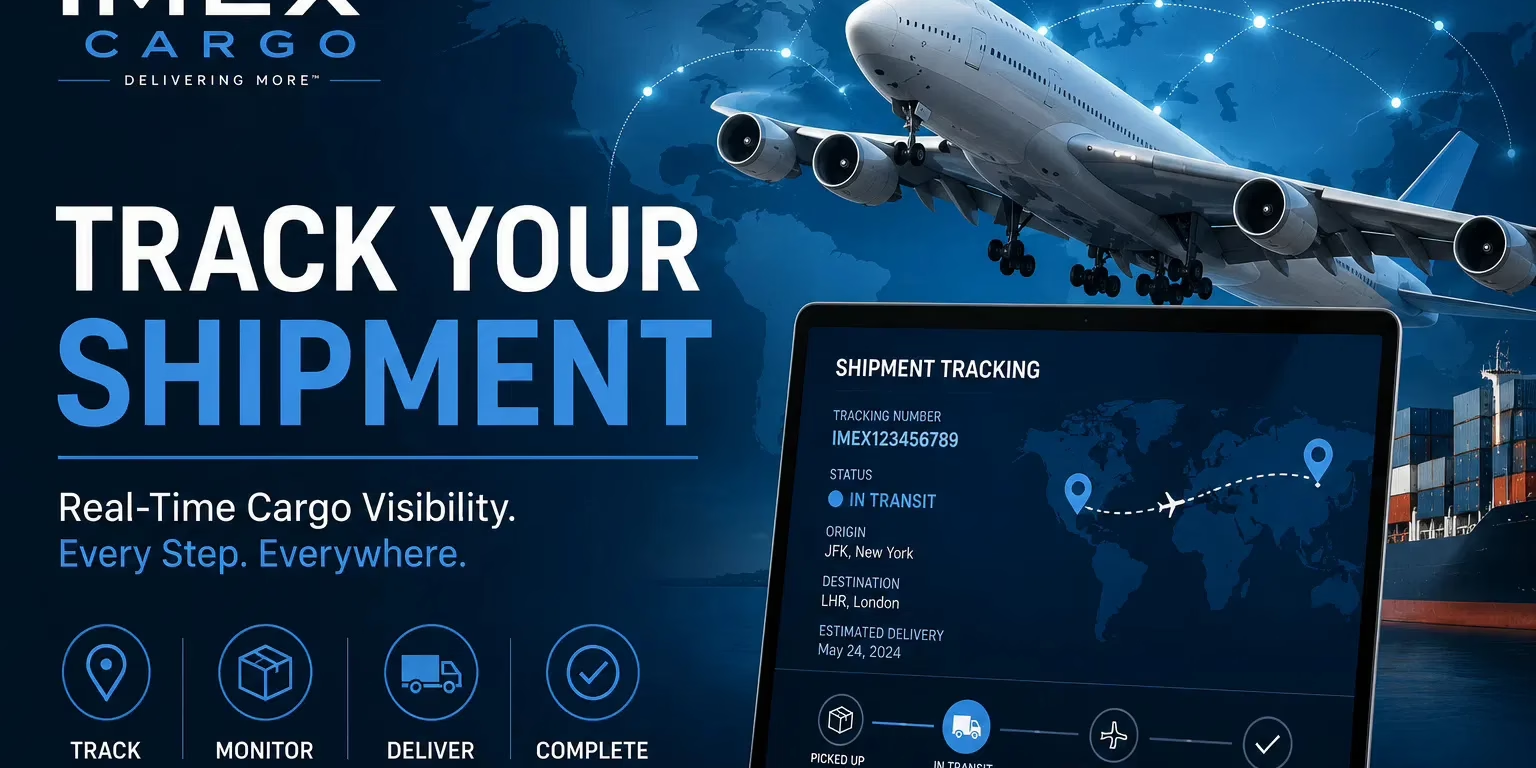
- Real-Time Intervention: Moving beyond "where is it?" to "what are we doing about it?" through automated alerts and shared execution environments.
- Ecosystem Accountability: Tracking the performance of every partner, including diverse suppliers and DBE networks, in one audit-ready system.
This is the core philosophy behind Plug-In Freight Ops™. Instead of asking stakeholders to "rip and replace" their existing TMS or airline systems, we provide a neutral layer that connects them all into a single, coordinated execution environment.
The Neutral Infrastructure Advantage
One of the primary reasons ecosystem execution fails is the lack of a "neutral" platform. Airlines don't want to use a forwarder's system; forwarders don't want to be locked into a single carrier's portal.
True digital infrastructure must be neutral. It must serve as the connective tissue that allows a GSA, a trucker, and an airport authority to work together without ceding control of their proprietary data or internal processes.
By positioning Plug-In Freight Ops™ as an execution layer rather than just another software tool, we enable:
- Airlines & GSAs to optimize capacity and sales execution through a structured booking flow.
- Government Contractors to maintain visibility and compliance over complex, multi-stakeholder projects.
- Airports & Hubs to modernize their freight flows without disrupting their existing tenant systems.
From Seeing to Doing: The Path Forward
The market language is finally catching up to the operational reality. Industry leaders are acknowledging that the next phase of supply chain evolution is the shift from Enterprise Optimization to Network Orchestration.
If you are still managing your ecosystem handoffs via 200-email chains and manual spreadsheets, you aren't just inefficient: you are operating with a massive blind spot. The advantage in 2026 won't come from who owns the most systems; it will come from who coordinates execution best across their entire participant network.

As Michelle DeFronzo, CEO of ImEx Cargo, often emphasizes, "We aren't just moving freight; we are managing the execution infrastructure that makes global trade possible."
Move Beyond Optimization
It’s time to stop trying to make your silos smarter and start making your ecosystem execute. Whether you are an airline looking to coordinate capacity or a prime contractor managing a massive infrastructure project, the solution isn't more software: it's better coordination.
Are you ready to move from internal optimization to ecosystem execution?
We typically address these challenges through a focused pilot program designed to map our execution layer to your current operation. Contact our team today to walk through how a Digital Execution Command Center can apply to your environment.