Where execution breaks down in the logistics industry, it usually isn’t because of a lack of planes, trucks, or ships. It breaks down because of a lack of coordinated, actionable data between stakeholders.
The same is true for the talent pipeline.
For universities, the gap between a logistics curriculum and the real-world operational execution of a complex shipment is widening. While students understand the theory of supply chain management, they often lack exposure to the digital execution layers where modern logistics actually happens.
To bridge this gap, we don’t just need more internships; we need a common coordination layer that integrates education into the heart of the logistics ecosystem.
The Disconnect: Why “Career Fairs” Aren’t Enough
Traditional industry exposure for students usually looks like a guest lecture or a booth at a career fair. While these are valuable for networking, they are point solutions: isolated events that don't provide students with a view of the actual execution workflows they will be expected to manage.
Today’s logistics environment is fragmented across airlines, GSAs, freight forwarders, and trucking providers. Without exposure to how these entities coordinate: specifically within a digital execution infrastructure: students graduate into an industry where they have to spend years "learning the ropes" of manual handoffs and fragmented systems.

Workforce as Infrastructure
At ImEx Cargo, we believe that workforce development is not a separate "HR function." It is a strategic component of the logistics infrastructure itself.
Just as a port or an airport needs physical infrastructure to move goods, a logistics ecosystem needs "workforce infrastructure" to move knowledge and talent. When universities are treated as a disconnected supplier of labor, rather than a core partner in the execution layer, the entire system loses efficiency.
The shift we are seeing is simple:
- From: Recruiting candidates as an afterthought.
- To: Activating a workforce pipeline as a strategic advantage.
By integrating universities into the coordination layer, we ensure that students are not just "industry-ready" in theory, but "execution-ready" in practice.
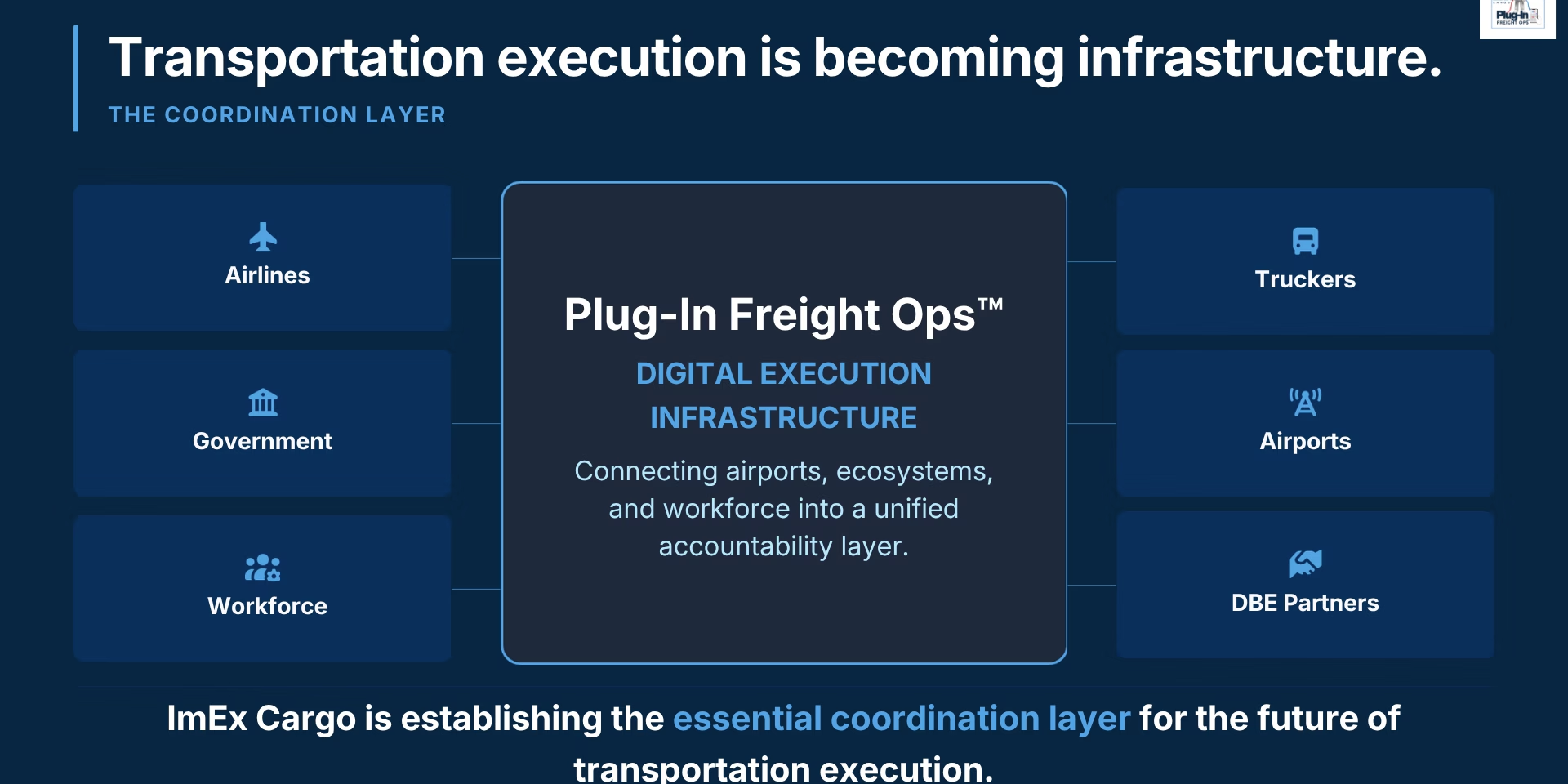
The Coordination Layer: Plug-In Freight Ops™ Workforce Innovation Network
The solution to this fragmentation is the Plug-In Freight Ops Workforce Innovation Network.
This isn't just another training program. It is a digital execution infrastructure designed to coordinate logistics across multi-stakeholder environments: and that includes educational institutions.
Rather than replacing existing academic systems, the Plug-In Freight Ops™ platform sits above them. It connects universities with airlines, government stakeholders, and private logistics firms into a single coordinated workflow.

This coordination layer allows for:
- Workflow Standardization: Students learn on the same structured workflows (from quote to booking to tracking) that are being used in real-world high-stakes projects.
- Performance Tracking: Academic outcomes are mapped directly to operational performance needs.
- Partner Accountability: Universities, industry partners, and workforce boards are held to a shared standard of execution.
Activating the Next Generation
Workforce activation is becoming a primary differentiator for logistics hubs and infrastructure programs. When a city or an airport authority can demonstrate a coordinated talent pipeline that is plugged into a real-time execution layer, they attract more investment and higher-tier partners.
For universities, being part of this "innovation network" means their students are exposed to:
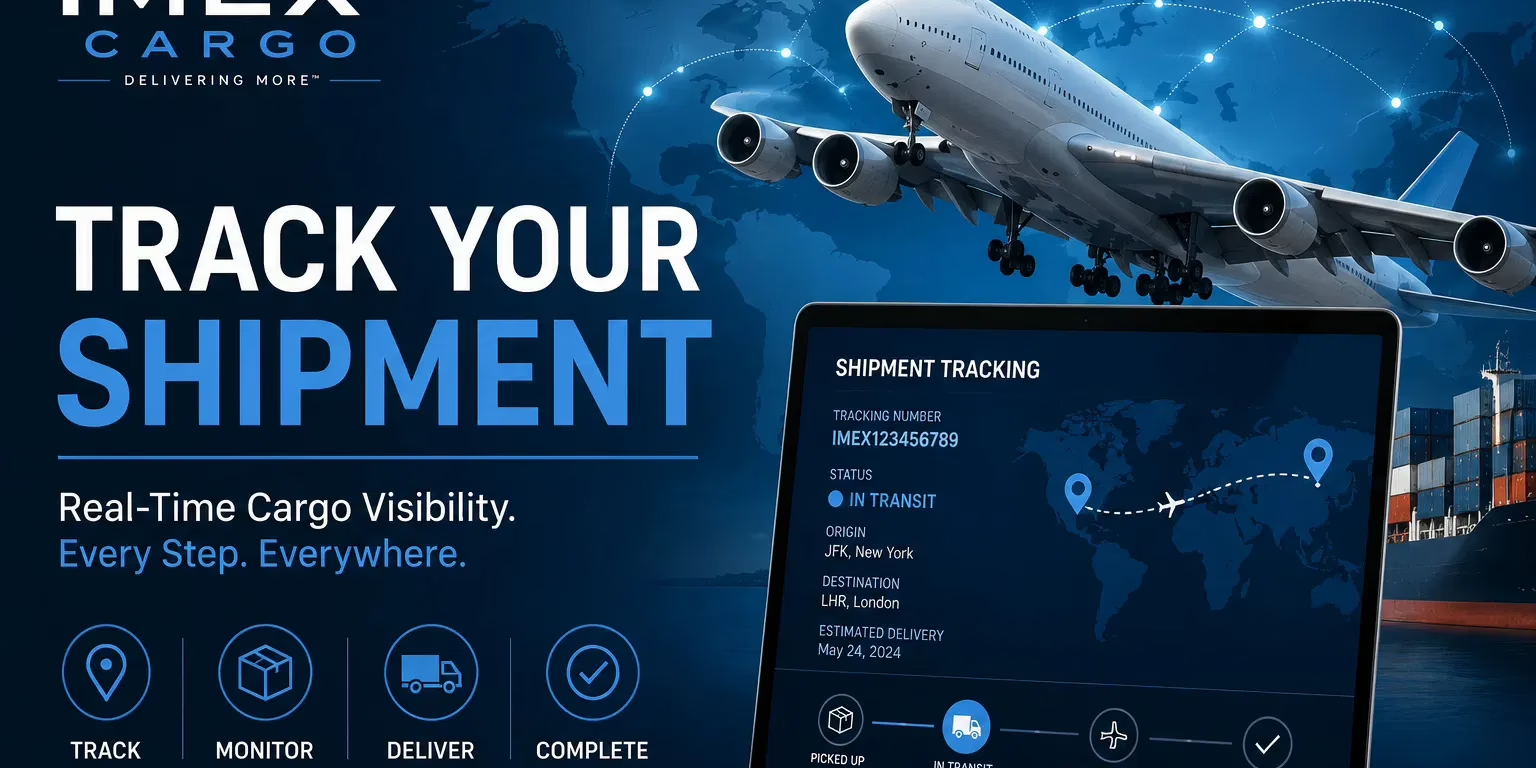
- Real-Time Visibility: Understanding how data flows across multimodal handoffs.
- Structured Handoffs: Learning the accountability required when moving freight between air, ground, and sea.
- Audit-Ready Oversight: Gaining experience in the compliance-heavy environments of federal and state-level infrastructure programs.

Beyond "Hiring Graduates"
The logistics industry doesn't just need more employees; it needs a workforce that understands how to operate within a unified, digital infrastructure.
When industry, education, and government operate on a common coordination layer, we eliminate the latency that currently exists in the talent pipeline. We move from a world of "hiring graduates" to a world of "activating logistics professionals" who are already familiar with the execution infrastructure of the future.
We are currently looking for university partners who want to move beyond traditional internships and become part of a strategic workforce infrastructure.
Let’s discuss how we can map the Plug-In Freight Ops™ environment to your current logistics programs.
We can walk through a pilot walkthrough or a full capability map to see how this coordination layer can benefit your students and your industry partners.
Learn more about our services at ImEx Cargo or explore our certifications to see how we maintain excellence in our execution layer.