Why Infrastructure Funding Is Shifting Toward Operator-Led Logistics Platforms Built to Scale
Infrastructure investment is expanding—but capital isn’t the bottleneck anymore. The constraint is execution: coordinating vendors, freight, compliance, and real-time visibility at a scale that government and major infrastructure programs require.
The New Reality: Funding Is Rising, Delivery Risk Is Rising Faster
When infrastructure programs scale, the challenge shifts from “how do we finance this?” to “how do we execute this without delays, overruns, and compliance failures?” That’s why more decision-makers are looking for operator-led logistics platforms—systems shaped by real-world constraints, not theoretical workflows.
In practice, the most common failure points appear where projects depend on many parties at once: agencies, primes, subcontractors, carriers, ports, warehouses, and on-site delivery teams. Without a shared operating layer, work becomes fragmented and progress becomes harder to prove.
What breaks first when projects scale
- Visibility gaps: no single source of truth across shipments, vendors, and milestones
- Manual coordination: email/spreadsheets that collapse under volume
- Exception chaos: delays with unclear ownership and slow escalation
- Audit pressure: reporting requirements that grow faster than documentation capacity
Why Operator-Led Platforms Are Getting More Attention
“Operator-led” means the platform is informed by people who actually run freight operations—handling exceptions, compliance, timelines, and vendor coordination in the real world. These systems tend to prioritize what matters most in infrastructure delivery: accountability, continuity, and repeatable execution.
"In infrastructure, scale isn’t a feature—it’s a requirement. The operating layer has to expand without breaking accountability."
Interoperability Wins Because Replacement Is Too Risky
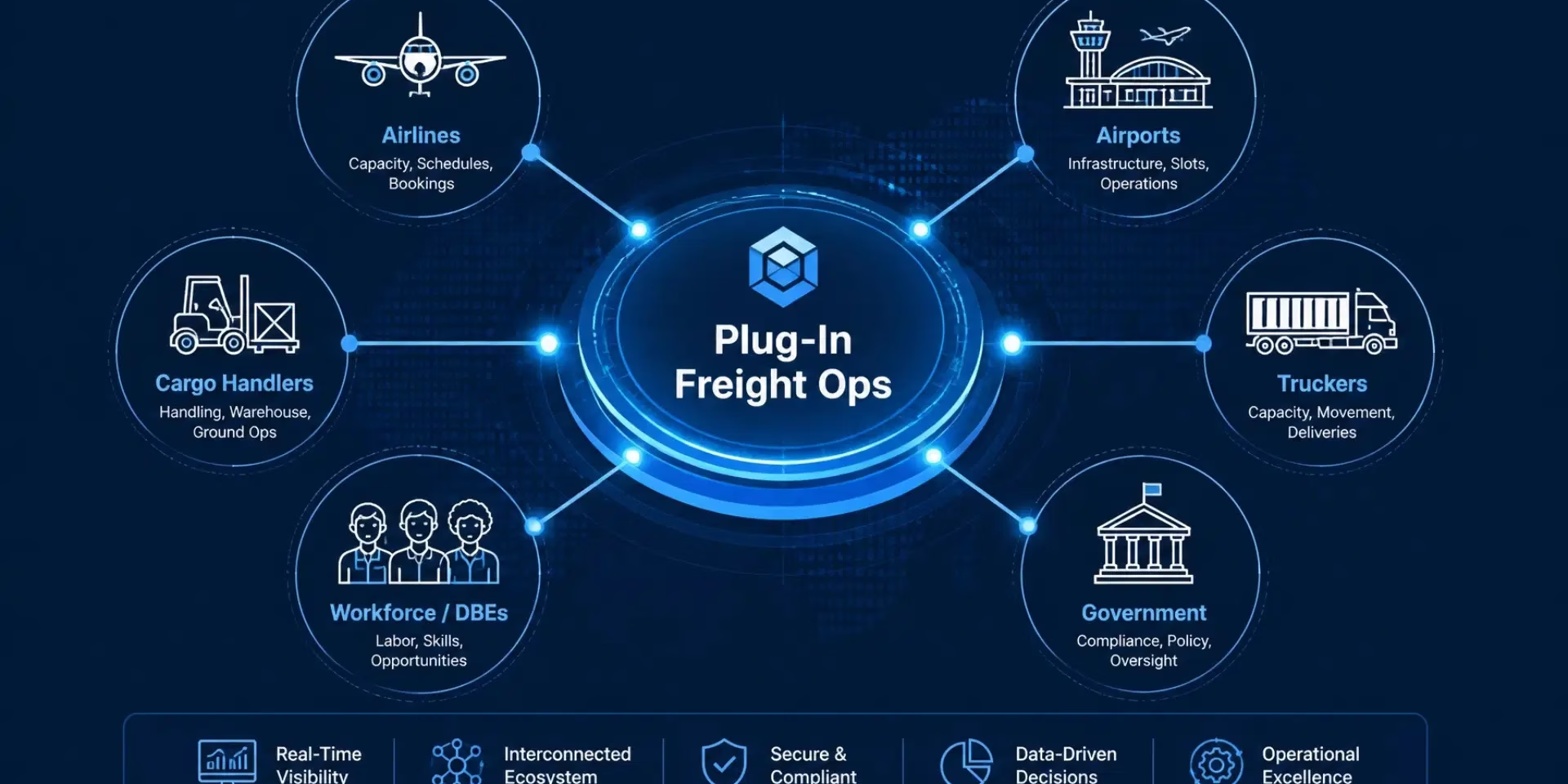
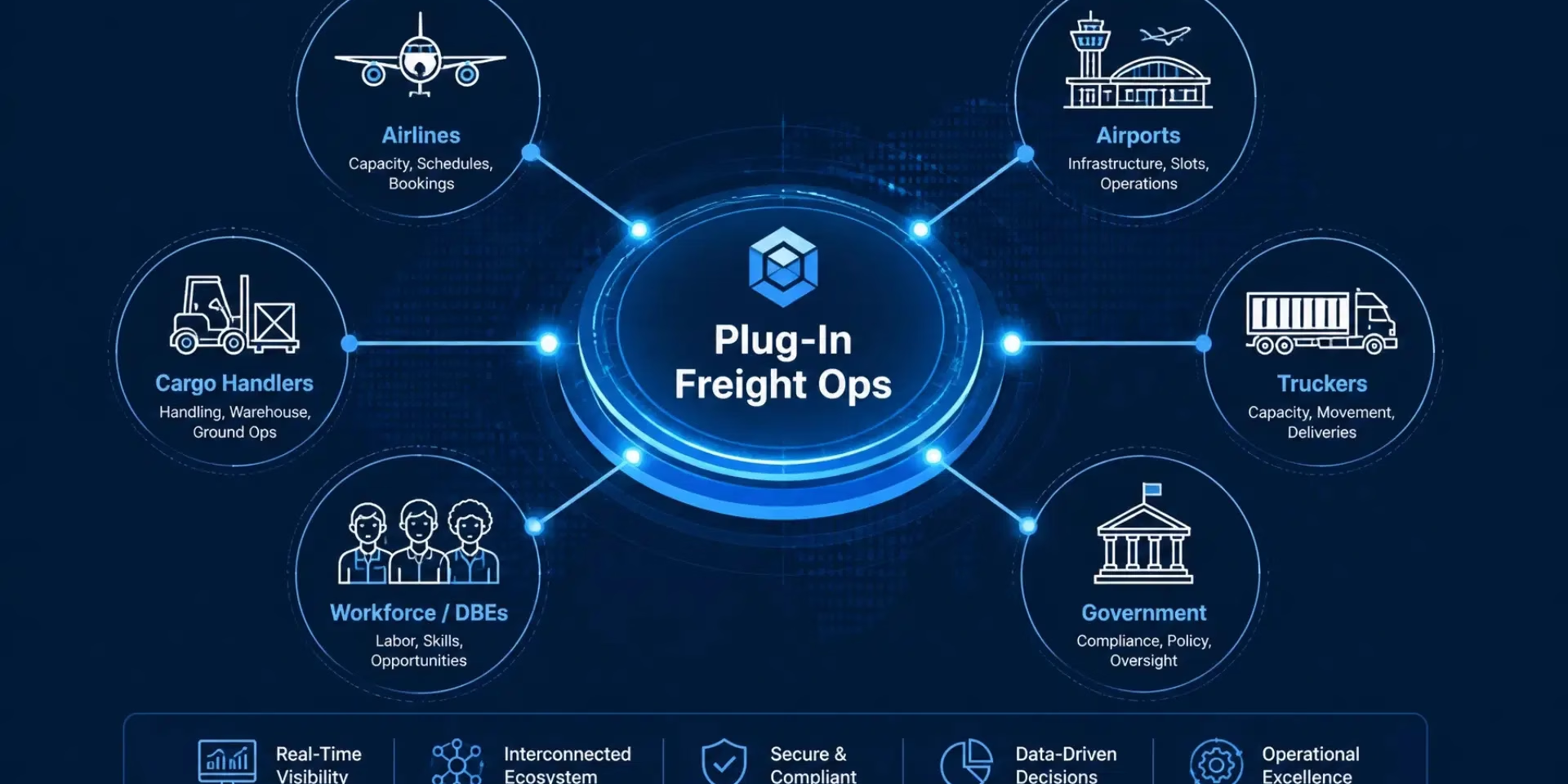
Agencies and primes can’t pause mission-critical delivery to replace every system. That’s why funding is shifting toward platforms that can layer onto existing tools—improving visibility and compliance without forcing a disruptive rip-and-replace transition.
What Interoperability-First Looks Like
- Standardized workflows (quote → book → track → report) that everyone can follow
- Shared dashboards for program managers and contracting stakeholders
- Audit-ready reporting that exports cleanly for reviews and compliance checks
- Exception management with alerts, escalation paths, and documented resolution
What This Means for Infrastructure Stakeholders
As funding expands, the winners won’t simply be the organizations that secure budgets—they’ll be the ones that can prove delivery with clean reporting, predictable workflows, and accountable coordination across vendors.
Operator-led logistics platforms are increasingly viewed as “infrastructure” themselves: the operating layer that turns funding into outcomes.
Want to See What Execution-Ready Logistics Infrastructure Looks Like?
Explore how Plug-In Freight Ops™ supports scalable delivery with interoperability, visibility, and compliance.
Learn MoreAbout ImEx Cargo
ImEx Cargo is a woman-owned logistics and freight-technology company building interoperable infrastructure for modern freight operations. Through Plug-In Freight Ops™, the company enables collaboration, visibility, and accountability without forcing wholesale system replacement.
Contact Information
For capability briefings, pilot program discussions, or partnership inquiries, contact ImEx Cargo at group@imexcargo.com or visit imexcargo.com.

Related Posts