For prime contractors and government agencies, the word "compliance" usually conjures images of endless paperwork, audit anxiety, and administrative overhead. But in the world of large-scale infrastructure and logistics programs, compliance isn't just a regulatory hurdle: it is a significant financial lever.
When execution breaks down between stakeholders, the first thing to suffer is your margin.
Most organizations treat Disadvantaged Business Enterprise (DBE) and diverse supplier compliance as a "checkbox" activity performed after the work is done. This reactive approach creates massive visibility gaps that lead to bid protests, liquidated damages, and withheld payments.
In a multi-party logistics environment, compliance is liability. If you cannot prove execution accountability in real-time, you are essentially self-insuring against the risk of federal and state audits.
Here are the seven most common compliance gaps currently draining profitability in complex logistics programs, and how to close them using a digital execution infrastructure.
1. The Manual Spreadsheet Trap
The most common point of failure is also the most basic: managing high-stakes compliance data via disconnected spreadsheets.
When your diverse supplier tracking lives in an Excel file that is only updated once a month, you are operating on "ghost data." By the time a discrepancy is found, the shipment has been delivered, the sub-contractor has been paid, and the audit trail is cold.
The Profit Drain: Administrative "churn": the cost of staff manually hunting down signatures and BOLs: often exceeds the administrative budget of the project itself.
The Fix: Transition to a digital freight infrastructure where compliance data is a byproduct of the execution. When a shipment is quoted, booked, and tracked within a unified platform like Plug-In Freight Ops™, the documentation is generated automatically.
2. Commercially Useful Function (CUF) "Ghost" Vendors
Federal regulations (49 CFR §26.55) are clear: a DBE must perform a Commercially Useful Function. This means they must actually manage and supervise the work.
Too often, prime contractors use diverse suppliers as "pass-throughs": where the DBE invoices, but a non-DBE firm provides the labor or equipment. This is a classic red flag for fraud.
The Profit Drain: If an auditor determines a DBE didn't perform a CUF, that entire portion of the contract is disqualified from your goal. You may face False Claims Act exposure and heavy fines.
The Fix: Use real-time tracking to verify that the certified firm is actually executing the hand-offs. Digital workflows provide timestamped proof of who moved the freight, where it was moved, and who authorized the delivery.

3. Reactive Reporting (Post-Mortem Compliance)
If your first look at your DBE participation numbers happens at the end of the quarter, you have already lost control of the outcome. Reactive reporting means you are only identifying shortfalls when it is too late to fix them.
The Profit Drain: Missed goals lead to "non-responsible" ratings on future bids, effectively locking you out of the next $100M+ infrastructure program.
The Fix: Implement audit-ready oversight that allows you to see participation percentages in real-time. If a diverse supplier’s volume drops, the system should flag it immediately, allowing for course correction before the reporting period ends.
4. Fragmented Hand-offs & Lost Accountability
In complex logistics, cargo changes hands multiple times: from the airline to the GSA, to the trucker, to the warehouse. Each hand-off is a potential "black hole" for compliance documentation.
If a trucking provider fails to provide a certified payroll or a weight ticket, the prime contractor is the one left holding the bag during an agency audit.
The Profit Drain: Delays in document collection lead to payment holds. When your cash is tied up because a third-tier sub failed to upload a PDF, your liquidity takes a hit.
The Fix: Standardize the workflow from quote to booking to tracking. By using an execution layer that sits above existing systems, you can mandate that certain documents are uploaded before the next stage of the shipment can proceed.

5. Improper Substitutions and Legal Exposure
Dropping a DBE subcontractor because they are "hard to work with" without following the proper federal notification process is a recipe for a lawsuit. Even if your subcontract technically allows for termination, federal DBE rules often require a 5-day notice and agency approval.
The Profit Drain: Legal fees and the cost of "Good Faith Effort" documentation after a disputed termination can skyrocket, often doubling the cost of the original line item.
The Fix: Centralize your diverse supplier networks within a platform that logs all communication and performance issues. When you have a digital paper trail of non-performance or "cure" notices, getting agency approval for a substitution becomes a matter of hours, not weeks.
6. The Payment Lag & Diverse Partner Attrition
Diverse suppliers, often being smaller entities, rely on prompt payment. Federal "Prompt Payment" clauses aren't just suggestions; they are enforceable mandates. If you pay your DBEs late, they won't work with you again.
The Profit Drain: High turnover in your diverse supplier pool means you are constantly spending money on new partner onboarding and vetting, rather than building a high-performing, reliable ecosystem.
The Fix: Link your execution platform to your financial reporting. When a delivery is confirmed digitally, the payment clock starts automatically. This transparency builds trust and ensures you remain the "Partner of Choice" for top-tier diverse firms.
7. Ignoring Performance and Growth Data
Most contractors treat compliance data as garbage data: something to be filed and forgotten. They fail to track which diverse partners are the most efficient, which have the best on-time delivery rates, and which provide the best value.
The Profit Drain: By not optimizing your supplier base, you are leaving 5-10% in operational efficiency on the table.
The Fix: Use a dashboard-driven approach to analyze performance. Treat your DBE partners as strategic assets. Identify the high-performers and integrate them deeper into your digital infrastructure to drive long-term project success.

The Shift: From "Checking Boxes" to Digital Execution
The reason most organizations fail at compliance isn't a lack of effort: it's a lack of infrastructure.
Legacy systems and manual processes are too slow for the speed of modern logistics. To close these gaps, prime contractors and agencies need to move toward digital freight infrastructure.
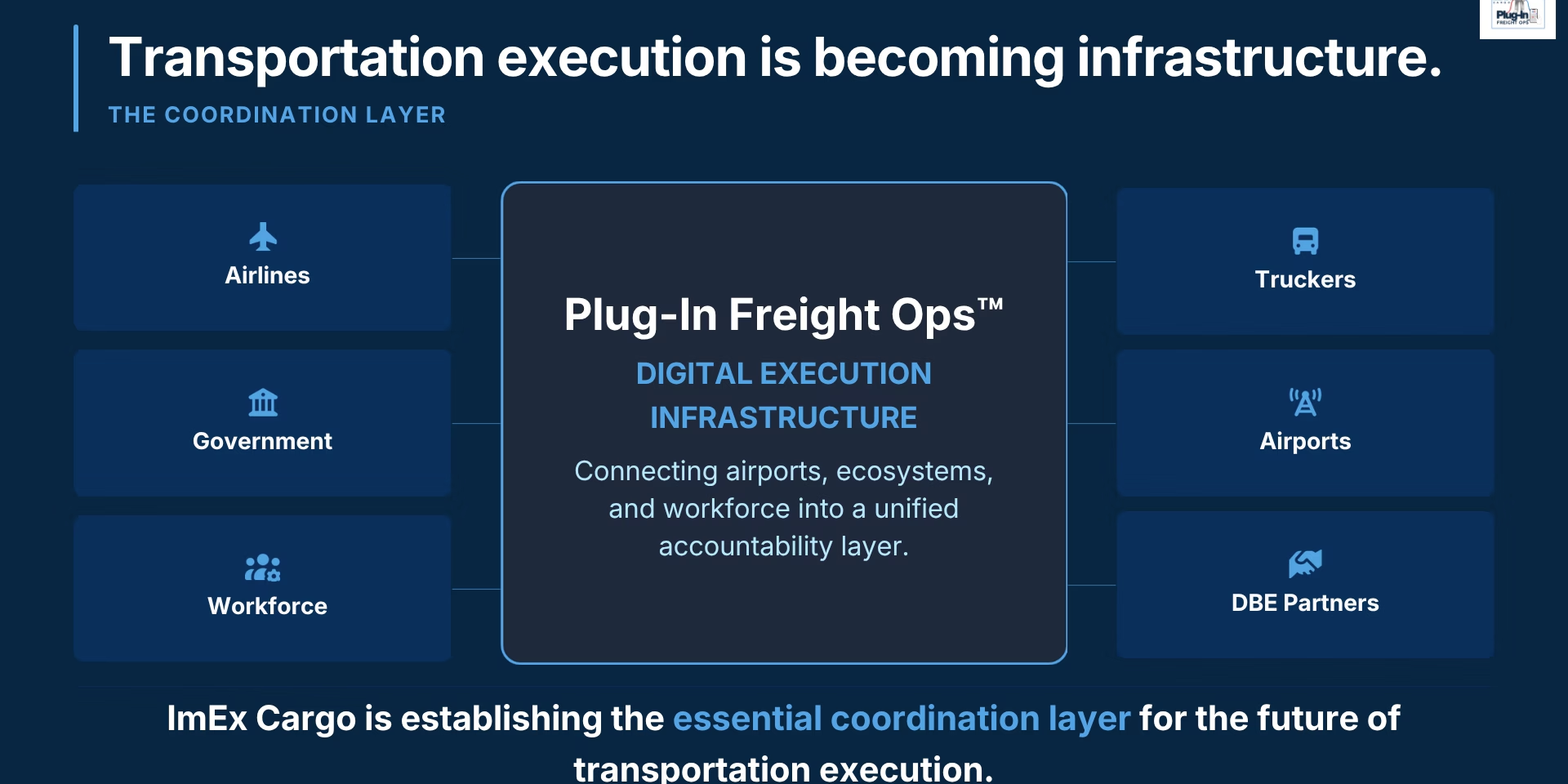
This doesn't mean replacing your current ERP or TMS. It means adding an execution coordination layer that connects all stakeholders: airlines, trucking providers, and government entities: into a single, coordinated workflow.
At ImEx Cargo, we call this Plug-In Freight Ops™.
Instead of chasing down paperwork after the fact, our platform ensures that execution and compliance happen simultaneously. It provides:
- Real-time visibility into every hand-off.
- Structured workflows that mandate compliance at every step.
- Audit-ready oversight that gives agencies the transparency they demand.
Summary Checklist: Are You Leaking Profit?
Ask yourself these three questions:
- Can you prove Commercially Useful Function (CUF) for every diverse supplier on your project right now?
- How many hours does your team spend "cleaning up" compliance data before an audit?
- Is your DBE reporting based on real-time execution data or last month's manual updates?
If you aren't sure of the answers, your compliance gaps are likely draining your profitability.
We can help you map this to your current operation.
We typically address these challenges through a focused pilot or a capability walkthrough of the Plug-In Freight Ops™ environment.
Explore Digital Freight Infrastructure to see how digital execution can turn your compliance liability into a competitive advantage.