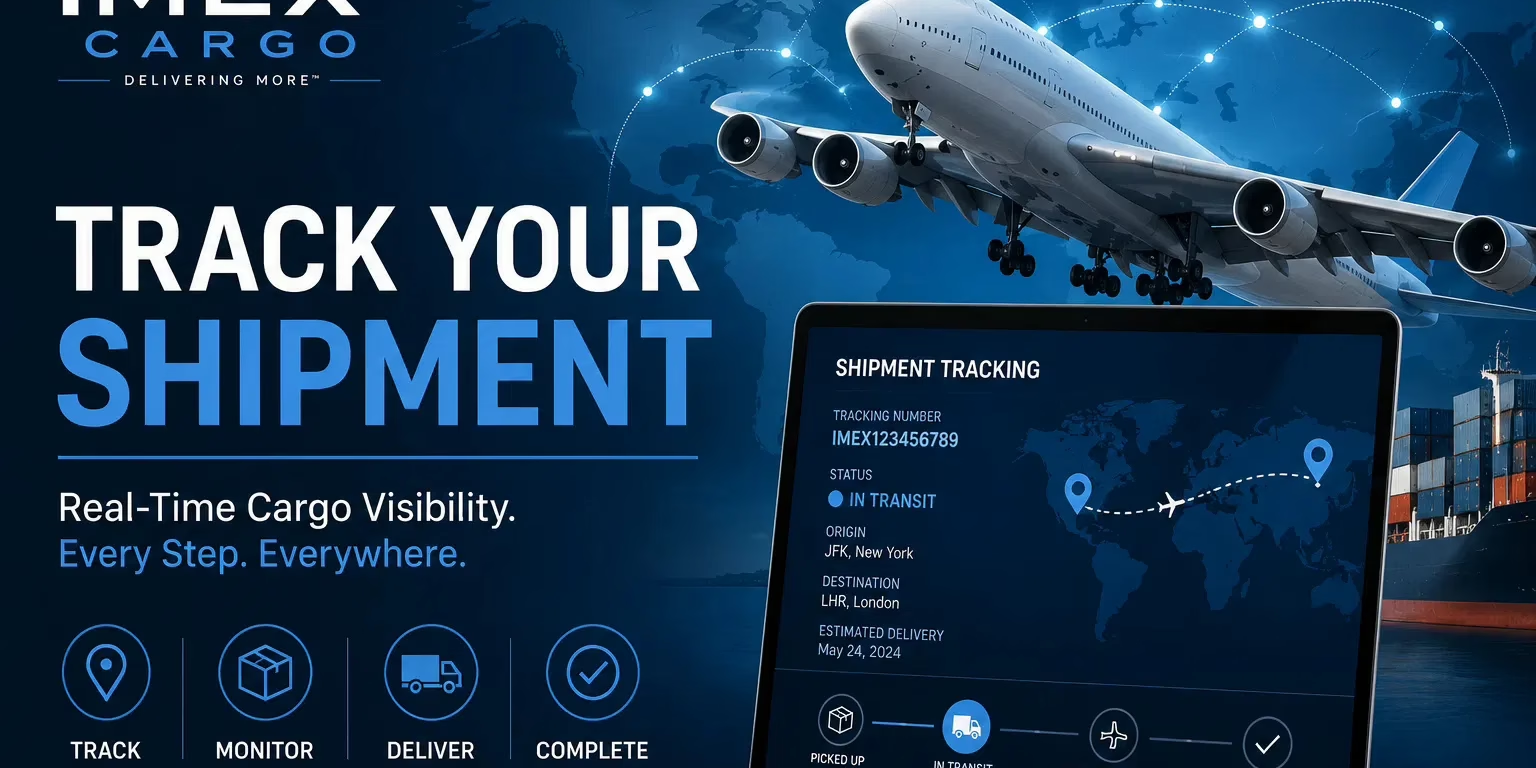
For the last decade, the logistics industry has been obsessed with one word: Visibility.
Billions of dollars have been poured into tracking platforms, ELD integrations, and IoT sensors. We have reached a point where a prime contractor or an agency lead can watch a shipment delay happen in high-definition, real-time color. They can see the truck idling at the gate. They can see the flight grounded on the tarmac.
But visibility is not execution.
Knowing a shipment is late doesn't move the freight. In complex, multi-stakeholder logistics: where airlines, ground handlers, trucking providers, and government agencies must act in unison: visibility without coordination is just a front-row seat to a failure.
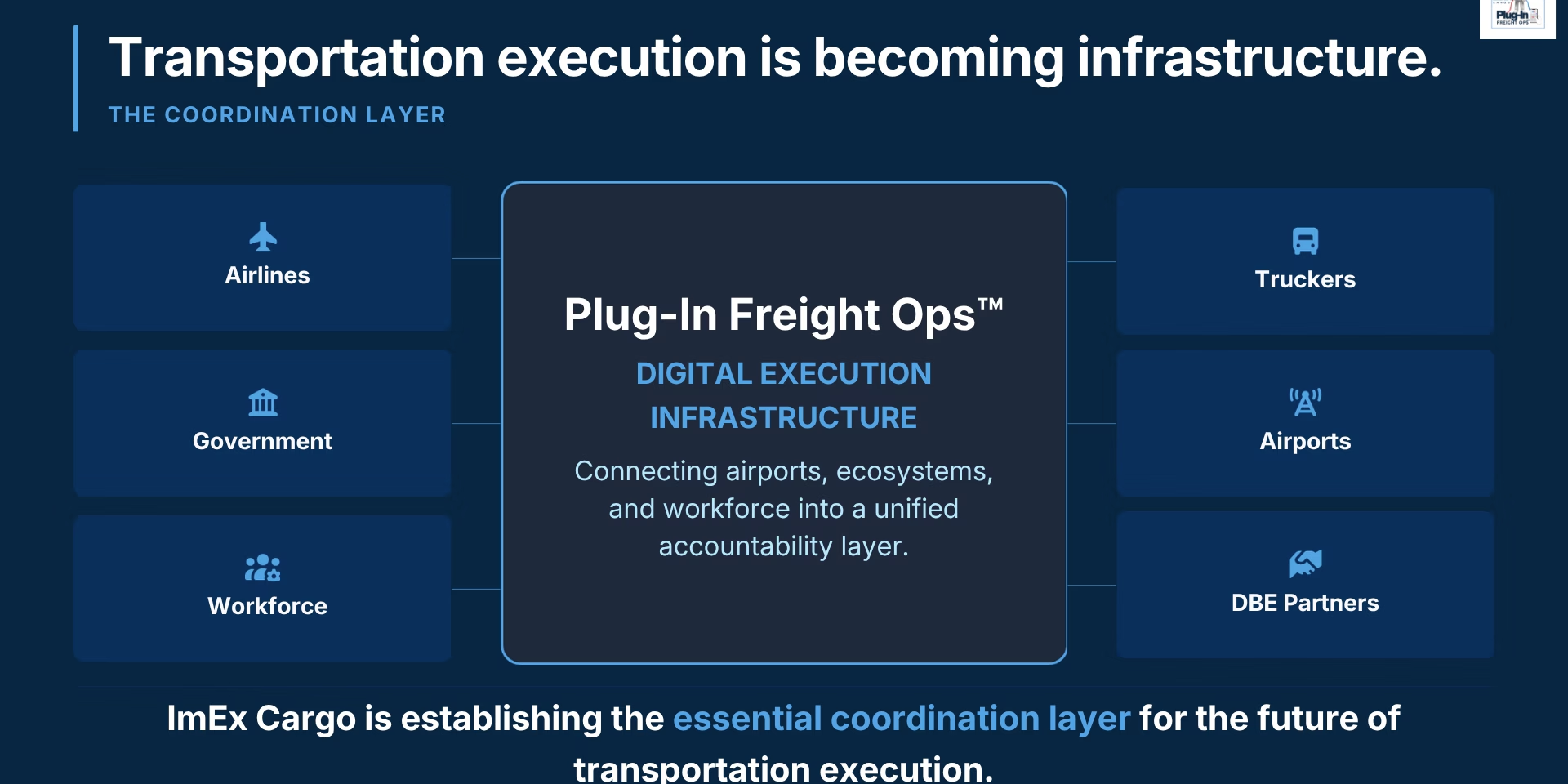
To solve the systemic fragmentation in our global supply chains, we must move beyond the "Visibility Era" and into the "Execution Era." This requires a new layer of digital infrastructure: The Coordination Layer.
The Visibility Trap: Why Seeing Isn't Doing
The industry has fallen into a "visibility trap." We assumed that if we provided enough data, the execution would naturally follow. However, in the reality of high-stakes logistics: from federal infrastructure projects to time-sensitive air cargo: data often hits a wall at the stakeholder handoff.
When a shipment moves from an airline to a ground handler, or from a primary contractor to a diverse supplier (DBE), the visibility data often resides in silos. One party sees the delay; the other party is still operating on the original schedule.
Execution breaks down at these friction points because there is no shared infrastructure to standardize the response. Visibility tells you that you have a problem; Coordination tells you who is responsible for fixing it, what the new workflow is, and tracks the resolution to completion.

Defining the Stack: The Rise of Layer 4 Infrastructure
To understand where the industry is going, we must look at logistics as a four-layer infrastructure stack.
- Layer 1: Physical Infrastructure – The roads, ports, airports, and warehouses.
- Layer 2: Digital Connectivity – The telecommunications and hardware (5G, IoT, ELDs) that transmit data.
- Layer 3: Visibility & Data – The platforms that aggregate signals to show where assets are (TMS, tracking software).
- Layer 4: Execution & Coordination – The digital execution layer that manages multi-party workflows, handoffs, and accountability.
Most organizations are stuck at Layer 3. They have plenty of data but no "Plug-In" architecture to turn that data into coordinated action. This is the space where Plug-In Freight Ops™ operates: not by replacing existing TMS or ERP systems, but by sitting above them to standardize execution across the full lifecycle.
Execution vs. Visibility: An Operational Distinction
Think of the difference between a GPS and Air Traffic Control (ATC).
A GPS provides visibility. It shows you where you are and where the traffic is. It is a passive tool for the driver.
Air Traffic Control is a coordination infrastructure. It doesn't just "see" the planes; it manages the separation, dictates the sequence, and ensures that every stakeholder: pilots, ground crew, and gate agents: is executing according to a unified, real-time plan. ATC is responsible for the safety and execution of the entire ecosystem, not just a single vehicle.
In modern logistics, we have too many GPS units and not enough Air Traffic Control.

(Image prompt: A professional, clean vector illustration showing a layered infrastructure stack. The bottom layer is a simplified gray grid representing physical roads and ports. The middle layer is a light blue mesh representing data and visibility signals. The top layer is a solid, bold deep blue (#0A2F5A) architectural plane labeled "Execution Layer" with glowing nodes connecting various stakeholders: a cargo plane, a truck, and a warehouse. The style is flat, modern, and technical.)
The Multi-Stakeholder Fragmented Environment
The greatest threat to execution is fragmentation. In a typical international shipment, there are often 10 to 15 different entities involved. When execution is managed through emails, spreadsheets, and disconnected portals, accountability evaporates.
When a prime contractor manages a massive infrastructure project, they aren't just managing their own fleet; they are managing an ecosystem. This includes:
- Airlines and GSAs managing capacity and bookings.
- Freight Forwarders handling documentation.
- Trucking Providers managing the "last mile."
- DBE/Diverse Suppliers meeting compliance and operational goals.
Without a centralized coordination layer, the "Master Contractor" lacks the tools to enforce performance standards across these entities. Plug-In Freight Ops™ solves this by creating structured handoffs. Every party in the chain is activated within a single coordinated workflow, providing audit-ready oversight and real-time performance tracking.
Moving Toward a Unified Execution System
The transition to a coordination-first model requires three fundamental shifts in how we approach logistics technology:
1. From Passive Tracking to Active Workflows
Instead of simply "tracking" a shipment, the system must trigger workflows. If a flight is delayed, the system should automatically alert the trucking provider, update the warehouse receiving schedule, and adjust the workforce requirements: all within a unified environment.
2. Standardization of Data Handoffs
We must move toward global data standards, such as IATA’s ONE Record, which allows for a single, verifiable version of the truth. When every stakeholder speaks the same digital language, the coordination layer can move at the speed of the cargo.
3. Real-Time Accountability
In a visibility-only model, disputes about "who was responsible for the delay" happen weeks after the fact. In an execution-led model, accountability is baked into the workflow. Performance is tracked at every handoff, allowing for immediate intervention and long-term partner optimization.

The Strategic Outcome: Speed, Compliance, and Control
Why does this transformation matter? Because for industry leaders and policy makers, the stakes are higher than ever.
Efficiency is no longer just about cost-cutting; it’s about resilience.
- For Federal and State Agencies: It means ensuring that multi-billion dollar infrastructure programs stay on schedule by operationalizing supplier diversity and local workforce participation.
- For Airlines and GSAs: It means maximizing capacity utilization by tightening the coordination between the tarmac and the truck.
- For Prime Contractors: It means reducing the risk of "execution gaps" that lead to massive liquidated damages.
The future of transportation is not just about moving goods; it’s about moving information in a way that dictates action. We have enough visibility. It’s time to start executing.
Taking the First Step
The shift from visibility to coordination doesn't require a "rip and replace" of your existing technology. It requires the integration of an execution layer that brings your fragmented stakeholders into alignment.
We typically address this through a focused pilot program, mapping the coordination layer to your current operations to identify where execution breaks down today.
Are you ready to move beyond visibility?
Explore the Plug-In Freight Ops™ Beta Platform or contact our team to walk through how a coordination layer can be applied to your specific logistics environment.