In 2026, the primary threat to logistics efficiency isn't a lack of software; it’s the fragmentation of it.
Most logistics executives have lived through the "rip and replace" nightmare. You identify a gap in visibility, realize your current TMS or ERP can't bridge it, and are then faced with two equally painful choices: invest millions in a multi-year system overhaul or live with a patchwork of spreadsheets and manual workarounds.
This cycle is more than just an IT headache. It creates a massive execution bottleneck. When systems don’t talk to each other, and stakeholders: airlines, GSAs, truckers, and government agencies: operate in silos, the handoffs are where the cargo stops moving.
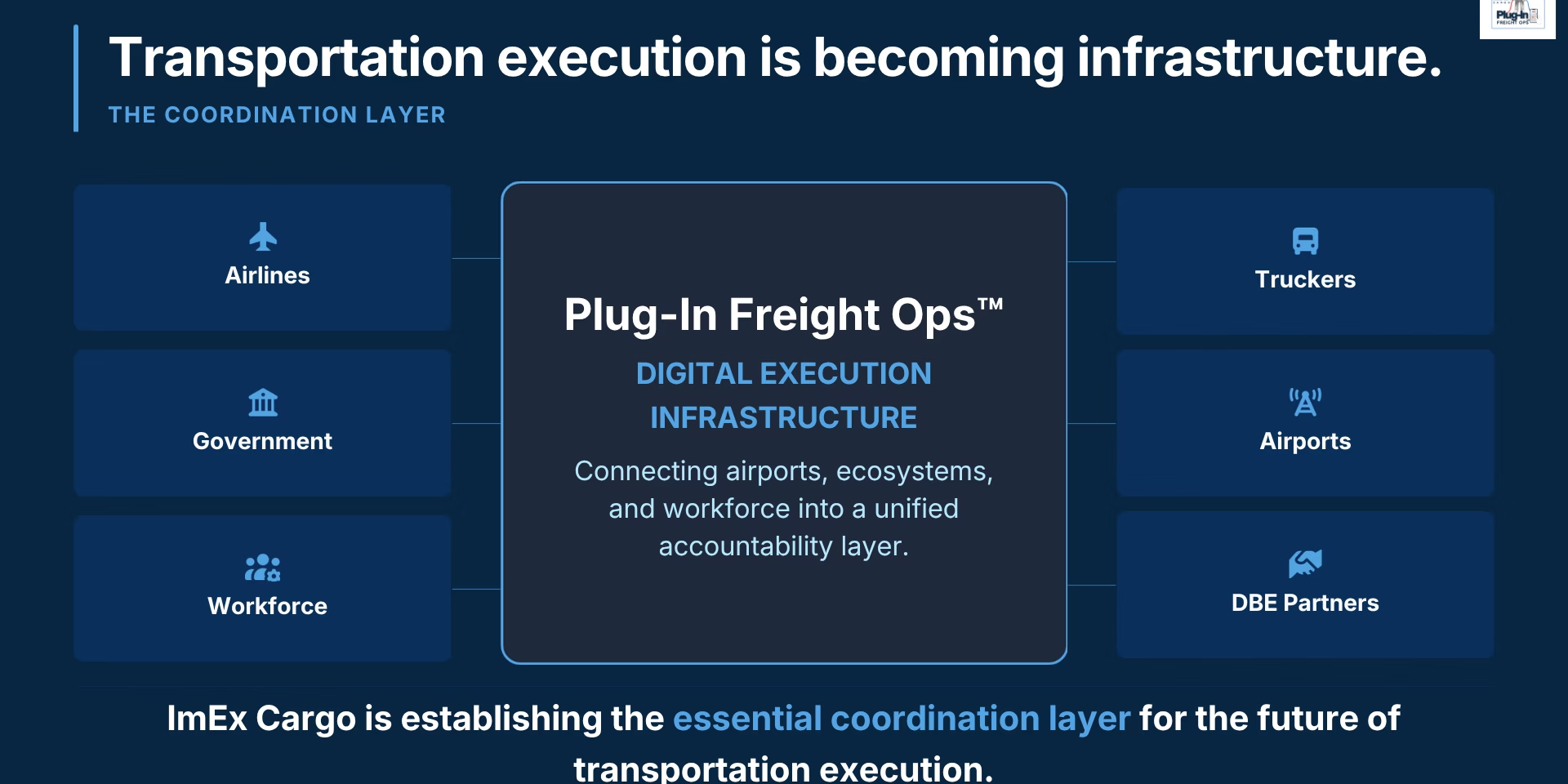
At ImEx Cargo, we’ve shifted the conversation. We don’t believe in ripping out what works. We believe in building a digital freight infrastructure that sits above your existing stack to coordinate what happens between systems.
Here is why coordination is the new frontier of logistics and how you can integrate an execution layer without the "rip and replace" risk.
The Bottleneck: Why Coordination Fails in 2026
We are currently seeing a paradox in global trade: individual stakeholders are more digitized than ever, yet the overall shipment lifecycle is still plagued by delays.
Why? Because transportation execution is a multi-player game, but most software is built for a single player.
When an airline receives a booking but the trucking provider isn't notified of the flight delay, the execution breaks down. When a freight forwarder has a quote but no visibility into the real-time capacity of a GSA, the process stalls. The problem isn't the data; it's the execution accountability.
Traditional systems are excellent at recording what happened after it happened (systems of record). They are notoriously poor at managing the structured handoffs required to make things happen on time (systems of execution).

The "Plug-In" Reality: A New Infrastructure Layer
Instead of replacing your core systems, the modern approach is to "plug in" a digital execution infrastructure.
Plug-In Freight Ops™ is designed to standardize execution across the full shipment lifecycle. It doesn't replace your TMS; it connects the fragmented dots between your carriers, your government partners, and your internal teams into a single, coordinated workflow.
By sitting above existing systems, this layer provides:
- Workflow Standardization: Ensuring the journey from quote to booking to tracking follows a predictable, audit-ready path.
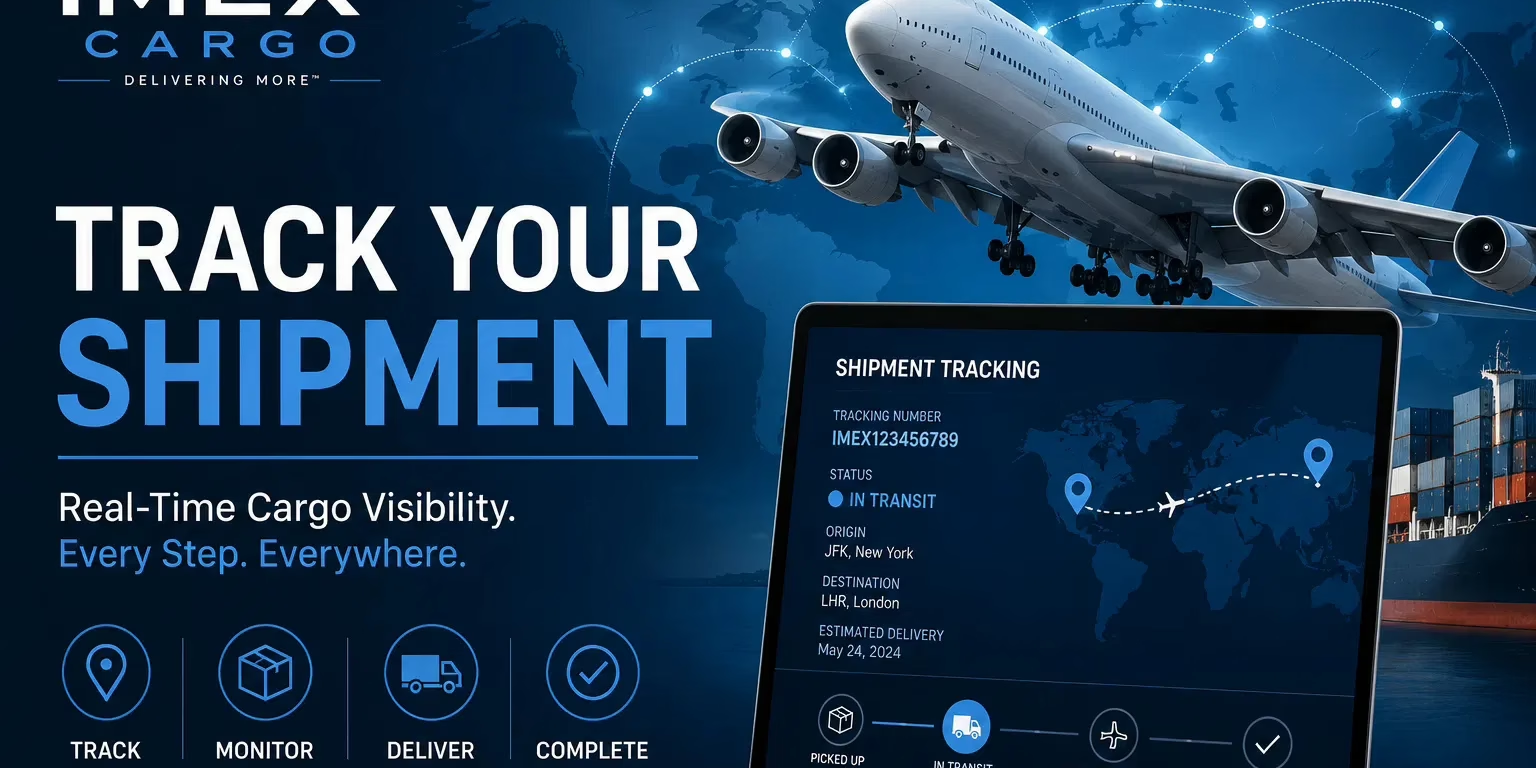
- Real-Time Visibility: Moving beyond "milestone" updates to true coordination where every stakeholder sees the same reality.
- Partner Accountability: Tracking performance metrics across the entire ecosystem, not just your internal team.
A 3-Step Guide to Integrating Digital Freight Infrastructure
Integrating a new layer of infrastructure sounds complex, but it is significantly faster and less risky than a core system replacement. Here is our 3-step framework for shifting to an execution-first model.
Step 1: Audit Touchpoints and Failure Modes
Before you add technology, you must identify where your execution currently dies. In 2026, "dead zones" usually occur at the handoffs.
Ask your team:
- Where are we re-keying data from an email into a system?
- At what point does a shipment "go dark" for more than 4 hours?
- Who is accountable when a truck misses a gate-in time due to a flight delay?
By mapping these touchpoints, you move from general "visibility" goals to specific execution accountability targets. You aren't just looking for where the cargo is; you are looking for who owns the next move. This audit provides the blueprint for where the digital freight infrastructure needs to provide the most support.
Step 2: Activate the Infrastructure Layer
Once you know where the gaps are, you activate the coordination layer. This is where Plug-In Freight Ops™ creates a unified environment for your operations.
This step involves connecting your primary stakeholders: airlines, trucking providers, and forwarders: into a single digital workflow. Rather than a "big bang" migration, we focus on the high-impact zones:
- Digitized Quoting and Booking: Transitioning from fragmented emails to a structured portal where capacity and pricing are transparent.
- Automated Handoffs: Setting digital triggers so that when a plane lands, the ground handler and trucker are notified automatically, with pre-populated documentation.
This layer ensures that even if different partners use different legacy systems, the execution of the freight remains standardized and visible to all.

Step 3: Digitize the Partner Ecosystem
The final step is expanding the digital perimeter. Logistics is a team sport, and your infrastructure is only as strong as your most "analog" partner.
In 2026, this means moving beyond just Tier-1 carriers. You must integrate:
- DBE and Diverse Supplier Networks: Integrating certified DBE logistics partners into your digital workflow ensures compliance and economic impact without sacrificing execution speed.
- Workforce Pipelines: Connecting training and talent institutions, such as the WTFP Express Program, directly into the logistics ecosystem to ensure you have the human capacity to execute on the digital plan.
- Government Stakeholders: Ensuring that data standards are maintained for audit-ready oversight across complex infrastructure programs.
By digitizing the entire ecosystem, you create a system where every participant: regardless of size: is part of the same coordinated execution layer.

Measuring Success: Impact Beyond Aesthetics
When you stop the "rip and replace" cycle and focus on infrastructure integration, the results are measurable in weeks, not years.
Organizations deploying a digital execution layer typically see:
- Reduction in Transit Times: By eliminating handoff delays and manual data entry, the "dwell time" of cargo at gates and warehouses is drastically reduced.
- Data Accuracy Gains: When the infrastructure layer acts as the single source of truth, the reliance on manual spreadsheets drops, leading to a significant increase in data integrity for shipment tracking.
- Audit-Ready Accountability: Every touchpoint is recorded, creating a complete digital trail that is essential for government contracts and airline charter operations.
As we noted in our recent deep dive on data standards, standards alone won't solve your operational gaps: you need an execution layer that enforces them.

Conclusion: The Path Forward
The era of the "monolithic system" is over. The future belongs to organizations that can coordinate across fragmented, multi-stakeholder environments using a flexible, digital freight infrastructure.
Stop waiting for the next major IT overhaul. You can achieve execution visibility and accountability today by layering coordination over the systems you already have.
Are you ready to stop the "rip and replace" cycle?
We typically address these challenges through a focused pilot program designed to map your current handoffs and demonstrate the impact of a coordination layer in a real-world environment.
Request a Pilot to walk through how Plug-In Freight Ops™ would apply to your specific logistics or infrastructure program.