A shipment can be visible and still be stalled. A system may flag a delay, predict a missed connection, or recommend a change, but freight moves only when the right organizations coordinate and someone with authority acts.
That distinction matters as AI enters freight operations. Intelligence can improve what teams know and when they know it. But recognizing a problem is not the same as resolving it. Between the recommendation and the result are partners, handoffs, responsibilities, and decisions that cross organizational boundaries.
The next stage of freight technology depends not only on smarter models, but on the infrastructure that lets intelligence inform coordinated, accountable action.
Industry shift
AI can help identify patterns in shipment activity, highlight emerging risks, summarize operational information, and recommend options for consideration. These capabilities have real potential in complex environments where people must make decisions across many shipments, systems, and partners.
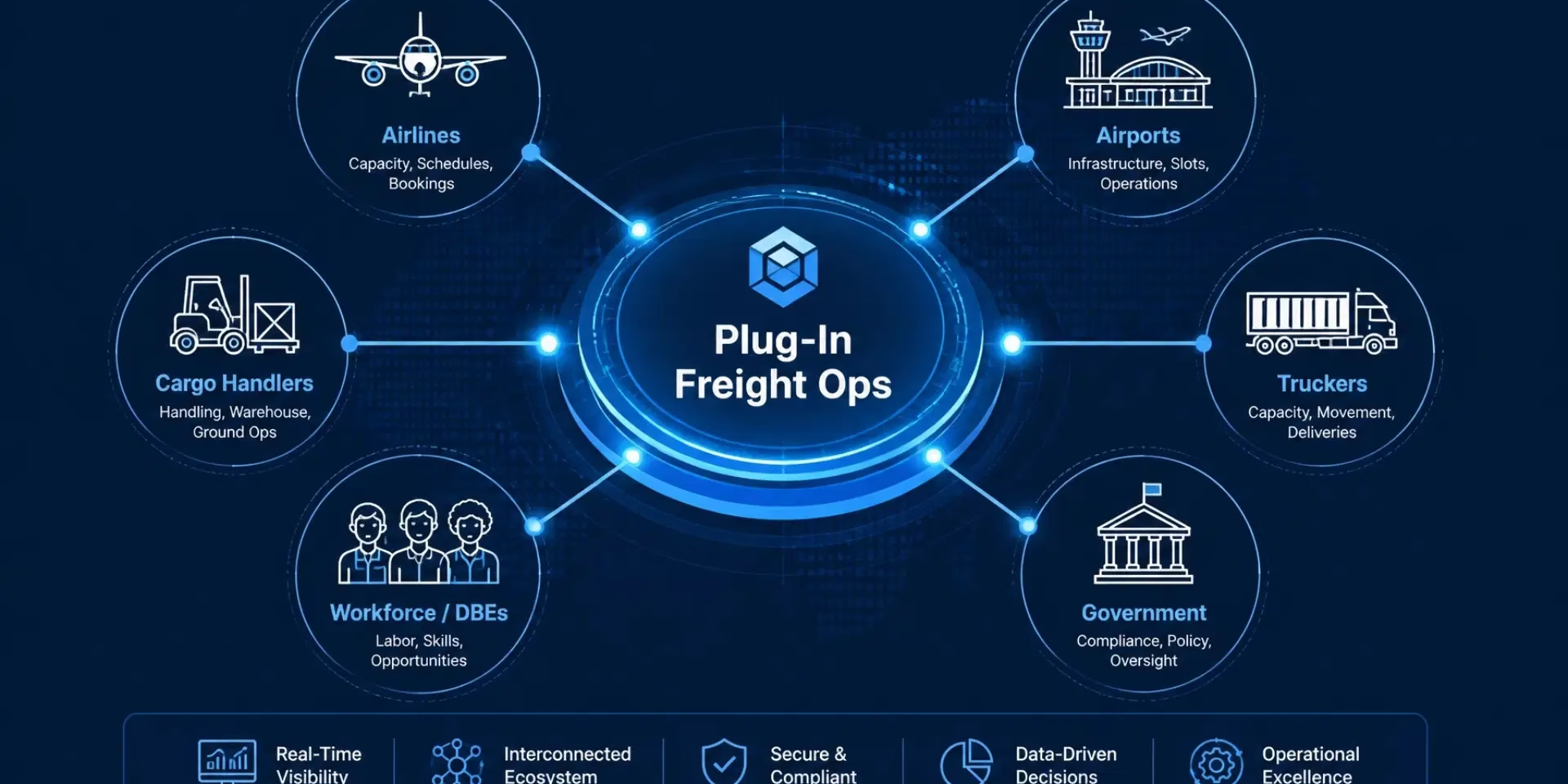
But freight execution is not contained within a single company’s software. A shipment may involve a forwarder, airline or GSA, ground handler, trucking provider, airport, customer, and government stakeholder. Each participant has its own responsibilities, operating context, and systems.
When an AI tool identifies a likely delay, it does not automatically create agreement among those parties. A recommendation still needs to reach the right people, be assessed against their responsibilities, and lead to an action that is acknowledged and carried through.
This is the difference between freight execution intelligence and execution itself. Intelligence can inform a decision. It cannot, by itself, establish who owns the next step or confirm that the step happened.
The industry’s work on shared standards points to the importance of a common foundation. In its December 2025 ONE Record industry survey, IATA reported that more than 70% of respondents were aware of ONE Record, while nearly 50% indicated readiness. The survey also reported more than 30 active pilots and strong interest in further pilots, peer learning, and guidance.
These figures describe progress toward shared data practices, and a continuing readiness gap. IATA identifies ONE Record as the preferred data-sharing standard for air cargo from January 1, 2026. A common standard can make information exchange more practical. It does not, on its own, assign accountability for coordinating what happens next.

Execution layer
A useful way to think about AI in freight is to separate intelligence from execution.
Intelligence helps people interpret what is happening. It may identify a potential issue, surface relevant information, or suggest a response. Execution is the coordinated activity that follows: a responsible party reviews what needs attention, relevant stakeholders are brought into the process, and the outcome is recorded.
That boundary is not a limitation of AI. It reflects the nature of freight. Decisions may affect capacity, customer commitments, safety, compliance, cost, or service expectations. The organization with authority to make a decision may not be the organization whose system first surfaced the information.
For freight execution intelligence to be useful across organizations, the operating environment needs to support:
- Shared context: Participants can understand the shipment’s status and the issue being addressed.
- Clear ownership: Each handoff has an identifiable responsible party.
- Coordinated action: The people and organizations involved can respond within a common workflow.
- Confirmation: Participants can distinguish a recommendation from an action taken and an outcome achieved.
- Accountability: The sequence of decisions and handoffs can be reviewed afterward.
This is not a claim that every action should be automated. Nor does it mean every participant must give up control of its own systems. It means AI recommendations need an environment in which the authorized people and organizations can evaluate, accept, change, or decline them, and where the outcome is visible to the parties who need to act.
In this sense, digital freight infrastructure is not another name for AI. It is the coordination foundation beneath intelligence: the environment that connects information to participants, responsibilities, and operational follow-through. For a broader reference library on this category, see the PIFO Knowledge Hub.
Network view
Freight crosses organizational boundaries by design. A shipment moving from quote to booking to tracking may pass through multiple companies, each with different roles and information. The gaps between those roles are often where execution becomes hard to manage.
A shared data standard can improve the ability to exchange information. IATA’s ONE Record work is an important example in air cargo. As discussed in our article on why data standards alone do not close air cargo operations gaps, a common language is valuable, but visibility into an event does not automatically coordinate its resolution.
The distinction is practical:
- A status can show that a shipment is delayed.
- An analysis tool can help identify patterns or suggest possible responses.
- A coordinated workflow connects the relevant participants to the decision and its follow-through.
No single party necessarily controls the entire movement. The airline, GSA, forwarder, handler, trucking provider, and customer each contribute to execution. That makes accountability across the network, not just visibility within one system, central to the operating challenge.

Use cases
The value of connecting AI insight with execution infrastructure becomes clearer in everyday freight scenarios.
Quote to booking. A recommendation may help a team assess an option or identify a booking that needs attention. The operational outcome still depends on clear communication and coordination between the parties responsible for confirming the booking and carrying it forward.
Tracking to response. A visibility tool may surface a delay or a change in status. The next question is not only “Where is the shipment?” but “Who needs to respond, and how will the response be coordinated and confirmed?”
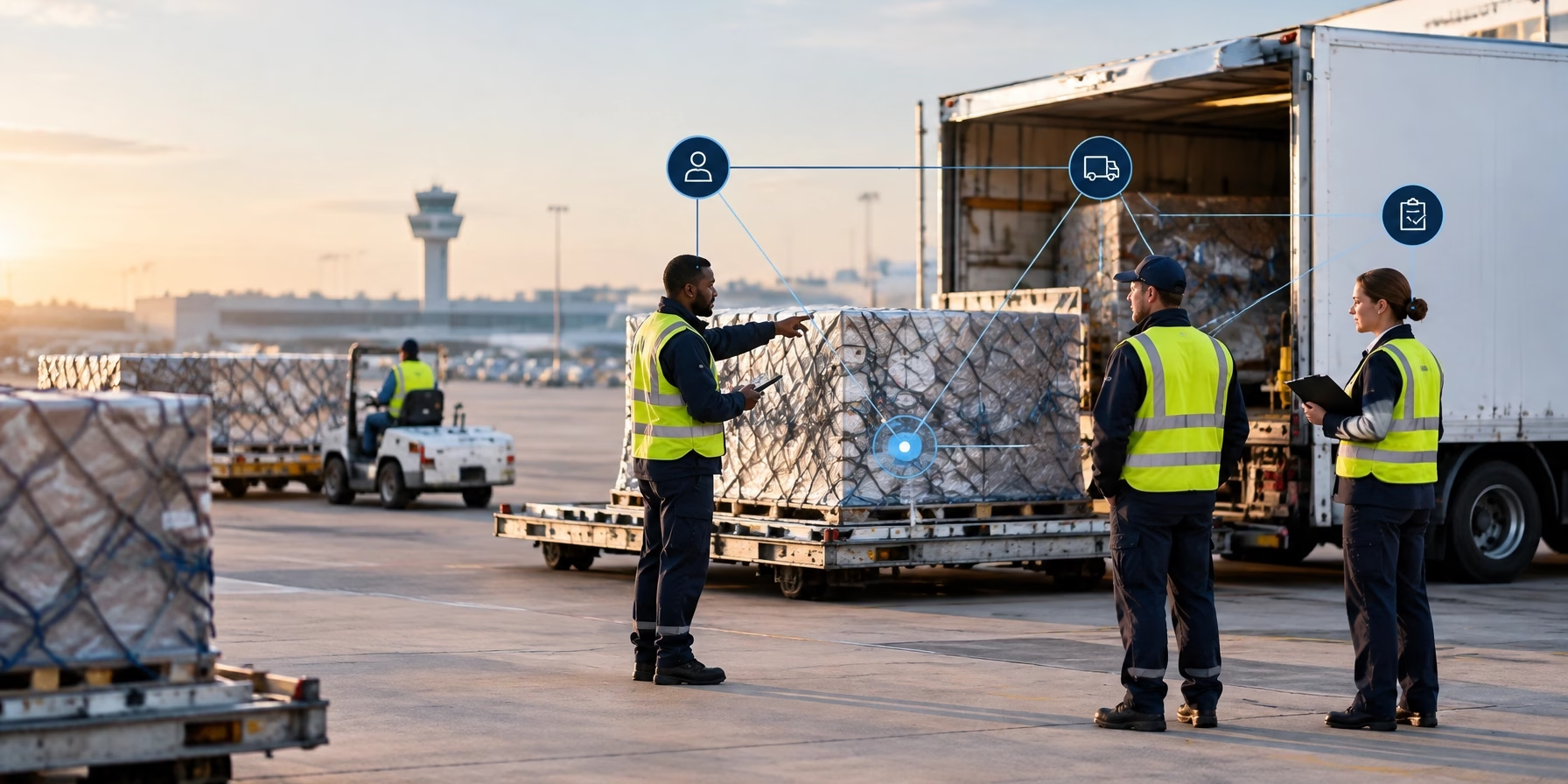
Air-to-ground handoffs. Air cargo often depends on connected activity across airlines, GSAs, handlers, forwarders, and trucking providers. If a handoff is unclear, knowing that a shipment has reached a milestone may not be enough to ensure the next party is ready to act.
Infrastructure and public-sector programs. Complex projects may involve prime contractors, agencies, transportation providers, certified DBEs, and workforce partners. Here, execution requires more than tracking activity. It requires coordination across organizations with distinct obligations and a record of participation and progress.
Across each scenario, AI can strengthen awareness and decision support. The infrastructure around it determines whether insight can travel across organizational boundaries and become a coordinated, accountable action.

Pilot path
Organizations exploring AI in freight operations can start with a focused question: Where does execution break down between the signal and the outcome?
A useful pilot discussion can center on one workflow (such as quote to booking, a shipment handoff, or tracking through delivery) and examine:
- Which organizations need to participate?
- Where do responsibilities change hands?
- What information do participants need to coordinate?
- How will the organization distinguish a recommendation from an approved action?
- What evidence will show whether the handoff and outcome were completed?
The aim is not to promise that AI will autonomously run freight. It is to test whether intelligence can be applied in an operating environment that supports coordination, visibility, and accountability, while preserving the authority of the organizations responsible for execution.
That is the role of an execution layer. Plug-In Freight Ops™ is ImEx Cargo’s digital execution infrastructure designed to coordinate workflows across fragmented, multi-stakeholder environments while sitting above, rather than replacing, existing systems. For organizations assessing how AI recommendations could fit into their freight workflows, a focused pilot conversation can help map the question to a real operating environment.
The long-term opportunity is not intelligence alone. It is intelligence connected to the infrastructure that lets freight participants coordinate decisions and own the outcome together.
LinkedIn article version
AI Can See the Problem. It Still Can't Own the Outcome
A shipment can be visible and still be stalled. An AI system may flag a delay or recommend a response, but freight moves only when the organizations involved coordinate and someone with authority acts.
That distinction matters as AI enters freight operations. Intelligence can improve what teams know. It does not automatically determine who owns the next step, bring the right parties together, or confirm that an action was completed.
Industry shift
AI can identify patterns, highlight risks, and support decisions. Freight execution, however, crosses organizational boundaries. A single shipment may involve a forwarder, airline or GSA, handler, trucking provider, customer, and government stakeholder.
IATA’s December 2025 ONE Record survey reported more than 70% awareness of the standard among respondents and nearly 50% readiness. It also reported more than 30 active pilots. ONE Record is an important step toward shared data practices in air cargo, but data exchange alone does not assign responsibility for resolving an issue.
Execution layer
AI can help people interpret what is happening. Execution is what follows: a responsible party evaluates the situation, relevant stakeholders coordinate, and the outcome is confirmed.
For AI recommendations to be useful across organizations, the environment around them needs shared context, clear ownership, coordinated action, confirmation, and accountability. The goal is not to automate every decision. It is to connect intelligence to the people and organizations authorized to act.
Network view
Freight does not move inside one system or one company. Standards can make information exchange more practical, while visibility can help participants understand shipment status. Neither guarantees coordinated resolution.
As we discuss in our article on ONE Record and air cargo operations, knowing what is happening is different from coordinating what happens next.
Use cases
This distinction applies across the shipment lifecycle:
- Quote to booking: insight may identify a booking that needs attention; the parties still need to coordinate confirmation.
- Tracking to response: a delay signal is useful when the right participant can respond and the outcome is visible.
- Air-to-ground handoffs: a milestone matters when the next organization is ready to take responsibility.
- Infrastructure programs: execution requires coordination among contractors, agencies, suppliers, and workforce partners.
Pilot path
Start with one workflow and ask where execution breaks down between a signal and an outcome. Identify the organizations involved, the handoffs that matter, and how the result will be confirmed.
The opportunity is not AI alone. It is intelligence connected to infrastructure that enables coordinated, accountable action. Plug-In Freight Ops™ is ImEx Cargo’s digital execution infrastructure for coordinating multi-stakeholder workflows above existing systems. A focused pilot conversation can help assess how that approach applies to a specific operating environment.