In the current logistics landscape, visibility is often mistaken for control.
Global enterprises and government agencies have spent millions on "Control Towers": centralized hubs designed to provide a bird's-eye view of the supply chain. These systems excel at gathering data, populating dashboards, and flagging when a shipment is delayed.
But when a container is stuck at a terminal or a multi-modal handoff fails, a Control Tower can only tell you that you have a problem. It cannot fix it.
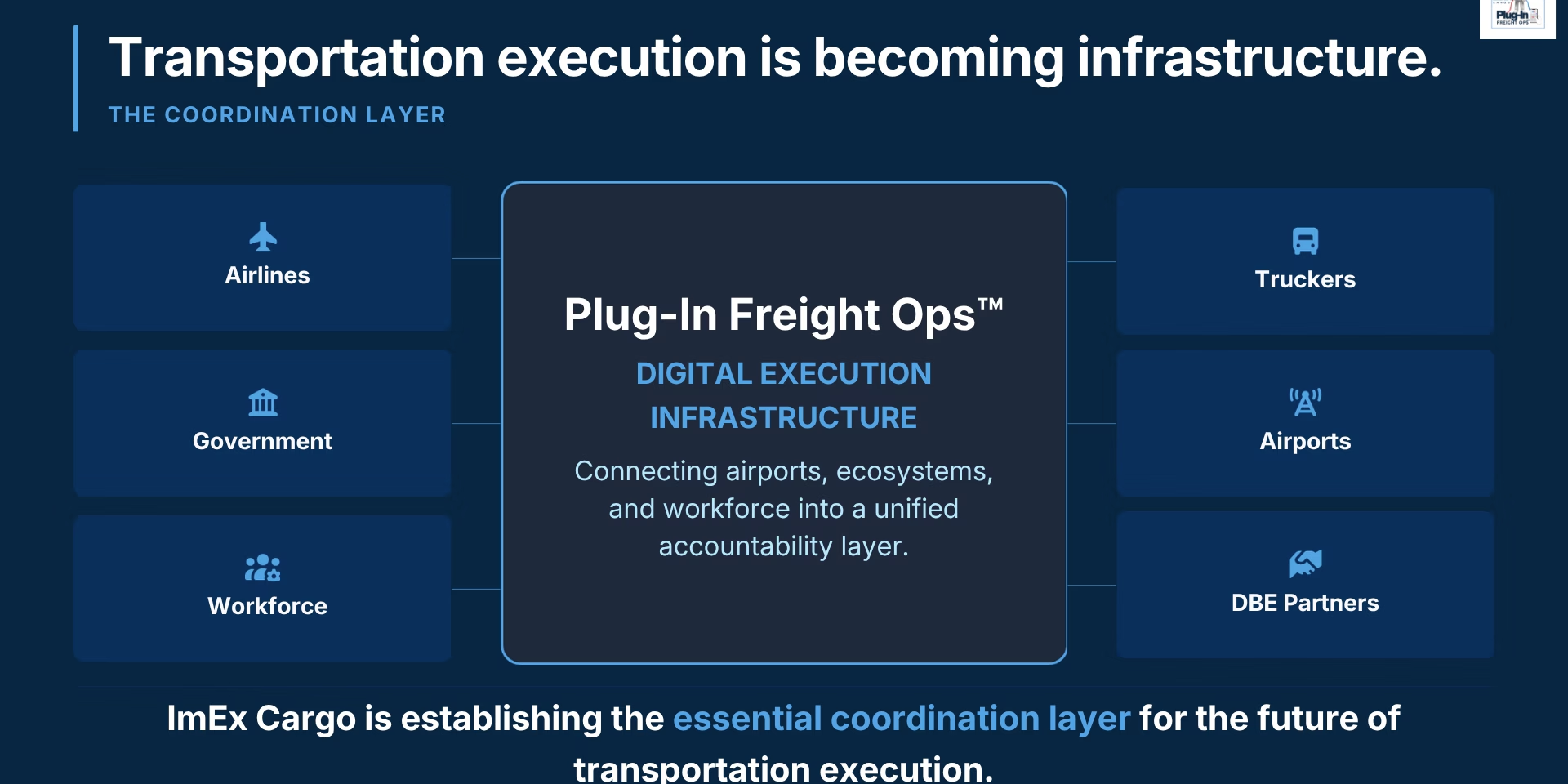
This is the fundamental shift from Supply Chain Observation to Digital Freight Execution Infrastructure. While Control Towers focus on the "what," Plug-In Freight Ops™ focuses on the "how": standardizing the execution, managing the handoffs, and enforcing accountability across a fragmented ecosystem of stakeholders.
Defining the Categories: The Eye vs. The Hand
To understand where your organization sits on the maturity curve, it is essential to distinguish between a monitoring layer and an execution layer.
- Logistics Control Towers act as a System of Intelligence. They aggregate data from various ERPs, TMSs, and carrier feeds to provide a single version of the truth. Their primary value is visibility and risk prediction.
- Plug-In Freight Ops™ acts as a System of Execution. It sits above existing systems not just to watch, but to coordinate. It manages the actual workflows between airlines, GSAs, trucking providers, and government agencies, ensuring that every party knows exactly what they are responsible for at every stage of the shipment lifecycle.
At a Glance: Execution vs. Observation
| Feature | Control Towers (Observation) | Plug-In Freight Ops™ (Execution) |
|---|---|---|
| Primary Function | Monitor and alert | Coordinate and execute |
| Visibility | Real-time tracking and dashboards | Real-time + structured handoffs |
| Exception Management | Flag issues (Alerts) | Resolve through coordinated workflows |
| Partner Coordination | Limited (Read-only data) | Active (Assignments and accountability) |
| Action Layer | No (Relies on external systems) | Yes (Orchestrates outcomes) |
| System Integration | Connected to data sources | Connected + Orchestrates stakeholders |
1. From Passive Dashboards to Active Orchestration
A traditional Control Tower is designed for the observer. It provides "supply chain execution visibility," which is invaluable for planning and high-level strategy. However, visibility without the power to act creates "alert fatigue."
Plug-In Freight Ops™ transforms that visibility into logistics orchestration. When a disruption occurs, the platform doesn't just send an email notification; it triggers a pre-defined execution workflow. It assigns tasks to the relevant stakeholder: whether it's an airline GSA or a last-mile trucking provider: and tracks their response in real-time.

2. The Accountability Gap: Structured Handoffs
The most common point of failure in logistics is the handoff. This is where "Digital Freight Infrastructure" separates itself from standard monitoring tools.
Control Towers generally view a shipment as a single line on a map. In reality, a shipment is a series of custodial transfers. Plug-In Freight Ops™ treats these transfers as structured handoffs.
By requiring digital confirmation and document validation at every touchpoint, the platform creates a "cargo execution command center" that eliminates the "he-said, she-said" of manual logistics. Every partner in the ecosystem: from prime contractors to certified DBE networks: is held to a measurable standard of performance.
3. Exception Management vs. Execution Resolution
When a Control Tower identifies an exception, the resolution usually happens outside the platform: in phone calls, disparate email chains, and manual spreadsheets. This "offline" resolution creates a data black hole where accountability is lost.
In a Freight Operating System environment, the exception is the workflow. If a pickup is missed, the platform automatically re-routes the task or alerts the backup provider within the governed logistics orchestration layer. The resolution is recorded, timed, and audited, providing a level of "neutral coordination infrastructure" that traditional towers cannot match.

4. Partner Activation: Beyond Read-Only Access
Most Control Towers offer a "partner portal," but these are often read-only views. Partners can see the data, but they aren't integrated into the execution flow.
Plug-In Freight Ops™ is built for multi-stakeholder execution. It doesn't just show you what your partners are doing; it activates them. This includes:
- Airline & GSA Coordination: Managing capacity and bookings directly within the execution layer.
- Workforce Pipelines: Integrating talent development and training directly into operational workflows to ensure the right people are in the right roles.
- Government & Compliance: Providing audit-ready oversight for large-scale infrastructure programs.
Why You Need Both (But Must Prioritize Execution)
Visibility is the foundation, but execution is the goal. A Control Tower without an execution layer is like a GPS that tells you you're in a traffic jam but can't suggest a new route or drive the car.
Organizations managing complex, high-stakes logistics: such as airport authorities, federal agencies, or prime contractors: require a Cargo Execution Infrastructure. This layer bridges the gap between the high-level data provided by Control Towers and the ground-level reality of moving freight.
Rather than replacing your existing visibility tools, Plug-In Freight Ops™ plugs into them, providing the "execution layer" that turns data into documented, accountable action.
Moving from Observation to Action
The era of simply "watching" the supply chain is over. As fragmentation increases and global logistics become more volatile, the competitive advantage lies in the ability to coordinate across stakeholders with precision.
We typically address these challenges through a focused pilot program, mapping your current "observation" tools to a structured execution workflow.
Are you ready to move beyond the dashboard?
We can walk through how this would apply in your environment.