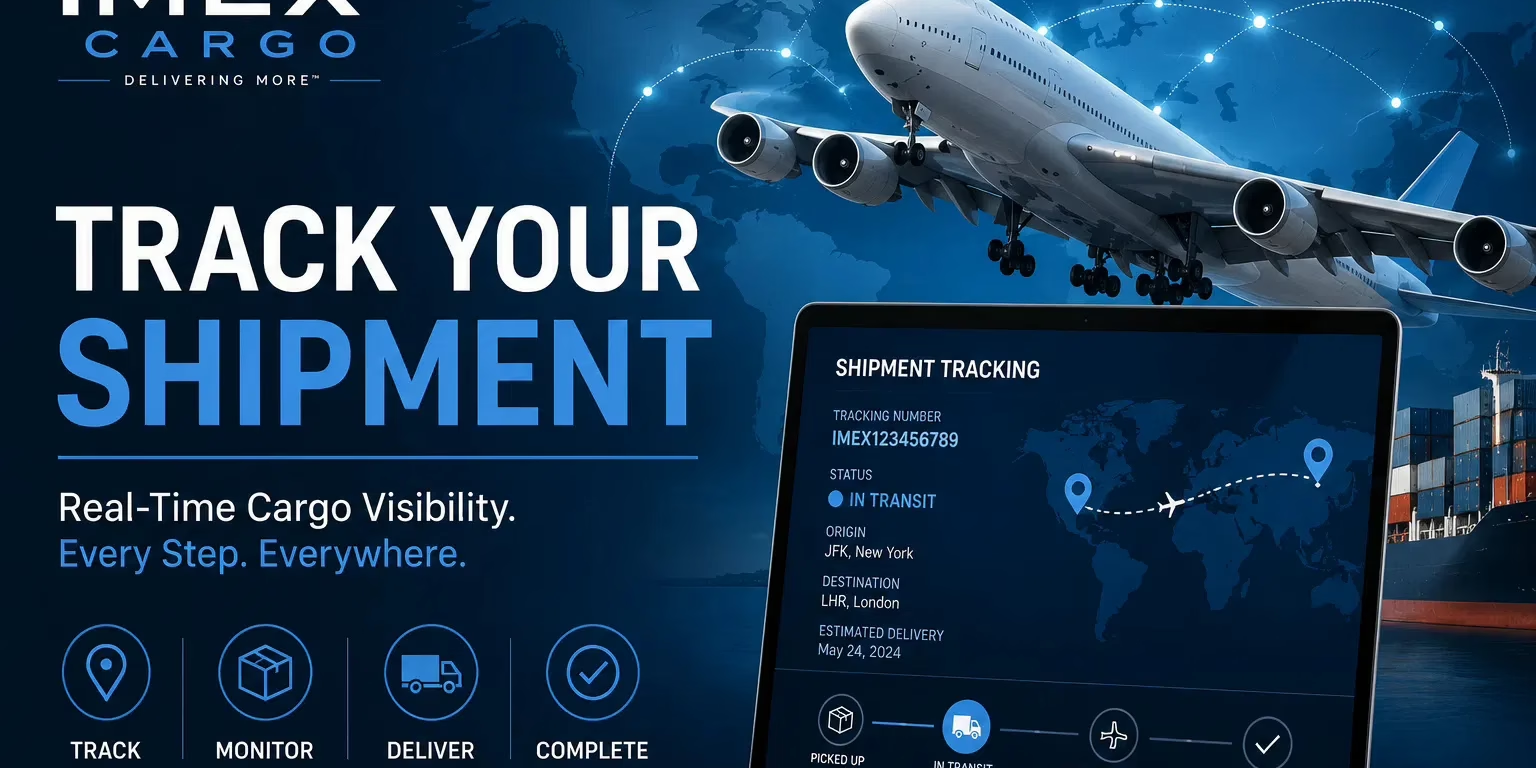
For decades, the logistics industry has obsessed over "visibility." We’ve spent billions on sensors, GPS pings, and dashboards that tell us exactly where a shipment is stuck.
But knowing something is stuck isn’t the same as moving it.
In complex, multi-stakeholder environments: like major infrastructure projects or international air cargo networks: visibility is just a spectator sport. True efficiency doesn’t come from watching the cargo; it comes from coordinating the army of people and companies responsible for moving it.
At ImEx Cargo, we aren't just adding another tracking tool to the pile. We are building the world’s first Execution Coordination Layer.
The Execution Gap: Why Visibility Isn't Enough
Logistics fragmentation is at an all-time high. A single shipment today might touch an airline, a ground handler, two different trucking companies, a government agency, and a prime contractor: all using different systems.
When a handoff fails, the system breaks. Traditional software tries to solve this by replacing existing systems. That’s a losing battle.
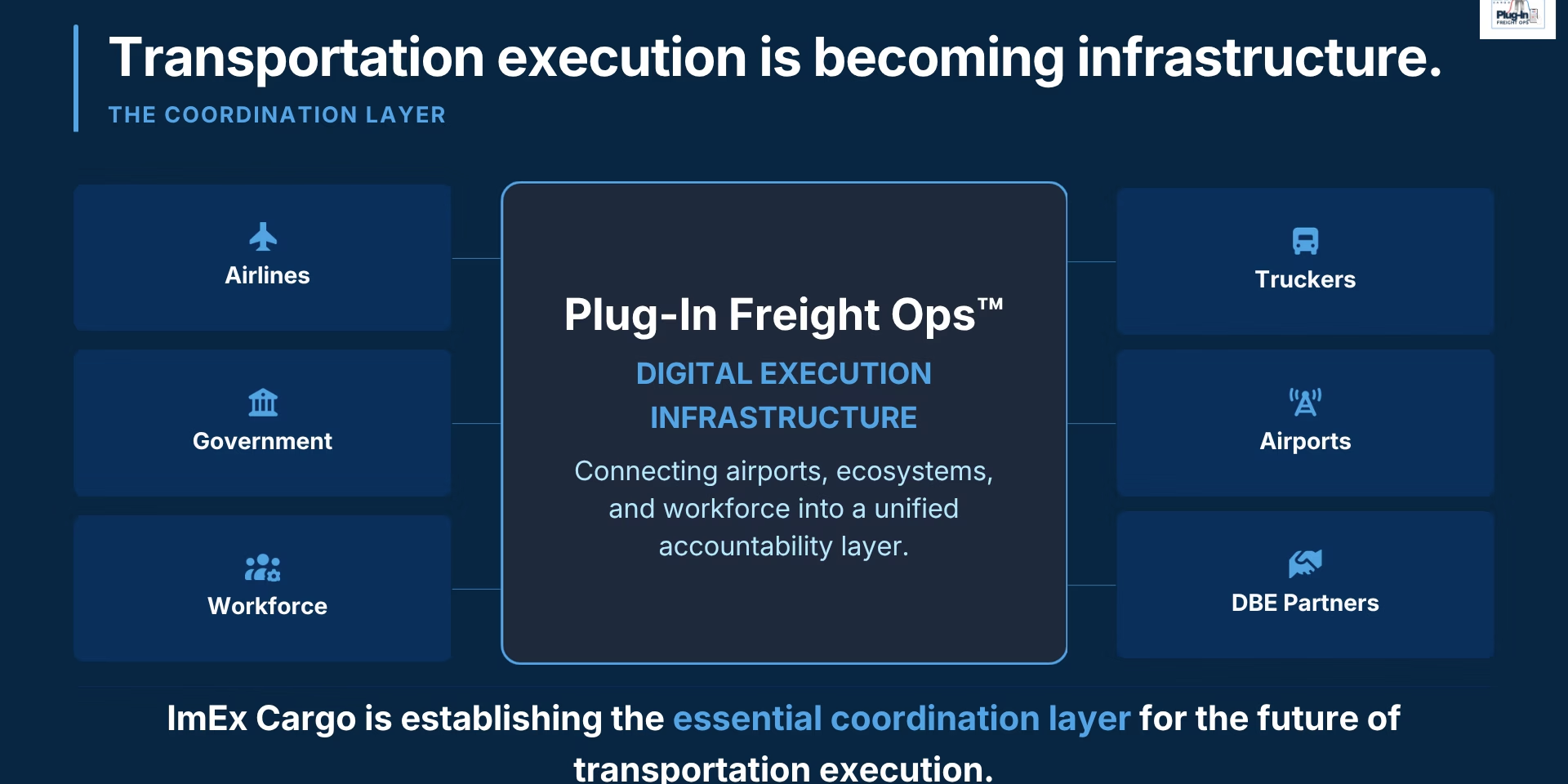
Plug-In Freight Ops™ takes a different approach. It doesn't replace; it orchestrates. It sits above the fragmented systems of every stakeholder to standardize execution across the full lifecycle: from quote to booking to final delivery.

Defining a New Category: The Coordination Layer
What exactly is an Execution Coordination Layer?
Think of it as the "Digital Execution Infrastructure." While a TMS (Transport Management System) manages a single company's fleet, and a visibility tool pings a GPS, the Coordination Layer manages the performance and accountability of the entire ecosystem.
It provides:
- Structured Handoffs: Ensuring every stakeholder knows exactly what they are responsible for, and when.
- Real-Time Accountability: Tracking partner performance in the moment, not in a post-mortem report.
- Workflow Standardization: Creating a single source of truth for complex logistics-driven projects.
By focusing on what we do at the coordination level, we reduce delays, lower risk, and ensure that execution actually happens as planned.
30 Years of Operational Reality
This isn’t "SaaS fluff" built in a vacuum. The foundation of Plug-In Freight Ops™ is thirty years of operational "dirt under the fingernails."
Our CEO, Michelle DeFronzo, has spent three decades navigating the chaos of global cargo. She’s seen where the handoffs break, why the paperwork fails, and how communication silos cause millions in losses.
As she often says, nothing is taken for granted in this business. Our platform is the digital manifestation of those 30 years of reality, designed to solve the problems that actually keep logistics managers up at night.

The Perfect Storm: Why the Market is Ready
The timing for a centralized coordination layer isn't just good: it's critical. Three massive forces are converging on the industry right now:
- The Infrastructure Bill: With $1.2 trillion flowing into massive programs, the complexity of coordinating prime contractors, sub-contractors, and government agencies has reached a breaking point.
- Supply Chain Fragmentation: Post-pandemic, the reliance on diverse, multi-party networks has increased. No single entity "owns" the end-to-end flow anymore.
- ESG and Diversity Requirements: Companies and agencies are now mandated to track and prove the participation of diverse suppliers (DBEs).
Most systems treat diversity as a checkbox. We treat it as an operational metric.
Activating the "Invisible" Ecosystem
One of the most unique aspects of the Plug-In Freight Ops™ model is how it activates the broader ecosystem: specifically Workforce Development and Certified DBE Networks.
For prime contractors and government agencies, meeting diversity and workforce goals is often a reporting nightmare. Our platform integrates these stakeholders directly into the execution workflow.

When you use our coordination layer, you aren't just moving freight; you are operationalizing compliance. You can track real-time DBE participation and workforce pipeline health as part of the standard logistics flow. You can view our current certifications to see how we lead by example in this space.
Moving the Industry Forward: From "Tracking" to "Moving Together"
The future of logistics isn't better tracking; it's better teamwork.
The industry is moving away from siloed data and toward a unified execution layer where every party: from the airport authority to the last-mile trucker: is strategically aligned.
By building this category, ImEx Cargo is providing the digital rails that allow multi-stakeholder environments to function as a single, coordinated unit. We are moving from a world of "where is my stuff?" to a world of "we are moving this together."
The Strategic Path Ahead
We are currently deploying Plug-In Freight Ops™ in environments where execution failure is not an option.
We aren't looking for "users": we are looking for partners who are ready to solve fragmentation once and for all. Whether you are an airline managing capacity, a prime contractor overseeing a major infrastructure build, or a government agency requiring audit-ready oversight, the coordination layer is the missing piece of your stack.
Ready to see the map?
We typically start by mapping your current operation to see where the execution breaks down.