In the current logistics landscape, the push for "digital transformation" often leads organizations to a fork in the road. On one path lies Workflow Automation: the process of making internal tasks faster through rules-based triggers. On the other lies Digital Freight Execution Infrastructure: a coordination layer that manages execution across an entire multi-party ecosystem.
For organizations managing complex logistics projects, the distinction is more than technical; it is the difference between optimizing a single department and controlling an entire supply chain lifecycle.
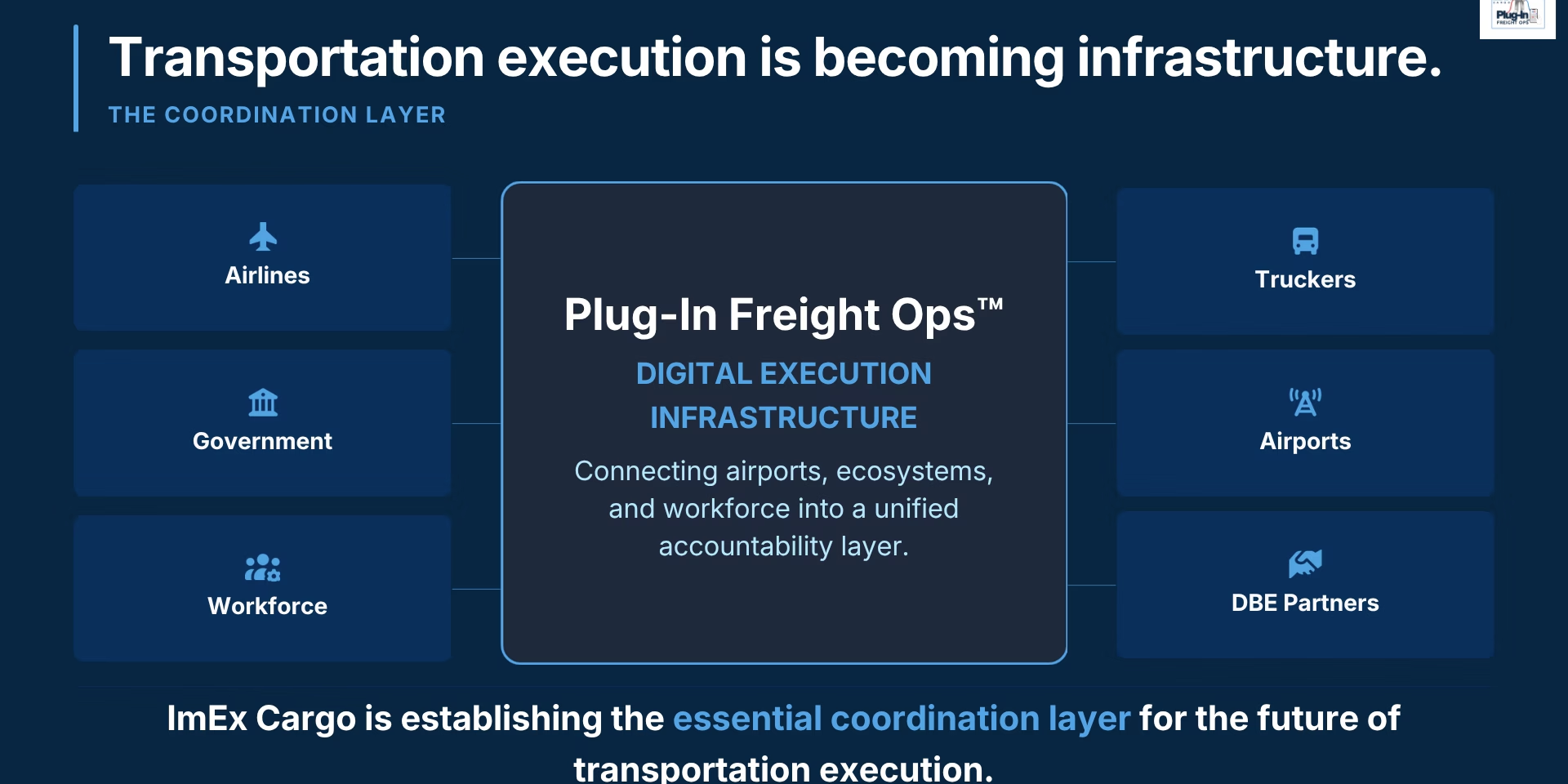
While workflow automation tools are designed to streamline what you do, Plug-In Freight Ops™ is designed to coordinate what happens between you and your partners.
The Internal Efficiency Trap: What is Workflow Automation?
Workflow automation (often involving RPA, Zapier, or native TMS triggers) focuses on automating repeatable tasks within a single organization or a closed system. It answers the question: "How can we move data from point A to point B without a human typing it?"
Common examples include:
- Auto-generating an invoice when a status changes to "Delivered."
- Sending an internal Slack notification when a quote is requested.
- Routing an approval task from a manager to an executive.
These tools are excellent for internal process compliance. They ensure your team follows your rules. However, they stop at your firewall. In a multi-stakeholder environment: involving airlines, GSAs, trucking providers, and government agencies: your internal workflow automation is invisible to everyone else.
The Infrastructure Perspective: What is Plug-In Freight Ops™?
Plug-In Freight Ops™ is neutral coordination infrastructure. It does not replace your internal tools; it sits above them as a standardized execution layer.
Instead of focusing on a single organization’s tasks, it focuses on the handoffs and accountability between independent entities. It provides a single coordinated workflow that connects disparate systems (TMS, ERP, legacy spreadsheets) into a unified execution environment.

Comparison: Process Optimization vs. Ecosystem Coordination
| Feature | Workflow Automation | Plug-In Freight Ops™ |
|---|---|---|
| Scope | Internal processes and task sequences | Cross-enterprise execution coordination |
| Participants | Teams within one organization | Multiple independent organizations |
| System Dependency | Often requires a shared platform or API | Works across disparate, disconnected systems |
| Handoffs | Internal task routing and status triggers | Structured multi-party digital handoffs |
| Accountability | Internal process compliance | Partner performance tracking across the ecosystem |
| Governance | Single-org organizational rules | Multi-stakeholder governed workflows |
Why Automation Alone Fails in Complex Logistics
Automation is binary; it follows a rule. But logistics execution is dynamic and exception-heavy. When a shipment is delayed at a terminal or a DBE partner requires specific compliance documentation, a standard internal workflow often breaks.
1. The "Black Box" Problem
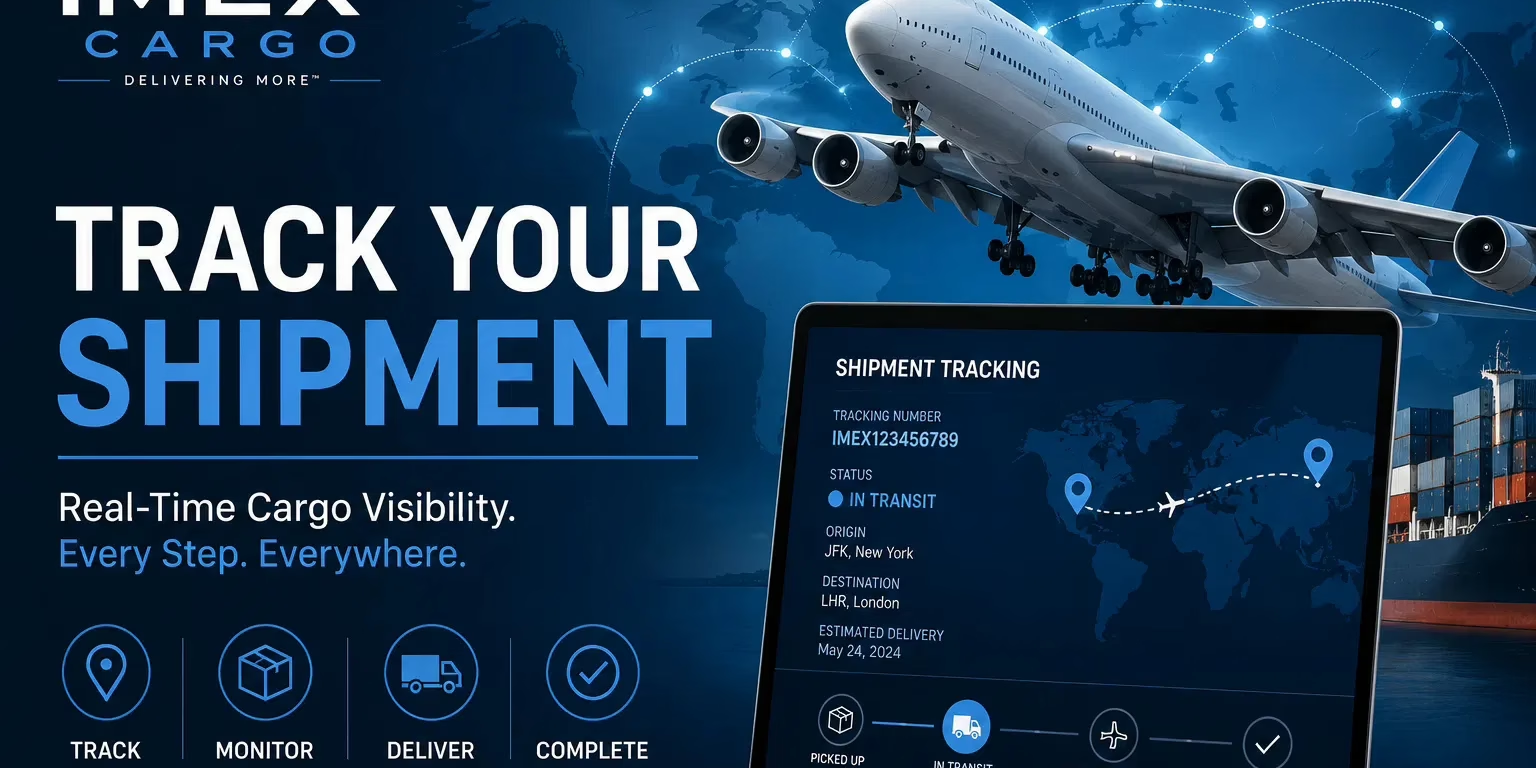
Internal automation creates a "black box" for partners. You might be efficient internally, but your carrier or airline has no visibility into the progress. Plug-In Freight Ops™ provides supply chain execution visibility, ensuring that every stakeholder sees the "source of truth" in real-time, reducing the need for status-check emails and calls.
2. Fragmentation vs. Standardization
If a freight forwarder automates their workflow and a GSA automates theirs, you simply have two automated silos that still cannot speak to one another. Digital freight infrastructure standardizes the execution layer so that handoffs are structured regardless of what internal software each party uses.
3. Compliance and Ecosystem Activation
For projects involving government logistics infrastructure, compliance is not just an internal task; it is a multi-party requirement. Workflow automation cannot track the real-time performance and certification status of a diverse DBE network across multiple tiers. Plug-In Freight Ops™ activates these partner ecosystems, integrating compliance into the execution flow itself.

Integration vs. Orchestration
A common misconception is that "Integration" (connecting two systems via API) is the same as "Orchestration."
Integration is the pipe. It moves data.
Orchestration is the conductor. It manages the timing, the sequence, and the accountability of the players.
Plug-In Freight Ops™ provides logistics orchestration. It governs the movement of freight from quote to booking to tracking and delivery across multiple parties. It ensures that when a trucking provider receives a load, the airline has already confirmed the capacity, the warehouse is ready for the handoff, and the GSA has validated the documentation.
From Tasks to Execution Command Centers
Workflow automation is about the task. Plug-In Freight Ops™ is a cargo execution command center.
For prime contractors and infrastructure firms, the priority isn't just "faster tasks": it's the reduction of risk and the elimination of delays. By utilizing a neutral coordination infrastructure, organizations can achieve:
- Structured Handoffs: No more "lost" shipments during stakeholder transfers.
- Audit-Ready Oversight: Every movement and digital handoff is tracked and timestamped across all parties.
- Execution Speed: Real-time visibility allows for proactive exception management rather than reactive fire-fighting.

Transitioning to Digital Freight Infrastructure
The goal of Plug-In Freight Ops™ is not to replace the tools your partners already love. It is to provide the "Plug-In" layer that makes those tools work together.
While workflow automation optimizes your internal team, digital freight infrastructure optimizes your entire operation. It turns a fragmented collection of vendors into a coordinated, high-performance ecosystem.
Are you ready to move beyond internal automation and toward ecosystem orchestration?
We typically address these coordination gaps through a focused pilot program or a capability walkthrough. We can map how Plug-In Freight Ops™ would integrate with your current stakeholder environment to improve execution speed and accountability.
Contact ImEx Cargo to discuss a pilot for your next complex logistics project.