In the world of logistics technology, "execution" is one of the most overused and misunderstood terms.
If you ask a dispatcher, execution means getting a driver to a dock on time. If you ask a freight forwarder, it means securing space on an aircraft. If you ask a project manager for a large-scale infrastructure program, it means ensuring twelve different vendors deliver their components in the correct sequence to avoid a million-dollar delay.
This ambiguity creates a significant gap in the tech stack. Most organizations believe that if they have a Transportation Execution System (TES), their "execution" is covered.
But there is a fundamental difference between executing a task inside your company and coordinating execution across an entire ecosystem. This is the divide between a traditional TES and Plug-In Freight Ops™.
The Internal View: What is a Transportation Execution System (TES)?
A Transportation Execution System is designed to manage the operational freight moves of a single organization. It is the engine that powers your internal logistics team.
The primary goal of a TES is to tender, track, and pay. It connects a shipper to their carriers to automate the transaction of moving freight.
Standard TES capabilities include:
- Carrier Connectivity: Electronic tendering of loads via EDI or API.
- Internal Dispatch: Routing and scheduling for a dedicated or contracted fleet.
- Shipment Tracking: Real-time visibility into the status of a specific move.
- Freight Settlement: Audit, rating, and payment processing.
While a TES is essential for transactional efficiency, its scope is limited to the direct relationship between the "payer" and the "provider." It does not account for the multi-party handoffs, government compliance hurdles, or secondary stakeholders that define modern, complex logistics.
The Ecosystem View: What is Plug-In Freight Ops™?
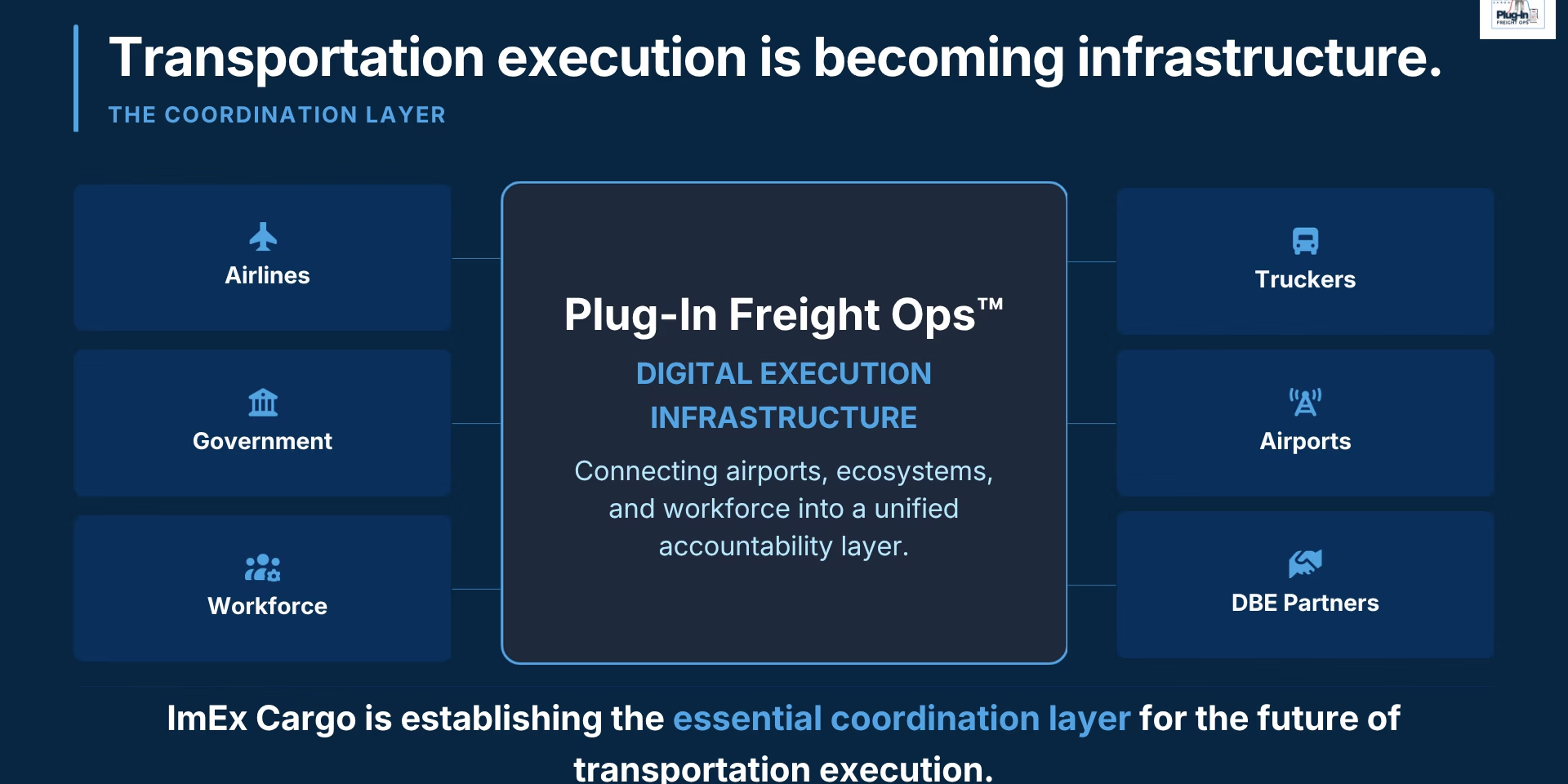
Plug-In Freight Ops™ is not a transactional tool for tendering loads. It is digital freight infrastructure: a coordination layer that sits above your existing systems (like your TMS, ERP, or TES) to standardize execution across the full shipment lifecycle.
Where a TES manages your team and your carriers, Plug-In Freight Ops manages the execution coordination between airlines, GSAs, forwarders, trucking providers, and government agencies. It treats the entire supply chain as a single, coordinated workflow rather than a series of disconnected shipments.

Side-by-Side: TES vs. Plug-In Freight Ops™
| Feature | Transportation Execution System (TES) | Plug-In Freight Ops™ |
|---|---|---|
| Scope | Single-organization execution | Multi-ecosystem execution coordination |
| Focus | Dispatch, routing, delivery | Cross-enterprise handoffs, partner accountability |
| Stakeholders | Internal teams, drivers, dispatchers | Airlines, GSAs, forwarders, truckers, government |
| Handoffs | Internal task routing | Structured digital handoffs across organizations |
| Visibility | Internal operational status | Ecosystem-wide execution status & performance data |
| Accountability | Internal KPIs | Multi-party SLAs and governed execution |
Why "Execution" Fails in the Gaps
The reason shipments fail isn't usually because a TES didn't tender a load correctly. Execution fails in the handoffs.
When cargo moves from a tarmac to a warehouse, or from a trucking provider to a government-inspected site, the visibility usually goes dark. The TES knows the truck arrived, but it doesn't know if the next stakeholder in the chain is ready to receive it, or if the necessary workforce is on-site to handle the specialized cargo.
Plug-In Freight Ops™ acts as a cargo execution command center. It bridges these gaps by:
- Standardizing the Workflow: It forces every party: regardless of their internal tech: into a unified execution protocol.
- Activating Partner Ecosystems: It integrates certified DBE networks and workforce pipelines directly into the execution flow, ensuring compliance and operational readiness.
- Providing Audit-Ready Oversight: Because it tracks every handoff across every stakeholder, it provides a level of accountability that internal execution systems simply cannot reach.

Complementary, Not Competitive
It is important to understand that Plug-In Freight Ops™ does not replace your Transportation Execution System. In fact, it makes your TES more valuable.
Your TES focuses on the how (the routing and the payment), while Plug-In Freight Ops focuses on the who and the when (the coordination and the multi-party accountability).
For a General Sales Agent (GSA) or a prime contractor managing a large infrastructure project, relying solely on a TES is like trying to conduct an orchestra while only being able to talk to the violin section. You need a platform that coordinates the entire ensemble.
The Shift to Governed Logistics Orchestration
As logistics becomes more fragmented and multi-stakeholder environments become the norm, the industry is moving away from simple "execution tools" and toward governed logistics orchestration.
A logistics operating system must be neutral. It must be able to sit above the fray and provide a single source of truth for every party involved in a move. This is the core of cargo execution infrastructure. It provides the structure necessary to reduce delays, mitigate risk, and ensure that "execution" isn't just a word on a dashboard, but a reality on the ground.
Moving from Internal Tasks to Ecosystem Results
If your organization is struggling with "black holes" in your visibility, or if you find that coordination breaks down as soon as a shipment leaves your direct control, you aren't looking for a better TES. You are looking for a multi-stakeholder execution layer.
Plug-In Freight Ops™ was designed specifically for organizations: Airlines, GSAs, and Prime Contractors: who are responsible for the outcome of a move, but do not own every asset in the chain.

We typically address these coordination gaps through a focused pilot. We can walk through how this digital infrastructure layer applies to your specific environment and how it integrates with your current execution systems.
Ready to see how coordination changes execution?
Contact ImEx Cargo to map your current operation.