Article #1 of The Digital Freight Infrastructure Journal
For more than a decade, the logistics industry has invested heavily in digital transformation.
We digitized documents. We connected booking systems. We introduced APIs, tracking platforms, IoT devices, predictive analytics, and AI. Nearly every major technology provider now promises greater visibility into the movement of freight.
Yet despite these advances, delays, missed handoffs, duplicate work, and endless email chains remain common across the cargo ecosystem.
The reason is simple.
Visibility solves an information problem.
It does not solve an execution problem.
Visibility Doesn't Move Cargo
Today, every participant in a shipment often has visibility into their own part of the process.
The airline knows when the aircraft lands.
The ground handler knows when cargo is ready for breakdown.
Customs knows when a shipment has been released.
The freight forwarder knows when documentation has been completed.
The trucking company knows when the cargo is available for pickup.
Each organization has information.
What no one owns is the coordination of work between them.
Cargo doesn't stop moving because information is unavailable.
It stops moving because responsibility changes hands.

The Hidden Cost of Fragmentation
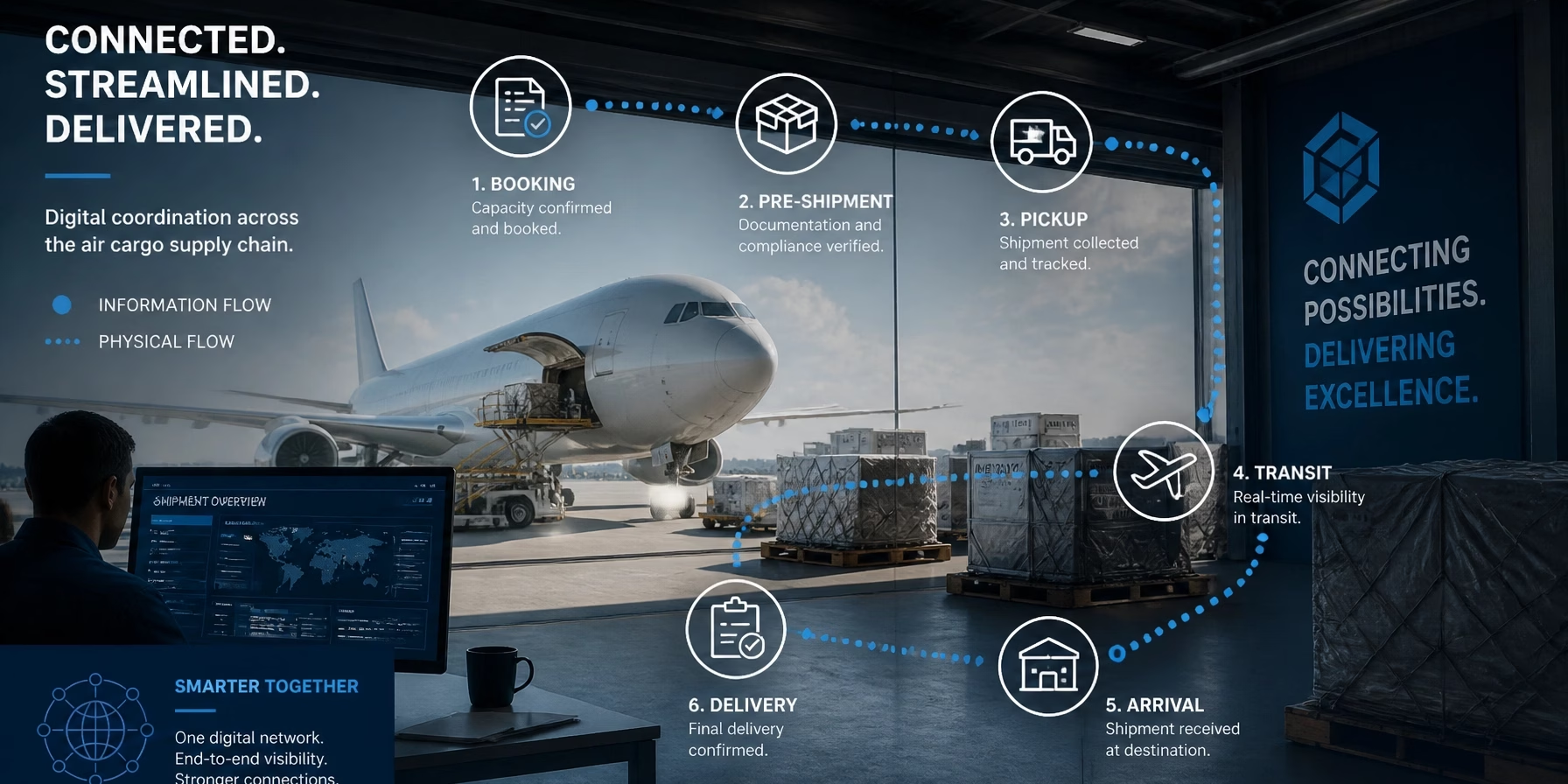
A typical international air shipment may involve airlines, GSAs, ground handlers, customs authorities, freight forwarders, trucking companies, warehouses, government agencies, importers, exporters, and consignees.
Each organization operates within its own systems, priorities, and workflows.
Every transfer of responsibility introduces risk.
Questions such as these are rarely answered consistently across organizational boundaries:
- Who owns the next action?
- Has the next party acknowledged receipt?
- What task is currently preventing movement?
- Which service level agreement is now at risk?
- Which asset is waiting?
- Who should be notified first?
These are execution questions : not visibility questions.
The Industry Has Solved Data Sharing Better Than Work Sharing
Many digital initiatives have focused on making information accessible.
Far fewer have focused on coordinating action.
Knowing that a shipment has landed is valuable.
Ensuring the next stakeholder acts immediately is transformational.
The distinction matters.
Information describes the current state.
Execution changes the future state.

Digital Freight Infrastructure Is the Missing Layer
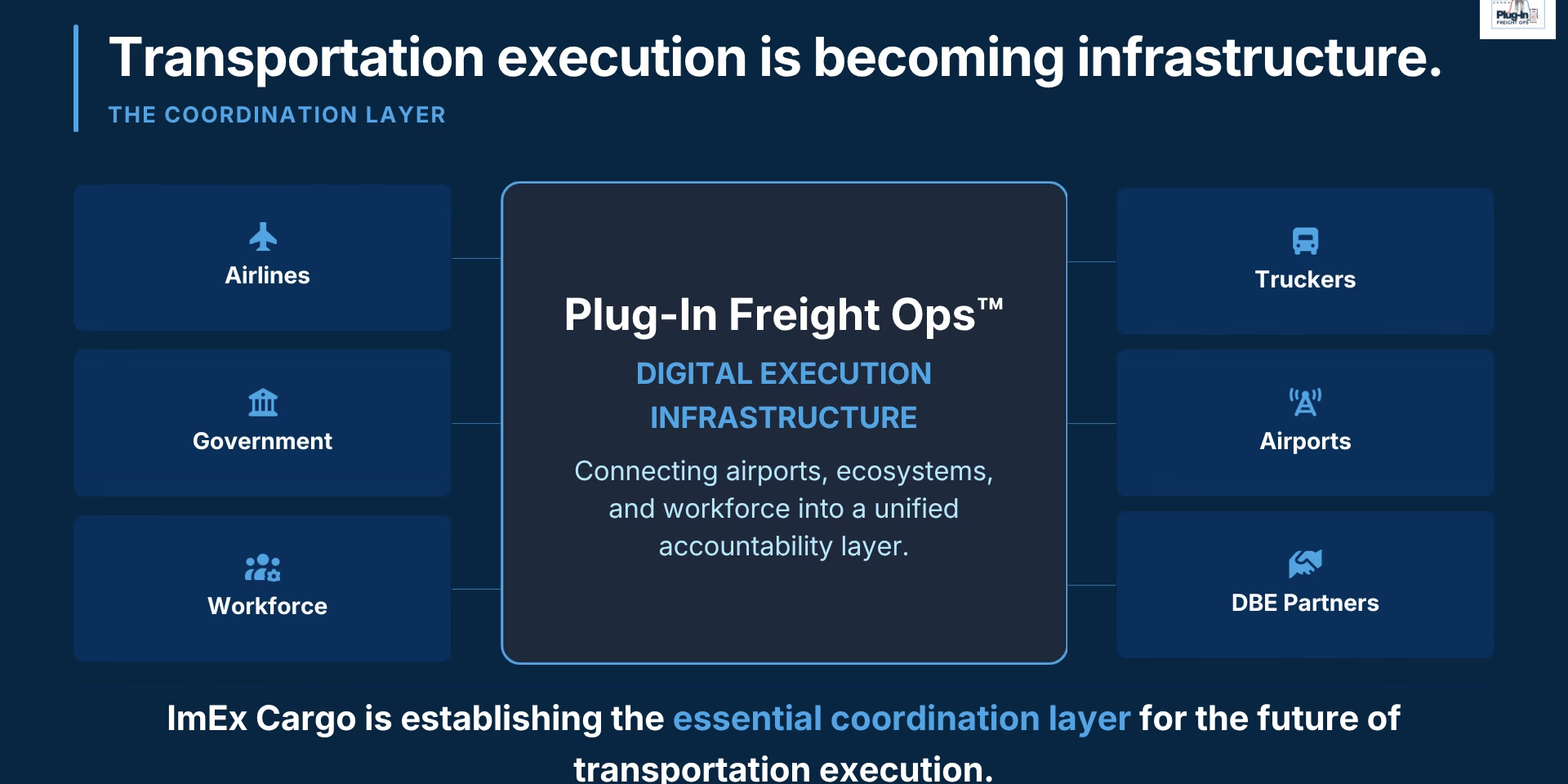
As logistics ecosystems become increasingly connected, a new layer of infrastructure is emerging.
Not another transportation management system.
Not another visibility platform.
Not another marketplace.
Instead, an execution layer that coordinates work across existing systems and organizations.
This layer doesn't replace airline systems, warehouse systems, customs platforms, or transportation management software.
It connects them operationally.
Its purpose is to answer one question continuously:
What needs to happen next, who owns it, and has it happened?
Moving Beyond Dashboards
The next generation of logistics technology will not be defined by more dashboards.
It will be defined by operational coordination.
Success will increasingly depend on reducing friction at organizational boundaries rather than simply collecting more data.
That means moving from:
- Visibility to accountability.
- Events to actions.
- Notifications to coordinated execution.
- Individual system optimization to ecosystem optimization.

A New Definition of Digital Transformation
For years, digital transformation in logistics has focused on digitizing information.
The next phase will focus on digitizing execution.
Organizations that can coordinate work seamlessly across airlines, GSAs, ground handlers, customs, trucking providers, freight forwarders, government agencies, and shippers will create measurable advantages in speed, reliability, resilience, and customer experience.
The industry's greatest opportunity is no longer seeing what happened.
It is ensuring the next action happens without delay.
To learn more about how organizations are approaching multi-stakeholder execution and infrastructure-level coordination, explore our ecosystem coordination solutions or review our operational advisory council.
About the Author
Michelle DeFronzo is Founder and CEO of ImEx Cargo and creator of Plug-In Freight Ops™, a Digital Freight Infrastructure initiative focused on improving execution coordination across fragmented cargo ecosystems. Drawing on more than 30-years of operational experience in airline cargo, GSA/GSSA operations, freight forwarding, trucking, and government logistics, her work explores how digital execution infrastructure can connect organizations, systems, assets, and handoffs without replacing existing technology.