Let’s talk about that "Day One" feeling. For most new hires in logistics, it usually involves a stack of manuals, a login to a system they’ve never seen, and a lot of shadowing someone who is too busy to actually show them the ropes.
In the industry, we call this the "onboarding lag." It’s that period where a company is paying full salary for about 20% of the productivity. Research shows that onboarding a single logistics employee can cost between $4,000 and $5,000 when you factor in training, administrative time, and the lost efficiency of idle equipment.
But at ImEx Cargo, we think that’s a legacy problem we can’t afford anymore.
As part of our Workforce Infrastructure Network (WIN) series, we’re diving into a concept that’s changing how we think about talent: Immediately Operable professionals. This isn't just about finding people with the right degree; it’s about building a pipeline where every student and new hire is ready to execute at 100% capacity the moment they step onto the tarmac or into the office.
The Invisible Tax on Logistics Operations
Execution breaks down where the handoffs happen. Whether it’s moving freight from a truck to a plane or handing off data from a forwarder to a government agency, the friction usually comes from a lack of standardized workflows.
When you bring a new person into that mix, the friction doubles. They aren't just learning "the job": they are learning your specific, often fragmented, way of doing the job. If your systems don't talk to each other, your new hire has to become the human bridge between those systems. That takes months to master.
This "onboarding tax" is why many prime contractors and agencies are hesitant to scale quickly. They aren't afraid of the work; they’re afraid of the risk that comes with a workforce that isn't yet "operable."
What Does "Immediately Operable" Actually Mean?
Being "Immediately Operable" means that a professional arrives with the digital and operational muscle memory required to manage complex logistics execution.

Through the ImEx Cargo Academy, we’ve shifted the focus from theoretical learning to execution-based training. We don't just teach what a Bill of Lading is; we teach how to manage a shipment lifecycle: from quote to booking to tracking: within a standardized digital infrastructure.
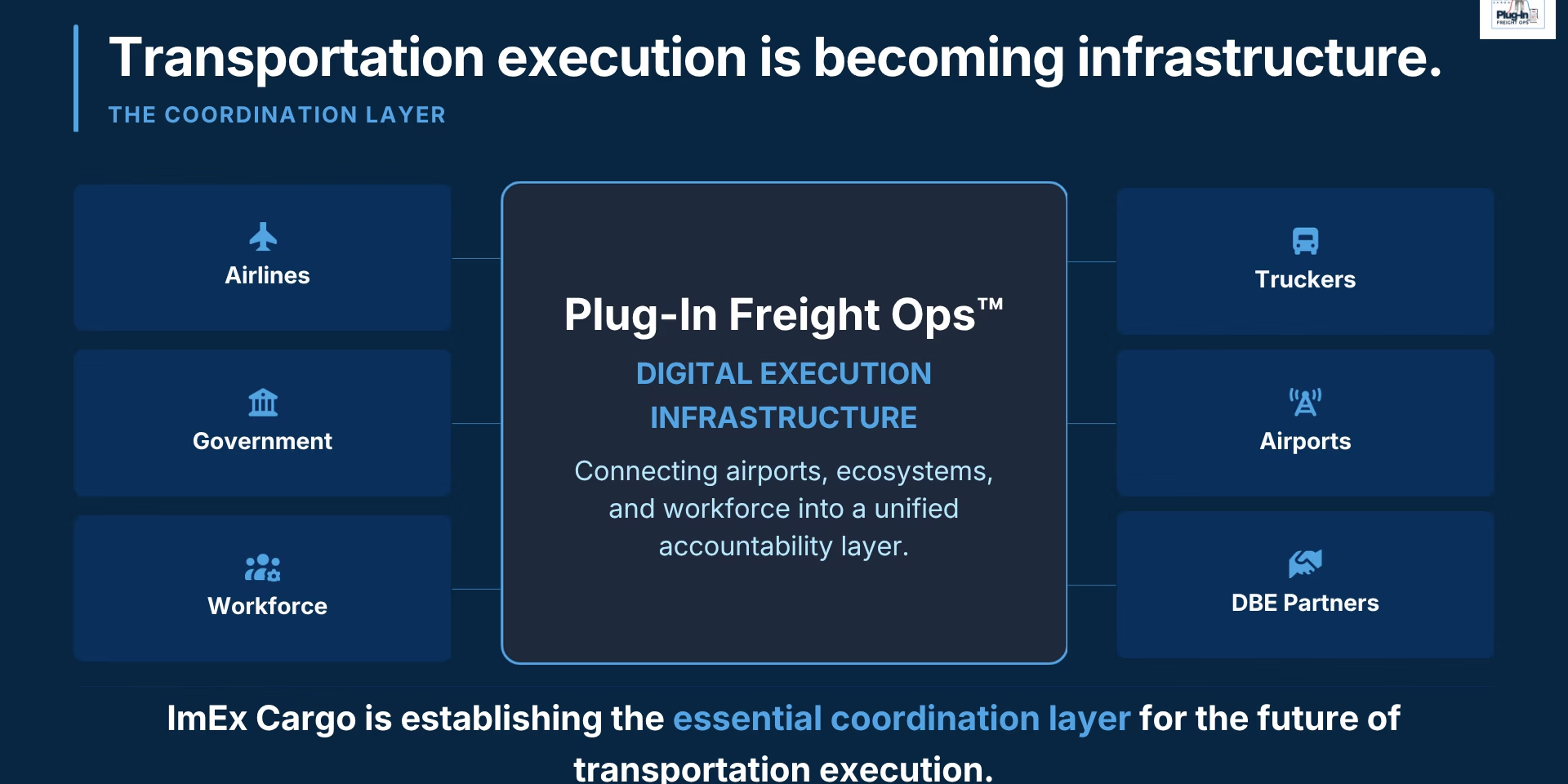
When a student or a new hire is trained on the Plug-In Freight Ops™ platform, they aren't just learning a tool. They are learning a universal standard for coordination. Because the platform sits above existing systems to manage execution, anyone who knows the platform knows how to coordinate with airlines, GSAs, truckers, and government stakeholders simultaneously.
Training on the Execution Layer
The secret sauce to making talent "operable" isn't just better textbooks: it’s the technology they use. Most logistics software is designed for visibility (seeing where stuff is). But as we’ve discussed before, visibility without accountability is just watching a train wreck in slow motion.
Plug-In Freight Ops™ is built for execution. It provides a structured coordination layer that guides the user through the necessary handoffs.
- Workflow Standardization: The platform ensures that every step: from the initial quote to final delivery: follows a set protocol.
- Structured Handoffs: New hires don't have to guess who needs what document. The system identifies the stakeholder and the requirement.
- Real-time Accountability: Because every action is tracked, the "learning curve" is supported by a system that prevents errors before they happen.
By training our WIN participants on this specific infrastructure, we remove the "system shock" that usually happens during the first week of a new job. They’ve already seen the workflows. They’ve already managed the digital handoffs. They are ready to plug in.

The WIN Network: Building the Pipeline
We aren't doing this in a vacuum. The Workforce Infrastructure Network (WIN) is about connecting the dots between educational institutions, certified DBE networks, and the prime contractors who need talent.
When we partner with universities, we aren't just giving guest lectures. We are providing students with access to the same tools used in high-stakes infrastructure projects. This creates a "talent-as-a-service" model where:
- Universities provide the foundational knowledge.
- ImEx Cargo Academy provides the execution training via Plug-In Freight Ops™.
- Industry Partners receive "Immediately Operable" talent that reduces their onboarding costs by up to 70%.
This isn't just good for business; it's a critical component of economic impact. By activating diverse supplier networks and workforce pipelines, we ensure that large-scale projects meet their compliance goals while actually improving operational speed.
Why This Matters for Prime Contractors and Agencies
If you are a prime contractor managing a massive infrastructure project or a government agency overseeing a complex supply chain, your biggest risk is fragmentation. You have too many stakeholders using too many different systems, and not enough people who know how to tie them all together.
Exception management becomes a full-time job for your senior staff because the new hires can't handle the complexity yet.
By prioritizing "Immediately Operable" talent, you:
- Reduce Risk: Fewer errors during the "ramp-up" phase.
- Increase Speed: Projects move faster when the workforce doesn't need a 90-day orientation.
- Improve Oversight: When everyone: including the new hires: is executing within a unified coordination layer, you get audit-ready oversight from day one.

From Student to Stakeholder
The logistics industry is changing. The days of "learning by osmosis" are over. The complexity of modern air cargo and infrastructure projects requires a workforce that is tech-fluent and execution-ready.
Through our WIN initiatives, we are proving that you can take someone with a passion for logistics and turn them into a high-performing coordinator in a fraction of the time. Whether they are coordinating cargo loading for a large aircraft or managing a diverse supplier portal, they are doing it with the confidence of someone who has been there before.

Let’s Map This to Your Operation
The "Immediately Operable" standard isn't just a goal for us: it’s a capability we are ready to share. Whether you are looking to strengthen your own workforce pipeline or you need a coordination layer that makes your current team more effective, we can help.
We typically address these challenges through a focused pilot program where we map the Plug-In Freight Ops™ infrastructure to your specific stakeholder environment.
Ready to eliminate the onboarding lag?
Let’s have a conversation about how we can walk through how this would apply in your environment. Whether you’re an airport authority, a prime contractor, or a university looking to give your students a real-world edge, the WIN network is ready to plug in.
Contact ImEx Cargo today to learn more about our Workforce Infrastructure Network and how we are redefining logistics execution.