Most logistics and transportation executives measure success by volume, yield, and on-time performance. But there is a hidden metric that is quietly eroding profitability across the industry: Time-to-Productivity.
In a landscape where finding qualified people is hard, but keeping them is even harder, the way we onboard new talent has become a critical operational bottleneck. We’ve discovered a surprising reality through recent industry engagement: the primary challenge isn't just a lack of applicants: it’s a lack of workforce continuity.
When execution knowledge lives exclusively in the heads of your most experienced employees, every resignation is a financial loss. It’s not just a person walking out the door; it’s a repository of "tribal knowledge": customer nuances, routing shortcuts, and vendor relationships: that vanishes.
To fix this, we need to stop viewing onboarding as a "training" problem and start viewing it as an infrastructure problem.
The Retention Paradox: Why Traditional Onboarding Fails
We recently polled a group of industry leaders (including airlines, forwarders, and GSAs) about their biggest workforce hurdles. The results were telling. While "Finding Qualified People" and "Training New Hires" are often cited as the top issues, the real winner was Retention.
The industry isn't failing to hire; it's failing to bridge the gap between a new hire’s first day and the moment they become a high-value contributor.
Traditional onboarding in logistics typically looks like this:
- Shadowing: A new hire sits next to a "pro" for two weeks.
- System Overload: They are thrown into three different legacy systems with zero integration.
- Information Silos: They learn how to "do the job," but not the why or the what if.
This approach relies on "individual heroics." When that hero leaves for a better offer, the onboarding cycle starts from zero, and the operation suffers a massive dip in execution quality. According to research from Argus Logistics, labor shortages and high turnover are making these fragmented processes even more dangerous.
Capturing the "Brain" of the Operation
The solution isn't to train people longer; it's to simplify the environment they work in. This is where Plug-In Freight Ops™ shifts the paradigm.
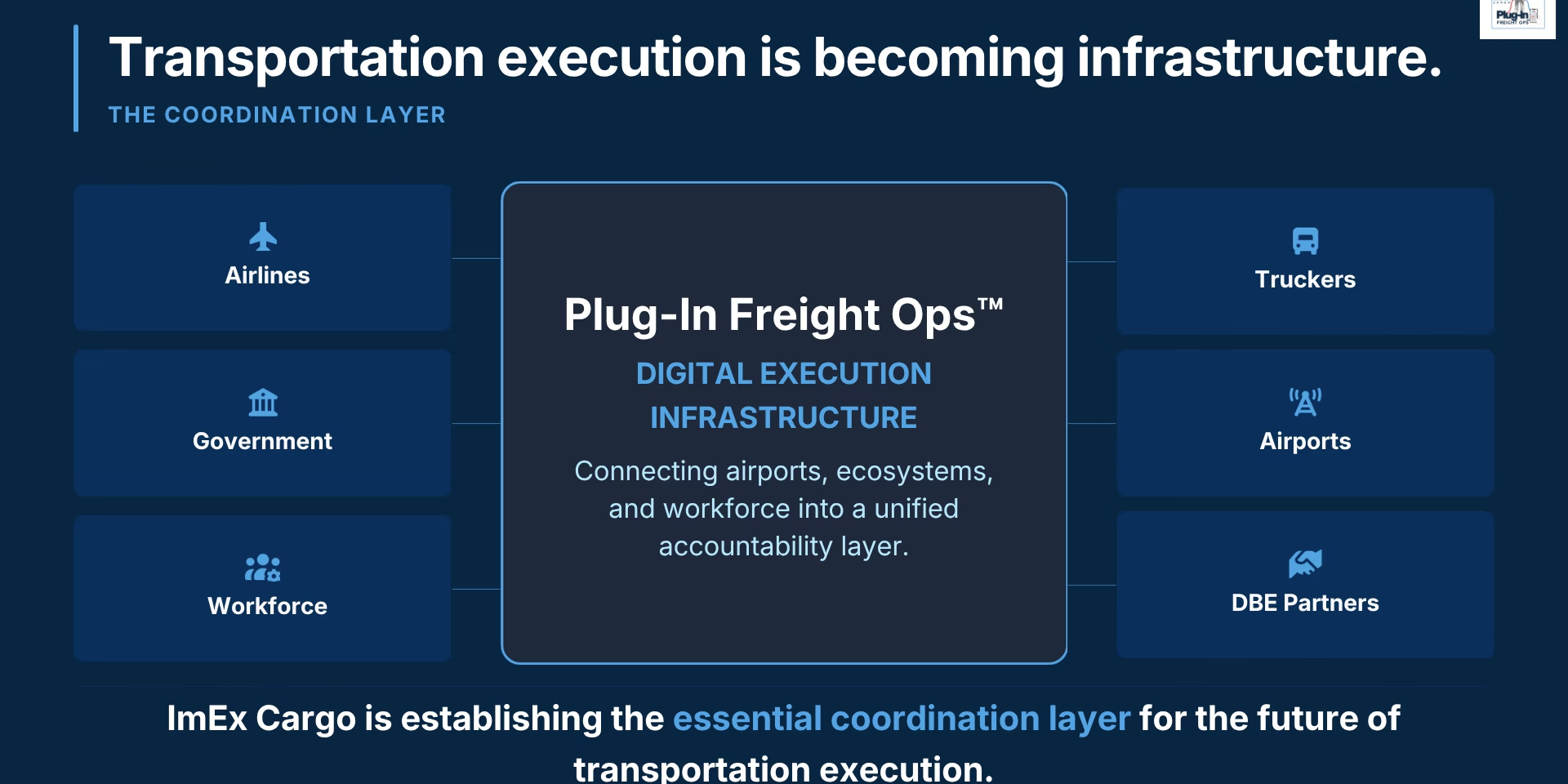
Instead of requiring a new hire to memorize a decade’s worth of tribal knowledge, Plug-In Freight Ops™ acts as a digital execution infrastructure. It standardizes the workflow from Quote → Book → Track → Deliver, providing a structured layer that sits above your existing systems.

By codifying best practices and standard operating procedures (SOPs) directly into the execution layer, you reduce the cognitive load on new employees. They don't have to guess the next step or search through endless email threads. The system guides them, while the Academy provides a structured learning environment that supports faster operational ramp-up.
Reducing the Stress of "First Day" Logistics
Logistics is a high-pressure environment. For a new hire, the fear of making a costly mistake: like missing a booking window or misrouting a high-value shipment: is a major driver of early-stage burnout.
Plug-In Freight Ops™ provides "digital guardrails." Because the platform coordinates logistics across multi-stakeholder environments (airlines, truckers, and government agencies), the new hire is working within a pre-validated system.
- Standardized Handoffs: Structured data entry ensures no critical information is missed during the transfer from warehouse to carrier.
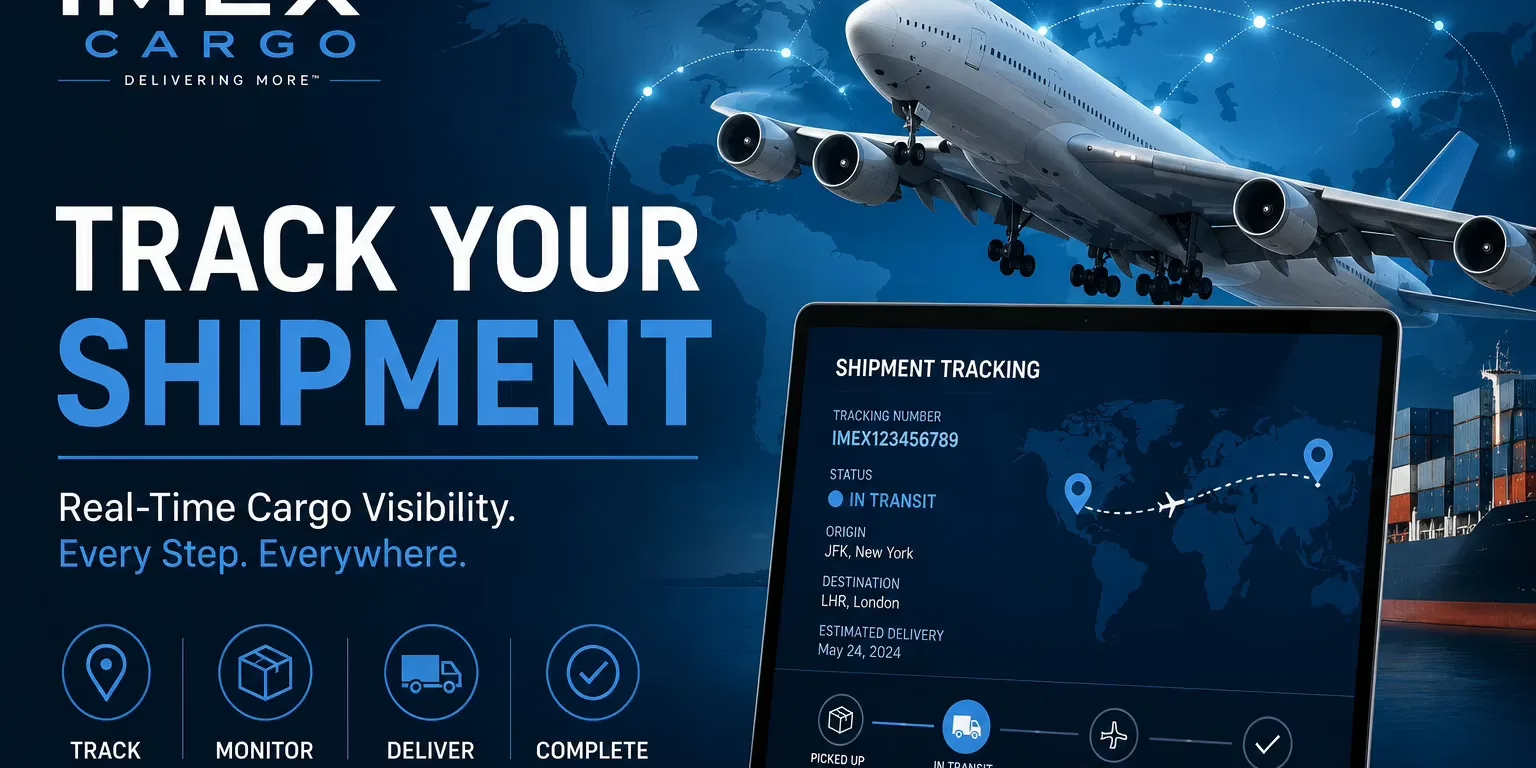
- Real-Time Visibility: New hires can see the status of every shipment in one place, eliminating the need to cross-reference five different portals.
- Accountability Loops: The platform tracks partner performance, giving the new hire (and their manager) instant feedback on what is working and what isn't.
Speeding Up the Time-to-Productivity
In a traditional logistics setup, it can take 3 to 6 months for a new hire to handle complex accounts independently. By utilizing a digital execution layer, organizations can slash that time significantly.
When the workflow is standardized, the "learning curve" becomes a "straight line." That is also where Workforce Activation Pilots become relevant: they create a structured environment for reducing the ramp-up time for new hires by aligning onboarding, workflow execution, and operational accountability.

Take the Plug-In Freight Ops™ Portal as an example. Its centralized dashboard allows a new hire to handle quoting and tracking across air, truck, and ocean freight within their first week. They aren't learning the nuances of ten different carriers; they are learning one unified interface.
The Impact on Multimodal Coordination
Logistics today is rarely just "point A to point B." It involves multiple modes of transport and a dizzying array of stakeholders. For a new hire, understanding the interplay between an airline GSA, a local trucking provider, and a certified DBE partner is overwhelming.
By connecting these entities into a single coordinated workflow, Plug-In Freight Ops™ simplifies the ecosystem. This is especially important when coordinating with Employer Partners across multi-party execution environments, where role clarity, handoff accuracy, and shared visibility directly affect performance. A new employee doesn't need to be an expert in every stakeholder’s internal system. They only need to understand the execution layer that connects them all.

Building Workforce Resilience
If your operation depends on specific individuals being present for the work to get done, you don't have a business: you have a collection of high-risk dependencies.
That is the core idea behind the Workforce Innovation Network (WIN): building workforce resilience through coordinated infrastructure, not isolated hiring activity.
True workforce resilience comes from Knowledge Preservation. By using Plug-In Freight Ops™, you are effectively "downloading" the operational intelligence of your best employees into your digital infrastructure. This aligns with how we think about Workforce Ecosystem Infrastructure, broader Workforce Development Partnerships, and the operating model behind the Workforce Innovation Network (WIN) that supports continuity across stakeholders.
When a key employee moves on, their "tribal knowledge" remains in the system. The next person who steps into that role doesn't have to reinvent the wheel. They simply "plug in" to the existing workflow and start executing. This transition is reflected in how Plug-In Freight Ops™ standardizes execution across fragmented operations.
Key Benefits of Infrastructure-Led Onboarding:
- Lower Onboarding Costs: Reduced reliance on senior staff for shadowing and one-on-one training.
- Higher Initial Accuracy: Standardized workflows prevent common "new hire errors" in quoting and booking.
- Improved Retention: Employees who feel supported by their tools are less likely to experience burnout and leave.
- Audit-Ready Execution: Every handoff and decision is tracked, creating a built-in audit trail for compliance and government projects.

From "Hire and Hope" to Structured Execution
The workforce challenge in 2026 isn't just about finding talent; it’s about reducing your dependency on individual heroics.
Organizations that continue to rely on tribal knowledge will continue to struggle with retention and slow time-to-productivity. Organizations that invest in execution infrastructure will find that their teams are more agile, their new hires are more productive, and their operations are far more resilient.
We are currently helping airlines, GSAs, and logistics providers map their current operations to this new execution model. If you’re ready to stop the "knowledge leak" in your organization and get your new hires contributing at a high level from day one, we should talk.
Ready to see how structured execution can transform your onboarding?
We can walk through how this would apply in your environment. Let’s map out your current workflows and identify where a digital execution layer can speed up your path to productivity.