In the current logistics landscape, "going digital" is often treated as a single destination. Companies invest heavily in portals, booking engines, and real-time tracking, yet operations still break down at the handoff. Shipments get stuck at ground handlers, documentation hangs in a government queue, or a trucker arrives at a warehouse only to find the cargo isn't ready.
These breakdowns happen because most "digital" solutions are built to solve a single problem: the commercial transaction. They are designed to help you book a load or find a rate faster. But they aren't designed to manage what happens after the booking button is clicked.
This is the divide between Digital Freight Platforms and Plug-In Freight Ops™. One digitizes the task; the other orchestrates the outcome.
To understand where your organization fits, we need to distinguish between the transaction layer and the digital freight execution infrastructure.
The Transaction Layer: What Digital Freight Platforms Do
Digital freight platforms, ranging from marketplaces to digital forwarders, have transformed how capacity is bought and sold. Their primary value proposition is efficiency in the "quote-to-book" phase of a shipment.
These platforms are optimized for:
- Price Discovery: Aggregating carrier rates so you can find the best deal.
- Transaction Speed: Reducing the time it takes to secure a booking through automation.
- Document Centralization: Storing invoices and bills of lading in a single portal.
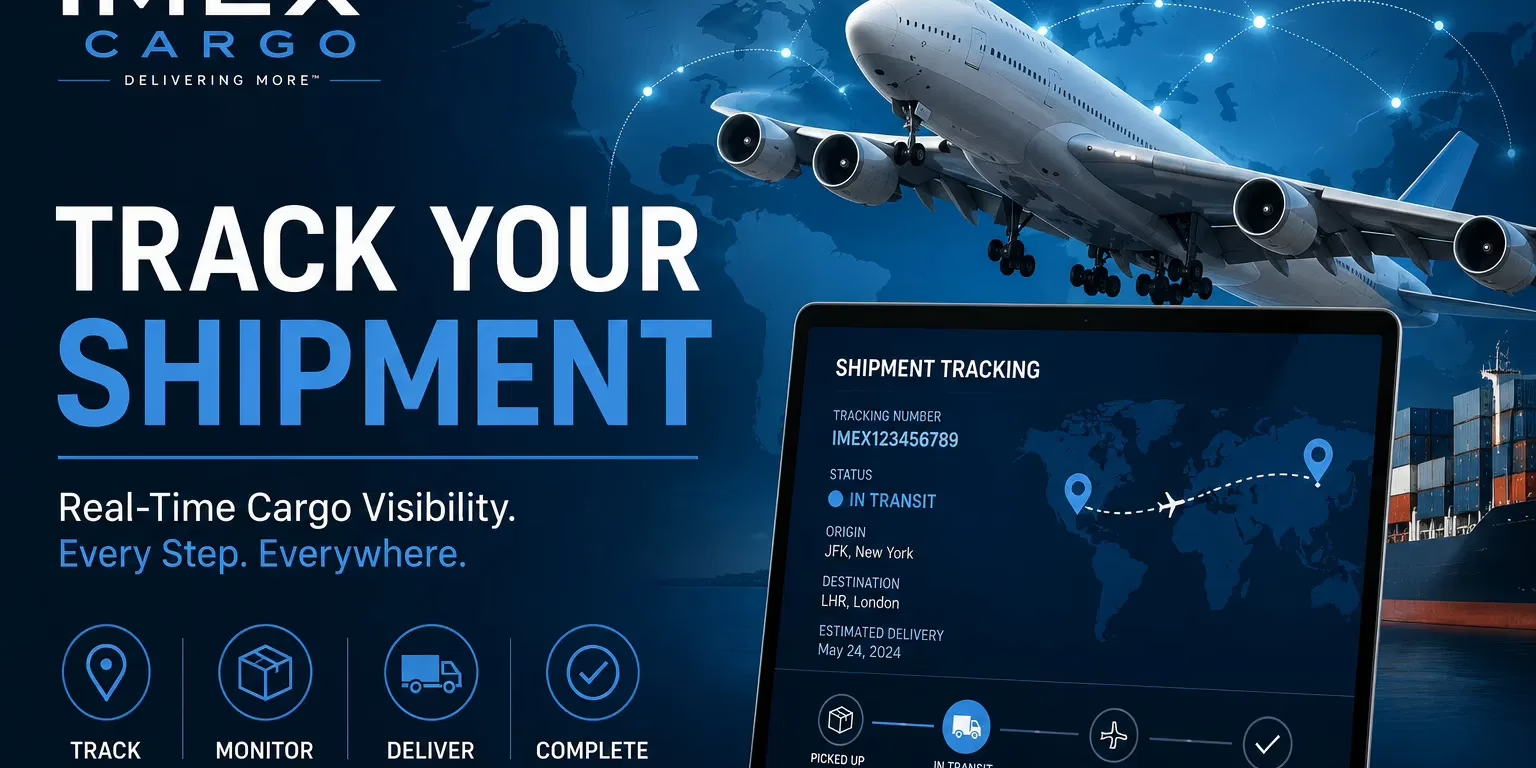
- Point-to-Point Visibility: Providing a GPS pin on a map for a specific leg of a journey.
In this model, the software acts as the broker or the forwarder. It focuses on the commercial relationship between the buyer and the carrier. However, logistics execution involves far more than just two parties.
The Orchestration Layer: What Plug-In Freight Ops™ Does
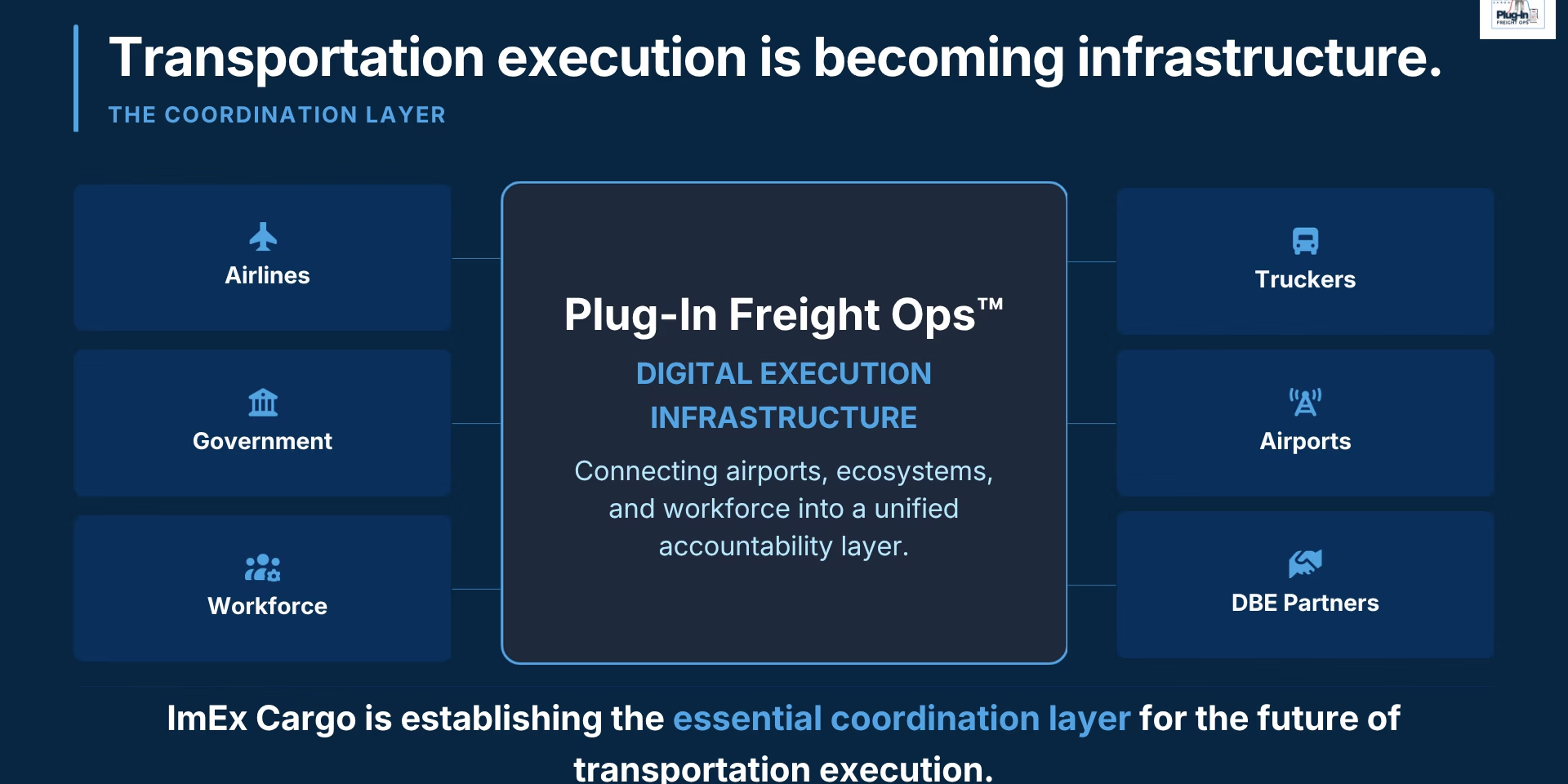
Plug-In Freight Ops™ is not a marketplace or a digital forwarder. It is a cargo execution infrastructure, a digital layer that sits above existing systems to coordinate multi-stakeholder execution.
Instead of replacing your TMS, airline system, or carrier network, it synchronizes them. It is designed for environments where execution depends on a complex web of airlines, GSAs, trucking providers, ground handlers, government agencies, and diverse suppliers (DBEs).
While a platform manages the transaction, Plug-In Freight Ops™ manages the lifecycle.

Side-by-Side: Transaction vs. Orchestration
When evaluating your technology stack, it is helpful to look at these two categories across the dimensions of day-to-day execution.
| Dimension | Digital Freight Platforms | Plug-In Freight Ops™ |
|---|---|---|
| Primary Focus | Digitizing transactions (quote, book, pay) | Orchestrating multi-party execution |
| Scope | Single-function or single-provider | Cross-enterprise and ecosystem-wide |
| Stakeholder Coverage | Limited (usually forwarder-carrier) | Full ecosystem (Airlines, GSAs, Truckers, DBEs, Gov) |
| Workflow Support | Point-to-point (booking & tracking) | End-to-end lifecycle (quote → delivery) |
| Partner Accountability | Limited to basic milestone tracking | Structured handoffs with performance auditing |
| Execution Layer | No (it is the operating tool) | Yes (coordination layer above existing tools) |
Why "Digitizing Tasks" Isn't Enough
The core limitation of a transaction-focused freight execution platform is that it assumes the transaction is the end of the problem. If you book a truck digitally, the software has succeeded. But if that truck sits at a terminal for eight hours because the cargo handler wasn't notified of its arrival, the logistics operation has failed.
Logistics orchestration moves beyond the booking. It treats every shipment as a series of governed handoffs.
For example, within Plug-In Freight Ops™, a workflow isn't just a status update. It is a coordination of responsibilities:
- The Airline confirms capacity.
- The GSA manages the booking details.
- The Ground Handler receives a notification for readiness.
- The Trucking Provider is dispatched based on real-time cargo availability.
- The DBE Partners are activated to handle specific compliance or project-based tasks.
This level of multi-stakeholder execution ensures that every party is working from the same "orchestration sheet," reducing fragmentation and the "black hole" of visibility that typically occurs between booking and delivery.
Ecosystem Coordination vs. Carrier Commodity
Digital platforms often commoditize capacity. They treat carriers or airlines as interchangeable nodes in a marketplace, focusing on who can move the freight for the lowest price.
A neutral coordination infrastructure like Plug-In Freight Ops™ takes the opposite approach. It is built to empower and activate your existing partner ecosystem. By providing a structured governed logistics orchestration layer, it allows prime contractors, airport authorities, and global logistics providers to manage their trusted networks more effectively.
This is particularly critical for large-scale infrastructure projects or government-funded programs where partner accountability and economic impact (such as DBE participation) are as important as the movement of the freight itself.

The Evolution of the Logistics Operating System
We are seeing a shift from the era of "Freight Forwarding 2.0" (the digital platform) to "Logistics Execution 3.0" (the logistics operating system).
The legacy approach was to buy a system that did everything: a monolithic ERP or TMS. When that proved too rigid, companies turned to digital platforms for specific tasks. Today, the challenge is that these platforms have created new silos. You might have one platform for air booking, another for trucking, and a third for visibility.
A supply chain execution layer solves this by acting as the "connective tissue." It integrates the data from your digital platforms and physical partners into a cargo execution command center.
It provides:
- Structured Handoffs: Knowing exactly who has the cargo and who is responsible for the next move.
- Performance Tracking: Moving from "Where is my stuff?" to "How well are my partners executing?"
- Audit-Ready Oversight: Providing a full lifecycle record of every decision and action taken across the network.
Complementary, Not Competitive
It is important to note that digital freight infrastructure is often complementary to the platforms you already use. You may still use a digital platform to find rates or book capacity. Plug-In Freight Ops™ then takes that booking data and plugs it into a larger execution workflow.
It fills the gaps where execution traditionally breaks down: the handoffs between stakeholders who don't share the same software. By sitting above these systems, it creates a unified environment for supply chain execution visibility without requiring every partner to abandon their current tools.

Moving Toward Execution Certainty
The distinction between orchestration and transaction is the difference between hope and control. A transaction-based model hopes that once the booking is made, the partners will execute correctly. An orchestration-based model ensures they do.
If your organization is managing complex movements across multiple stakeholders: particularly in air cargo, infrastructure, or government programs: the transaction-only approach will eventually hit a ceiling. You need more than a better way to book; you need a better way to execute.
We typically address these challenges through a focused pilot program. We can walk through how this coordination layer would apply to your specific environment, mapping your current fragmented flows into a structured, audit-ready execution infrastructure.
Learn more about our Workforce and Execution Pilots here.