In modern logistics, execution doesn't fail because of a single company’s internal software. It fails in the "white space" between stakeholders. When an airline hands off to a trucker, or a freight forwarder waits on a government clearance, the process often reverts to manual emails, fragmented spreadsheets, and phone calls.
This fragmentation is why a new category of technology has emerged: Digital Freight Infrastructure.
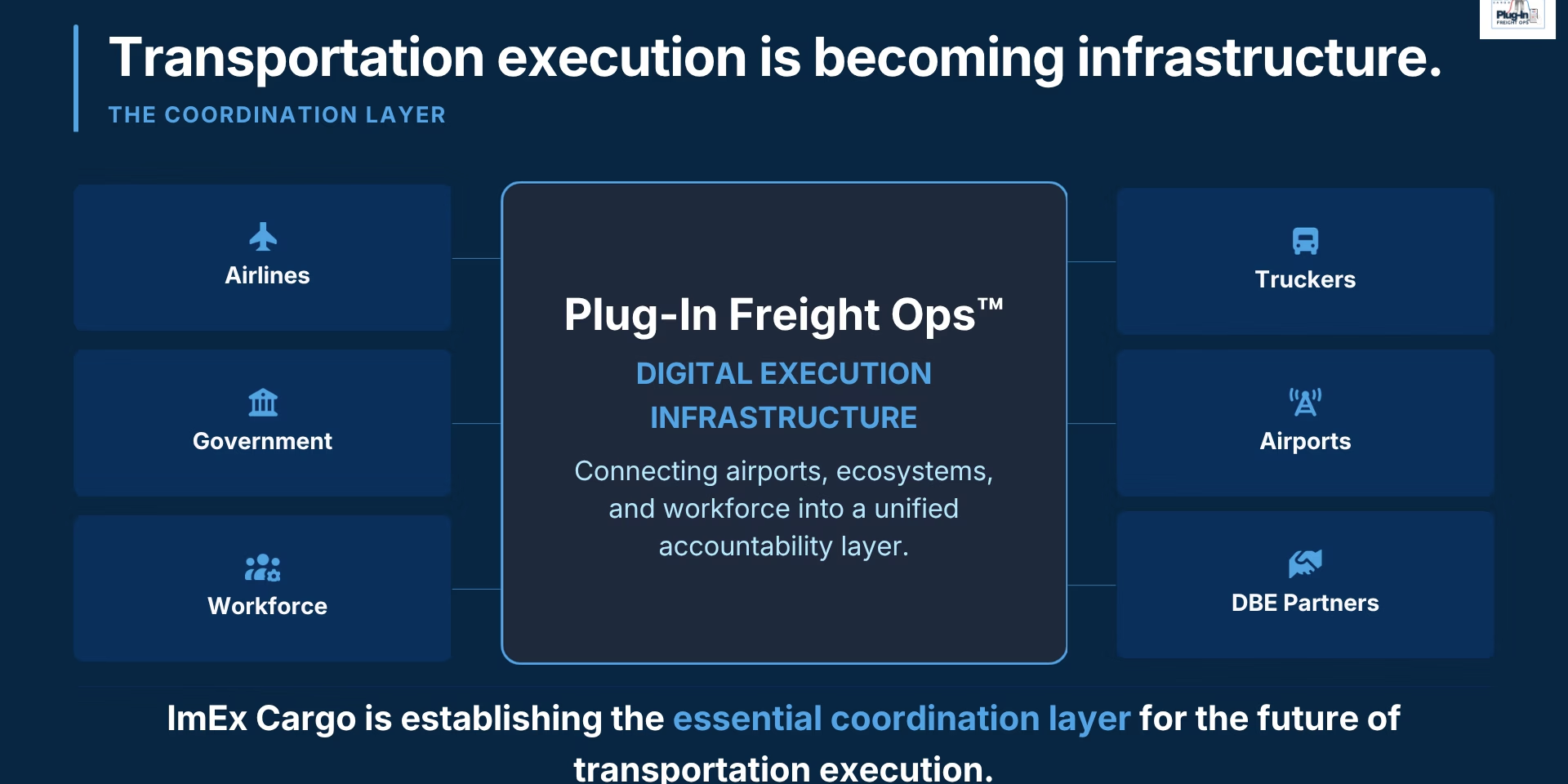
Unlike a traditional Transportation Management System (TMS) or a Supply Chain Visibility (SCV) tool, Digital Freight Infrastructure (DFI) is not a standalone app for one business. It is a shared execution layer designed to coordinate movement across a multi-stakeholder ecosystem.
1. What is Digital Freight Infrastructure?
Digital Freight Infrastructure is a digital execution infrastructure layer that coordinates logistics across fragmented, multi-stakeholder environments.
Rather than replacing the systems of record that companies already use: such as ERPs, TMSs, or WMSs: DFI sits above them. It acts as a neutral coordination backbone that standardizes data and manages execution across the entire shipment lifecycle.
At its core, DFI is the plumbing that connects disparate entities: airlines, GSAs, trucking providers, airports, and government agencies: into a single, structured workflow. It ensures that when a shipment moves from one hand to the next, the data, accountability, and visibility move with it in real-time.
2. The Problem It Solves: The Execution Gap
The primary challenge in global logistics is not a lack of data, but a lack of coordinated execution.
Most logistics software is built for "Single-Party Utility." A TMS helps a carrier manage their own trucks. An ERP helps a shipper manage their own inventory. However, a single international air freight movement can involve up to 20 different entities.
When execution breaks down, it is usually due to:
- System Fragmentation: Partner A uses one software, Partner B uses another, and they don't speak the same language.
- Manual Handoffs: The transition of responsibility between a warehouse and a carrier is often undocumented in real-time.
- Lack of Accountability: If a delay occurs, it is difficult to pinpoint which stakeholder in the chain is responsible.
- Workforce Lag: New partners or employees take weeks to "onboard" into complex, manual workflows.
Digital Freight Infrastructure closes this "execution gap" by providing a unified environment where every party plugs into the same operational logic.

3. How It Differs from Traditional Logistics Technology
To understand DFI, it is helpful to look at how it differs architecturally from the tools we have used for the last two decades.
Not a System of Record, but a System of Coordination
A TMS is a "System of Record" for a single company's assets and orders. DFI is a "System of Coordination" for a project’s ecosystem. It doesn't care whose truck is moving the cargo; it cares that the execution of that movement meets the standardized requirement of the project.
Above, Not Instead Of
Traditional implementations usually require "ripping and replacing" old software. DFI uses a "plug-in" approach. By sitting on top of existing infrastructure, it allows organizations to keep their legacy systems while gaining the coordination power of a modern, digital backbone.
Execution vs. Visibility
Most "Visibility Platforms" simply show you that your cargo is late. They are reactive. Digital Freight Infrastructure is proactive; it manages the tasks and handoffs required to prevent the delay in the first place.
4. Core Capabilities of Digital Freight Infrastructure
A true DFI platform, such as Plug-In Freight Ops™, provides five essential capabilities:
1. Real-Time Multi-Party Visibility
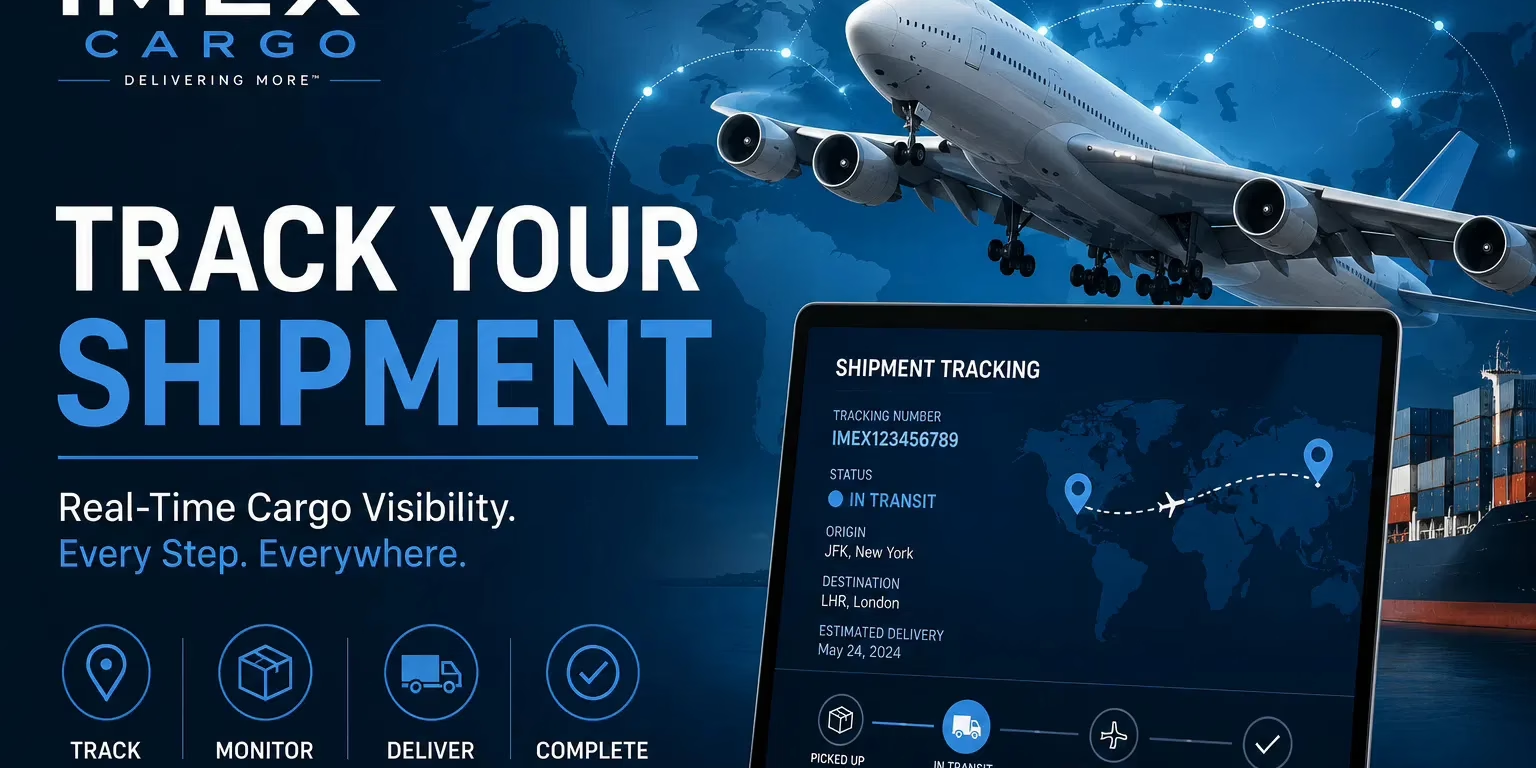
Visibility is not just a dot on a map. In a DFI environment, visibility means knowing the status of every milestone, document, and handoff across every stakeholder simultaneously.
2. Structured Handoff Management
The platform defines exactly what data and physical actions are required to move freight from one party to another. This eliminates "he-said-she-said" disputes and ensures data integrity at every gate.
3. Partner Accountability & Performance Tracking
Because the infrastructure tracks execution at the stakeholder level, organizations can finally measure the actual performance of their vendors, carriers, and GSAs against objective data.
4. Ecosystem Activation (DBE & Workforce)
DFI allows for the rapid integration of diverse supplier networks (DBE) and workforce pipelines. By standardizing the workflow, even new or smaller partners can "plug in" and execute with the same precision as a global provider.
5. Standardized Lifecycle Management
From Quote → Booking → Tracking → Delivery, the infrastructure provides a single, audited thread of activity that serves as the "single source of truth" for all parties.

5. Who Needs Digital Freight Infrastructure?
This category of technology is designed for organizations responsible for managing complex, high-stakes logistics execution:
- Airlines & Air Cargo Networks: To manage capacity and coordinate with GSAs and ground handlers.
- Freight Forwarders: To orchestrate multi-leg movements across diverse carrier sets.
- Prime Contractors & Infrastructure Firms: To manage the massive logistics requirements of capital programs and construction projects.
- Federal, State, & Municipal Agencies: To ensure compliance, transparency, and economic impact (DBE participation) in public works.
- Airport Authorities & Ports: To coordinate the movement of goods and entities within a physical hub.
6. Why It Matters Now: The Shift to Interconnectedness
The logistics industry is moving away from a "siloed" model toward an "ecosystem" model. Supply chains are now too fast and too interconnected for single-company tools to suffice.
Global disruptions, rising compliance requirements, and the need for extreme operational speed mean that coordination is now a competitive advantage. Organizations that rely on fragmented systems will continue to suffer from high administrative costs and frequent execution failures. Those that adopt a Digital Freight Infrastructure will operate with a level of control and agility that was previously impossible.

7. The Future: Cargo Execution Intelligence
As Digital Freight Infrastructure matures, the category will evolve into Cargo Execution Intelligence.
Once the "plumbing" of coordination is in place, AI and machine learning can begin to optimize movements in real-time. We will move from "What is happening now?" to "What should happen next to prevent a failure?"
This infrastructure-first approach is the necessary foundation for autonomous logistics. You cannot have an autonomous truck or a drone delivery network if the digital "roads" (the coordination layer) don't exist to manage the handoffs.
Conclusion: Building Your Execution Backbone
Digital Freight Infrastructure is no longer a "nice-to-have" digital upgrade; it is the foundational layer required for modern, large-scale logistics. By focusing on coordination, accountability, and ecosystem activation, it allows organizations to move freight faster, with less risk and total visibility.
At ImEx Cargo, we are defining this category through our Plug-In Freight Ops™ platform. We don't just help you ship; we provide the digital infrastructure to ensure your entire ecosystem executes with precision.
Ready to see how a coordination layer fits into your current operation?
Explore Plug-In Freight Ops™ or Contact our team to schedule a capability walkthrough.