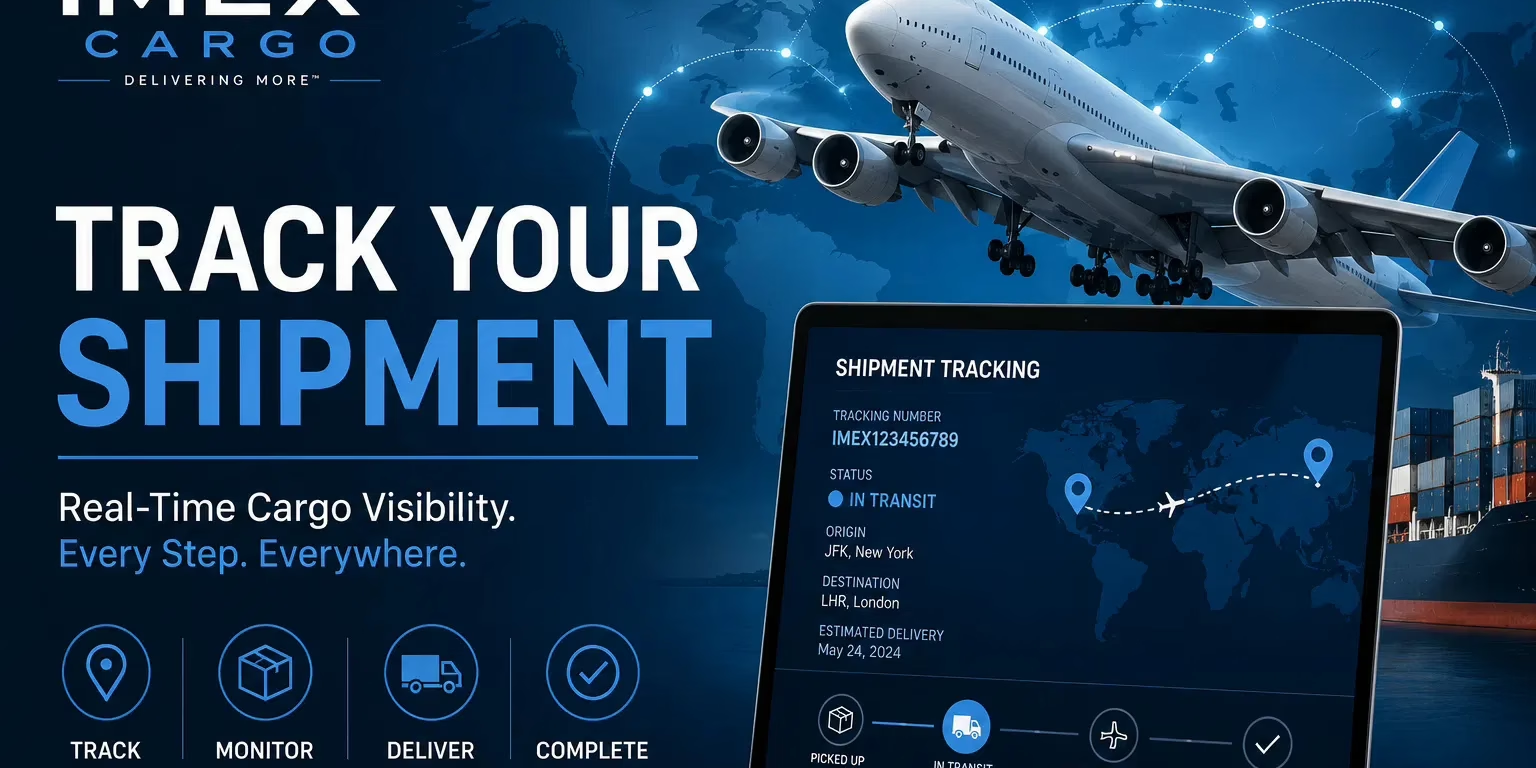
For decades, the logistics industry has poured billions into "knowing." We have real-time visibility platforms that show us exactly where a container is on the ocean. We have TMS solutions that calculate the precise cost of a route. We have ERPs that track every SKU in the warehouse.
Yet, despite this mountain of data, execution still breaks down the moment a shipment leaves one company’s controlled environment and enters another’s.
When an airline hands off cargo to a ground handler, or a primary contractor engages a diverse subcontractor network, the digital thread snaps. Coordination reverts to manual "noise": phone calls, disjointed emails, and static spreadsheets. This is the Execution Gap, and it is why traditional technology is no longer enough.
To bridge this gap, a new category of technology has emerged: Execution Infrastructure.
1. What is Execution Infrastructure?
Execution Infrastructure is a digital orchestration layer designed to standardize and manage execution across fragmented, multi-stakeholder logistics environments.
Unlike a Transportation Management System (TMS), which is built to optimize the internal operations of a single company, Execution Infrastructure is built to coordinate shared outcomes between multiple independent parties. It is the "connective tissue" that sits above existing systems to ensure that when a handoff occurs, it is verified, accountable, and visible to everyone involved.
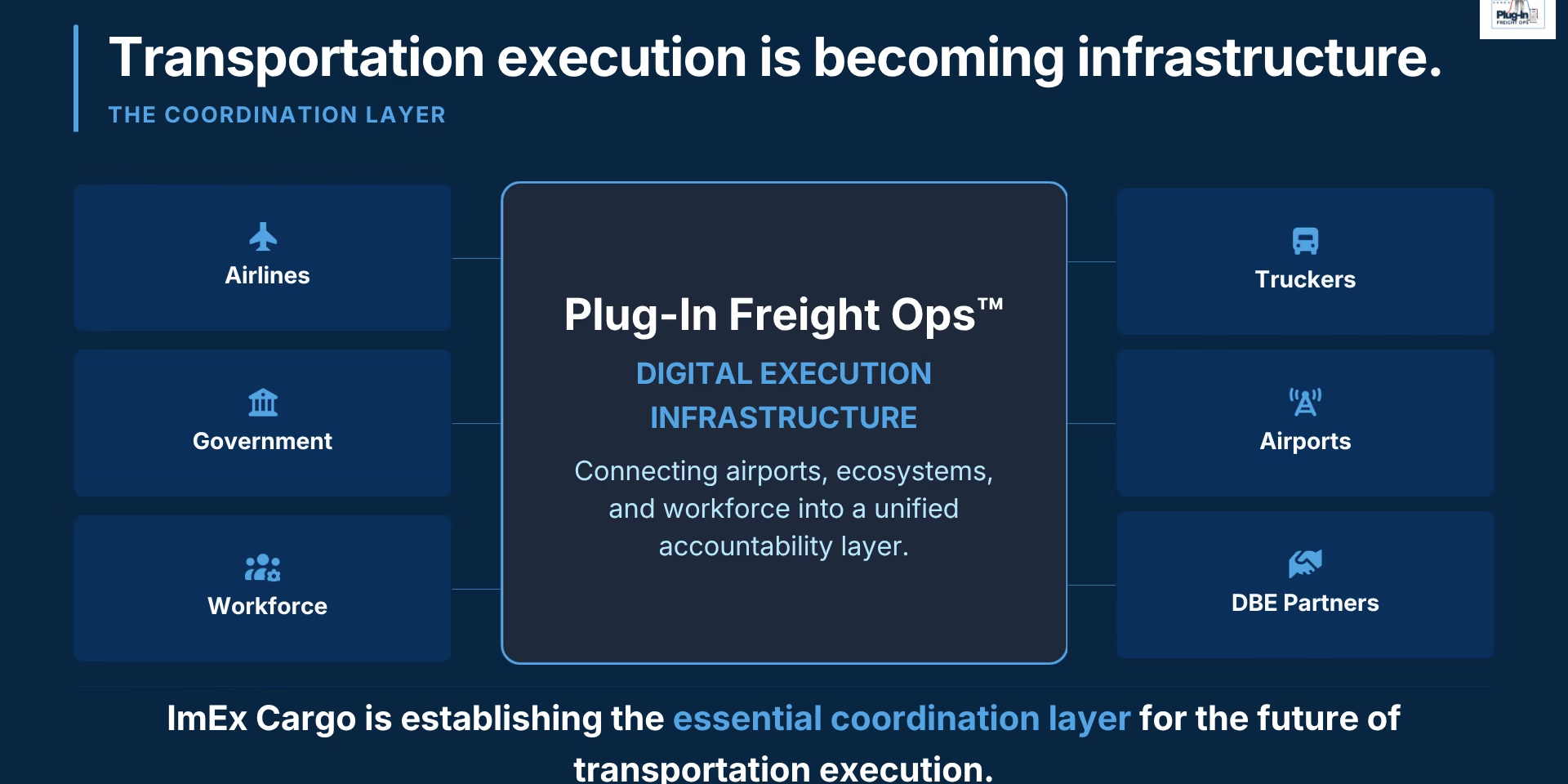
At ImEx Cargo, we call this Plug-In Freight Ops™. It doesn't replace your TMS or your ERP; it plugs into them to provide a unified execution framework that manages the full shipment lifecycle: from quote to booking to tracking and final delivery: across your entire partner ecosystem.
2. The Execution Gap: Why Visibility Isn't Execution
There is a common misconception in logistics that "visibility" equals "control." It doesn't.
If a visibility platform tells you that a truck is four hours late to a terminal, you have data. But you don't necessarily have a solution. The actual execution of the recovery: notifying the terminal, rebooking the slot, updating the airline, and documenting the delay for the shipper: usually happens outside of that platform.
The Breakdown of Multi-Party Logistics
Most logistics delays and risks occur at the "seams" of the supply chain. These seams are the handoffs between stakeholders who use different systems and have different incentives:
- Airlines and GSAs coordinating with local trucking providers.
- Freight Forwarders managing complex multi-modal moves.
- Prime Contractors overseeing DBE (Disadvantaged Business Enterprise) subcontractors on government projects.
When coordination happens in silos, accountability vanishes. Execution Infrastructure closes this gap by moving the coordination into a governed, digital environment where every party is held to a standardized workflow.

3. The Core Components of Execution Infrastructure
To be considered a true execution layer, a platform must go beyond simple data sharing. It must provide four critical capabilities:
A. Workflow Orchestration
Execution Infrastructure standardizes the sequence of events. It defines the "golden path" for a shipment (e.g., Quote → Book → Deliver → Audit) and ensures that each step is completed in the correct order by the correct stakeholder.
B. Digital Handoffs and Verification
Instead of assuming a handoff happened because a GPS ping moved, Execution Infrastructure requires active verification. This creates a "verified record of custody," ensuring that risk and responsibility are clearly transferred at every point in the journey.
C. Partner Accountability
Because the system tracks execution against standardized workflows, it can measure partner performance in real-time. Organizations can see exactly where delays are occurring and which partners are consistently meeting (or failing) their obligations.
D. Governed Execution
For government and infrastructure projects, compliance is non-negotiable. Execution Infrastructure provides an audit-ready trail of every action taken, making it a critical tool for government logistics and DBE activation.
4. Where It Fits in the Tech Stack
Execution Infrastructure represents a shift in how we think about logistics software. It is not an "all-in-one" solution; it is a coordination layer.
- The System Layer (ERP/TMS/WMS): These are the systems of record. They handle the "inside-the-four-walls" tasks like inventory management and internal routing.
- The Execution Infrastructure (Coordination Layer): This is where Plug-In Freight Ops™ lives. It sits above the systems of record to coordinate movements and data between different companies' systems.
- The Visibility Layer: This feeds real-time data (pings, ETAs) into the execution layer to trigger automated workflows and alerts.
By positioning the execution layer in the middle, organizations can maintain their existing investments in TMS or ERP while gaining the ability to operate as a unified ecosystem.

5. Real-World Applications: From Cargo to Infrastructure
Execution Infrastructure is particularly valuable in high-stakes environments where fragmentation is high and the cost of failure is extreme.
Air Cargo and GSAs
For airlines and General Sales Agents (GSAs), managing capacity across multiple airports and trucking partners is a coordination nightmare. Plug-In Freight Ops™ provides a centralized execution portal that allows these stakeholders to manage bookings and track execution through a single pane of glass, reducing manual errors and improving speed-to-market.
Government and Infrastructure Projects
Large-scale infrastructure programs involve hundreds of stakeholders, from federal agencies to local DBE suppliers. Execution Infrastructure provides the oversight needed to ensure that these logistics-heavy projects remain on schedule and compliant with workforce and diversity mandates.
Workforce and Ecosystem Activation
Modern logistics isn't just about moving goods; it's about the people moving them. Our infrastructure includes Workforce Innovation Labs and talent pipelines, ensuring that the execution layer also supports the development of the people required to run it.

6. Why It’s a Category, Not a Feature
You might ask: "Isn't this just a feature of a modern TMS?"
The answer is no. A feature is an add-on; a category is an architectural shift.
Traditional logistics software is tenant-centric: it is designed to serve the needs of the company that bought it. Execution Infrastructure is network-centric: it is designed to serve the needs of the project or the shipment, regardless of which party is performing the task.
Why Execution Infrastructure is a Distinct Layer:
- Multi-Party Sovereignty: It respects that different companies have their own internal systems and won't switch to yours. It bridges them instead.
- Lifecycle Management: It manages the outcome (the delivery), not just the transaction (the booking).
- Governance: It provides a neutral, third-party record of execution that all stakeholders can trust.

Moving Toward Execution Certainty
As supply chains become more fragmented and specialized, the "visibility" era is ending and the "execution" era is beginning. The winners in the next decade of logistics will not be the ones who have the most data, but the ones who can coordinate action most effectively across their entire ecosystem.
Plug-In Freight Ops™ was built specifically to solve this problem. We provide the digital execution infrastructure that transforms fragmented operations into coordinated, high-performance networks.
Are you ready to bridge the execution gap?
We typically address these challenges through a focused pilot program. We can walk through how this architecture would apply to your specific operational environment.