In the current logistics landscape, the primary constraint on growth isn't a lack of cargo or technology: it is a lack of qualified people. By mid-2026, the industry is facing a projected shortfall of over 174,000 drivers and a 31% year-over-year increase in demand for supply chain talent.
Execution breaks down when the "who" doesn't match the "how." For most organizations, workforce development is treated as an isolated HR function, disconnected from the daily reality of freight operations. This fragmentation creates a lag between training and performance, leading to delays, safety risks, and operational bottlenecks.
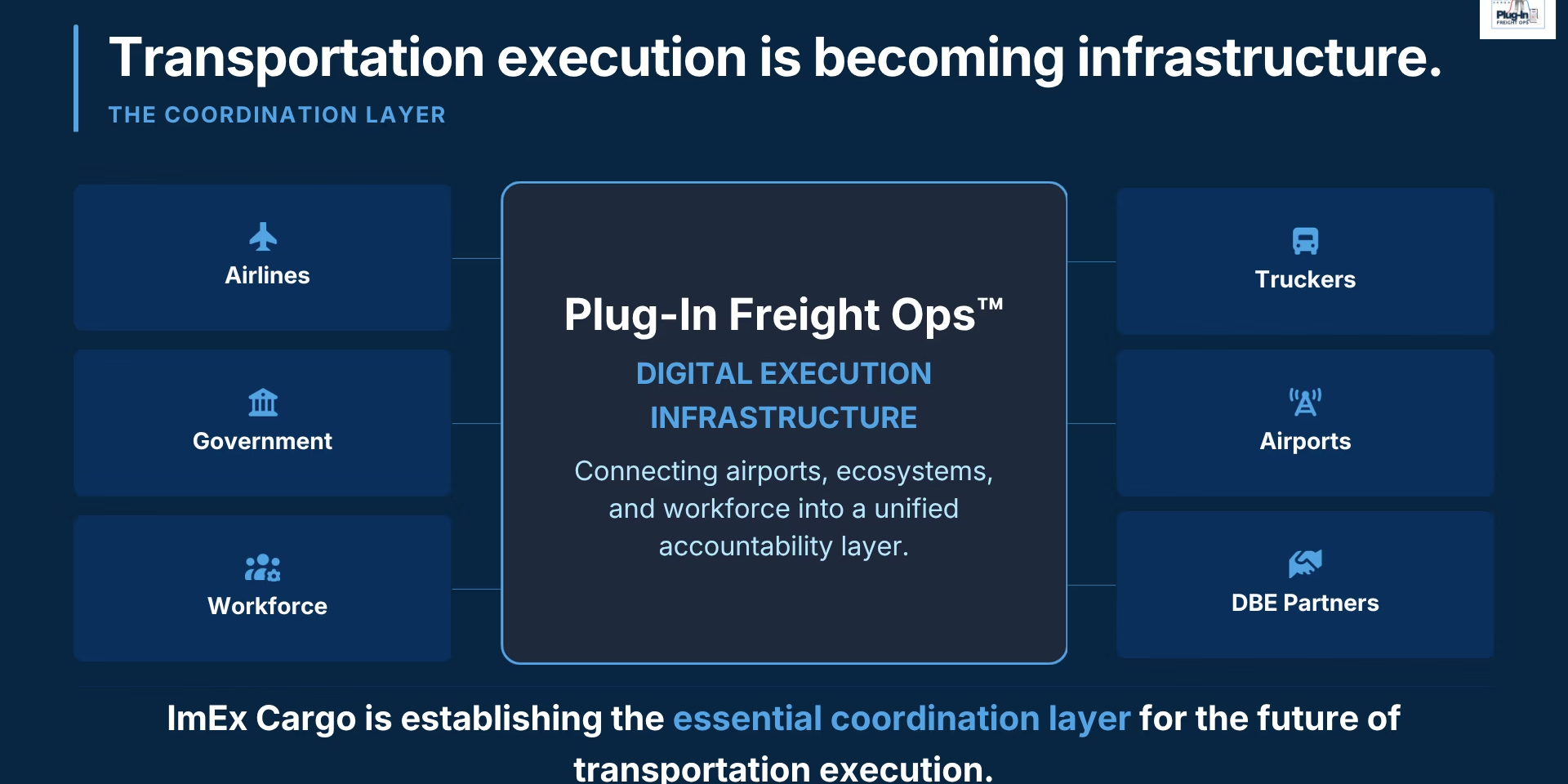
At ImEx Cargo, we view the workforce not as a separate department, but as a critical component of our Plug-In Freight Ops™ digital execution infrastructure. We are moving beyond simple "training" toward a model of Workforce-to-Execution, where talent pipelines are hardwired into the operational workflow.
The Gap: Why Traditional Training Fails Execution
Traditional logistics training often happens in a vacuum. A candidate completes a course, receives a certification, and is then dropped into a complex, multi-stakeholder environment where they must navigate fragmented systems, varying handoff protocols, and high-pressure deadlines.
The "talent gap" isn't just about a lack of bodies; it’s a gap in operational readiness. When a new hire or a partner's staff lacks familiarity with the specific digital execution layers used by airlines, GSAs, and trucking providers, execution suffers.
Plug-In Freight Ops™ solves this by standardizing the execution layer. By integrating our Academy directly into the platform, we ensure that every participant in the ecosystem is trained on the exact workflows they will be expected to execute.
Workforce-to-Execution Infrastructure
Positioning workforce development as "infrastructure" means treating talent as a reliable, scalable, and measurable asset. Just as you wouldn't launch a logistics program without a tracking system, you shouldn't launch one without a verified talent pipeline.
Our infrastructure supports talent pipelines through three key pillars:
- Standardized Workflows: Trainees learn on the same Plug-In Freight Ops™ interface they will use in the field.
- Real-Time Performance Tracking: Accountability isn't checked once a year; it’s tracked through every quote, booking, and delivery milestone.
- Modular Skill-Building: Training is broken down into specific operational modules, from air cargo terminology to complex GSA coordination.

The Fast-Track: Workforce Training Express Programs
To address the urgency of the 2026 talent crisis, ImEx Cargo leverages the Workforce Training Express Programs. These programs are designed for rapid deployment, allowing employers to access grant-funded training to upskill their teams without the typical bureaucratic wait times.
These aren't generic business courses. They are instructor-led, operationally focused modules designed for immediate implementation. Available tracks include:
- Digital Freight Operations & Workflow Management: Training teams to navigate the digital execution infrastructure layer.
- Logistics Data Analysis: Ensuring staff can interpret real-time visibility data to make informed execution decisions.
- Regulatory & Audit Readiness: Preparing personnel to handle CUI compliance and FAR-overhaul requirements within active shipments.
By utilizing these Express Programs, organizations can transform their existing staff into high-performance execution specialists in a fraction of the time required by traditional onboarding.
Direct Pathways: From Academy to Active Operations
The ultimate goal of workforce-to-execution infrastructure is the creation of direct pathways. In a fragmented environment, a certified DBE or a new workforce trainee often struggles to find their place in the "prime" contractor's workflow.
Plug-In Freight Ops™ acts as the bridge. When a student completes a module in the ImEx Cargo Academy, their credentials and proven competency are visible within the platform’s partner ecosystem.
- Airlines & GSAs can activate ground handling partners with verified training.
- Prime Contractors can meet diversity and workforce goals by pulling from a pool of pre-vetted, platform-ready talent.
- Government Agencies gain audit-ready oversight, knowing that every individual touching the program has been trained to standard.

Outcome: Reduced Risk and Higher Accountability
When training is disconnected from execution, risk increases. Errors in documentation, missed handoffs, and poor communication are almost always the result of a "talent-to-task" mismatch.
By "plugging in" the workforce, we achieve:
- Improved Execution Speed: Staff spend less time "figuring out" the system and more time moving freight.
- Structured Handoffs: Accountability is built into the workflow, ensuring that every party knows exactly what is expected at each stage of the shipment lifecycle.
- Economic Impact: Beyond logistics, this model provides a scalable way to meet economic impact and workforce development objectives within large-scale infrastructure projects.
Building the Pipeline
The talent gap will not be solved by waiting for the market to correct itself. It requires a proactive shift in how we build and deploy logistics teams.
Organizations responsible for complex logistics: whether you are an airport authority coordinating multi-entity operations or a prime contractor managing a massive infrastructure program: need a centralized coordination layer that includes the people doing the work.
We typically address these workforce-to-execution challenges through a focused pilot program, mapping your specific talent needs to our digital infrastructure.
Are you ready to bridge the gap?
Explore the Academy | Learn about Plug-In Freight Ops™
We can walk through how this workforce-to-execution model would apply in your specific environment. Contact us for a capability walkthrough.