Execution in complex logistics is where the most sophisticated plans meet their demise. In an industry where a single shipment can change hands six times across four different systems, the "visibility gap" isn't a data problem: it’s an infrastructure problem.
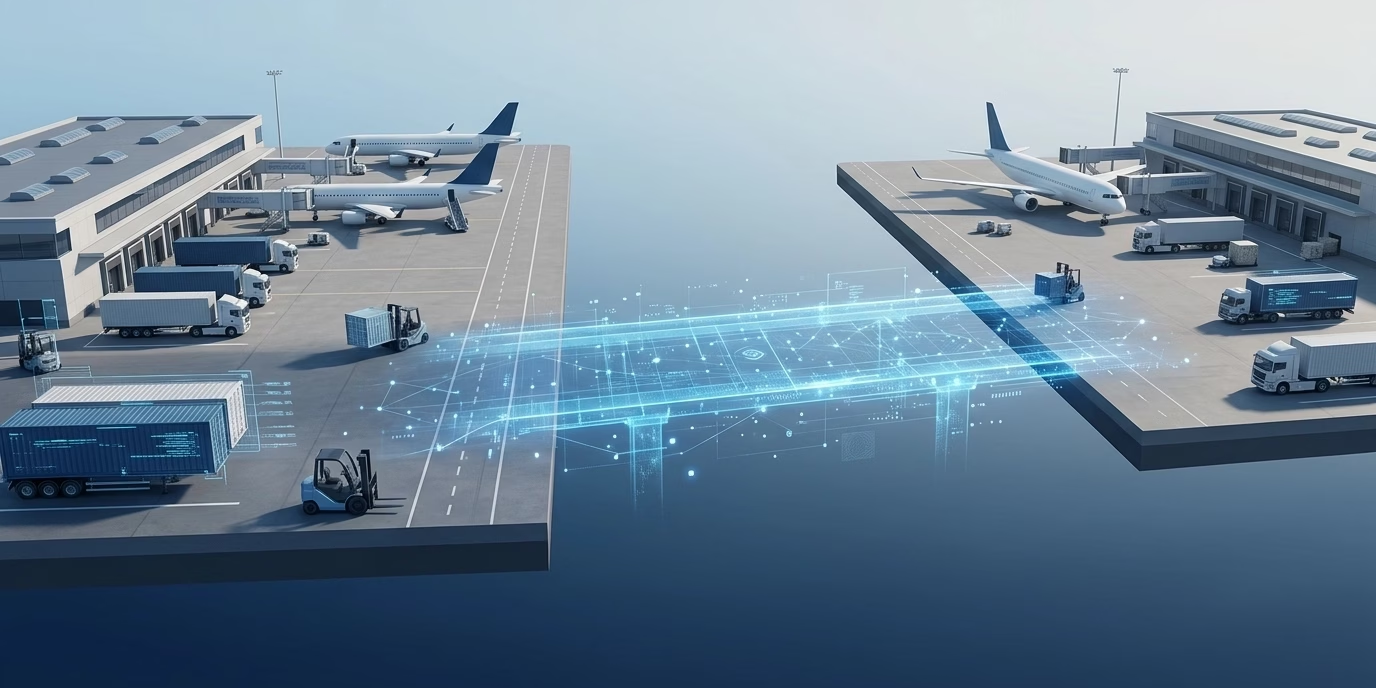
Most logistics technology today focuses on individual silos: the carrier’s TMS, the warehouse’s WMS, or the forwarder’s booking portal. While these systems excel at managing internal tasks, they fail to manage the handoffs between stakeholders.
This is why we are seeing the emergence of Digital Execution Infrastructure.
At ImEx Cargo, we’ve developed Plug-In Freight Ops™ to serve as this neutral coordination layer. It doesn't replace your existing tech stack; it sits above it, standardizing execution across the entire lifecycle: from the initial quote to final tracking and delivery.
The Problem: The "Orchestration Gap" in Multi-Stakeholder Execution
Logistics leaders, tech firms, and investors are increasingly realizing that more "point solutions" won't solve fragmentation. When an airline, a GSA, a freight forwarder, and a trucking provider are all involved in a single move, the breakdown occurs in the spaces between them.
Current systems lack:
- Structured Handoffs: Knowing exactly when accountability shifts from one party to another.
- Neutrality: Systems are often biased toward the party that owns the software.
- Unified Workflow: A single source of truth for the quote-to-track lifecycle that everyone trusts.
Without a Logistics Orchestration Platform, these gaps are filled with manual emails, phone calls, and "best-guess" status updates. This creates a high-risk environment where delays are common and accountability is non-existent.

Defining Digital Execution Infrastructure
Digital Execution Infrastructure is a cloud-native, API-driven layer designed to synchronize data and decisions across a multi-enterprise network. It is the "operating system" for the logistics ecosystem.
Unlike traditional software that manages assets, this Neutral Coordination Infrastructure manages the execution of the movement. It provides a standardized framework where every stakeholder: whether they are a prime contractor, a government agency, or a local trucking company: plugs into a unified workflow.
The Core Pillars of the Infrastructure:
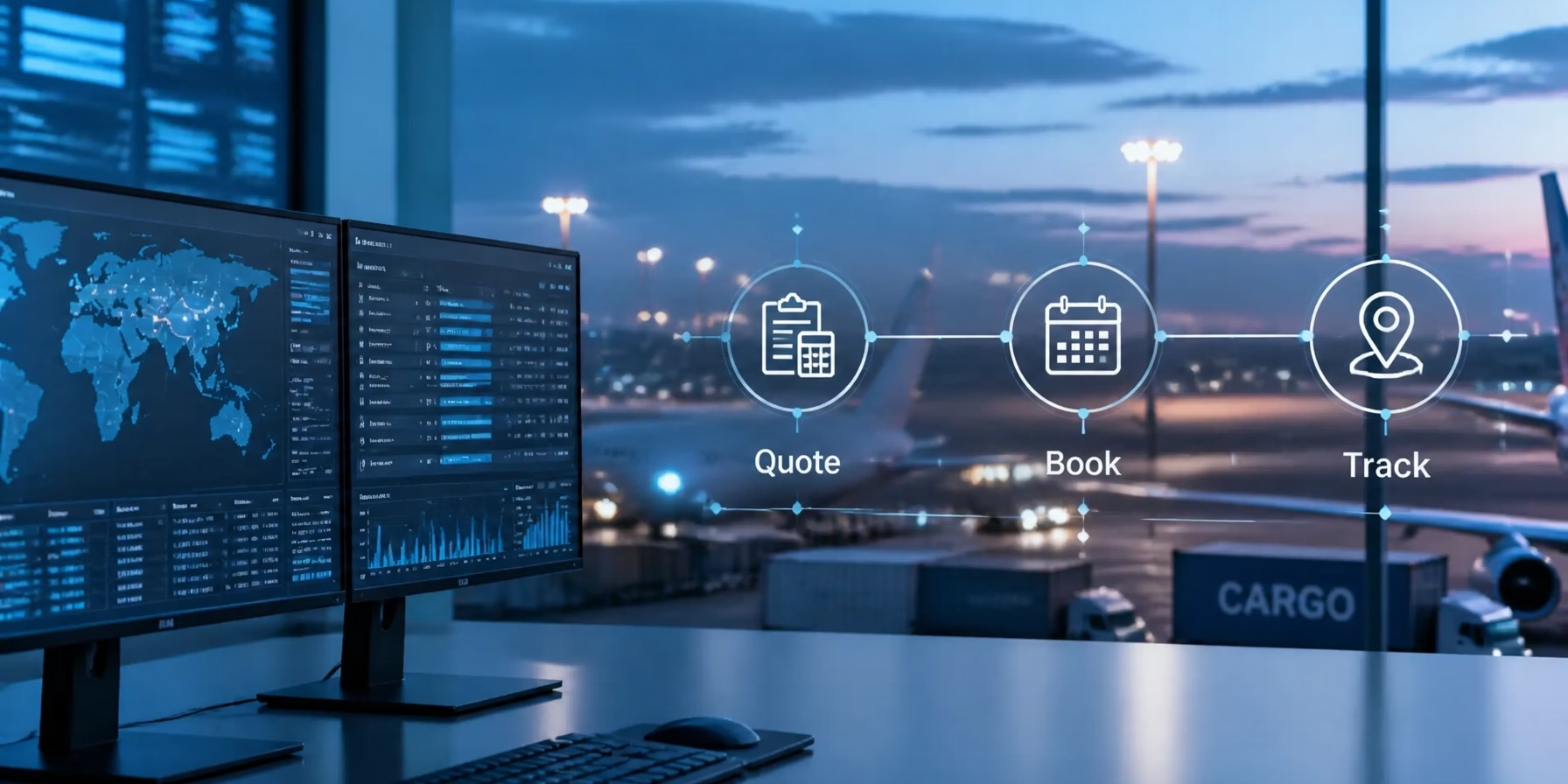
- Workflow Standardization: Ensuring every shipment follows a precise path (Quote → Book → Track → Deliver) regardless of which partners are involved.
- Partner Accountability: Real-time performance tracking that holds each stakeholder responsible for their specific leg of the journey.
- Cross-System Integration: Pulling data from fragmented systems into a single normalized data layer for real-time visibility.
How Plug-In Freight Ops™ Orchestrates the Lifecycle
The power of Plug-In Freight Ops™ lies in its ability to coordinate logistics across fragmented, multi-stakeholder environments. It creates a "digital twin" of the execution process.
1. From Quote to Booking
The infrastructure starts at the earliest stage. By standardizing how quotes are generated and bookings are confirmed, the platform ensures that the data at the start of the shipment is accurate and complete. This reduces downstream errors that typically occur when data is manually re-entered into different systems.
2. Real-Time Execution Visibility
Visibility isn't just knowing where a truck is; it’s knowing if the execution is on track. Our platform monitors the handoffs. If a cargo handler at an airport hasn't scanned a pallet by the scheduled cutoff time, the system flags the delay immediately to all stakeholders.

3. Multi-Stakeholder Coordination
For complex infrastructure projects or government-funded programs, the stakeholder list is extensive. Plug-In Freight Ops™ coordinates:
- Airlines & GSAs: Managing capacity and bookings in real-time.
- Freight Forwarders: Orchestrating the end-to-end movement.
- Trucking Networks: Ensuring first- and last-mile precision.
- Government & DBE Partners: Meeting compliance and diversity requirements through a certified DBE network.
The Strategic Value for Partners and Investors
For technology firms and investors, the shift toward Execution Coordination Infrastructure represents a move away from "SaaS-as-a-Service" and toward "Infrastructure-as-a-Service."
By providing a neutral layer that standardizes execution, we are creating a more resilient supply chain. This approach provides:
- Audit-Ready Oversight: Crucial for federal, state, and municipal agencies managing transportation and infrastructure programs.
- Reduced Risk: By eliminating manual handoffs, the risk of data loss and operational delay is significantly mitigated.
- Scalability: Organizations can activate new partner ecosystems: including workforce pipelines and diverse suppliers: without reinventing their operational workflows.

Activating the Workforce and DBE Ecosystem
One of the unique differentiators of ImEx Cargo's infrastructure is its ability to activate the Workforce Innovation Network. We don't just coordinate the freight; we coordinate the human capital required to move it.
By integrating workforce development pipelines directly into the execution layer, we allow prime contractors and airport authorities to meet operational and economic impact objectives within a single, unified system. This is what it means to build true infrastructure: connecting the physical, the digital, and the human elements of logistics.
Moving Toward a Coordinated Future
The future of logistics isn't about better trucks or faster planes; it’s about better coordination. The complexity of modern supply chains demands a layer of oversight that sits above the noise of individual systems.
Digital Execution Infrastructure provides the visibility, accountability, and standardization required to move freight or execute logistics-driven projects at scale. It transforms fragmented operations into a high-performance network.
We are currently working with a select group of partners to map this infrastructure to their unique operational environments.
If you are a prime contractor, an airport authority, or a logistics technology leader looking to solve the orchestration gap, we invite you to explore how a focused pilot could transform your execution strategy.
Explore our Airline & GSA Execution Infrastructure or contact our team for a capability walkthrough.