For years, the logistics industry has operated on "heroics." We’ve relied on that one person in the office who knows every airline's eccentricities, every trucker’s favorite route, and every customer’s specific requirements.
But what happens when that person leaves?
Most logistics executives measure workforce success by headcount. If the desks are full, the operation is "fine." However, recent data and operational experience tell a different story. The challenge isn’t just finding people or even training them: it’s retaining the operational intelligence required to move freight without constant friction.
In a digital-first environment, empowerment doesn’t come from working harder. It comes from having the digital skills and AI-driven tools to manage complex execution without being overwhelmed by the noise.
The Retention Crisis is a Knowledge Crisis
When we talk about "workforce development" in 2026, we are no longer just talking about certifications. We are talking about operational resilience.
The traditional logistics model is built on tribal knowledge. Information lives in fragmented email threads, personal spreadsheets, and the individual memories of employees. This creates a dangerous dependency. If an employee resigns, a piece of your company’s "brain" walks out the door.
Why traditional training is falling short:
- Static Learning: Training people on how things usually work doesn't help when things break.
- Knowledge Silos: Information is locked within specific roles (e.g., the dispatcher knows the route, but the accountant doesn't know why it was chosen).
- Execution Gaps: Without a standardized system, every new hire creates their own "way of doing things," leading to fragmentation.
To solve this, leaders are shifting their focus from "filling roles" to "building infrastructure." By integrating digital skills and AI tools, organizations can capture workflows and automate the low-value coordination tasks that lead to burnout and turnover.

AI: From "Replacing People" to "Managing Exceptions"
There is a common fear that AI is coming for logistics jobs. In reality, AI is the only way to save the logistics professional from the crushing weight of manual data entry and fragmented communication.
The modern logistics professional shouldn’t spend 70% of their day tracking down status updates or re-typing quote data from a PDF into a TMS. AI excels at the routine, but it fails at the complex. This is where Exception Management becomes the most critical digital skill of the decade.
AI can flag a shipment that is trending toward a delay before it happens. The empowered professional is the one who has the data literacy to interpret that alert and the digital tools to coordinate a solution across multiple stakeholders.
The Shift in Roles:
- Old Role: Information gatherer (calling for updates).
- New Role: Orchestration expert (using AI to oversee multiple streams of execution).
- The Result: Reduced workload, higher accuracy, and a clear career path from manual labor to digital operations management.
Plug-In Freight Ops™: The Knowledge Anchor
At ImEx Cargo, we realized that to empower the workforce, you first have to stabilize the environment they work in. This is why we developed Plug-In Freight Ops™.
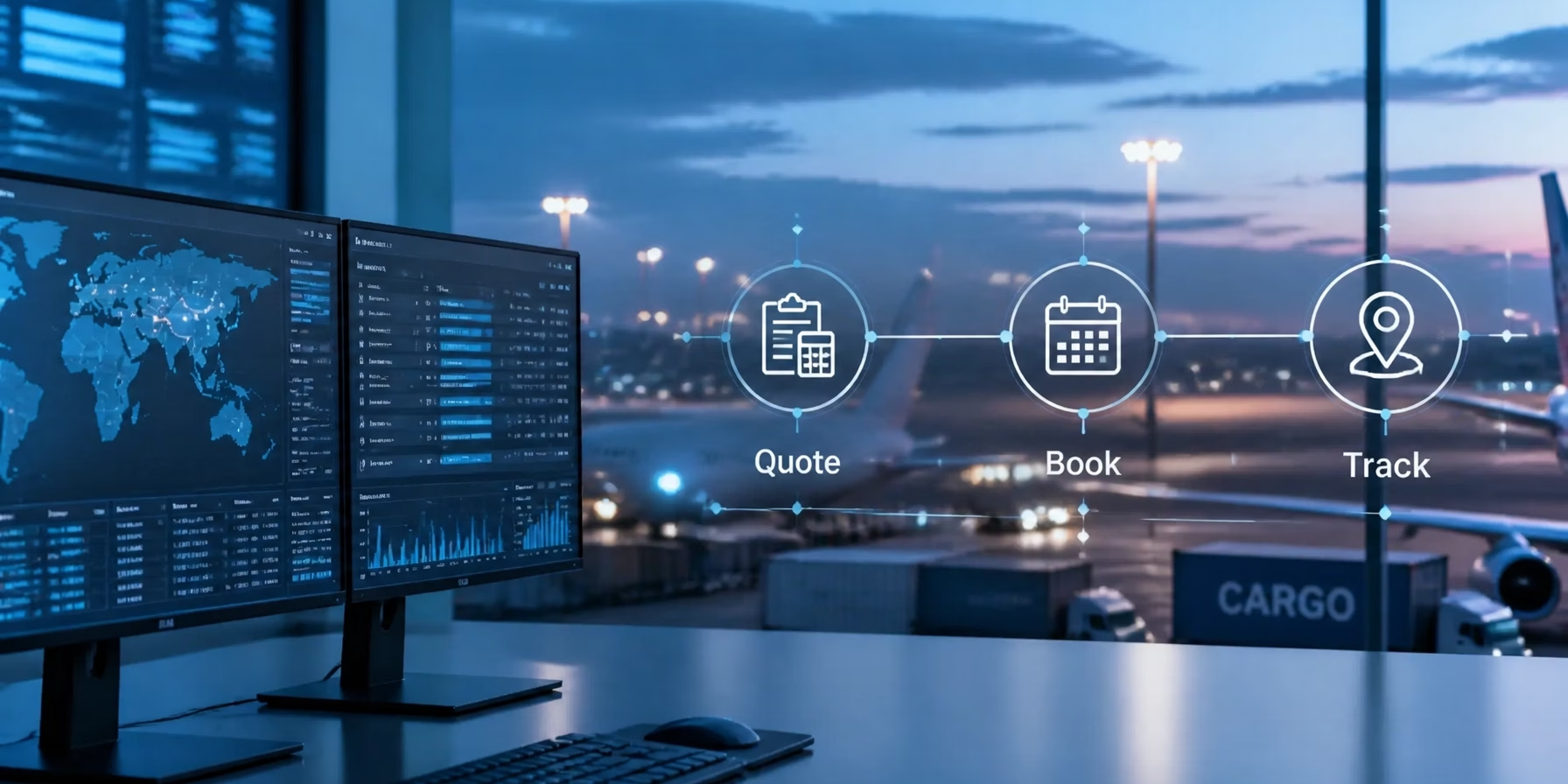
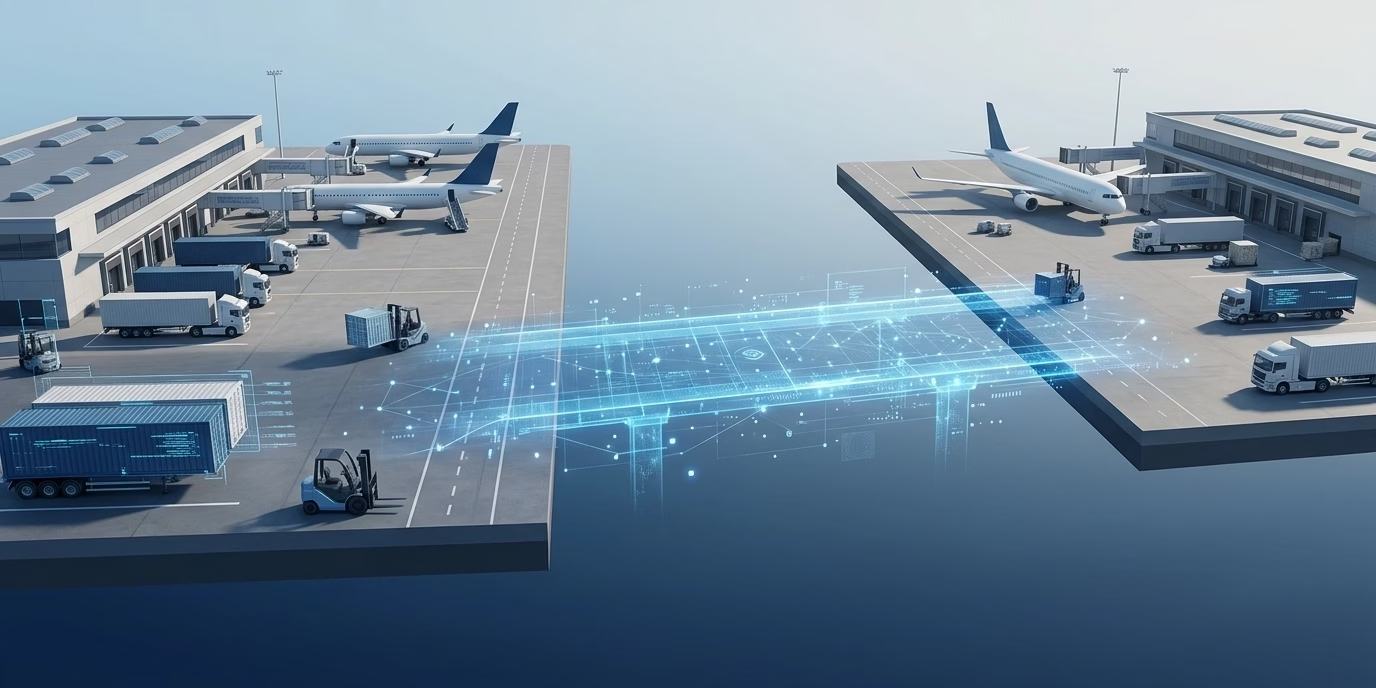
It isn’t a replacement for your existing systems; it is a digital execution infrastructure layer that sits above them. It standardizes the lifecycle of a shipment: from Quote to Booking to Tracking.

When you have a unified coordination layer, the "tribal knowledge" becomes "system knowledge."
- Standardized Handoffs: Every stakeholder (airline, GSA, trucker, forwarder) follows the same structured workflow.
- Audit-Ready Oversight: Every decision and communication is captured in a single source of truth.
- Scalable Onboarding: New hires don't have to spend months learning "who to call." They simply step into a pre-defined execution infrastructure.
This reduces the dependency on "heroics" and allows your team to focus on high-value partner relationships and strategic growth.
Upskilling for the New Logistics Infrastructure
Empowerment requires more than just software; it requires a commitment to workforce activation. As we integrate AI and digital layers into the supply chain, the skill sets we recruit for are changing.
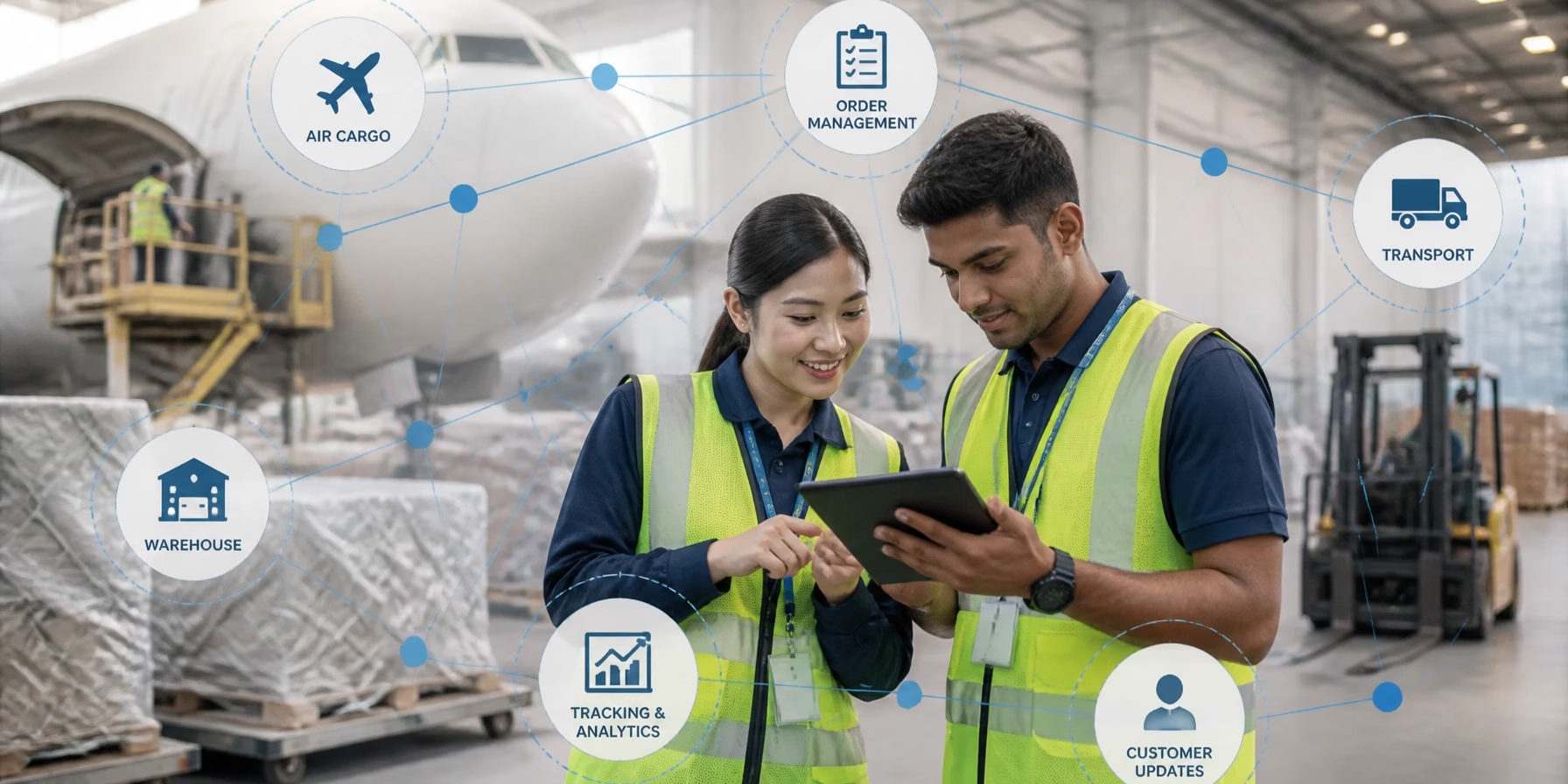
We are looking for "Digital Operators": individuals who understand the physical movement of goods but are equally comfortable navigating data dashboards and automated coordination tools.
Key Skills for the 2026 Workforce:
- Data Literacy: The ability to look at a visibility dashboard and identify risks before they become disruptions.
- System Integration Fluency: Understanding how different platforms (TMS, ERP, Plug-In Freight Ops™) interact to create a seamless flow.
- Collaborative Problem Solving: Working across stakeholder lines (Airlines, DBEs, Government) within a unified digital environment.

The Ecosystem Approach: Building Workforce Resilience
No organization can solve the labor gap in a vacuum. True workforce resilience comes from an ecosystem approach.
ImEx Cargo works with a network of partners: including MassHire and workforce development partnerships, universities like Northeastern and UMass, and specialized training academies through the Academy: to build a talent pipeline that is day-one ready for digital execution.
By aligning our workforce initiatives with the actual technology being used on the terminal floor and in the back office, we ensure that training leads directly to operational outcomes. Through our Employer Partners, we connect workforce development directly to execution needs across real operating environments. We aren't just training people to "work in logistics"; we are training them to lead the digital transformation of the industry.
Moving Toward Operational Resilience
The conversation is shifting. It’s no longer about whether you can find employees: it’s about whether your operation can survive their departure.
The companies that will win in the next five years are the ones that treat their workforce and their technology as a single, integrated execution layer. By providing your team with AI-driven tools and digital skills, you aren't just making them more efficient. You are making your entire organization more resilient.

Ready to build a resilient execution infrastructure?
We typically address these challenges through a focused pilot program. We can walk through how Plug-In Freight Ops™ can capture your operational knowledge and empower your team to manage complex logistics at scale.
Contact ImEx Cargo to schedule a capability walkthrough.