Article #2 of The Digital Freight Infrastructure Journal
Every logistics organization has invested heavily in visibility. Dashboards glow in control rooms, tracking APIs feed real-time status updates into ERP systems, and milestone alerts notify managers the moment a flight lands or a customs entry clears.
And yet, despite decades of digital maturity and billions spent on supply chain visibility tools, the industry’s on-time performance numbers have not fundamentally shifted. Freight still sits on airport ramps. Handoffs still break down between stakeholders. Shipments still miss connecting flights, requiring costly recovery work the following day.
Why? Because visibility tells you what is happening, but it does nothing to ensure that what needs to happen next actually occurs.
What Visibility Actually Does
To understand why visibility falls short of preventing delays, we first need to acknowledge what these platforms do exceptionally well. Modern visibility tools convert raw operational data into actionable awareness.
They answer foundational questions across the shipment lifecycle:
- Where is the consignment right now?
- What milestone was just completed?
- When did the truck depart the terminal?
- What is the current estimated time of arrival (ETA)?
By aggregating telemetry, EDI messages, and status feeds, visibility platforms eliminate the dark spots of traditional logistics. They replace frantic phone calls with instant data feeds. They allow teams to manage by exception rather than manually checking every single airway bill.
This awareness is valuable. It provides context, reduces anxiety, and enables teams to prepare for arrivals. But awareness is not the same as control, and observation is not execution.
What Visibility Cannot Do
Dashboards and tracking feeds are inherently passive. They display the reality of an operation, but they do not participate in it.
When a shipment hits an exception or a critical threshold, a visibility platform can flash red. It can send an automated email or push notification across three different systems. But it cannot answer the operational questions that dictate whether a delay is prevented or compounded:
- Who is currently accountable for the next step in the handoff?
- Which specific task or stakeholder is blocking forward progress?
- What precise workflow needs to be triggered to alter the outcome?
- How do we automatically assign responsibility and track completion?

Visibility highlights a problem; it does not resolve it. If an alert surfaces on a screen at 2:00 PM, but the human workflow required to fix the issue relies on manual emails, scattered phone calls, and siloed stakeholder systems, the delay continues uninterrupted. The information was timely, but the execution was stagnant.
The Delay Chain: Where Awareness Fails Execution
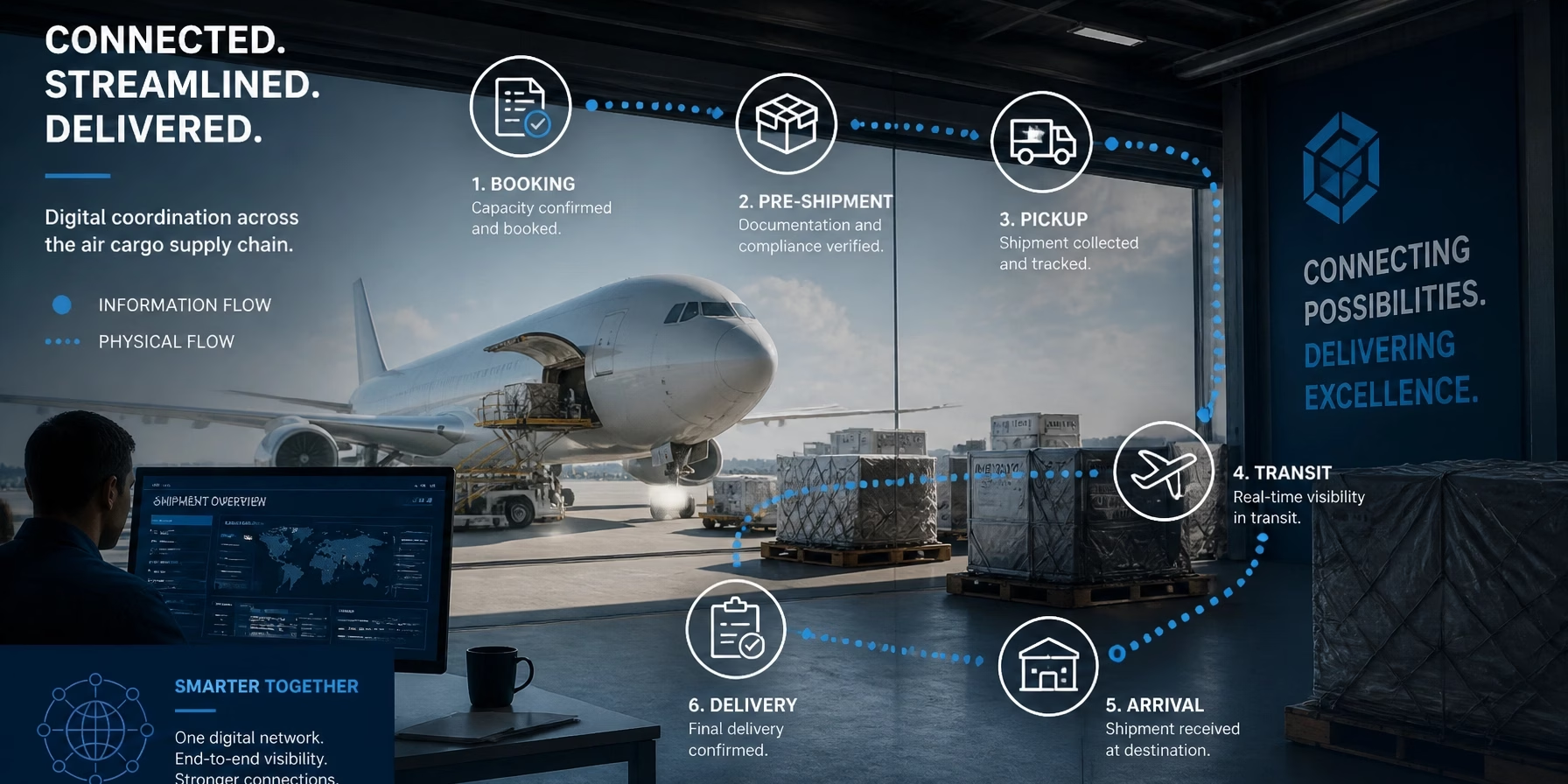
To see this dynamic in action, consider a standard, multi-stakeholder freight movement crossing an airport cargo terminal:
- The Customs Clearance Handoff: A consignment is successfully cleared by customs authorities at 08:00. The customs platform updates its status. The visibility dashboard registers "Cleared."
- The Terminal Notification Gap: However, the trucking provider scheduled for pickup has not been automatically triggered, because the trucker's dispatch system operates on a separate network from the ground handler's warehouse management system.
- The Stalled Window: The ULD (Unit Load Device) sits ready for breakdown, but the handler's dock team has not received a prioritized queue alert. No one is assigned to coordinate the physical retrieval.
- The Paperwork Bottleneck: An airway bill requires an electronic endorsement that remains pending due to a missing verification sign-off from an off-site agent.

In each of these moments, visibility existed. Anyone with access to the tracking portal could see that the flight had landed and clearance was achieved. But execution did not exist. The delay was not caused by a lack of information; it was caused by a complete lack of coordinated action at the critical moment of handoff.
The Real Cost of the Execution Gap
When organizations rely solely on visibility to manage complex logistics environments, late freight metastasizes into compounding operational failure.
A single missed handoff cascades across the network:
- Missed Connections: A truck fails to secure a delayed ULD before the terminal cut-off, causing the shipment to miss its booked outbound freighter.
- Rolled Shipments: Freight must be rescheduled for the next available rotation, occupying valuable warehouse capacity and disrupting subsequent schedules.
- SLA Penalties & Revenue Leakage: Shippers face service-level agreement penalties, while air carriers and forwarders absorb the cost of emergency re-routing.
- Resource Burn: Operational teams spend hours chasing updates via phone and email instead of managing core logistics workflows.
Awareness only preserves value if someone is immediately empowered, structured, and triggered to act upon it. Without an underlying execution layer, visibility merely accelerates how quickly you discover that you are failing.
The Missing Layer: Infrastructure for Action
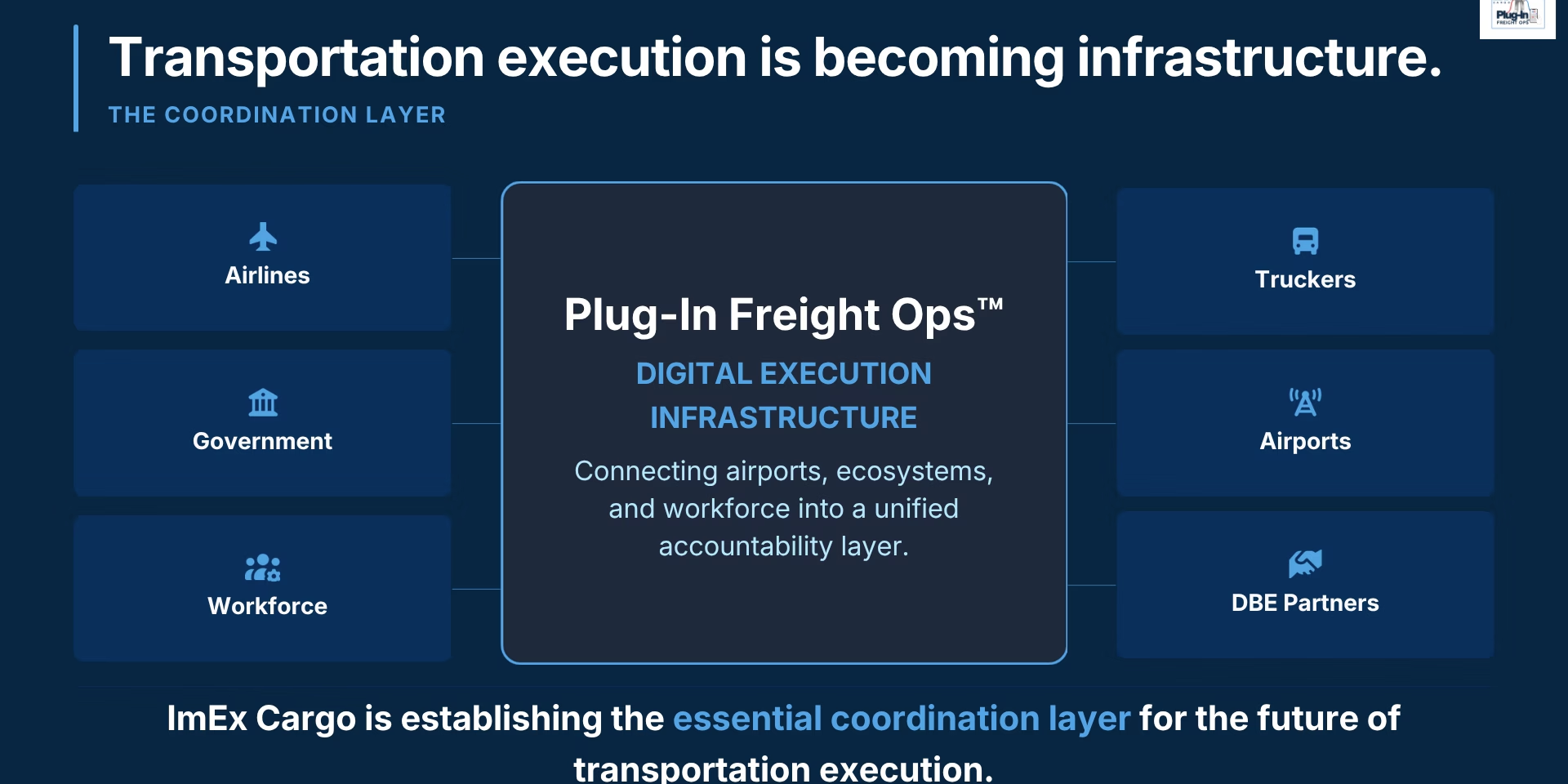
If visibility is the mirror of the supply chain, execution is the steering wheel. Bridging the gap between knowing a problem exists and resolving it requires moving beyond passive dashboards toward active cargo execution infrastructure.

What modern logistics ecosystems require is a coordination layer that sits above fragmented legacy systems to standardize and automate the entire shipment lifecycle:
- Assigning ownership: Automatically routing tasks to the exact stakeholder responsible for the next operational step.
- Enforcing structured handoffs: Requiring confirmation, digital sign-offs, and compliance checks before a shipment transitions to the next phase.
- Triggering actions: Moving from static milestone alerts to automated operational triggers that initiate trucking pickups, dock staging, and document verification without human friction.
- Tracking completion: Verifying that tasks are actually finished, not just viewed, and escalating stalls before they become terminal delays.
This is the core premise of digital freight infrastructure: transforming static observation into dynamic, multi-stakeholder orchestration.
Conclusion
The next time a critical shipment runs late across your network, ask a precise operational question: Did we lack information, or did we lack action?
Most logistics organizations will find that the information was available hours before the delay materialized. What was missing was the structured coordination layer required to turn that awareness into immediate, accountable resolution.
Solving today's supply chain bottlenecks does not require another dashboard to watch the freight fall behind. It requires the execution infrastructure to keep it moving.
About the Author
Michelle DeFronzo is Founder and CEO of ImEx Cargo and creator of Plug-In Freight Ops™, a Digital Freight Infrastructure initiative focused on improving execution coordination across fragmented cargo ecosystems. Drawing on more than 30 years of operational experience in airline cargo, GSA/GSSA operations, freight forwarding, trucking, and government logistics, her work explores how digital execution infrastructure can connect organizations, systems, assets, and handoffs without replacing existing technology.