The Digital Freight Infrastructure Journal : Article 5 of 12
A shipment can spend less than a day in motion and several more days waiting.
The aircraft may complete its flight on schedule. The truck may cover its route within the expected transit window. The terminal may have adequate capacity. Yet the shipment still misses its delivery commitment.
The reason is often not the movement itself. It is the space between movements.
In complex, multi-party logistics, delays accumulate at the points where responsibility changes hands. A task is completed, but the next stakeholder is not notified. A document exists in one system but must be re-entered into another. A shipment is physically ready, but no one has formally accepted responsibility for the next action.
The transit time is visible.
The handoff time is not.
The Illusion of Transit Time
Most logistics performance discussions begin with point A and point B: flight duration, driving time, port-to-port transit, or estimated delivery time.
That is only the movement layer.
The execution layer includes everything that happens before, after, and between those movements:
- Waiting for a booking confirmation
- Confirming cargo readiness
- Transmitting or correcting documents
- Releasing freight to a ground handler
- Waiting for breakdown or warehouse availability
- Confirming customs status
- Scheduling a truck against a real release event
- Communicating exceptions to the next responsible party
These intervals often disappear inside the phrase “in transit,” even though the cargo may be stationary for most of them.
A shipment does not become delayed only when a plane is late or a truck is stuck in traffic. It becomes delayed when the next action is not triggered at the right time.
The Anatomy of an Air Cargo Handoff
Consider a typical air cargo movement involving an airline, ground handler, customs broker, freight forwarder, and trucking provider.
The exact sequence can vary by trade lane, airport, commodity, and operating model. The coordination problem remains consistent: each organization completes part of the work, but no single party automatically controls the transition across the full chain.

1. Airline to Ground Handler
The airline confirms the booking and transfers physical handling responsibility to the ground handler.
At this point, several conditions must align:
- The cargo must arrive before the applicable cut-off
- Weight, pieces, dimensions, and special handling requirements must match
- The air waybill and related data must be available
- Security, dangerous goods, or temperature-control requirements must be satisfied
- The handler must know what needs to be received, built, staged, and loaded
If the airline’s booking data and the handler’s operational data do not align, the cargo may be held for reconciliation. The freight is present, but execution stops while people compare records.
2. Ground Handler to Customs Broker
The handler processes the freight, while the customs broker manages the information required for clearance.
The handoff depends on accurate and timely data, including:
- Commercial invoice
- Packing list
- Air waybill information
- Harmonized System classification
- Country of origin
- Customs values
- Import or export filings
- Special permits or licenses where applicable
A missing field or inconsistent value can create a rework cycle. The broker requests clarification. The forwarder contacts the shipper. The shipper sends a revised document. The broker submits again.
The cargo may not be moving, but the clock is.
3. Customs Broker to Freight Forwarder
The broker communicates clearance status, document requirements, holds, releases, or inspection instructions to the freight forwarder.
This is a critical transition because the forwarder is often responsible for coordinating the next physical movement. But “customs cleared” may not mean the same thing as “cargo available for pickup.”
There may still be a terminal processing step, a warehouse release, a handling charge, or a specific pickup instruction outstanding.
When status definitions differ between organizations, the forwarder may schedule too early: or wait too long.
4. Freight Forwarder to Trucking Provider
The forwarder engages the trucking provider once the freight is ready for recovery or delivery.
A reliable truck dispatch requires more than a pickup address. The provider needs:
- Confirmed cargo availability
- Release status
- Warehouse location
- Pickup number
- Appointment window
- Delivery instructions
- Equipment requirements
- Any customs or security restrictions
If the truck is dispatched before the cargo is physically available, the result may be a wasted trip, detention, or a missed appointment. If the truck is dispatched late, the cargo may remain at the terminal overnight.
The physical trucking leg may take two hours. The handoff into that leg may consume an entire day.
5. Trucking Provider to Consignee
The final handoff includes delivery, proof of delivery, exception reporting, and closure of the shipment record.
A missed delivery window, incorrect address, unavailable consignee, or incomplete proof of delivery can leave the shipment operationally unresolved even after the truck has arrived.
The movement is complete. The execution workflow is not.
Where Information Breaks Down
Handoffs fail because information is treated as a message instead of an operational trigger.
An email may say that cargo has arrived. A status screen may show “available.” A spreadsheet may list a booking as confirmed. But unless the next responsible party receives a clear task, deadline, and acceptance condition, the workflow remains dependent on someone noticing the update and acting on it.
Common breakdowns include:
- One party completes a task without notifying the next party
- A status is updated in one system but not shared with downstream partners
- Data must be manually re-entered between platforms
- Different stakeholders use inconsistent definitions of “ready,” “released,” or “complete”
- Exceptions are communicated through informal channels
- No one owns the transition between two organizations
- A downstream appointment is scheduled before the upstream prerequisite is satisfied
This is why visibility alone is insufficient.
A dashboard may show that a shipment is sitting at an airport. It may not show whether the handler has completed breakdown, whether customs has released the cargo, whether the broker has notified the forwarder, or whether the trucker has accepted the pickup task.
Visibility describes the condition.
Coordination moves the work forward.
The Cost of Handoff Friction
Handoff delays are cumulative.
Assume a shipment has a nominal 24-hour transit plan and four transfer points. If each handoff creates only two hours of avoidable waiting, the shipment gains eight hours of delay before accounting for weather, congestion, capacity constraints, or labor disruption.
That is the difference between a next-day movement and a three-day customer experience once cut-offs, operating windows, and overnight dwell are included.
The direct costs can include:
- Missed flight or linehaul connections
- Additional terminal storage
- Truck detention or redelivery fees
- Overtime and manual follow-up
- Customer service escalations
- Rebooking and recovery activity
- Inventory disruption
- Reduced confidence in the service commitment
The less visible cost is management attention. Teams spend time searching for updates, reconciling conflicting records, and asking whether another party has completed a prerequisite task.
That effort is a symptom of missing execution infrastructure.
From Passive Tracking to Active Handoff Coordination
The operational question should not be, “Where is the shipment?”
It should be:
- What has been completed?
- What must happen next?
- Who owns that action?
- What prerequisite is still outstanding?
- When does the action become late?
- Who is automatically notified if the condition is not met?
Active handoff coordination turns each transition into a controlled workflow.
When a prerequisite is completed, the next stakeholder is triggered. When an expected event does not occur within its time window, an exception is surfaced. When responsibility changes, the change is recorded. When a document is corrected, the relevant participants see the updated status instead of continuing from an outdated record.
This does not require every organization to replace its existing system.
A neutral execution layer can sit above airline, forwarder, handler, broker, trucking, and government workflows to standardize the handoffs between them. The objective is not to own every transaction. It is to make the transition visible, structured, and accountable.
That is the distinction between tracking activity and coordinating execution.

What a Controlled Handoff Requires
A reliable handoff should define five things:
- The completion event : what must be true before responsibility changes
- The next action : what the receiving party is expected to do
- The accountable owner : who is responsible for moving the task forward
- The time threshold : when the action becomes late or at risk
- The escalation path : who must be notified when the handoff fails
These elements create operational discipline without requiring a single organization to control the entire shipment.
They also create measurable performance data. Organizations can track dwell time by handoff, document rework, response time, missed cut-offs, exception frequency, and first-time completion rates.
That is where improvement becomes possible.
The Execution Layer Between Systems
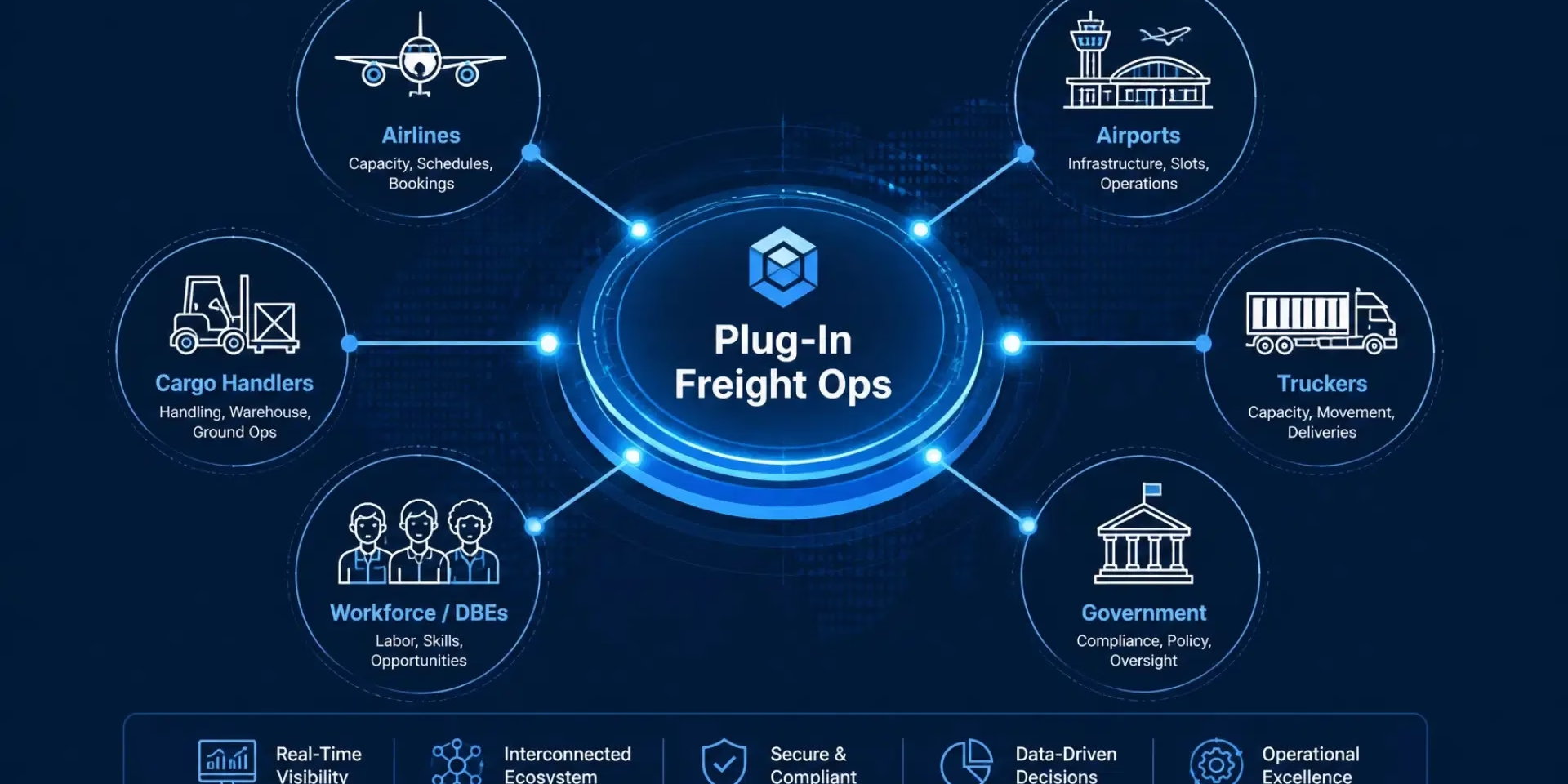
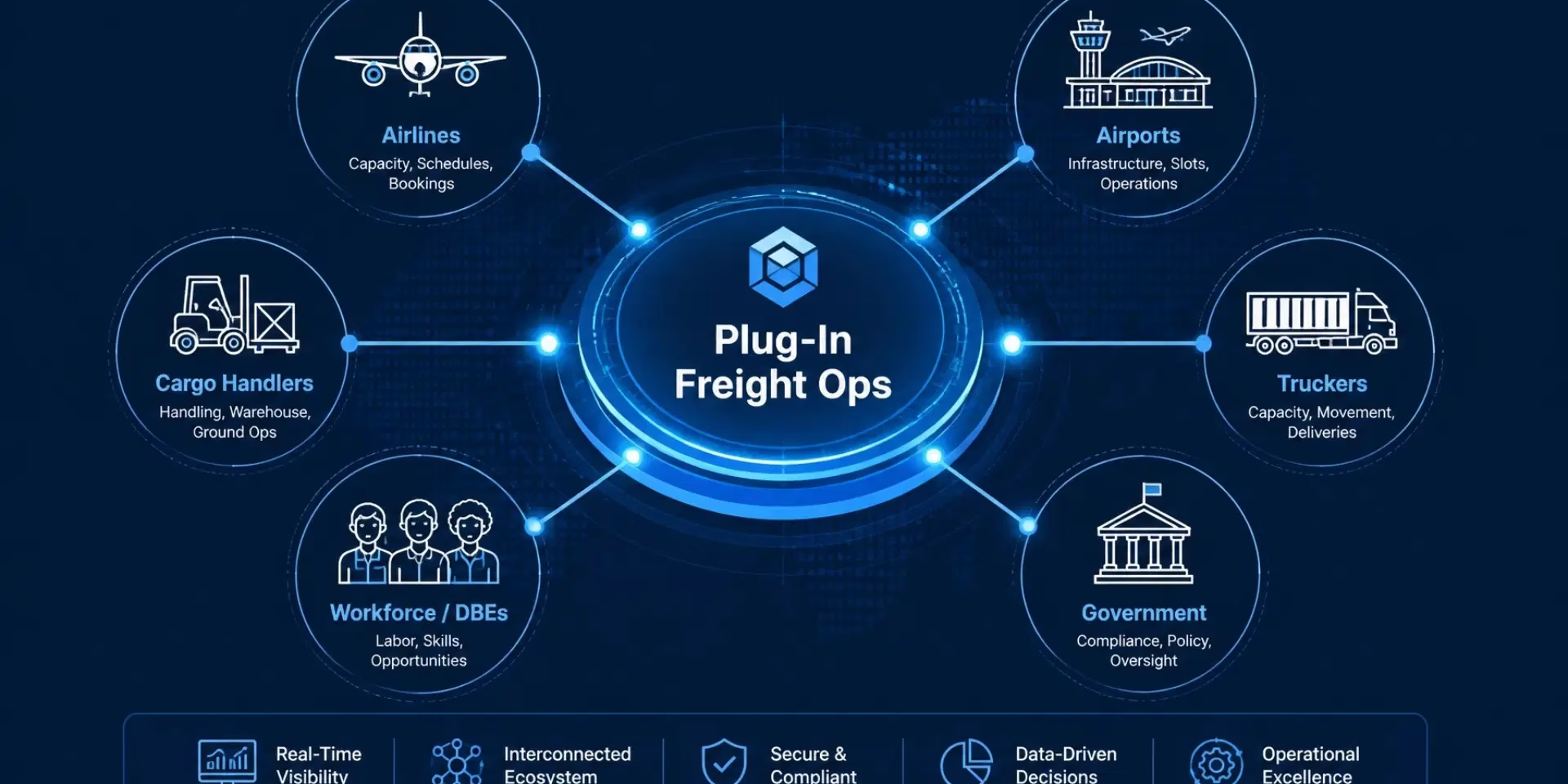
The freight industry is commercially connected but operationally fragmented. Airlines, GSAs, freight forwarders, ground handlers, customs brokers, trucking providers, agencies, and customers may all participate in the same shipment while working from different systems and timelines.
The missing capability is not necessarily another system of record.
It is the coordination layer between systems of record.
Plug-In Freight Ops™ represents this model: a digital execution infrastructure layer that coordinates requests, bookings, milestones, handoffs, exceptions, partner responsibilities, and reporting across existing participants.
The principle is straightforward. When one stakeholder completes its obligation, the next stakeholder should not have to discover that fact through a phone call or a buried email thread.
The workflow should already know what happens next.
Fix the Handoffs
If the goal is to speed up supply chains, the first instinct is often to make the physical movement faster: reduce flight time, accelerate loading, add trucks, or increase capacity.
Those improvements matter. But they do not solve the delay created when a completed task fails to trigger the next one.
Every shipment has handoffs. Every handoff carries timing, information, and accountability risk.
The organizations that improve execution will be the ones that measure those transitions: not just the miles between them.
Stop looking only at how long freight spends in transit.
Look at how long it waits for the next stakeholder to know what to do.
That is where execution infrastructure lives.
About Michelle DeFronzo
Michelle DeFronzo is the Founder and CEO of ImEx Cargo, with more than 30 years of experience across airfreight, ocean freight, domestic trucking, airline cargo GSA/GSSA operations, and government contracting. Through ImEx Cargo and Plug-In Freight Ops™, she focuses on the coordination infrastructure required to connect fragmented logistics ecosystems, improve execution visibility, and strengthen accountability across partners.
To discuss a focused pilot, capability walkthrough, or partnership opportunity, contact ImEx Cargo.