This is Article #4 of The Digital Freight Infrastructure Journal, a 12-article series establishing the category of digital freight execution infrastructure.
Where execution breaks down across global supply chains is rarely a lack of technology. It is an architectural omission.
For decades, the logistics industry has digitized every isolated corner of the transportation lifecycle. Shippers bought Enterprise Resource Planning (ERP) systems. Warehouses installed Warehouse Management Systems (WMS). Freight forwarders and carriers deployed Transportation Management Systems (TMS).
Yet, when freight moves from an airline dock to a ground handler, across a customs broker, into a trucking network, and toward a final infrastructure project site, the software silos stop talking. The digital handoffs fracture.
Global logistics is missing an execution layer.
Why the Logistics Industry Evolved in Silos
To understand why this architectural gap exists, we have to look at how logistics software evolved over the past thirty years.
Enterprise technology in supply chain was built around single organizations. A TMS was designed to optimize one company’s freight movements. A WMS was built to govern four walls of a specific warehouse. An airline cargo system was engineered to manage that specific carrier's flight capacity.
No single software vendor had the incentive: or the neutral mandate: to build the "between."
- Software designed for ownership, not coordination: Systems were built to secure internal control and record transactions, not to orchestrate multi-stakeholder handoffs.
- The vendor boundary problem: Software vendors naturally optimize their own ecosystem. A platform built for a freight forwarder rarely integrates deeply into an airline’s core operating system on equal footing.
- Reliance on custom point-to-point APIs: Where integration did occur, it relied on brittle, point-to-point EDI connections that break whenever one partner updates their internal database.
As a result, the industry relied on human intervention to act as the integration layer. Phone calls, emails, PDF attachments, and manual data re-entry became the default glue holding global trade together.
The Cost of the Missing Middle
When there is no neutral supply chain execution layer governing multi-party workflows, operational friction becomes a permanent line item.
Consider a standard air cargo movement involving an airline, a Ground Handling Agent (GSA), a freight forwarder, a trucking provider, and a government regulatory body. Each entity operates inside its own system of record. When flight schedules shift or customs holds an import, the information does not propagate across a shared workflow.
Instead, it triggers a cascade of manual notifications:

- Visibility without agency: Dashboards alert teams that a shipment is delayed, but no system exists to automatically coordinate the downstream schedule changes with the trucking provider and warehouse dock.
- Fragmented accountability: When a handoff fails, every stakeholder can point to their own system logs to prove they completed their isolated task, leaving the root cause buried in the "between."
- Administrative overhead: Highly skilled operational staff spend up to 40% of their day chasing updates across portals and emails rather than managing strategic exceptions.
In complex infrastructure projects or government transportation programs, these coordination breakdowns translate directly into millions of dollars in project delays, compliance exposure, and wasted asset capacity.
Defining the Solution: Digital Freight Infrastructure
Closing this architectural gap requires moving beyond legacy tracking tools and isolated software point solutions. The industry requires a dedicated digital freight infrastructure that sits above existing systems of record.
This cargo execution infrastructure does not replace an organization's existing TMS, ERP, or WMS. Rather, it provides a neutral, interoperable orchestration layer across them.

A true freight execution platform must deliver four foundational capabilities:
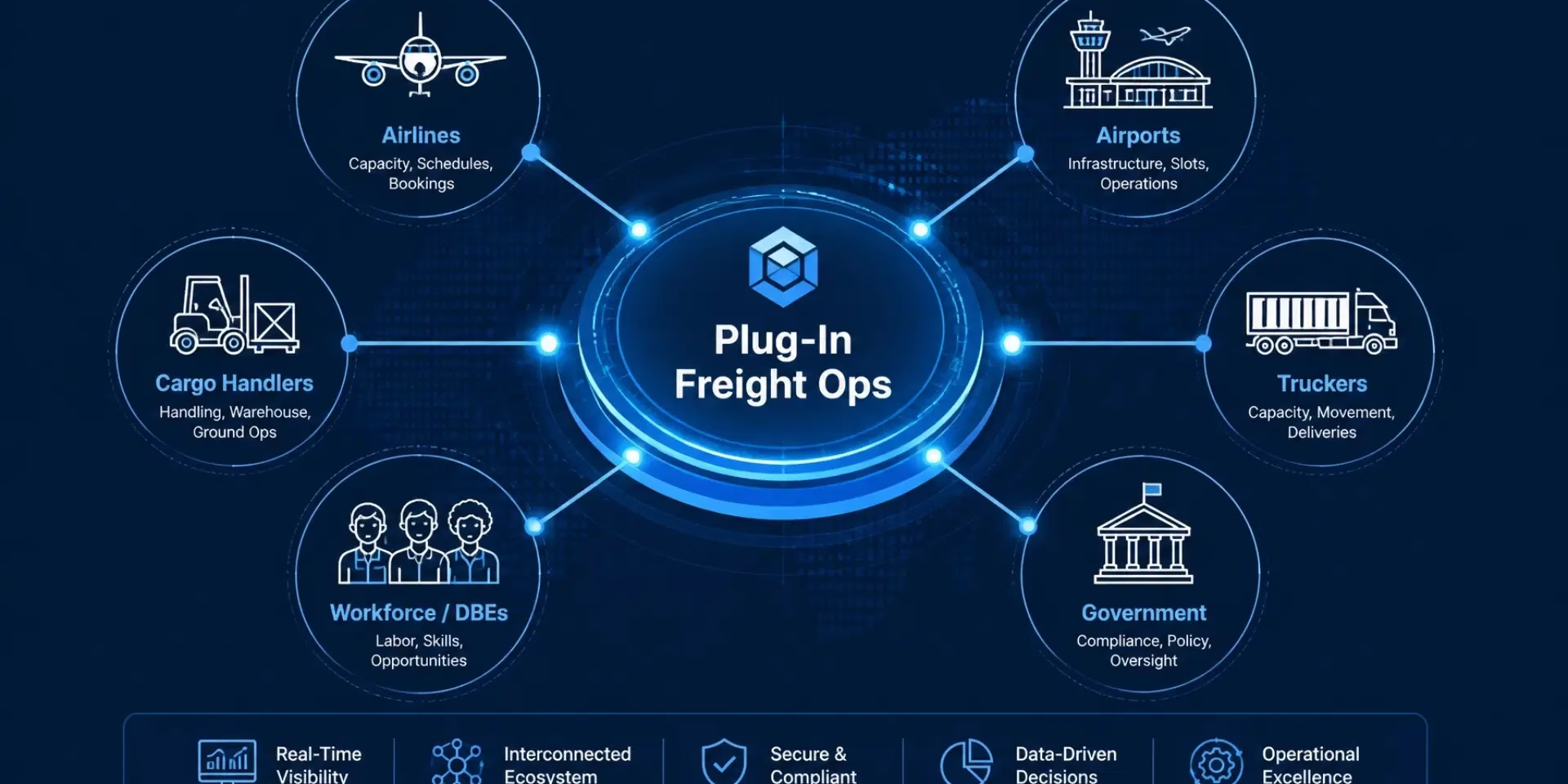
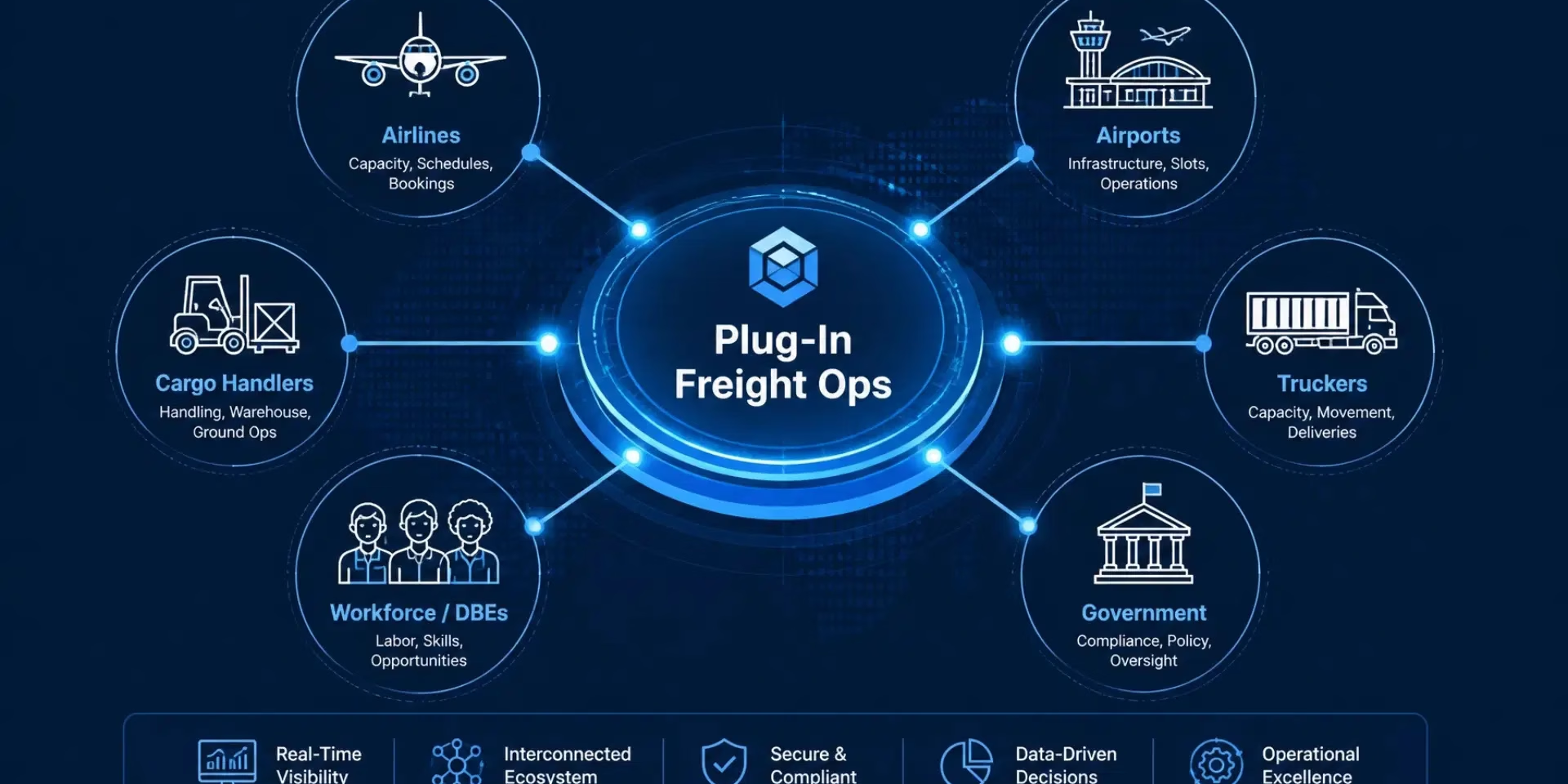
- Ecosystem Coordination Layer: Unifying airlines, GSAs, forwarders, carriers, and public sector stakeholders into a single, structured operational workflow from quote to booking to tracking and delivery.
- Workflow Standardization: Enforcing standard operating procedures (SOPs) and data validation at every handoff point, transforming chaotic multi-party communication into auditable task execution.
- Transaction-Level Accountability: Establishing absolute clarity on who executed each operational step, when it occurred, and which SLA governed the process.
- Workforce and Partner Activation: Seamlessly integrating certified DBE networks, diverse suppliers, and talent pipelines directly into project execution workflows to meet compliance and economic impact goals.
Moving From Isolation to Orchestration
As global supply chains face increasing regulatory scrutiny, labor constraints, and geopolitical volatility, patching old systems with more visibility dashboards is no longer viable.
Organizations managing complex, multi-stakeholder freight flows require a unified logistics orchestration framework that bridges the gap between planning systems and physical execution.
This is precisely the category-defining challenge addressed in recent industry milestones, including ImEx Cargo’s ongoing rollout of Plug-In Freight Ops™, which establishes a dedicated digital execution infrastructure layer designed to standardize and coordinate logistics across fragmented, multi-stakeholder environments.
By functioning as an overarching ecosystem coordination layer, modern platforms allow airlines, forwarders, and infrastructure leaders to eliminate manual friction, secure audit-ready oversight, and scale operations without adding administrative headcount.

Charting the Next Operational Frontier
The evolution of global logistics will not be defined by who builds the biggest single-company database. It will be defined by who successfully standardizes the spaces between companies.
By recognizing the execution layer as a necessary architectural component rather than an afterthought, enterprise organizations can finally transform fragmented supply chains into resilient, high-performance operational networks.
We regularly help enterprise logistics teams, air cargo operators, and government agencies evaluate their current tech stacks to identify execution gaps and design structured coordination workflows.
Happy to map this to your current operation or walk through how an execution infrastructure layer would apply in your environment. Reach out to discuss a focused pilot.
About the Author
Michelle DeFronzo is the founder and CEO of ImEx Cargo and the creator of Plug-In Freight Ops™. With over two decades of frontline experience as a veteran logistics operator, air cargo GSA leader, and government contractor, Michelle has dedicated her career to modernizing global freight execution, advancing supply chain transparency, and building resilient economic ecosystems. Under her leadership, ImEx Cargo has pioneered new standards in digital freight infrastructure, championing operational excellence, workforce development, and diverse supplier integration across complex international transport networks.