The logistics industry is not suffering from a lack of technology; it is suffering from a lack of coordination.
Over the last decade, billions have been invested in specialized software. Shippers have Transportation Management Systems (TMS). Carriers have ELDs and fleet management. Forwarders have digital booking portals. Governments have compliance portals. Yet, despite this sea of "digital transformation," the actual execution of a shipment remains a fragmented, manual, and often invisible process.
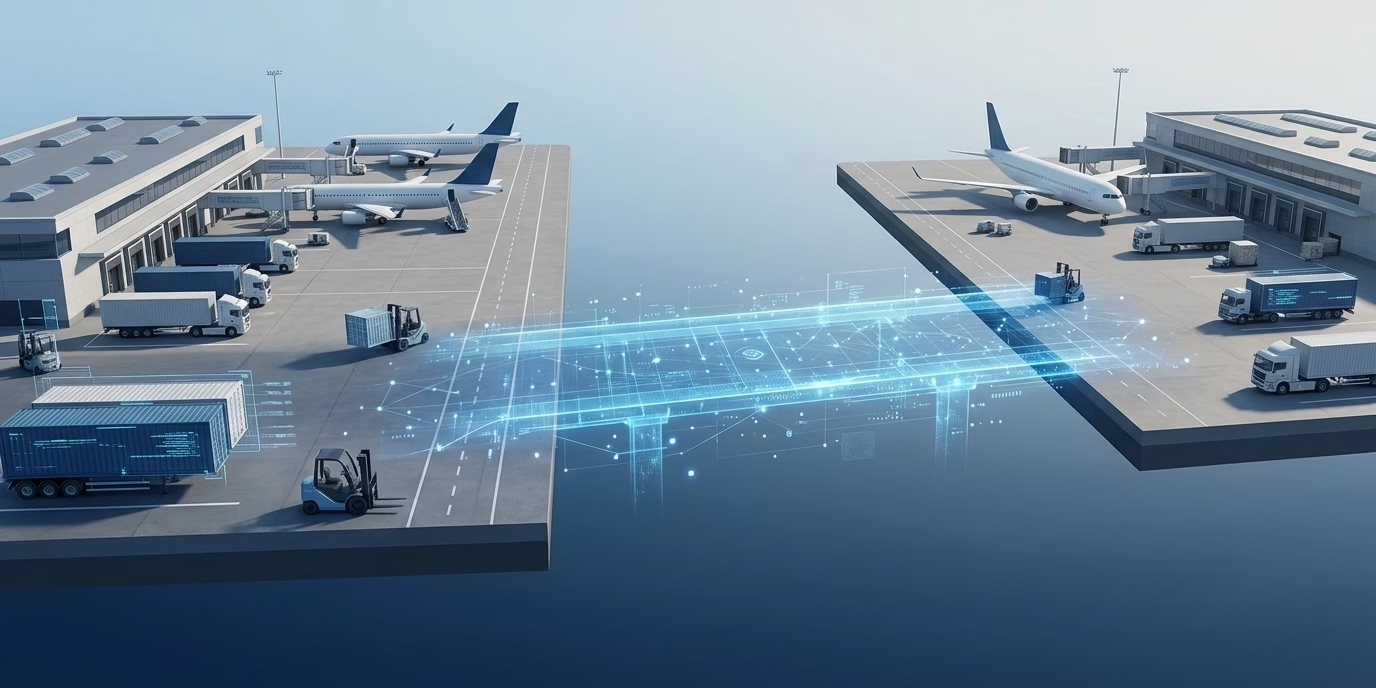
When a shipment moves from an airline to a ground handler, then to a trucking provider, and finally through a government-cleared warehouse, the data doesn't move with it. It gets trapped in silos. Execution breaks down at the handoffs.
This guide defines a new category of logistics technology designed to solve this exact problem: Digital Execution Infrastructure.
Plug-In Freight Ops™ is the digital execution infrastructure layer that sits above existing systems to standardize and manage execution across the full shipment lifecycle. It is not just another SaaS tool. It is the coordination layer modern logistics ecosystems need to reduce fragmentation, preserve operational knowledge, and keep execution moving across stakeholders.
The origin story matters. Plug-In Freight Ops™ was built as an alternative to simply operating as a freight forwarder. It evolved from our roots in passenger sales at Eastern Airlines into a neutral coordination layer designed for the operational reality the industry faces today: too many disconnected stakeholders, too many manual handoffs, and too much knowledge loss every time execution depends on individual workarounds instead of shared infrastructure.
1. The Problem: The Execution Gap in Fragmented Ecosystems
Most logistics delays do not happen while cargo is in motion; they happen while cargo is sitting still, waiting for a human to trigger the next step in a manual chain. We call this the Execution Gap.
Fragmented Logistics Ecosystems
The logistics industry is built on a "multi-stakeholder" model. For a single international shipment to move, it may require interaction between 10 to 20 different entities. Each entity has its own tech stack, its own data standards, and its own internal KPIs.
Because these systems don't talk to each other, the "ecosystem" isn't an ecosystem at all: it’s a collection of isolated islands.
Disconnected Stakeholders
In a standard workflow, the Airline knows the flight status, the GSA knows the booking details, and the Trucking provider knows the driver’s ETA. However, the Warehouse manager: the one who needs to prepare the dock: often has no visibility into any of those data points until the truck physically rolls onto the property.
When stakeholders are disconnected, the only way to coordinate is through "manual heroics": phone calls, endless email threads, and WhatsApp groups.
Manual Coordination & Invisible Handoffs
The most dangerous part of any shipment is the handoff. This is the "invisible" space between one partner’s responsibility ending and another’s beginning.
- Did the ground handler release the cargo?
- Is the paperwork ready for the driver?
- Has the DBE subcontractor been notified of the pickup?
In a fragmented environment, these handoffs are invisible. If a driver waits four hours at a terminal because the paperwork wasn't digitally pushed forward, that is an execution failure. Digital Execution Infrastructure turns these invisible handoffs into structured, accountable workflows.
2. The Participants: Who Operates Within the Infrastructure?
Plug-In Freight Ops™ is designed to activate and coordinate the entire logistics ecosystem. Unlike a TMS, which is built for one company, this infrastructure is built for the interaction between these eight key participants.
Airlines & GSAs (General Sales Agents)
For Airlines and GSAs, the challenge is capacity utilization vs. execution reality. A GSA can sell space, but they often lose visibility the moment the cargo hits the ground.
Plug-In Freight Ops™ provides GSAs with an "Execution Command Center," allowing them to track the performance of their ground partners and ensure the service levels they sold to the forwarder are actually met.
Freight Forwarders
Forwarders are the architects of the shipment, but they are often forced to work with "blind spots." By plugging into a digital execution layer, forwarders gain real-time, audit-ready oversight of every partner in their chain, reducing the time spent on manual "where is my cargo?" inquiries.
Trucking & Warehousing
These are the physical nodes of the network. For trucking providers, the infrastructure provides structured digital handoffs that reduce "dwell time" at warehouses. For warehouse operators, it provides a predictable flow of inbound and outbound freight, allowing for better labor management.
Government & Public Sector
Government agencies and airport authorities manage complex infrastructure programs that require massive coordination. They need to ensure that logistics projects stay on schedule and that every dollar spent is traceable. Plug-In Freight Ops™ provides the structured data needed for compliance and oversight.
DBEs (Disadvantaged Business Enterprises)
Meeting diversity requirements is often seen as a compliance hurdle. Plug-In Freight Ops™ turns DBE activation into a strategic advantage. By onboarding DBE partners into a structured execution layer, prime contractors can ensure these smaller partners have the digital tools they need to perform at enterprise standards, providing visibility and accountability that was previously impossible.
The Workforce
Logistics is a people-driven industry. Plug-In Freight Ops™ integrates workforce development directly into the execution flow. Through the Workforce Innovation Network (WIN), the platform connects trained talent directly to the operational nodes where they are needed most. This isn't just a job board; it's the integration of human capital into the logistics infrastructure.
3. The Infrastructure Layer: Defining the Category
To understand what Plug-In Freight Ops™ is, we must first clarify what it is not.

What Plug-In Freight Ops™ Is NOT:
- It is NOT a TMS (Transportation Management System): A TMS is a "System of Record" for an individual company to manage its own shipments. Plug-In Freight Ops™ is a "System of Action" that coordinates between companies.
- It is NOT a Marketplace: We are not a freight board or a "Tinder for Trucking." Marketplaces focus on the transaction; we focus on the execution after the deal is made.
- It is NOT a Freight Broker: We do not take possession of the freight or the margin. We provide the digital tracks that the freight moves on.
- It is NOT just a "Visibility Tool": Most visibility tools tell you where your cargo is. We tell you who is responsible for it, what they need to do next, and why it is or isn't moving.
What Plug-In Freight Ops™ IS: Digital Execution Infrastructure
Think of it as the "Operating System" for a logistics ecosystem. While a TMS helps you run your business, Digital Execution Infrastructure helps you run your partnerships.
Key Characteristics of Logistics Orchestration:
- Neutrality: It does not favor one carrier or forwarder. It acts as the "Neutral Coordination Infrastructure" that allows competitors and partners to work within a shared workflow.
- Plug-In Architecture: It doesn't require you to "rip and replace" your current software. It "plugs in" to your existing ERP, TMS, or manual spreadsheets and bridges the gap to your partner's systems.
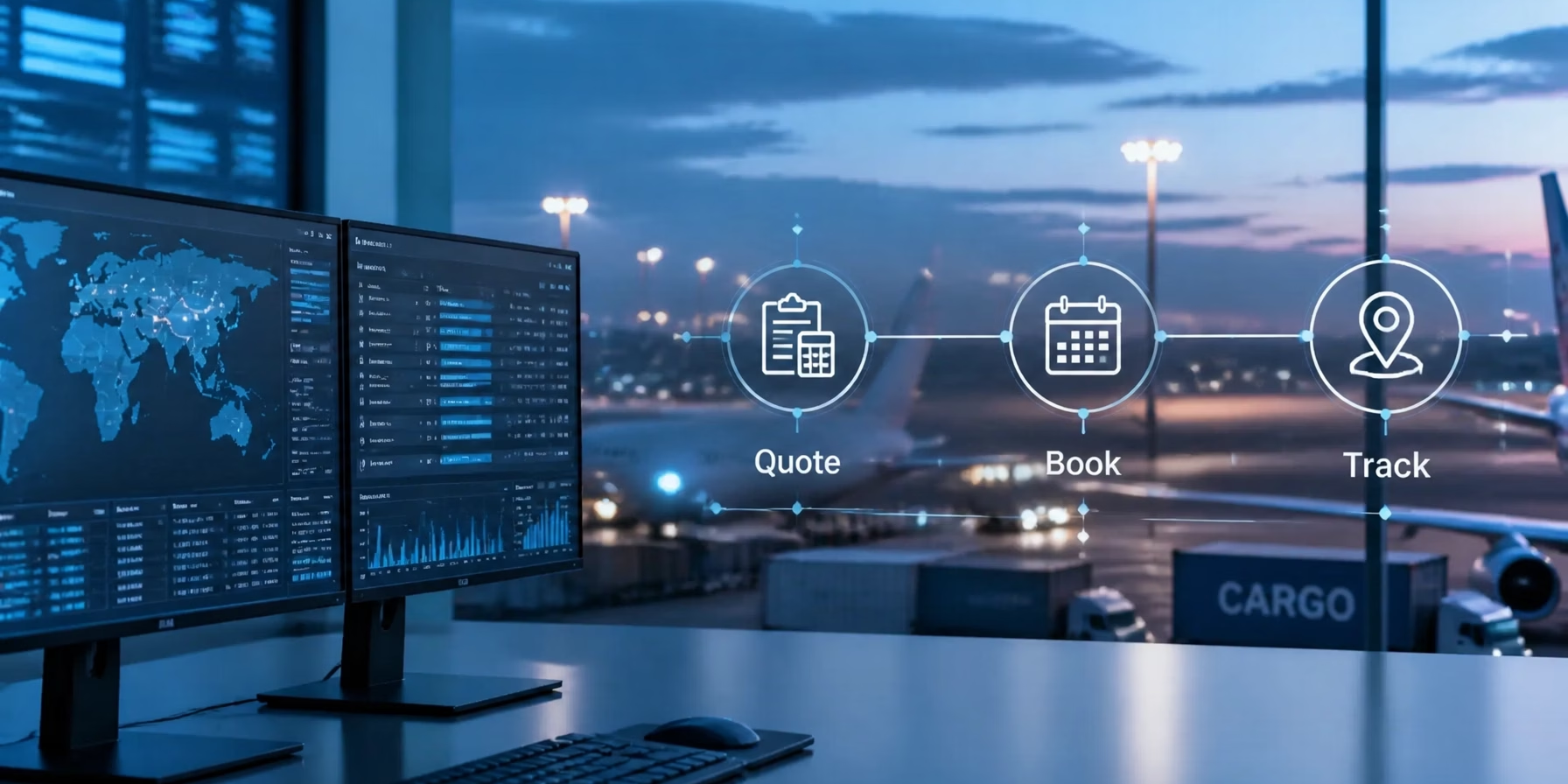
- Execution Standardization: It enforces a standard "Quote → Book → Track → Deliver" workflow across all stakeholders, ensuring that data is captured at every handoff.
4. The Outcome: Visibility Through Accountability
When you move from manual coordination to digital execution infrastructure, the business outcomes shift from reactive to proactive.
Real-Time Visibility
True visibility isn't a dot on a map; it's knowing the status of the process. Plug-In Freight Ops™ provides real-time shipment visibility that includes the digital "paper trail" of who handled the cargo, when, and where. This data is essential for high-stakes industries like aerospace, pharmaceuticals, and government contracting.
Ecosystem Coordination
Instead of 50 emails to coordinate a single project, stakeholders work within a unified dashboard. When a flight is delayed, the trucking provider is automatically notified, the warehouse dock is rescheduled, and the end customer receives an updated ETA: all without a single phone call.
Partner Accountability
The platform tracks "Execution Performance." Did the carrier arrive on time? Did the ground handler process the paperwork within the SLA? By having an objective, digital record of every handoff, organizations can manage their partners based on data, not anecdotes.
Workforce & DBE Activation
By digitizing the execution layer, we lower the barrier to entry for diverse suppliers and new talent.
- Workforce Activation: We move from "training" to "execution," placing certified talent into high-demand logistics roles.
- DBE Activation: We provide small, diverse businesses with the digital infrastructure they need to compete for: and win: large-scale government contracts.
Conclusion: From Friction to Flow
The future of logistics isn't about faster planes or bigger ships; it’s about smarter coordination.
The "Execution Gap" costs the global economy billions every year in wasted time, fuel, and labor. By implementing Plug-In Freight Ops™, organizations are moving beyond the limitations of fragmented systems and building a resilient, transparent, and coordinated digital infrastructure.
We are not just moving freight. We are orchestrating the execution economy.
How to Get Started
We typically address complex coordination challenges through a focused Pilot Activation.
If you are managing a fragmented ecosystem: whether as an airline, a prime contractor, or a government agency: we can map our infrastructure to your current operation.
Schedule a Capability Walkthrough to see how Digital Execution Infrastructure can close your execution gap.