In the current logistics landscape, "visibility" is the industry’s most expensive consolation prize.
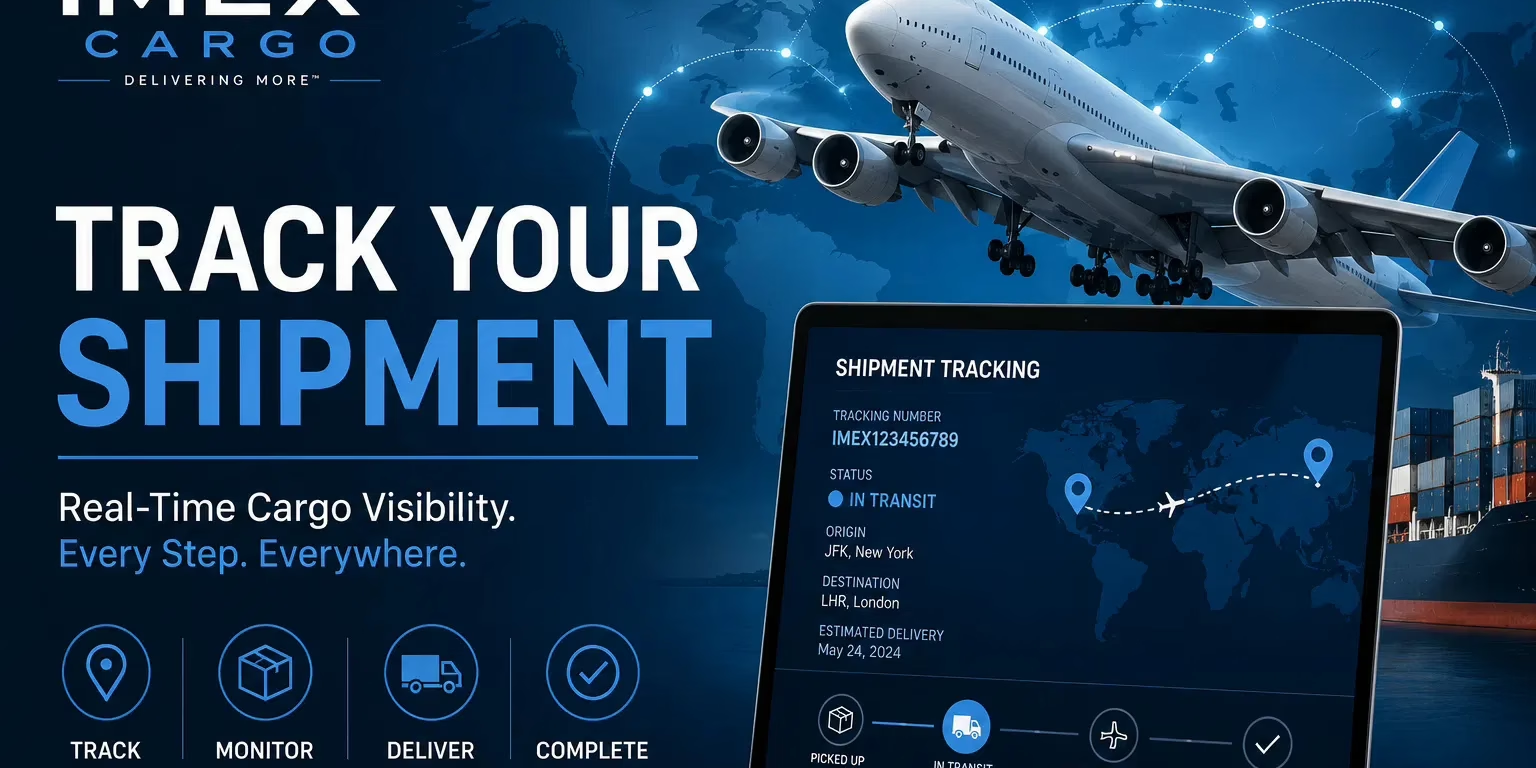
Organizations invest millions into sophisticated tracking platforms that offer real-time GPS pings, heat maps, and predictive ETAs. But here is the operational reality: Visibility tells you that your shipment is late. It doesn’t prevent it from being late.
If you are managing complex, multi-stakeholder logistics: especially in high-stakes environments like government contracting or multi-modal infrastructure projects: knowing where a pallet is located is only 20% of the battle. The other 80% is the execution required to move that pallet through the next handoff.
The breakdown isn't happening because of a lack of dots on a map. It’s happening because of a lack of structured coordination between the people and systems responsible for the move.
The Visibility Trap: Information Without Control
Most logistics managers are drowning in data but starving for control. This is the "Visibility Trap."
When a shipment stalls at a cross-dock or sits on a tarmac for 12 hours, a visibility tool sends an alert. By the time that alert hits your dashboard, the delay has already triggered a domino effect of missed windows, detention fees, and frustrated stakeholders.
Visibility is reactive. Execution is proactive.
The real problem in modern logistics is the "Execution Gap": the friction that occurs at every handoff point between an airline, a GSA, a trucking provider, and the final destination. These entities often operate in silos, using disparate TMS, ERP, and WMS systems that don't speak to one another. Tracking might bridge the data gap, but it doesn't bridge the operational gap.

Introducing Layer 4: Digital Freight Infrastructure
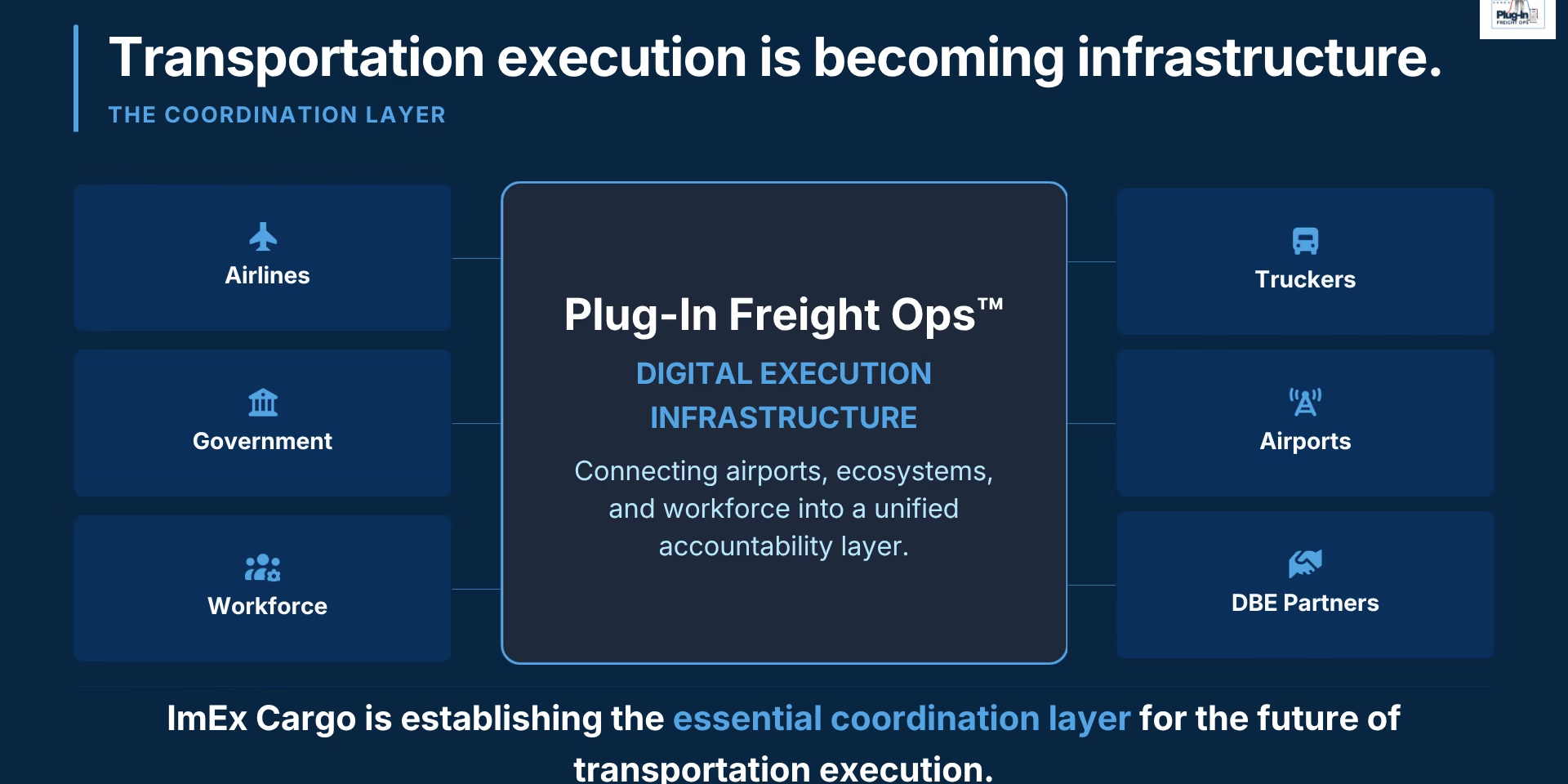
To solve the execution gap, we have to look at logistics as a layered infrastructure rather than a series of isolated transactions. At ImEx Cargo, we define this as the "Layer 4" concept.
- Layer 1: Physical Infrastructure (Airports, roads, ports, warehouses).
- Layer 2: Carriers and Assets (Airlines, trucking fleets, ocean vessels).
- Layer 3: Discrete Systems (TMS, WMS, ERPs, and individual tracking tools).
- Layer 4: Digital Freight Infrastructure (DFI) (The execution coordination layer).
Layer 4 is the digital execution infrastructure that sits above existing systems. It doesn't replace your TMS; it standardizes and manages execution across the full shipment lifecycle. This is where Plug-In Freight Ops™ operates.
Rather than just watching the freight move, Layer 4 coordinates the move. It connects the fragmented multi-stakeholder environment: airlines, GSAs, forwarders, and trucking providers: into a single, coordinated workflow.
Why Handoffs Are Where Execution Fails
Logistics is essentially a relay race. The race is rarely won or lost during the sprint; it’s won or lost during the passing of the baton.
In a typical shipment flow, a handoff occurs when:
- Cargo moves from a warehouse to a line-haul truck.
- The truck delivers to an airport ground handler.
- The ground handler transfers the cargo to an airline.
- The airline hands off to a GSA or local delivery partner at the destination.
If the documentation is missing, the booking isn't confirmed, or the driver arrives outside the window, the process breaks. Visibility platforms will show you the "red status," but they won't tell you why the handoff failed or who is accountable for fixing it in real-time.
Plug-In Freight Ops™ addresses this by creating structured handoffs. Every stakeholder in the chain is integrated into a unified execution layer. The platform ensures that the data required for the next step is present before the current step is completed. This creates partner accountability.

Moving From Tracking to Structured Workflows
Execution requires more than just knowing a location; it requires a standardized workflow that covers the entire lifecycle: Quote → Book → Track → Deliver.
When execution is standardized, you gain:
- Reduced Fragmentation: No more switching between five different carrier portals to figure out a shipment status.
- Performance Tracking: You can finally measure which partners are hitting their execution marks and which are causing the handoff delays.
- Real-Time Intervention: Instead of receiving a "late" notification, you receive a "pending action" alert that allows you to resolve a handoff issue before it becomes a delay.
- Audit-Ready Oversight: For federal or state-managed infrastructure programs, having a single layer of truth for every handoff is critical for compliance and reporting.
Ecosystem Activation: The DBE Advantage
In many large-scale logistics projects, execution isn't just about moving freight: it’s about meeting compliance and economic impact objectives.
A digital freight infrastructure allows organizations to activate partner ecosystems, including certified DBE (Disadvantaged Business Enterprise) networks. By bringing these diverse suppliers into a unified execution layer, prime contractors can ensure that smaller partners are operating with the same level of visibility and coordination as major carriers. This reduces risk and ensures that diversity goals are met without sacrificing operational speed or accuracy.

The Outcome: Execution Speed and Accuracy
The difference between a visibility-led operation and an execution-led operation is measurable in hours, dollars, and risk.
Organizations that transition to a Layer 4 coordination model typically see:
- Faster Execution Speed: Handoffs are streamlined, and wait times are reduced.
- Lower Risk: Real-time accountability prevents small issues from ballooning into major disruptions.
- Improved Performance: Structured data allows for better decision-making and carrier selection.
Stop Watching. Start Coordinating.
If your current logistics operation feels like a constant game of catch-up, it’s likely because you’re relying on visibility to solve an execution problem.
Tracking tells the story of what happened. Digital Freight Infrastructure dictates what happens next.
At ImEx Cargo, we help organizations responsible for complex logistics: from airport authorities to prime contractors: implement Plug-In Freight Ops™ as their centralized coordination layer. We don't just show you where your freight is; we ensure it gets to where it needs to be through structured, accountable execution.
Ready to move beyond the visibility trap?
We typically address these challenges through a focused pilot program tailored to your specific operational environment. We can walk through how this infrastructure layer would apply to your current multi-stakeholder workflows.
Join our partner network or contact us today for a capability walkthrough.