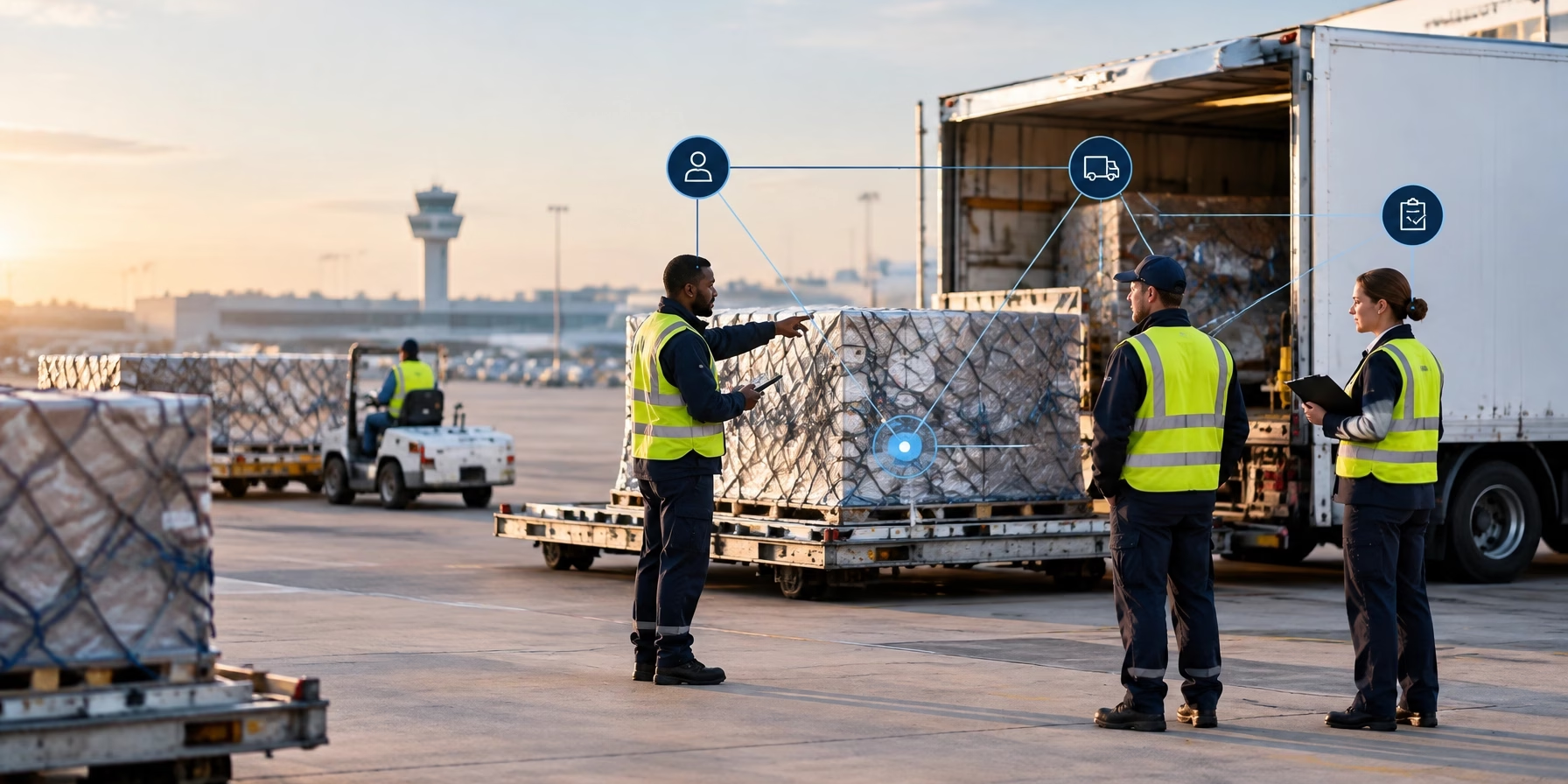
The road feeder service leg is where an airline’s flight schedule meets a trucking network it does not fully control.
A planned RFS movement depends on more than a truck departing on time. Cargo must be ready. Documentation must be complete. Release requirements must be satisfied. The handler must have dock capacity. The truck must arrive within the acceptance window. The connecting flight must still be able to receive the freight.
When those conditions are managed separately, a visible truck does not necessarily mean coordinated cargo execution.
The industry shift
Road feeder services are strategically important because they extend airline networks beyond the airports an aircraft physically serves. They connect regional locations to hubs, support cargo consolidation, and create additional routing options for forwarders and airline customers.
But the operating environment has become more fragmented. Airlines, GSAs, freight forwarders, handlers, trucking providers, terminals, and public-sector stakeholders often work from different systems and different operational priorities.
Common failure points include:
- The flight schedule is planned separately from the truck departure and arrival plan.
- A truck arrives before cargo is physically ready for collection.
- Cargo is ready, but documents, security status, customs information, or release instructions are incomplete.
- A truck arrives at a full dock or outside the handler’s receiving window.
- The RFS provider can see the vehicle, but the airline cannot see whether the cargo is accepted, released, or ready for the connecting flight.
- The truck is on time at the first location but loses time at the destination terminal.
- A delay, no-show, capacity issue, or misrouting event occurs without a clear responsibility point.
- Smaller trucking providers are excluded from digital coordination because participation is assumed to require a large technology investment.
- Performance reporting is assembled after the movement instead of being captured through the execution workflow.
The central issue is not that the network lacks capable participants. It is that responsibility crosses organizational boundaries faster than the information and coordination supporting it.

The execution layer
An RFS network needs more than transportation capacity and shipment tracking. It needs a coordination layer that connects the work around the movement.
This is the role of digital freight infrastructure. It does not replace the airline cargo system, the trucking provider’s dispatch environment, the handler’s operating system, or the standards and community systems used to exchange freight information.
Those systems remain important. The coordination layer sits above fragmented execution and organizes responsibility, handoffs, visibility, and action across organizations.
1. Flight-to-truck coordination
The truck plan should be connected to the flight plan, not treated as a separate transportation event.
That means aligning the planned road movement with cargo acceptance timing, handler capacity, documentation readiness, and the requirements of the connecting flight. A truck departure time by itself is not an execution plan. The relevant question is whether the road movement supports the cargo’s full path into the booked air movement.
2. Cargo readiness and partner visibility
A truck can be available while cargo is still being packed, screened, released, documented, or prepared for tender.
Coordination must distinguish between:
- Truck ready
- Cargo ready
- Documentation ready
- Cargo released
- Handler ready
- Cargo accepted
- Flight connection protected
This distinction gives airlines, forwarders, handlers, and trucking providers a more useful view than vehicle location alone.
3. Operational accountability across systems
A trucking provider’s system may not integrate directly with an airline’s cargo platform. That is common in a multi-partner RFS network.
Coordination does not require every participant to adopt the same operating system. It requires the network to establish shared execution points: who owns the next action, what handoff is pending, what has changed, and who must be notified.
This is especially important for small and mid-size trucking providers. They need a practical way to participate in coordinated execution without replacing the dispatch tools they already use or adopting heavy enterprise systems. The Trucking Network Execution Infrastructure model addresses this participation gap by focusing on the work around the truck, not only the truck’s technology stack.
4. Exception escalation and performance visibility
RFS exceptions are operational events that cross company boundaries.
A delay may begin with traffic, but become a missed dock window. A documentation issue may begin with a forwarder, but become a handler rejection. A no-show may require a replacement truck, a customer update, and a flight recovery decision.
The execution layer provides a shared context for assigning responsibility, escalating the issue, and recording the outcome. It helps separate the cause of an exception from the next action required to protect the shipment.
Network view
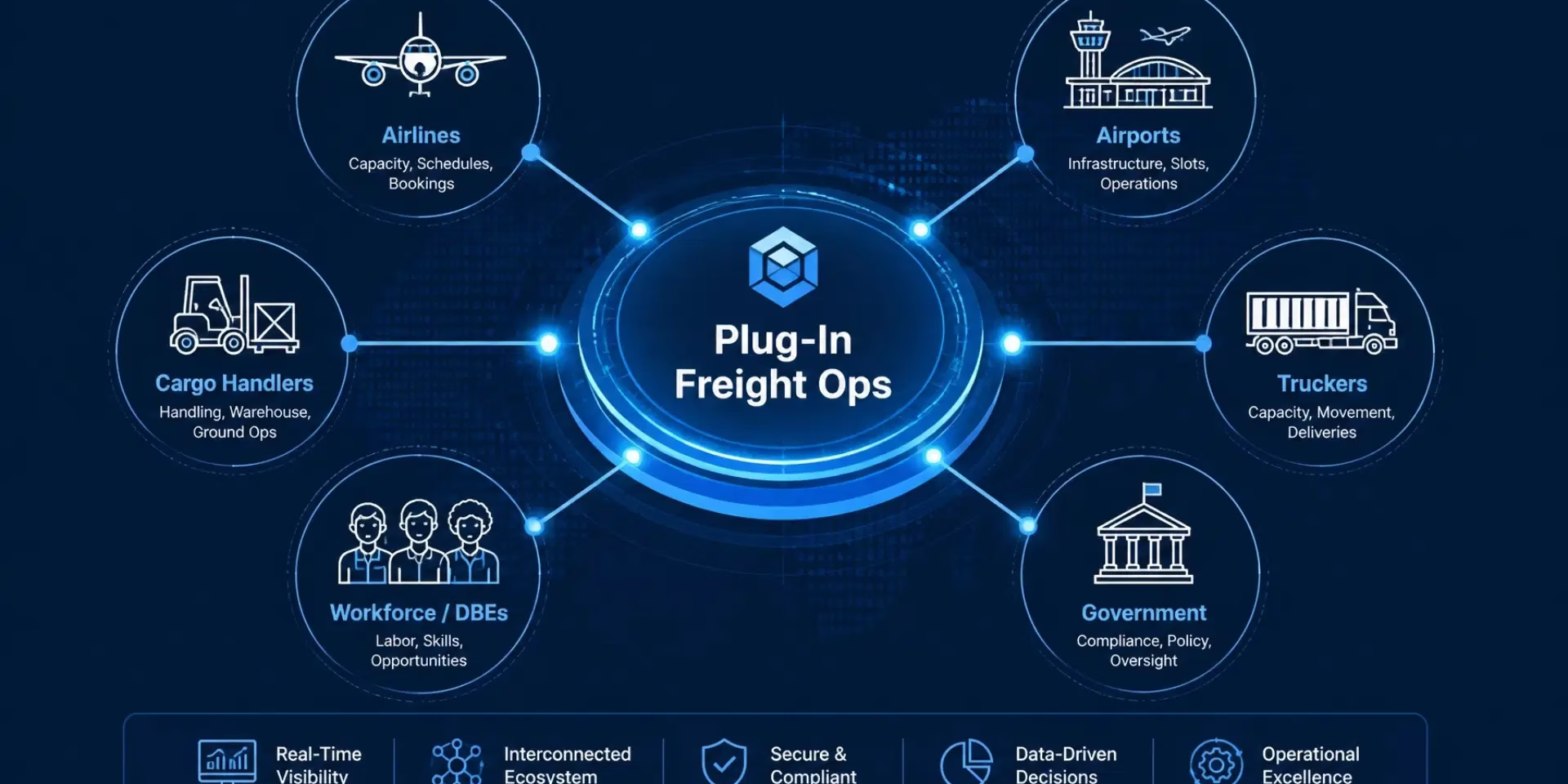
An RFS movement may pass through:
- Airline cargo planning and control teams
- GSAs and GSSAs
- Freight forwarders and shippers
- RFS trucking providers, dispatchers, and drivers
- Ground handlers and cargo terminals
- Airport and landside operations
- Customs, security, and other government stakeholders
- Consignees, delivery providers, and onward carriers
The workflow is not only:
Quote → Book → Track
It is closer to:
Quote → Book → Plan → Assign → Confirm cargo readiness → Confirm documentation and release → Dispatch → Arrive → Accept → Connect to flight → Escalate exceptions → Report performance
At each stage, the network needs to know what has happened and what must happen next.
That is the difference between visibility and coordinated resolution. A location update may show that the truck is approaching the terminal. It does not show whether the cargo is released, whether the dock can receive it, whether the documents are acceptable, or who is responsible if the flight connection is at risk.
The broader Airline and GSA Execution Infrastructure perspective applies directly here: commercial commitments, partner activity, station execution, and reporting must be connected across the network.
Use cases, where this creates measurable value
Road feeder schedule coordination
Airlines and GSAs can coordinate the RFS timetable with the relevant flight, station, handler, and cargo acceptance requirements. The goal is not simply to publish a truck departure. It is to create a shared operating view of the road leg and the air movement it supports.
Truck readiness and dock capacity
A truck’s arrival is only useful when the receiving location can act on it. Coordination connects truck readiness, estimated arrival, cargo readiness, and receiving capacity so the network can identify timing conflicts before they become waiting time or missed cut-offs.
Documentation and release coordination
Freight may be physically ready while still blocked by incomplete or inconsistent documentation. RFS coordination gives the airline, forwarder, handler, and trucking provider a clearer view of whether the cargo is ready to move, ready to be accepted, and ready to connect to the planned flight.
Last-mile execution at both ends of the RFS leg
The first mile begins before the truck arrives. The cargo must be available, correctly identified, and released for collection.
The final mile of the RFS leg also requires coordination. Arrival at an airport or cargo terminal does not equal acceptance. The receiving handler may need to reconcile the freight, confirm release status, manage the dock handoff, and move the cargo into the next stage of airline execution.
Both ends require structured handoffs. Neither should depend solely on a driver calling for instructions after arrival.
Road feeder exception escalation
Common RFS exceptions include delays, capacity shortages, misrouting, documentation problems, no-shows, missed appointments, and cargo-not-ready events.
The operational requirement is not merely to record the exception. It is to connect the event to responsibility and action: who must respond, which stakeholders need an update, and whether the shipment requires recovery, rebooking, or a revised plan.
Multi-partner lane coordination and performance visibility
A lane may involve more than one trucking provider, handler, terminal, forwarder, or airline relationship. A shared coordination view makes it easier to understand where handoffs are occurring and where performance issues repeatedly emerge.
The resulting record can support discussions about responsiveness, missed handoffs, update quality, exception handling, and connection reliability without treating vehicle tracking as a complete performance picture.

Value summary
| Visibility | Control | Speed | Accountability |
|---|---|---|---|
| See cargo, truck, document, handler, and flight activity in context. | Coordinate work across organizations without replacing existing systems. | Reduce manual chasing, repeated calls, and avoidable rework. | Clarify ownership when a handoff or exception requires action. |
Pilot access
A focused RFS coordination pilot can be structured in four stages:
-
Select the workflow
Choose a lane, station, airport transfer, flight connection, documentation process, or exception workflow where coordination gaps are visible. -
Define participants
Identify the airline, GSA, forwarder, trucking providers, handlers, terminals, and other stakeholders involved in the movement. -
Configure execution
Establish the shared milestones, handoffs, responsibility points, and reporting needs that matter for the selected workflow. -
Measure outcomes
Review visibility gaps, manual touchpoints, readiness conflicts, exception response, handoff quality, and partner performance.
The objective is not to force every participant into one system. It is to create a practical coordination structure above the systems already in use.
The landside network deserves execution infrastructure
Road feeder services are not an administrative extension of air cargo. They are a strategic part of the airline network, connecting flight schedules to regional markets, handlers, terminals, forwarders, and trucking providers.
The operational challenge is that airlines depend on a landside network they do not fully control. That makes structured handoffs, readiness visibility, exception escalation, and partner accountability essential.
Plug-In Freight Ops™ is designed as digital execution infrastructure for that space between systems, stakeholders, and physical cargo movement.
ImEx Cargo typically addresses this through a focused pilot. Request a Pilot to map an RFS workflow to your operating environment, or Join the Ecosystem to explore participation in a coordinated freight network.
About the author
Michelle DeFronzo is Founder and CEO of ImEx Cargo, a woman-owned logistics and freight-technology company. She builds modular infrastructure that modernizes access and collaboration in operational industries without replacing existing systems. Her work focuses on platform strategy, ecosystem design, interoperability, and coordinated freight execution.
Frequently asked questions
What are road feeder services?
Road feeder services are scheduled or contracted trucking movements that connect airports, cargo terminals, hubs, and regional markets as part of an air cargo routing. They extend the reach of airline networks without requiring every origin or destination to be served by an aircraft.
Why does tracking a truck not solve RFS coordination?
Tracking shows where the vehicle is or may show a movement milestone. It does not necessarily show whether cargo is ready, documentation is complete, release has been granted, dock capacity is available, or the connecting flight can still receive the shipment.
Does an RFS coordination layer replace airline or trucking systems?
No. A coordination layer is intended to complement airline cargo systems, trucking dispatch environments, handler systems, community systems, and established standards. Its purpose is to coordinate responsibility and action across organizational boundaries.
How can small and mid-size trucking providers participate?
They can participate through structured coordination points, shared status expectations, handoff visibility, and exception communication without replacing the tools they already use to manage dispatch and transportation operations.
What should airlines measure in an RFS workflow?
Useful measures may include cargo-ready accuracy, documentation readiness, truck arrival timing, handler acceptance, missed connections, exception response, handoff quality, and partner performance. The right measures depend on the lane, station, carrier, handler, and operating environment.