Supply chain technology has reached a ceiling. While individual organizations have spent decades and millions of dollars optimizing their internal operations with ERPs, TMSs, and WMSs, the execution of logistics still breaks down at the boundary between companies.
The industry is currently struggling with a fundamental architectural mismatch: we are trying to manage multi-party ecosystems using single-enterprise software.
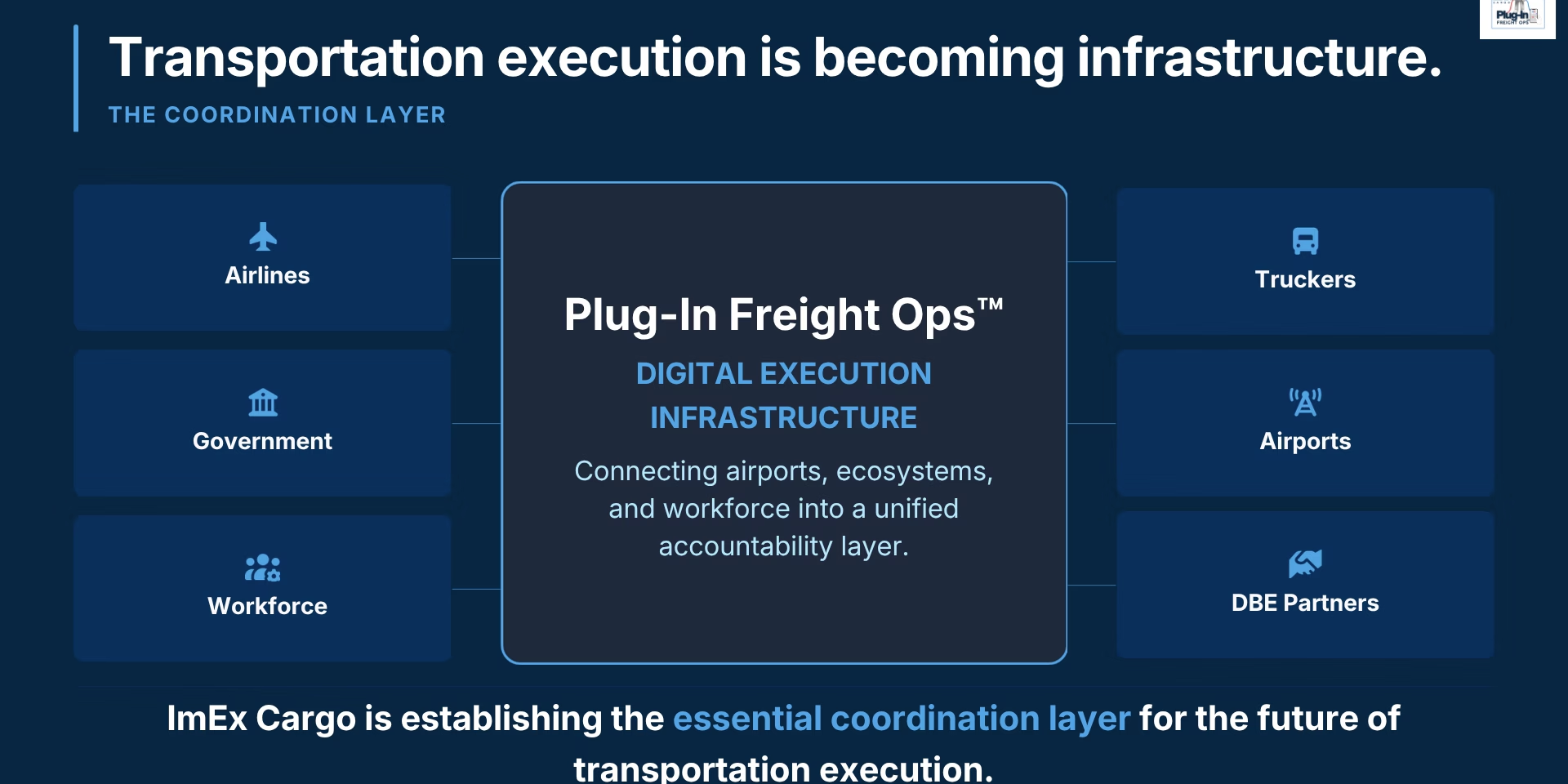
This gap is where the Ecosystem Coordination Layer emerges. It is not just another piece of software; it is a digital infrastructure category designed to solve the problem of fragmented execution across independent stakeholders.
What is an Ecosystem Coordination Layer?
An Ecosystem Coordination Layer is a digital execution infrastructure that sits above existing enterprise systems to coordinate activities across multiple independent organizations in a supply chain ecosystem.
Architecturally, it is the answer to a single, critical question: “How do we make all these different companies work together as if they were one organization?”
Unlike a Transportation Management System (TMS) which focuses on a single company’s freight, or an Integration Layer that simply moves data from point A to point B, the coordination layer manages the governed execution of a shipment lifecycle: from quote to booking to tracking and delivery: across airlines, GSAs, freight forwarders, trucking providers, and government stakeholders.
The Architecture Problem: Built for One, Used by Many
Most logistics technology is designed for "single-tenant" or "single-enterprise" use. An ERP or TMS is a system of record for one company’s assets, orders, and employees.
When a shipment moves from a manufacturer to a freight forwarder, then to a trucking company, then to an airline handler, and finally to an international carrier, the digital thread breaks. Each handoff requires manual intervention: emails, phone calls, and manual data entry: because the systems weren't built to talk to each other, let alone coordinate with each other.
In this environment:
- Visibility is passive: You see where a shipment was, not where it is stuck.
- Accountability is manual: Proving who missed a deadline requires an audit of email threads.
- Speed is capped: The pace of execution is limited by the slowest human handoff.
The ecosystem requires an architectural shift from "internal optimization" to "cross-enterprise coordination."

How It Works: The Mechanics of Coordination
An Ecosystem Coordination Layer like Plug-In Freight Ops™ operates through four primary architectural pillars:
1. Neutral Positioning
To coordinate an ecosystem, the technology must be neutral. It cannot favor the buyer over the seller or the carrier over the forwarder. It acts as a digital "referee" or execution infrastructure that all parties trust to provide a single version of the truth.
2. API-First Connectivity
Rather than replacing existing systems, the coordination layer "plugs in" to them. It uses robust APIs to pull data from a trucking company’s GPS and push it into an airline’s booking system, ensuring that data moves as fast as the physical freight.
3. Workflow Orchestration
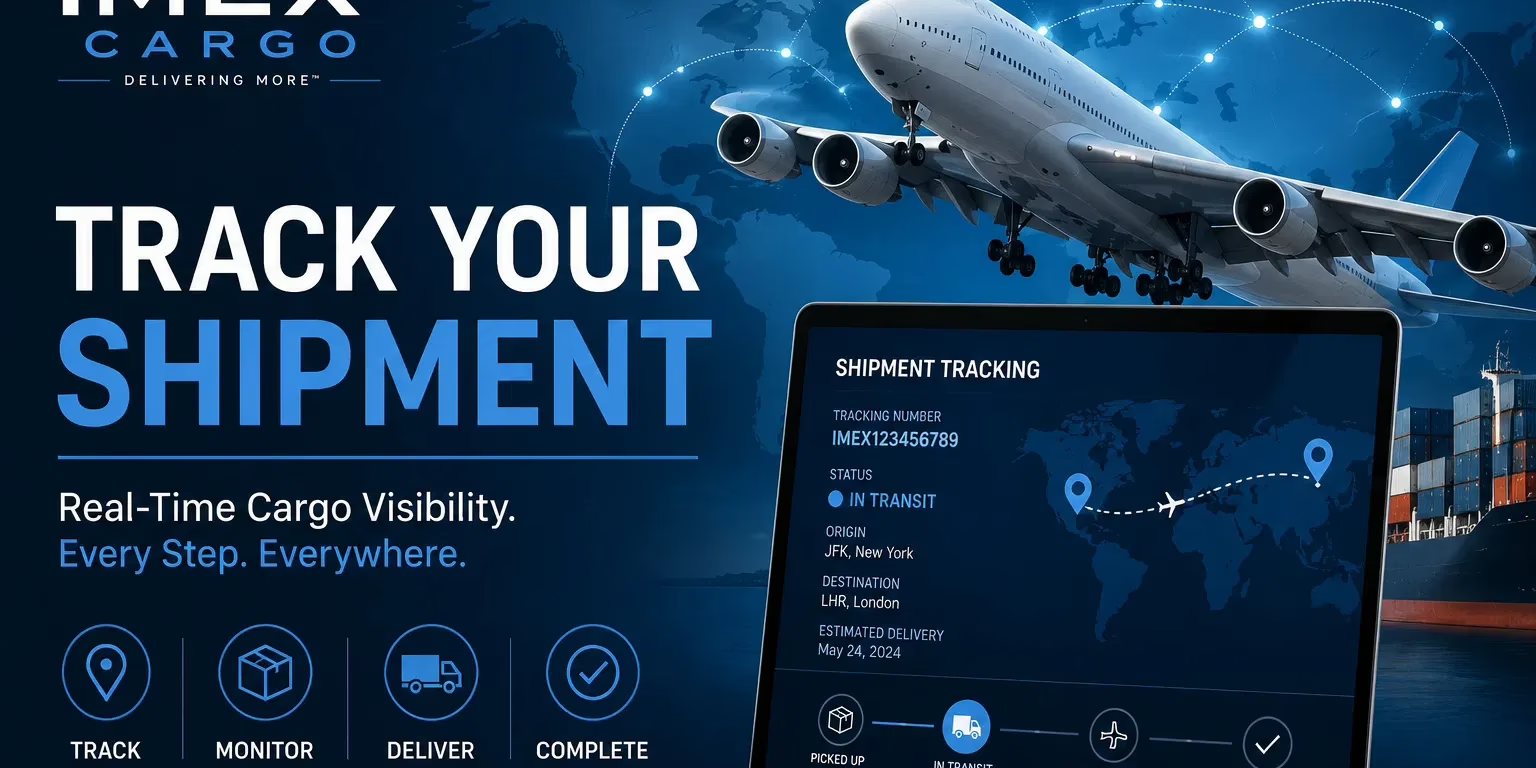
The layer doesn't just display data; it drives the process. It standardizes the Quote → Book → Track → Deliver workflow across all participants. If a trucker is late to an airport terminal, the coordination layer automatically alerts the ground handler and updates the airline's capacity forecast.
4. Governed Execution
This is where coordination becomes infrastructure. The layer enforces business rules and performance standards across the ecosystem. It tracks partner accountability in real-time, providing an audit-ready trail of every handoff and decision made by every stakeholder.
Key Characteristics of a Coordination Layer
To qualify as a true Ecosystem Coordination Layer, the technology must possess these four traits:
- Multi-tenant by Design: It is built from the ground up for dozens of different organizations to interact within the same environment without compromising data security.
- Organization-Agnostic: It treats every stakeholder: from a global airline to a small DBE-certified trucking firm: as a first-class participant in the workflow.
- Execution-Focused: It prioritizes "doing" over "viewing." While visibility is a byproduct, the primary goal is the successful completion of the logistics task.
- Audit-Ready Oversight: Because it manages the handoffs between entities, it provides a level of oversight and compliance reporting that internal systems cannot reach.

Comparison to Other Architectural Layers
It is easy to confuse a coordination layer with other common technology stacks. Here is how they differ:
| Layer | Primary Function | Limitation |
|---|---|---|
| Integration Layer | Moves data (EDI/API) between systems. | Does not manage the logic or status of a shipment. |
| Data Layer | Stores and aggregates data (Data Lakes). | Does not drive action or manage partner accountability. |
| Application Layer | Manages internal tasks (TMS/ERP). | Cannot see or control what happens outside the enterprise. |
| Coordination Layer | Governs the execution between organizations. | Designed to sit above and connect all the other layers. |
Real-World Use Cases
The need for an Ecosystem Coordination Layer is most acute in high-complexity, multi-stakeholder environments:
Air Cargo & GSA Networks
When a General Sales Agent (GSA) manages capacity for an airline, they must coordinate with forwarders, truckers, and handlers. A coordination layer provides the digital infrastructure to manage these bookings and handoffs with real-time accuracy, reducing "ghost bookings" and improving load factors.
Government Logistics & Infrastructure
Large-scale infrastructure projects involve prime contractors, federal agencies, and a network of diverse DBE (Disadvantaged Business Enterprise) suppliers. An Ecosystem Coordination Layer ensures that all parties are meeting compliance and execution standards, providing the visibility required for federally funded programs.
Workforce & Talent Pipelines
Logistics execution depends on people. Modern coordination layers are beginning to integrate workforce development pipelines, connecting training institutions directly to the execution infrastructure so that certified talent is available precisely when and where the logistics ecosystem needs it.

Why It’s a New Category
An Ecosystem Coordination Layer is not middleware, it’s not a "suite," and it’s not just another platform.
It is Execution Infrastructure.
Just as physical infrastructure (roads, rails, airports) allows different companies to move goods, digital execution infrastructure allows those same companies to move data and decisions in a synchronized way. It provides the "standard gauge" for logistics coordination.
By adopting this layer, organizations stop fighting against fragmentation and start leveraging their ecosystem as a competitive advantage. You move from a state of "managing vendors" to "executing as a unified network."
Moving Toward a Coordinated Future
As global supply chains become more fragmented and project-driven, the ability to coordinate across stakeholders is no longer a "nice-to-have" capability: it is a requirement for operational continuity.
At ImEx Cargo, we have built Plug-In Freight Ops™ specifically to serve as this Ecosystem Coordination Layer. We don't ask you to rip and replace your systems; we help you plug them into a coordination layer that brings accountability, visibility, and speed to your entire network.
Interested in seeing how a coordination layer fits into your current operation? We can walk through a pilot or map this architecture to your specific logistics environment. Contact us to schedule a capability walkthrough.