In the world of logistics, we’ve accepted a frustrating "tax" on growth: the onboarding lag.
Whether you’re an airline, a GSA, or a prime contractor, bringing on a new hire or a new partner usually means weeks: if not months: of "shadowing," manual training, and inevitable errors. We’ve been conditioned to believe that this ramp-up time is just part of the business.
It isn't. Or at least, it shouldn't be.
The real reason onboarding takes so long isn’t because logistics is "too hard to learn." It’s because our execution layers are fragmented. We ask new professionals to navigate a maze of disparate systems, informal email threads, and tribal knowledge that varies from office to office.
At ImEx Cargo, we’re changing the narrative through the Workforce Innovation Network (WIN) and our Plug-In Freight Ops™ digital execution infrastructure. We aren't just training people; we are building a workforce that is immediately operable.
The Friction Point: Why Traditional Training Fails
Traditional logistics training is often too academic or too siloed. A new hire might understand the concept of an Air Waybill, but they don’t know your specific process for coordinating a handoff between an airline and a trucking provider.
When execution is buried in spreadsheets and "how we’ve always done it" conversations, knowledge is trapped. This creates three major risks:
- Operational Drag: New staff take months to reach full productivity.
- Execution Risk: High error rates during the "learning curve" lead to shipment delays.
- Scalability Bottlenecks: You can’t grow because your senior team is too busy hand-holding new recruits.
To move beyond this, we have to stop treating workforce development as a separate HR function and start treating it as a core part of our logistics infrastructure.

The WIN Approach: Training on the Execution Layer
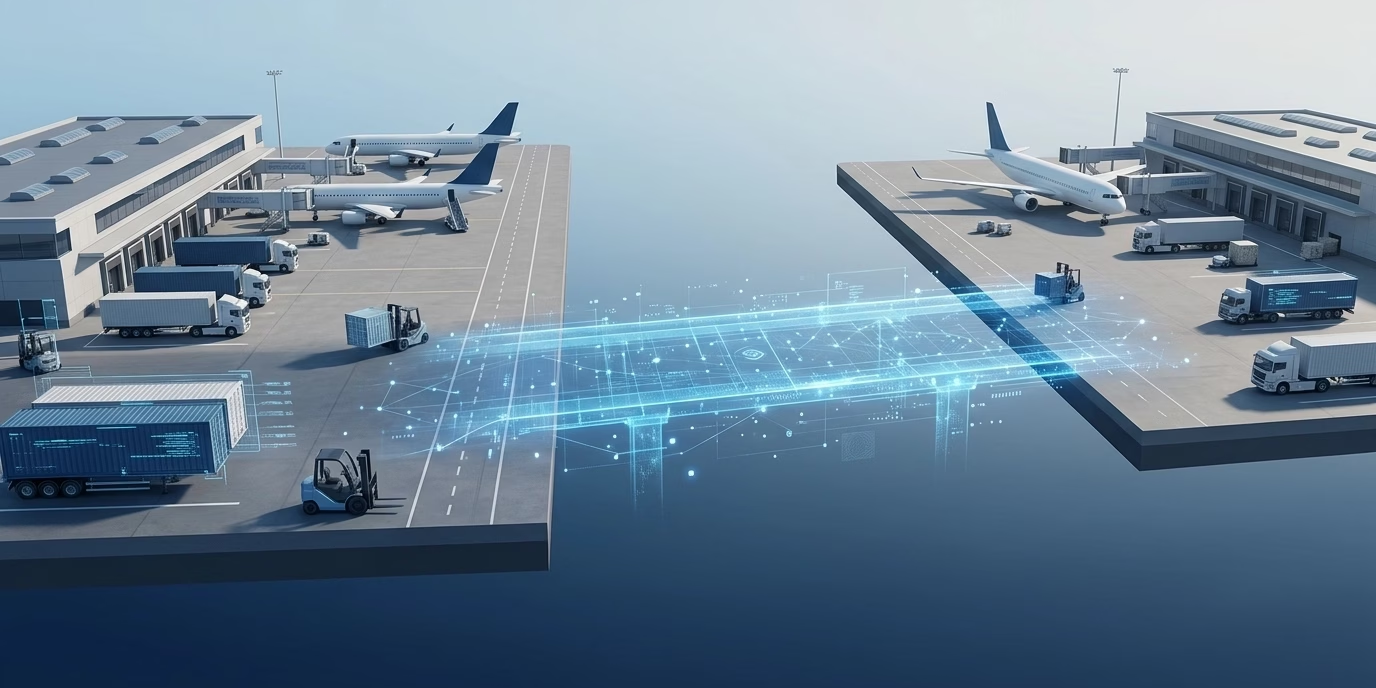
The Workforce Innovation Network (WIN) is Topic 4 in our series for a reason. It is the bridge between technology and talent. By using Plug-In Freight Ops™ as a standardized execution layer, we provide a unified environment where the "how-to" is built directly into the workflow.
When we talk about "Immediately Operable" talent, we mean professionals who have been trained on the very same digital infrastructure they will use on day one.
What "Immediately Operable" looks like in practice:
- Standardized Workflows: Instead of learning five different ways to book freight, the professional learns one standardized execution workflow: from quote to tracking to delivery.
- Pre-Validated Skills: Through the ImEx Cargo Academy, talent is vetted within real-world digital environments, not just classrooms.
- Ecosystem Portability: Because the execution layer is standardized, a professional can move between stakeholders: like a GSA and a freight forwarder: without needing to relearn the fundamentals of coordination.
Moving Beyond "Classroom Learning"
Most logistics courses focus on theory. WIN focuses on operational readiness.
We’ve shifted the focus from "academy courses" to "workforce pipelines." This distinction matters. You aren't hiring someone who read about logistics; you’re hiring someone who has already executed shipments within a digital coordination layer.
This approach transforms the hiring process for airlines, GSAs, and government agencies. Instead of searching for "logistics experience" (which is often vague), you hire for "infrastructure proficiency."

Reducing Fragmentation Through People
Logistics is a multi-stakeholder game. The breakdown in execution usually happens at the handoff: where the airline hands off to the trucker, or the trucker to the warehouse.
By creating a workforce that understands ecosystem execution, we reduce that fragmentation. When everyone is trained on a common coordination layer, communication becomes structured and accountability becomes a baseline, not a goal.
Key benefits for our partners:
- Reduced Time-to-Value: New hires contribute to revenue-generating activities in days, not weeks.
- DBE Activation: We use WIN to empower a diverse network of suppliers (DBEs) and workforce pipelines, helping organizations meet compliance and economic impact goals simultaneously.
- Structured Handoffs: With a trained workforce, the "tribal knowledge" that causes manual bottlenecks is replaced by documented, digital execution.
Building a Stronger Strategic Moat
In a competitive market, your ability to scale isn't just about having the best software; it’s about how fast you can deploy talent that knows how to use it.
We see the combination of Infrastructure + Workforce + DBE Activation as the ultimate strategic moat. Most logistics providers offer one of the three. ImEx Cargo integrates them into a single, unified layer.
When your workforce is "immediately operable," you aren't just filling a staffing gap. You are strengthening your operational capacity. You are ensuring that every shipment, every quote, and every partner handoff is handled with the same level of precision, regardless of who is behind the desk.

Why This Matters for Government and Infrastructure Projects
For federal, state, and municipal agencies, the stakes are even higher. Large-scale infrastructure projects require massive logistics coordination. Traditional onboarding lag can result in millions of dollars in budget overruns and missed milestones.
By plugging in a workforce that is already "execution-ready," prime contractors can guarantee a level of performance that manual, fragmented processes simply can't match. It’s about creating a predictable, audit-ready environment from the very first day of the contract.
The Plug-In Workforce Concept
Think of it like an electrical outlet. In the old world, every time you hired a new person or partner, you had to re-wire the entire house. You had to teach them your specific "wiring" (processes, tools, and quirks).
In the Plug-In Freight Ops™ world, the wiring is already done. The infrastructure is standardized. Your workforce simply "plugs in" and starts producing.

From Training to Execution
The "Immediately Operable" mindset isn't a pipe dream. It’s a necessity for the modern logistics ecosystem.
We’ve seen what happens when coordination fails. We’ve seen the delays, the frustration, and the lost revenue. By investing in workforce infrastructure, we aren't just solving a hiring problem: we are solving an execution problem.
Let’s Map This to Your Operation
Are onboarding inefficiencies or staffing gaps slowing down your operations? We’d love to walk through how the WIN workforce pipeline and Plug-In Freight Ops™ can be mapped to your specific environment.
We typically address this through a focused pilot or a capability walkthrough. Whether you’re an airline looking to scale your GSA network or a prime contractor managing a complex infrastructure project, we can show you how to move from "onboarding lag" to "immediate execution."
Ready to see how workforce infrastructure works in action?