Entrepreneurship is often framed as a series of bold visions and rapid growth milestones. Mine, however, was forged in crisis.
After 30 years in air cargo: running freight desks, representing global airlines, and managing complex government logistics: I didn’t set out to build a technology company. I didn’t wake up one morning wanting to disrupt a market or chase a SaaS valuation.
I set out to protect my business, my team, and our customers from a system that was no longer sustainable. The industry had plenty of "tools," but it lacked infrastructure.
The Breaking Point: Oxygen and Operations
Every founder has a "why." Mine came in a hospital room.
During the height of the pandemic, I found myself hospitalized for eight days. I was on oxygen, battling the virus, and yet I was still running operations remotely. I was making sure customers were supported and airline partners were protected because, in the cargo world, the freight doesn't stop just because the person moving it has to.

That experience was a brutal wake-up call. We were managing 200–300 emails per day per shipment, juggling airline portals, carrier spreadsheets, and manual customer updates. We weren't failing to "digitize": we were digitizing pieces, but the workflow remained fundamentally broken. If the lead operator is out, the whole fragile system risks collapse.
The Second Blow: Geopolitical Reality
Shortly after recovering, the second blow landed. Geopolitical disruptions: specifically the Russian invasion of Ukraine: eliminated one of our major airline partners, AirBridgeCargo, overnight.
In a single moment, more than half of our revenue vanished. We had shipments sitting in customs, ready for export, that had to be returned. Our customers couldn't invoice. We were all suffering due to circumstances entirely outside our control.
That’s when survival stopped being a theoretical concept and became a daily mandate. I made a decision: we would never again depend entirely on someone else’s system, contract, or circumstances to control our future.
Building Independence Instead of Dependency
Plug-In Freight Ops™ was built from that resolve.
This wasn’t a startup idea brainstormed on a whiteboard by technologists. It was built from decades of lived operational pain: the kind you only understand when shipments are late, customers are anxious, and teams are overwhelmed by "system switching."
We realized that most cargo technology fails for one simple reason: it tries to replace the systems people already use. But in a high-stakes environment like an airline GSA or a freight desk, you don't have the luxury of "ripping and replacing." You need to complete the ecosystem.

A Connective Layer, Not a Marketplace
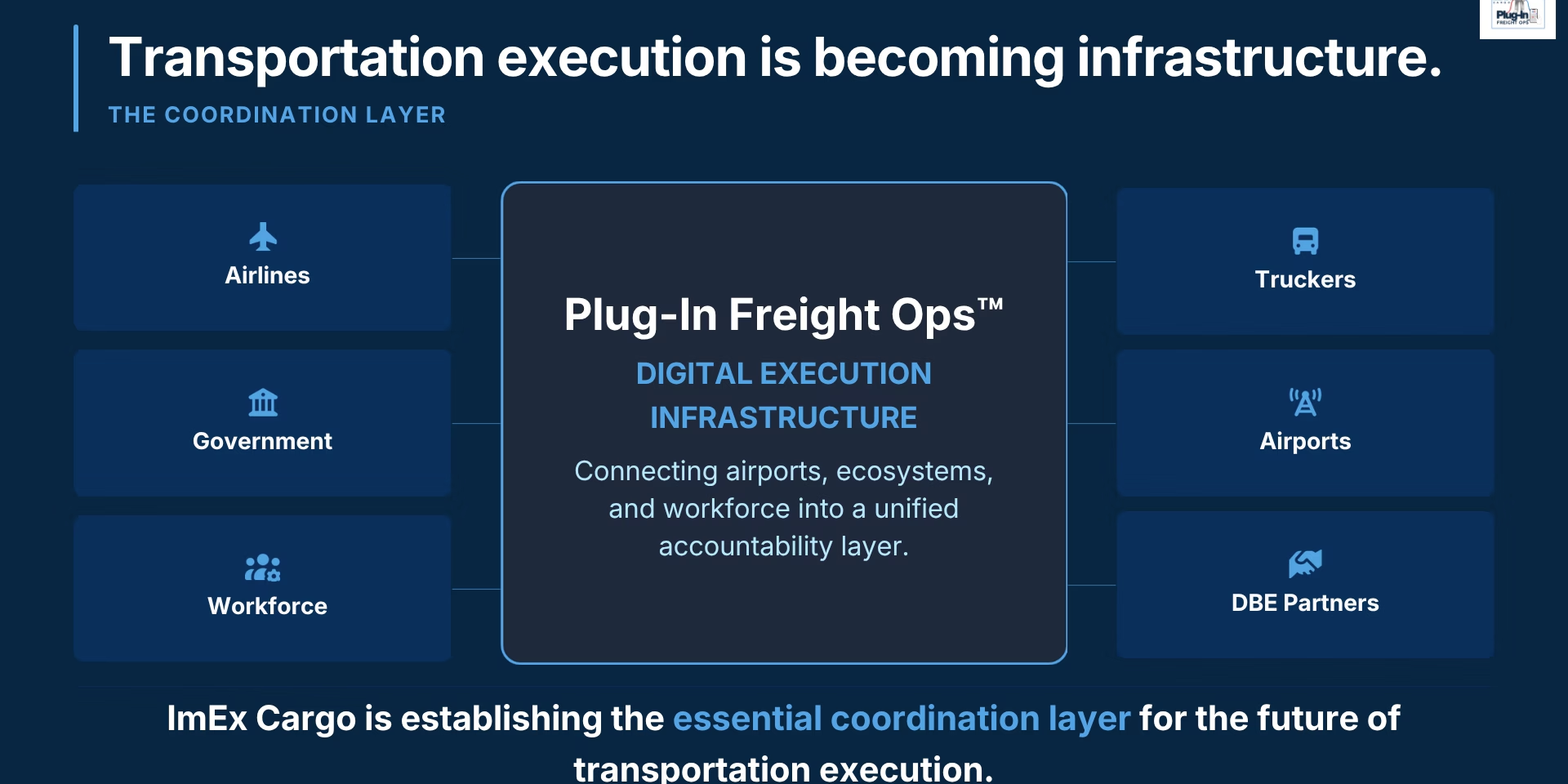
We designed Plug-In Freight Ops™ as a connective operational layer. It sits between existing systems rather than competing with them.
Instead of forcing a forwarder or an airline to abandon their legacy portal, our platform unifies the workflow. It allows teams to:
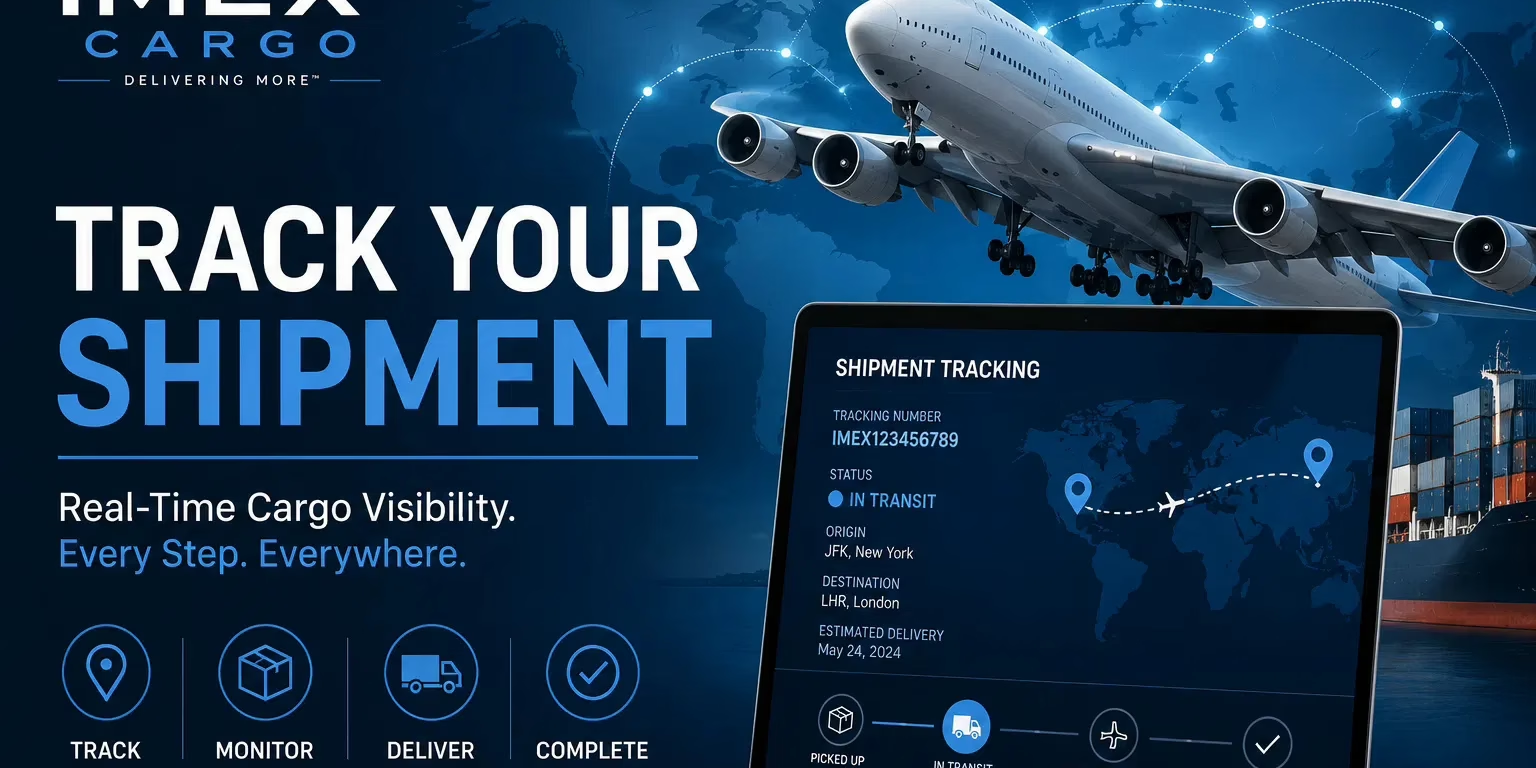
- Quote, book, and track across multiple stakeholders in one view.
- Reduce manual quoting by 60–80%.
- Automate documentation for government audit readiness.
- Scale operations without adding headcount or burnout.
Every feature exists because we lived without it. Every button in the interface was built to solve a problem that once required ten emails and a spreadsheet.
Leadership Through Resilience
Building during a crisis teaches you what actually matters. It’s not about hype or trends; it’s about reliability, adoption, and trust.
Leadership, to me, isn’t about surviving hardship quietly. It’s about building systems so the next generation doesn’t have to struggle with the same fragmentation. That is why we integrated the ImEx Cargo Academy directly into our strategy: to ensure that as the technology evolves, the workforce is ready to lead it.

As a woman in logistics, resilience is often expected, but rarely is it turned into infrastructure. We have turned our survival story into a digital freight infrastructure that helps others move from chaos to coordination.
Still Standing: and Building
I didn’t come this far just to come this far. Today, ImEx Cargo is more than a service provider; we are an execution partner. Whether we are coordinating domestic trucking or representing an airline's entire U.S. capacity, we do it through a lens of independence and control.

We are building an ecosystem where:
- Airlines can sell capacity digitally without losing personal touch.
- Forwarders can operate at high speeds without the risk of burnout.
- Government agencies gain the shipment-level visibility they require for transparency.
This platform exists because survival demanded it. Leadership turned it into something more.
Are you ready to move from fragmented tools to a unified execution layer?
We typically start with a 90-day pilot and coordination walkthrough, mapping your current operational flow to identify where handoffs are breaking down. We can walk through how this infrastructure would apply to your specific environment.
Contact our team today to discuss a 90-day pilot or a capability walkthrough.