For two decades, the logistics industry has been obsessed with "optimization." We optimized our warehouses, our fleets, and our internal workflows. We spent billions on Enterprise Resource Planning (ERP) systems and Transportation Management Systems (TMS) to ensure that everything inside our "four walls" moved with surgical precision.
But when the world changed, we discovered a painful truth: An optimized enterprise is not an optimized supply chain.
In today’s landscape, the most significant breakdowns don’t happen inside your organization. They happen in the "white space" between organizations. They happen at the handoffs between the airline and the trucker, the trucker and the ground handler, and the handler and the government agency. These are the zones where execution fails, visibility vanishes, and accountability dissolves into a sea of fragmented emails and spreadsheets.
We are entering the era of Ecosystem Execution. It is no longer enough to be efficient in isolation. True resilience and performance now depend on your ability to coordinate across a multi-stakeholder infrastructure.
The ERP/TMS Ceiling: Why Internal Optimization Isn't Enough
The traditional enterprise system was designed as a "system of record." Its primary job is to store data and manage the internal processes of a single company. While a TMS can tell a freight forwarder that a shipment is "out for delivery," it rarely has a real-time, bi-directional connection to the specific execution steps happening on the tarmac or at a distant port.
This creates a "coordination gap." When you optimize internally, you are effectively polishing your own link in a chain without looking at how that link connects to the next. Recent industry commentary from thought leaders like Talking Logistics and technology giants like Infor has highlighted this macro shift: the market is rapidly moving away from individual enterprise optimization toward network and ecosystem coordination.
As supply chains become more volatile, the value is no longer found in the data you own, but in the flow you can coordinate.

The Cargo Hub: A Case Study in Fragmentation
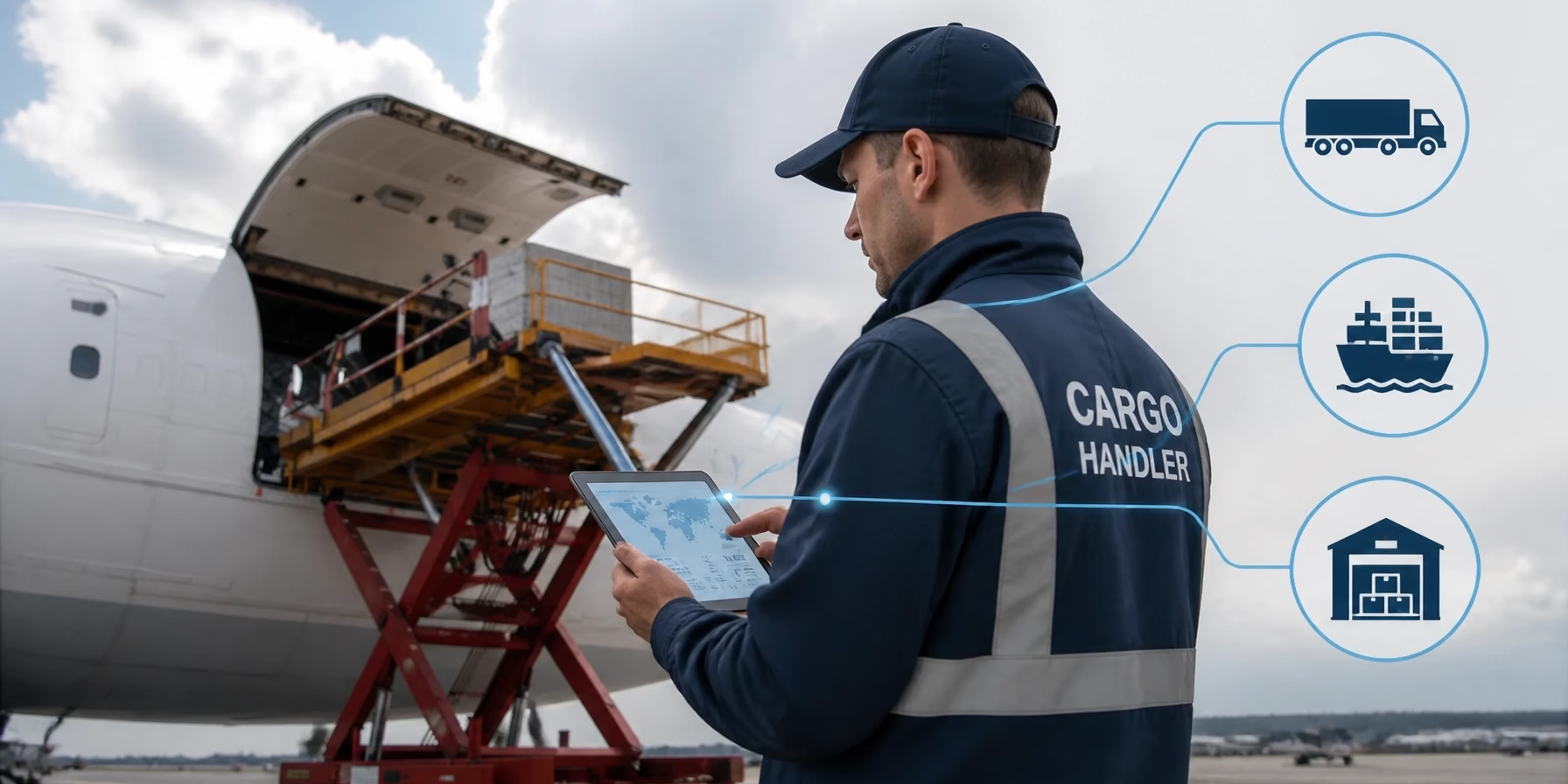
Nowhere is the need for ecosystem execution more apparent than the airport cargo hub. Consider the sheer number of entities required to move a single piece of high-value freight:
- The Airline (providing capacity)
- The GSA (managing the sales and capacity)
- The Ground Handling Agent (managing physical loading)
- The Trucking Provider (handling the first/last mile)
- Government Agencies (customs, TSA, and infrastructure oversight)
- The Freight Forwarder (coordinating the end-to-end movement)
In a typical airport environment, each of these stakeholders uses a different system. Data is siloed. Communication is reactive. When a flight is delayed or a crew is short-staffed, the information trickles through the network in a game of "telephone."
This fragmentation is why we see bottlenecks even when every individual player is "optimized." The friction isn't in the work; the friction is in the handoff. By establishing a digital freight infrastructure, we can move from reactive firefighting to proactive transportation execution.

The AI Warning: Intelligent Noise vs. Structured Action
As Artificial Intelligence (AI) permeates the logistics space, there is a growing misconception that "more data" or "smarter insights" will solve our coordination problems.
The reality is different. AI without a structured coordination layer creates intelligent noise.
A generative AI tool might be able to scan your emails and tell you that a shipment is delayed. It might even predict that a port strike will cause issues next week. But knowing there is a problem is not the same as executing the fix.
Without an Execution Command Center: a layer that connects stakeholders and standardizes workflows: AI simply gives you a better view of your own failure. To turn insights into action, you need a system that doesn’t just report on the handoff but manages it. You need a platform that can trigger a new booking, alert a carrier, and update a government compliance portal in one coordinated movement.
Defining Execution Infrastructure
At ImEx Cargo, we believe the solution isn't another software tool. It is Execution Infrastructure.
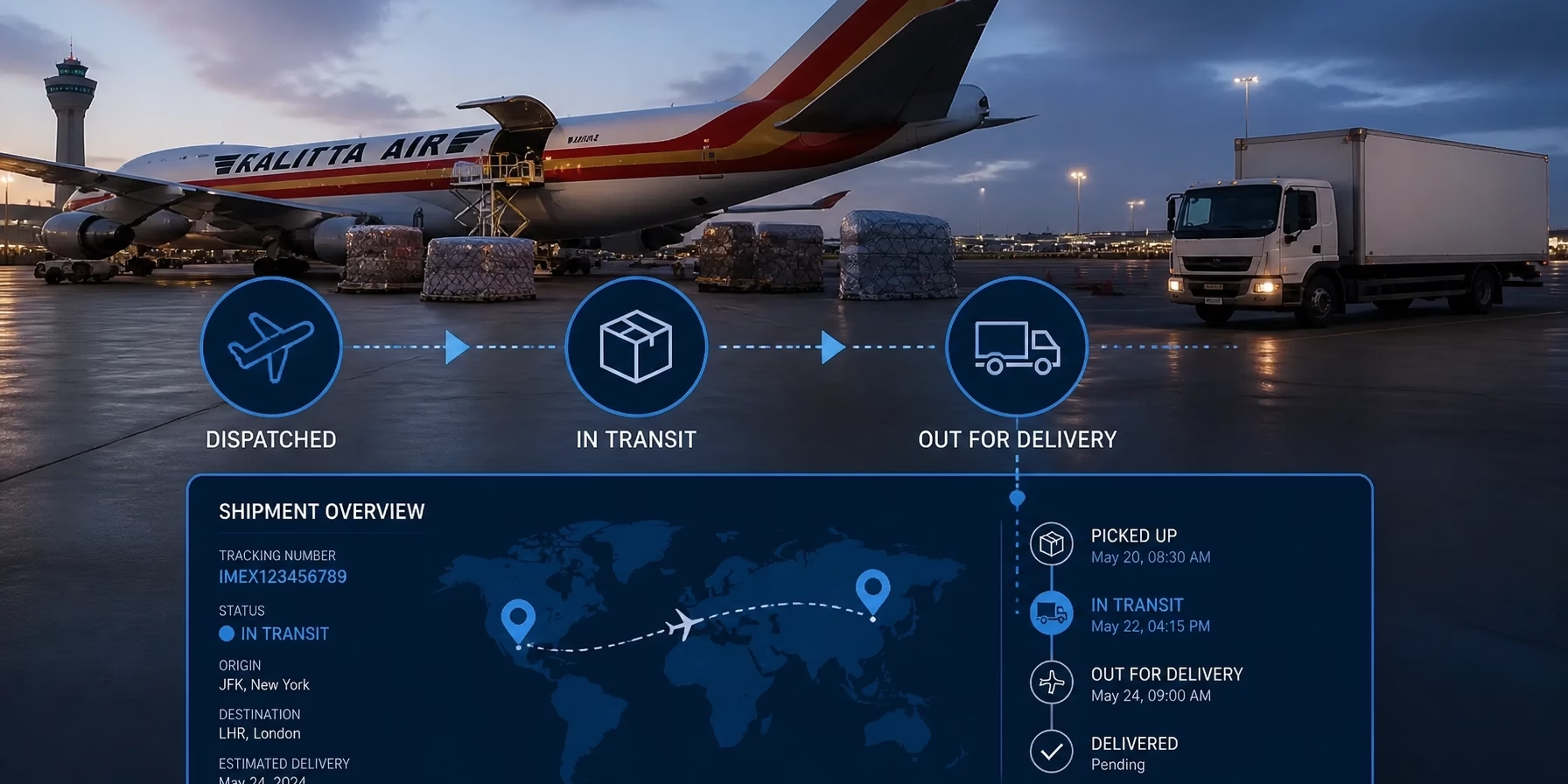
Unlike a traditional SaaS product that asks you to "rip and replace" your current systems, an execution layer sits above them. It serves as a neutral coordination environment that standardizes the workflow from Quote → Book → Track → Deliver.
The Execution Command Center Concept
The goal of this infrastructure is to provide an Execution Command Center for logistics leaders. This center provides:
- Execution Accountability: Every stakeholder has a clear, timestamped role in the workflow. There is no ambiguity about who owns the freight at any given second.
- Real-Time Visibility: Not just "milestone" updates, but active visibility into the handoffs between partners.
- Partner Activation: The ability to bring specialized partners: such as certified DBE networks or workforce talent: into a project with the same level of oversight as a primary contractor.
- Audit-Ready Oversight: Particularly for government logistics and infrastructure support, having a single, immutable record of execution is critical for compliance and funding.

The ImEx Cargo Approach: Plug-In Freight Ops™
Our platform, Plug-In Freight Ops™, was built by operators, for operators. We understand that you cannot ask a global airline or a state agency to abandon their legacy systems. That is why we designed our solution as a Plug-In.
It is a digital infrastructure layer designed to coordinate logistics across fragmented, multi-stakeholder environments. It doesn’t replace your TMS; it makes your TMS effective in the real world. It bridges the gap between your internal "system of record" and the external "system of execution."
By providing a neutral layer for coordination, we enable:
- Airlines & GSAs to manage capacity and bookings with total transparency.
- Infrastructure Firms to oversee complex project logistics with audit-ready data.
- Public Agencies to track the economic impact and participation of diverse suppliers (DBEs) in real-time.

From Optimization to Execution
The "Next Frontier" of logistics is not about making your own company faster. It is about making the ecosystem smarter.
The organizations that win in the coming decade will be those that stop trying to optimize their silos and start building their execution infrastructure. They will be the ones who can coordinate across boundaries, maintain accountability among partners, and provide a seamless experience to the end customer: regardless of how many stakeholders are involved in the move.
The shift from enterprise optimization to ecosystem execution is not just a trend; it is a necessity for anyone operating in the high-stakes world of global freight and infrastructure.
Are you ready to move beyond the internal silo?
We typically address these challenges through a focused pilot program. We can walk through how this execution layer would apply to your specific operational environment: whether you are managing an airport hub, a government program, or a global carrier network.
Contact ImEx Cargo today to start a partnership conversation.