Most logistics leaders spend their days looking at maps.
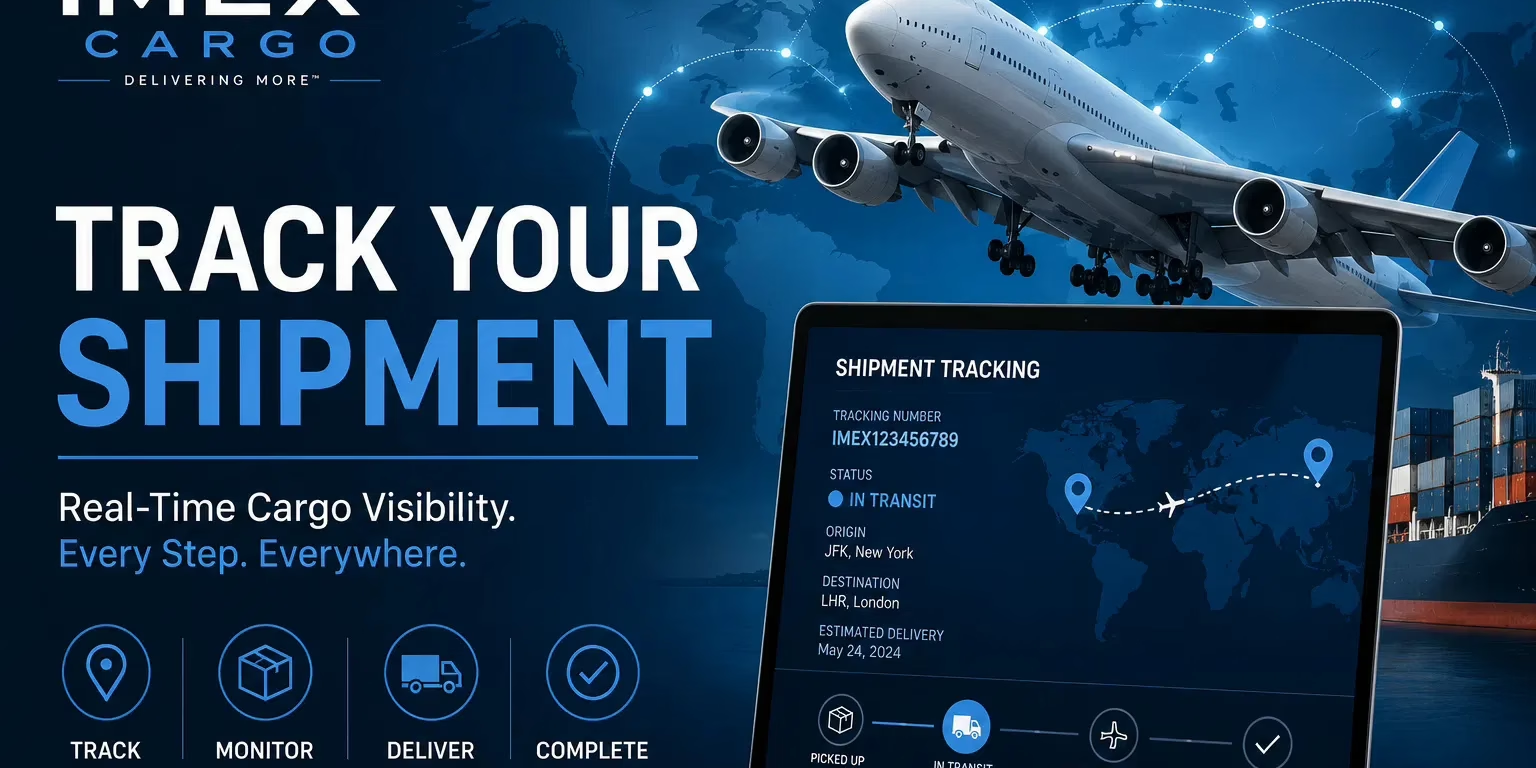
They have invested heavily in real-time visibility platforms that show them exactly where their trucks, planes, and containers are at any given second. These dots on a map provide peace of mind, but they rarely solve the underlying problem: knowing where a shipment is delayed doesn’t automatically fix the delay.
This is the critical gap between Visibility Platforms and Digital Freight Infrastructure.
One platform is designed for watching. The other is built for doing.
The Visibility Trap: Information Without Action
In the last decade, visibility became the primary focus of supply chain technology. Platforms emerged to aggregate GPS data, AIS signals, and ELD feeds into sleek dashboards. For the first time, organizations could see their entire network in one place.
However, visibility is a passive capability. It provides the "what": the location, the status, and the ETA. But when a shipment is stuck at a ground handler or a handoff between an airline and a trucking provider fails, visibility platforms simply report the failure. They don't provide the mechanism to resolve it.
This is where logistics orchestration becomes necessary. Knowing that a shipment is late is a data point. Having a cargo execution infrastructure that automatically re-routes that shipment or alerts the next stakeholder in the chain with a structured task is a solution.
The Shift to Execution Infrastructure
Execution infrastructure: specifically platforms like Plug-In Freight Ops™: represents the evolution from monitoring to management.
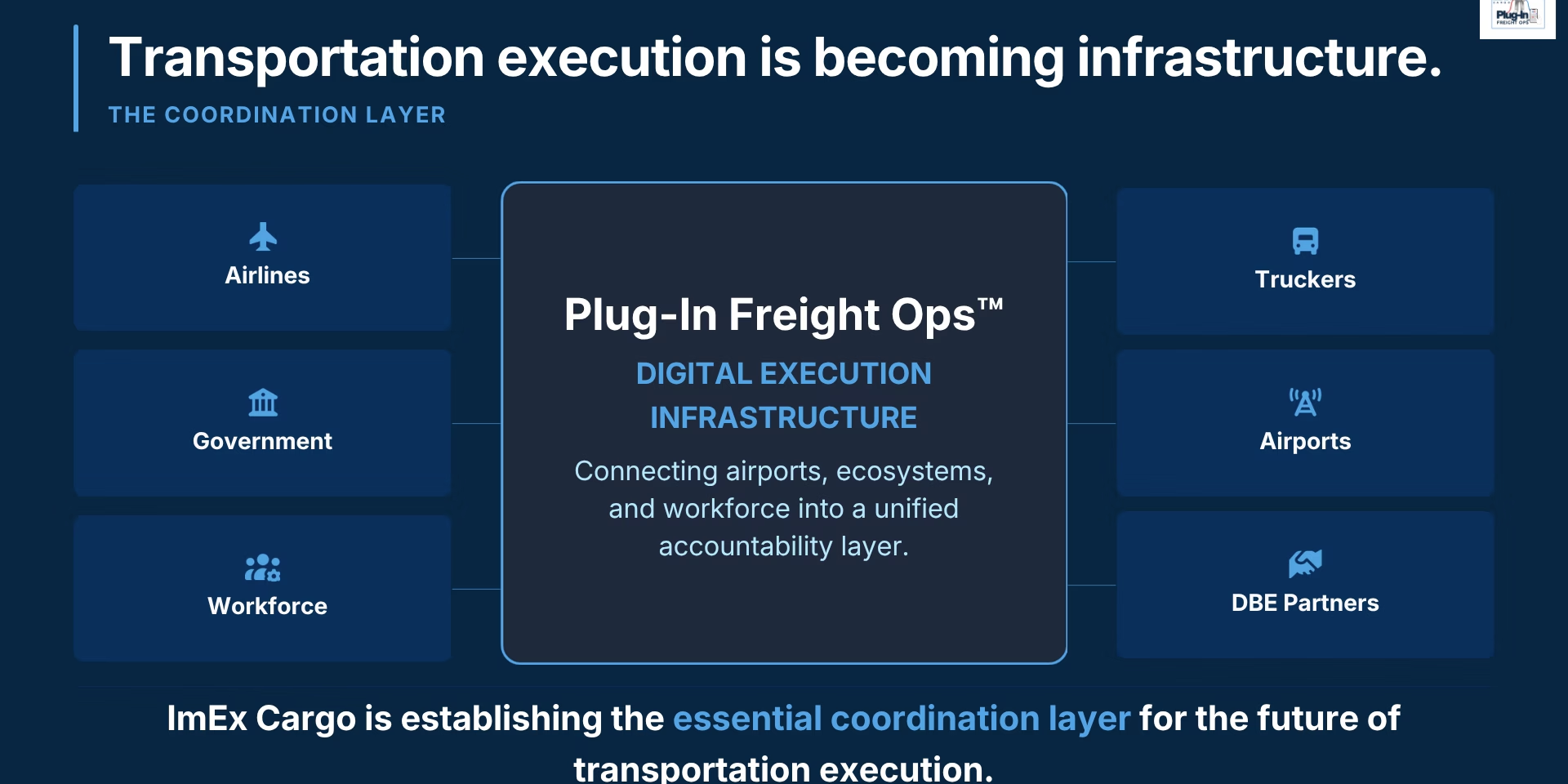
Instead of just tracking a shipment, an execution layer sits above your existing systems to manage the actual work required to move freight across a fragmented, multi-stakeholder environment. It is the logistics operating system that defines who does what, when they do it, and how they pass the baton to the next partner.

Comparison: Watching vs. Doing
To understand how these two layers differ, it is helpful to look at their core outputs. A visibility platform answers: "Where is my shipment?" An execution infrastructure answers: "What should happen next?"
| Capability | Visibility Platforms | Execution Infrastructure |
|---|---|---|
| Primary Goal | Real-time tracking | Operational coordination |
| Data Focus | Milestones, maps, and alerts | Workflows, assignments, and handoffs |
| Interactivity | Passive monitoring | Active collaboration |
| Stakeholder Role | Information consumers | Task execution & accountability |
| Result | Situational awareness | Standardized execution |
Why Coordination Requires a Shared Layer
One of the biggest hurdles in modern logistics is the "blind spot" during handoffs. A freight forwarder might have visibility into their internal TMS, and an airline might have visibility into their flight schedule, but the multi-stakeholder execution between them often happens via manual emails and phone calls.
A neutral coordination infrastructure bridges this gap. By providing a shared execution layer, all parties: airlines, GSAs, trucking companies, and government agencies: can operate within a single coordinated workflow.
This eliminates the fragmentation that causes delays. When a digital handoff occurs, the system records not just the event, but the transfer of responsibility. This creates a level of accountability that simple tracking cannot provide.

Moving Beyond the Map: The Benefits of a Freight Execution Platform
When organizations move from a visibility-first mindset to a governed logistics orchestration model, the operational impact is immediate.
- Reduced Fragmentation: Instead of checking five different portals and a tracking map, teams manage the entire shipment lifecycle: from quote to booking to tracking and delivery: in one cargo execution command center.
- Structured Accountability: Because the system assigns tasks and manages handoffs, there is a clear record of who is responsible for the cargo at any given moment.
- Audit-Ready Compliance: For government logistics infrastructure support, having a structured execution trail is essential for meeting compliance and economic impact objectives.
- Operational Velocity: Automation within the execution layer handles routine tasks, such as status updates and documentation, allowing logistics managers to focus on high-value exceptions.
Integration: Not a Replacement, But a Completion
It is important to note that supply chain execution visibility is still vital. Plug-In Freight Ops™ doesn't replace visibility; it consumes it.
Our platform connects into your existing visibility feeds and uses that data to trigger workflows. If your visibility platform reports a delay, our ecosystem coordination layer triggers the necessary operational adjustments across your partner network.
We enable organizations to stop managing shipments via spreadsheets and start managing them via an integrated freight operating system.

The Future of Multi-Party Execution
The industry is reaching a tipping point. The "visibility era" gave us the data we needed to see the problems in our supply chains. The "infrastructure era" is giving us the tools to fix them.
If your organization is tired of watching delays happen and is ready to start coordinating solutions, it’s time to look beyond tracking dots.
We typically address these challenges through a focused pilot program. We can walk through how a digital execution layer would apply in your specific environment: connecting your airlines, forwarders, and trucking providers into a unified system of coordination.
Ready to move from watching to doing?
Schedule a capability walkthrough with the ImEx Cargo team to see how Plug-In Freight Ops™ can transform your operational execution.