A GSA or GSSA is expected to represent airline interests commercially while coordinating the operational details that turn demand into executed cargo movement.
That means managing forwarder requests, quotes, bookings, allotments, capacity updates, documentation, customer communication, station activity, partner follow-up, shipment milestones, exceptions, and reporting to airline principals.
The commercial role is becoming more distributed. Airlines are increasingly using GSAs and GSSAs to extend market coverage, manage customer relationships, and support cargo sales without carrying every commercial function internally. Air Cargo Week reported that Kales Group CEO Sebastiaan Scholte described GSSA share of cargo sales as increasing from approximately 24% to 27% over five years. Those figures are attributed to Kales leadership as reported by the publication, not presented as independently audited market data. Read the Air Cargo Week coverage.
As more commercial responsibility sits outside the airline, cross-company execution coordination becomes more important.
The industry shift
The challenge is not simply finding capacity or selling space. The challenge is maintaining a reliable execution view across multiple airlines, forwarders, stations, handlers, truckers, customers, and internal teams.
For many GSAs and GSSAs, the operating environment still includes airline portals, forwarding systems, spreadsheets, shared inboxes, phone calls, and separate reporting routines.
Common failure points include:
- Forwarder requests scattered across email and disconnected intake channels
- Quote activity separated from booking status and follow-up
- Allotment and capacity information difficult to compare across represented airlines
- Booking changes communicated differently by carrier, station, or market
- AWB milestones visible in one system but not connected to customer or partner action
- Documentation questions moving through long email chains without clear ownership
- Station, handler, and trucking updates reaching the GSA team late
- Exceptions escalated only after a missed handoff or service failure
- Customer communication dependent on manual status collection
- Principal reporting assembled from fragmented records and individual knowledge
- Multi-market performance difficult to review consistently
- Visibility available at the shipment level without a coordinated resolution process
This is why visibility alone is not enough. A status update may show that something changed. It does not necessarily show who must act, which partner must be contacted, or how the issue should be reported back to the airline principal.
The result is a gap between commercial activity and physical execution.

The execution layer
A coordination layer for fragmented airline cargo execution
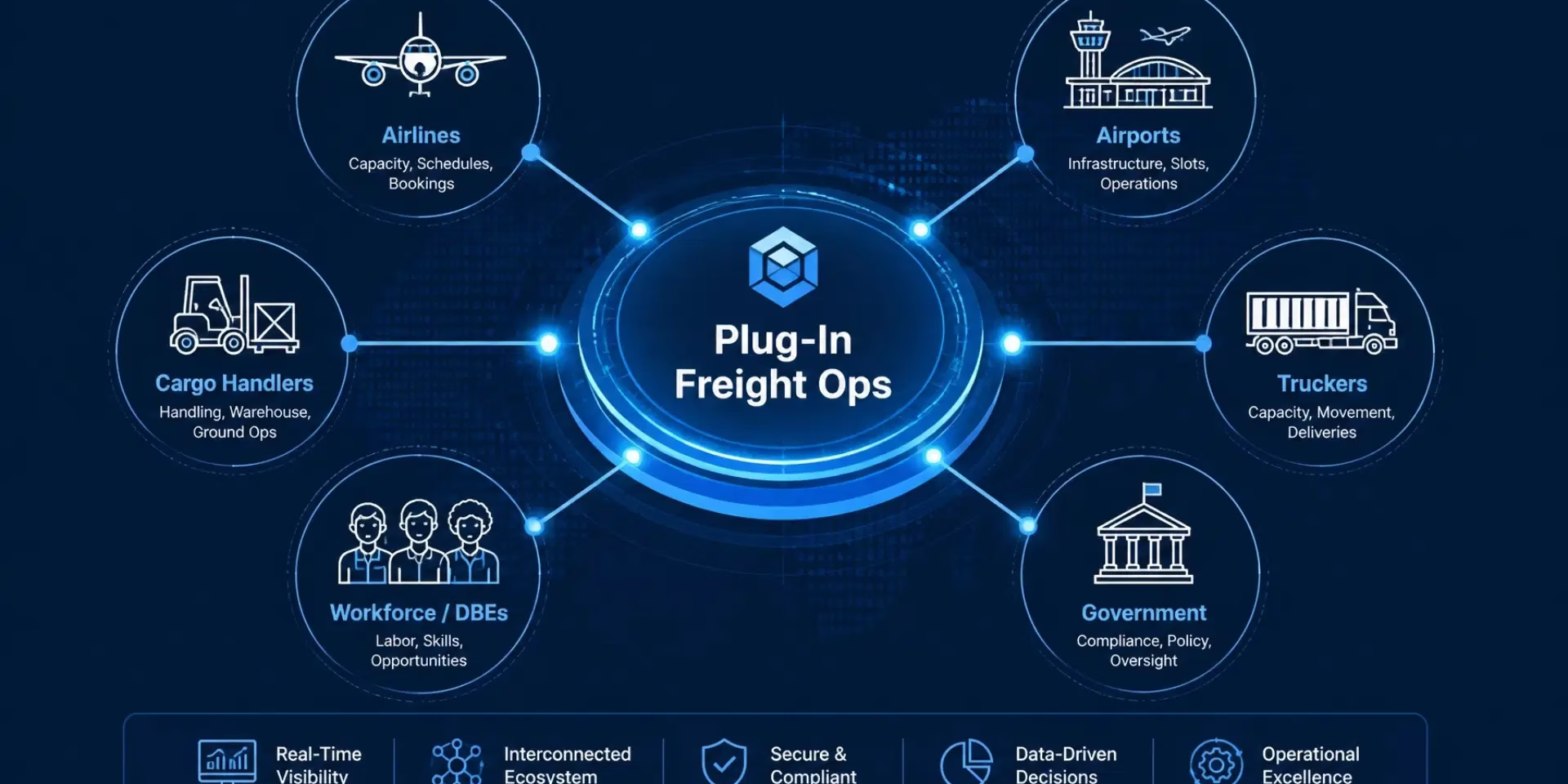
Plug-In Freight Ops™ is positioned as digital freight infrastructure above existing systems and standards. It does not replace airline systems, forwarding platforms, cargo community systems, or data standards. It provides an execution coordination layer for the work that crosses organizational boundaries.
IATA’s ONE Record provides a standardized approach to air cargo data sharing. Cargo Connect and EPIC address connectivity and partner identification. e-AWB supports electronic documentation and paperless air waybill processes through established industry guidance.
Plug-In Freight Ops™ is what happens after the standard, community system, or data model has done its job: the layer where responsibility, communication, follow-up, and action are coordinated across organizations.
1. Multi-airline coordination
A GSA workflow management environment must accommodate different represented airlines, markets, stations, customer requirements, and operating practices without forcing every relationship into an isolated process.
The coordination layer creates a shared view of commercial and operational activity across airline relationships, including quote requests, booking movement, allotment discussions, capacity considerations, and partner communication.
2. Quote-to-booking discipline
A quote is not the end of a commercial interaction. It is the beginning of an execution path.
Structured coordination helps connect forwarder demand to quote status, booking movement, documentation requirements, customer communication, and relevant airline or station follow-up. This reduces the risk that a request remains active in one inbox while the operational context changes elsewhere.
3. Partner visibility and structured handoffs
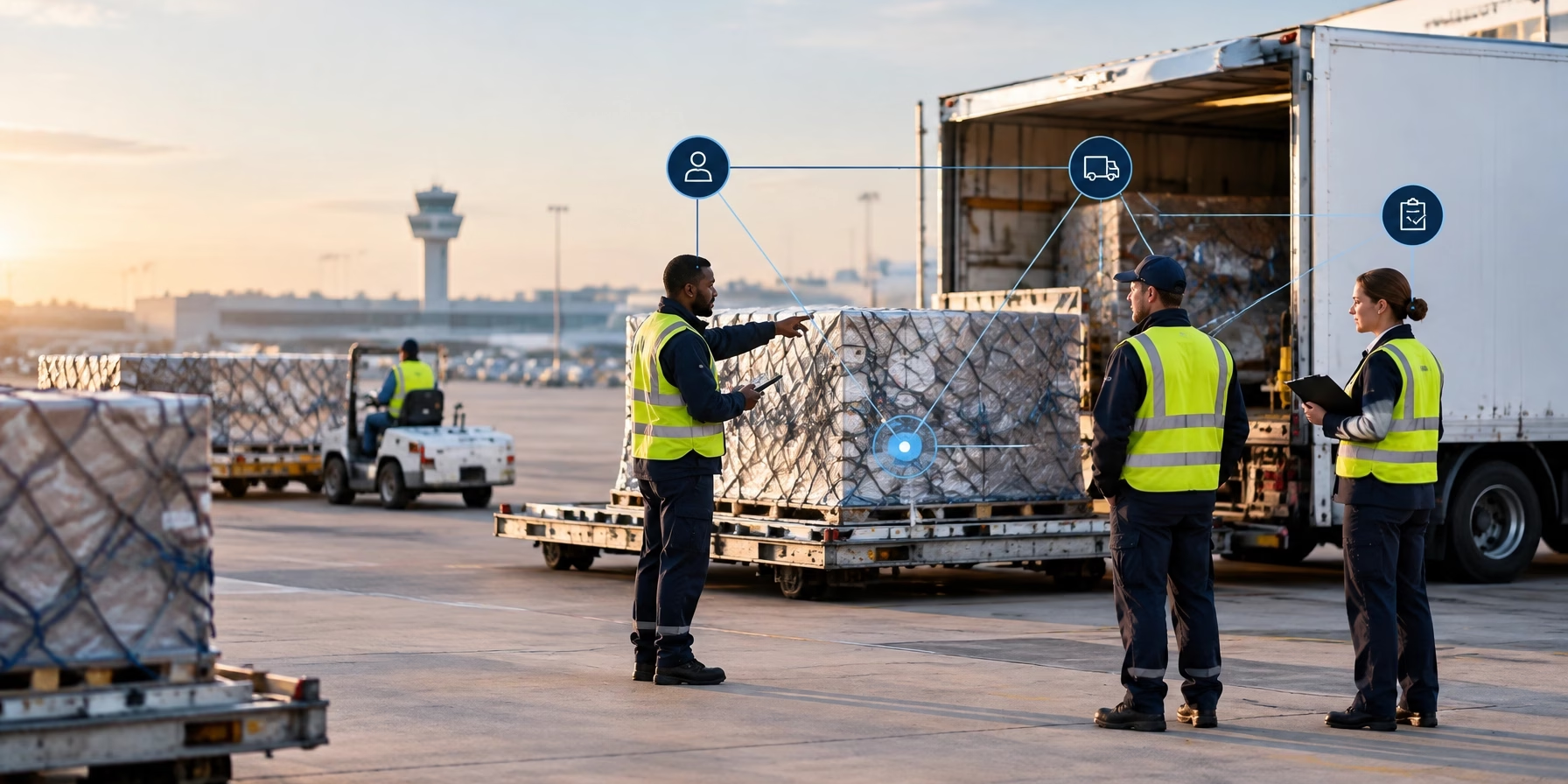
Airline cargo execution passes through forwarders, truckers, handlers, stations, and customer-facing teams. Each handoff creates a potential visibility gap.
A GSSA digital execution model should make those handoffs easier to identify and coordinate without requiring every participant to abandon its existing system.
4. Operational accountability
The goal is not to create more records. It is to make execution responsibility clearer.
When capacity changes, documentation is incomplete, a truck movement is delayed, or a milestone is missed, the relevant parties need a coordinated path for communication and escalation. The GSA remains better positioned to represent the airline principal because operational activity can be reviewed as a connected workflow rather than a collection of disconnected messages.
Network view
From commercial request to principal reporting
A multi-airline GSA or GSSA network may include:
- Represented airlines
- GSA or GSSA commercial teams
- Freight forwarders
- Shippers and consignees
- Ground handlers
- Trucking and road feeder providers
- Airport and station teams
- Customs or government stakeholders
- Internal finance, customer service, and reporting teams
- Airline principals and management
The execution path commonly moves through a sequence such as:
Quote → Book → Track → Assign → Escalate → Report
At the quote stage, the GSA coordinates customer requirements and airline options. At booking, the focus shifts to confirmation, capacity, documentation, and relevant parties. During tracking, AWB lifecycle milestones and station activity become central.
When conditions change, responsibility must move to the right airline, handler, trucker, forwarder, or customer contact. Escalation is not simply a notification; it is a coordinated transfer of attention.
The final stage is reporting to airline principals. This includes commercial activity, booking movement, shipment milestones, partner responsiveness, exceptions, and market-level execution context.
This network view complements the operating concepts described in ImEx Cargo’s airline GSA execution infrastructure, while also connecting to related freight forwarder execution infrastructure and trucking network execution infrastructure.

Use cases, where this creates measurable value
Multi-airline quoting
A GSA managing several airlines needs a consistent way to see forwarder demand, quote movement, capacity discussions, and follow-up across represented carriers. The value is a clearer commercial execution view without treating every airline relationship as an isolated workflow.
Forwarder request visibility
Forwarder requests often arrive through different channels and at different levels of detail. A coordination layer provides a structured view of requests, responses, booking movement, and customer communication so that open activity is easier to review and prioritize.
Allotment and capacity coordination
Capacity decisions are affected by route, flight, station, commodity, timing, and airline-specific conditions. Cross-airline coordination gives GSSA teams a more coherent context for discussing allotments, capacity availability, changes, and commercial commitments with forwarders and airline partners.
Exception escalation across represented carriers
A missed milestone may involve an airline, handler, trucker, forwarder, or station. Coordinated escalation makes it easier to identify where the issue sits, which organization must respond, and what information should move back through the GSA team.
Airline principal reporting
Principal reporting should reflect more than sales totals. It should provide context on quote activity, booking progression, AWB milestones, partner communication, exceptions, and market execution. Structured operational activity creates a stronger foundation for that conversation without claiming that reporting alone resolves performance issues.
Station-level and multi-market oversight
GSSA leadership needs to understand whether execution is consistent across markets and stations. A common coordination view supports comparison of workflows, handoffs, open exceptions, and reporting quality across the network.
Value summary
Visibility: See commercial and operational activity across airline, forwarder, station, handler, and trucking relationships.
Control, Coordinate quote-to-booking movement and shipment lifecycle handoffs through a structured execution view.
Speed: Reduce manual searching and repeated follow-up when requests, milestones, or exceptions change.
Accountability: Make ownership, escalation, communication, and principal reporting easier to trace.
A focused pilot for GSA digital execution
A pilot should begin with one operational workflow rather than an attempt to redesign the entire GSSA network.
1. Select the workflow
Choose a focused starting point, such as multi-airline quoting, forwarder request visibility, allotment coordination, AWB milestone tracking, station communication, exception escalation, or principal reporting.
2. Define the participants
Identify the represented airline or airlines, GSA team, forwarder group, station, handler, trucking provider, customer-facing roles, and reporting stakeholders involved in the selected workflow.
3. Configure the execution focus
Align the pilot around the relevant requests, handoffs, milestones, communication responsibilities, and reporting needs. The objective is to create a common coordination view while preserving the systems and standards already used by participating organizations.
4. Measure the operating baseline
Review response time, manual follow-up, visibility gaps, open exceptions, milestone communication, and reporting quality. The pilot should establish what is visible today, where responsibility breaks down, and what changes when execution is coordinated more deliberately.
For broader context, ImEx Cargo describes this approach as Plug-In Freight Ops™ digital execution infrastructure rather than a replacement TMS, marketplace, or isolated dashboard.
Frequently asked questions
What is GSA workflow management?
GSA workflow management is the structured coordination of airline sales and cargo execution activity across forwarder requests, quotes, bookings, capacity, documentation, shipment milestones, partner communication, exceptions, and reporting.
How is GSSA digital execution different from a booking system?
A booking system records or supports booking activity. GSSA digital execution addresses the wider coordination surrounding that booking, including forwarder requests, airline and station communication, handler and trucker handoffs, AWB milestones, exceptions, and principal reporting.
Does Plug-In Freight Ops™ replace ONE Record, e-AWB, Cargo iQ, or cargo community systems?
No. Plug-In Freight Ops™ is positioned as a complementary execution coordination layer. Industry standards and community systems provide data, message, documentation, or connectivity foundations. The coordination layer focuses on assigning responsibility and managing action across organizations.
Where should a GSSA begin?
A practical starting point is a contained workflow with visible friction: forwarder request intake, multi-airline quoting, station-level exception escalation, or airline principal reporting. A focused pilot can establish the operating baseline before broader coordination is considered.
About the author
Michelle DeFronzo is CEO and Founder of ImEx Cargo. She leads the development of Plug-In Freight Ops™ and brings operating experience across freight forwarding, air cargo, trucking, airline GSA/GSSA operations, government contracting, supply-chain execution, and complex stakeholder coordination. ImEx Cargo is a woman-owned, government-certified logistics and transportation company focused on digital freight infrastructure and multi-stakeholder execution.
GSA and GSSA teams do not need another disconnected tool. They need a practical way to coordinate the work that sits between airlines, customers, forwarders, stations, handlers, truckers, and principals.
We typically address this through a focused pilot. Request a Pilot to map a GSA workflow, or Join the Ecosystem to explore a broader partner conversation.